Tag: privacy

  • India’s technocracy

    India’s technocracy

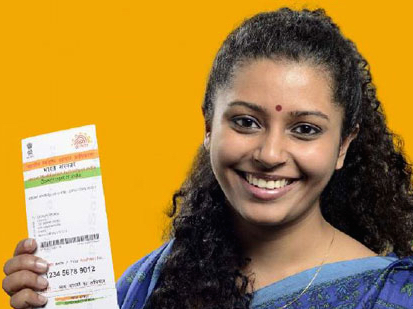
    Buzzfeed today has an in depth look at India’s Aadhaar national identity system.

    1.12 billion Indians are now enrolled in the system that’s rapidly becoming mandatory as everything from telephone companies to job interviewers demand an identification number.

    Aadhar is far from without critics with warnings that the database has a rich potential for abuse and the risk of betraying Indians’ biometric data should the system be compromised.

    The latter point is important as biometric data isn’t like passwords – once biometric data been compromised it can’t be changed which opens up massive possibilities for identity fraud.

    Regardless of the risks, India’s state and Federal governments are pressing ahead with the system and making sure it is a fundamental part of national life. Coupled with the recent demonetisation of the economy, the nation’s governments now have a very good picture of most Indian’s lives.

    For civil rights campaigners this is a worrying system while government officials and politicians claim it will stamp out fraud and strengthen national security.

    India is leading the way in where many other nations are going in coming years, it would be worthwhile watching how Aadhaar develops.


    Similar posts:

  • The science of money and data mining

    The science of money and data mining

    Last week I wrote a piece for Fairfax Metro – the Sydney Morning Herald and Melbourne Age – looking at how government agencies and private credit companies are mining data.

    That story sparked a range of interest with my doing a twenty minute segment on ABC Brisbane today on the topic which morphed into a deeper discussion on surveillance, particularly with the Australian government’s ‘metadata’ laws.

    I’ll also be talking on ABC Radio Perth on Monday, March 6 about this story at 6.15am local time (9.15am Sydney and Melbourne).

    In the wake of the Australian government’s Centrelink scandala national disgrace that is only getting worse – it’s worthwhile discussing exactly what data is being gathered and how it is being used.

    The answer is almost everything with commercial operators like Experian pulling in data from sources ranging from credit card applications to social media services although store loyalty cards remain the richest information source.

    As the Australian Tax Office spokesperson pointed out, none of this is particularly new as they have been collecting bank deposit data since the Federal government introduced income taxes in the 1930s.

    The arrival of computers in 1960s changed the scale and scope of tax offices’ abilities to track citizens’ finances and gave rise to the major commercial credit bureaus.

    With the explosion of personal electronics and internet connected devices in recent years along with increased surveillance powers being granted to government and private agencies, that monitoring is only going to grow.

    The best citizens can expect is to have their data protected and respected with financial providers only using what is ethical and relevant in determining our access to banking and insurance products.

    Politically the only way to ensure that is to make it clear through the ballot box, the question is do we care enough?

    Similar posts:

  • Governments count the cost of massive data breaches

    Governments count the cost of massive data breaches

    Slowly it’s dawning on government agencies how serious online data breaches can be. That can only be a good thing.

    With a billion account details exposed the Yahoo! data breach announced last year was the greatest internet security failure to date.

    Now Australian government agencies are worried about the scope of the breach and the number of politicians and officeholders whose credentials may have been affected.

    Other government officials compromised include those carrying out sensitive roles such as high-ranking AFP officers, AusTrac money laundering analysts, judges and magistrates, political advisors, and even an employee of the Australian Privacy Commissioner.

    The ramifications of this breach are far broader than just a few malcontents grabbing the contents of disused Yahoo! mail accounts or being able to hack Flickr profiles, many of the passwords will have been used on other services, compromised profiles linked to other platforms and the possible for identity fraud is immense.

    With social media and cloud computing services coupled to these accounts, it’s quite possible for someone’s entire life to be hijacked thanks to one insecure service as Wired’s Matt Horan discovered a few years ago.

    Just like individuals and businesses, the ramifications of careless organisations allowing private information to be stolen can be severe for governments. It’s right that Australian agencies are concerned about where this data has gone.

    The official response to continued data breaches has been weak at best so it is good that suddenly agencies are having to face the consequences of the biggest one.

    A widespread scare about insecure data may be what’s required to see governments start taking data security and citizen privacy seriously. That may be the positive side of the Yahoo! breach.

    Similar posts:

    • No Related Posts
  • Trade offs in the smart city

    Trade offs in the smart city

    What are the trade offs in the connected city? Last week we had an opportunity to talk with Esmeralda Swartz, Ericsson’s Vice President of Marketing Enterprise and Cloud last week about what policy makers and citizens need to consider.

    One of the important issues is security in both the data being collected, “what are the benefits and what is not acceptable?” Esmeralda asks.

    In all the conversations this site has had with smart city advocates the topic of open data has been essential, but this raises the issue of security. Something lacking in the Internet of Things.

    “Security has to be built into every level,” says Esmeralda who flags that the IoT adds a whole range of new risks.

    Along with security, a critical part of a successful connected city is having open data, Esmeralda believes.

    “if you start looking at the all the layers that need to be connected then they have to be open,” she says.

    Open data is a critical point for smart cities and connected communities, if information isn’t open then it’s hard for an ecosystem to develop or for residents to have confidence their data is being used for their benefit.

    For companies like Ericsson, who are trying to establish themselves outside of the traditional telco model, gaining the confidence of communities and their leaders is essential to their smart city strategies.

    Much of the smart city movement is based upon solutions looking for problems – a common trait of the IT industry – for vendors like Ericsson to succeed in selling their products it’s essential to prove value to their customers and gain the confidence of communities as they trade off utility for privacy.

    Similar posts:

    • No Related Posts
  • Guessing ethnic affinity

    Guessing ethnic affinity

    What’s your ethnic affinity? Apparently Facebook thinks its algorithm can guess your race based upon the nature of your posts.

    This application is an interesting, and dangerous, development although it shouldn’t be expected that it’s any more accurate than the plethora of ‘guess your age/nationality/star sign’ sites that trawl through Facebook pages.

    Guessing your race is something clumsy and obvious but its clear that services like Google, LinkedIn and Facebook have a mass of data on each of their millions of users that enables them to crunch some big numbers and come up with all manner of conclusions.

    Some of these will be useful to governments, marketers and businesses and in some cases it may lead to unforeseen consequences.

    The truth may lie in the data but if we don’t understand the questions we’re asking, we risk creating a whole new range of problems.

    Similar posts:

    • No Related Posts