Tag: retail

  • Links of the day – dead malls, economics and politics of the future

    Links of the day – dead malls, economics and politics of the future

    Today’s interesting links revolve around economics – those of shopping malls, the future and how politics might react to a world where the majority’s incomes are lower and far more precarious than we’re used to.

    The economics of dead malls

    Shopping malls were the town square of the late Twentieth Century consumerist society. Now in many parts of the US the shopping mall is dying as economics and culture turns against them.

    The New York Times looks at the economics of shopping malls and how they are affected by changes to society, particularly the decline of working class incomes and the middle class squeeze. In the meantime high end malls seem to be doing extremely well.

    Having opened in 1986 with a renovation in 1998, Owings Mills is young for a dying mall. And while its locale may have contributed to its demise, other forces played a crucial role, too, like changing shopping habits and demographics, experts say.

    A number of factors are working against old fashioned shopping malls including growing wealth disparity, falling middle and working class incomes along with fundamental changes to the economy which mean retail businesses, along with other industries, are going to have to adapt to a very different future.

    Journey through the landscape of the future

    Some of those changes to the global economy are described in Deloitte’s Centre For The Edge’s The hero’s journey through the landscape of the future, first published in July last year.

    The Deloitte think tank describes a world where the workforce is more casualised – dare one say more precarious – and the barriers to business far lower than today.

    Democracy in the 21st Century

    Changes like those described by Deloitte don’t happen without consequences and economist Joseph Stiglitz suggests this will change our democratic institutions.

    Sadly Stiglitz doesn’t suggest the changes that might happen apart from observing the current system that seems to be baking in inequality probably isn’t sustainable.

    In a world where incomes are less stable and economic standards of livings are falling for the majority of people, the current beliefs that underpin the philosophies of political parties and government agencies become redundant. How today’s governments react to these changes will be an important question for how our societies look in the 21st Century.

    Similar posts:

    • No Related Posts
  • Old business and new tech

    Old business and new tech

    The payments war has been well and truly on as companies like Stripe, Apple and PayPal battle it out to control the next generation of currency.

    One of the more hapless bystanders in this has been the CurrentC consortium, a group of US retailers set up to take advantage of mobile technology and bypass merchant fees.

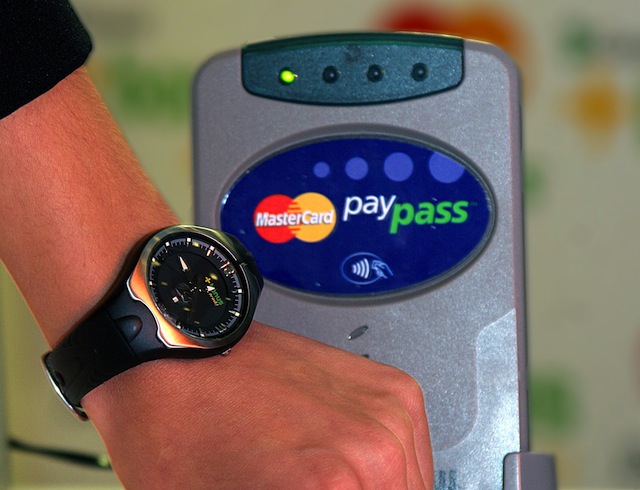
    This weekend news leaked out that some of the consortium members have disabled Near Field Communications functions in their store Point of Sale systems to prevent Apple Pay and Google Wallet from working while they wait to roll out CurrentC.

    In a deep dive review of CurrentC, Tech Crunch looks at how the service works and its limitations. One of the things that jumps out in Tech Crunch’s review is just how cumbersome the system is compared to its competitors.

    Despite being founded in 2011 and having the backing of some of America’s biggest companies, CurrentC is two, or possibly three, iterations behind other services which illustrates the problem of incumbents trying to innovate their way out of problems.

    No doubt the committee model of CurrentC hasn’t helped the development process along with the aim being addressing the consortium’s fixation with merchant fees rather than making things easier for customers.

    It’s hard not to conclude that CurrentC is doomed and the actions of retailers in blocking competitor’s products is only staving off the inevitable. When old businesses embrace new tech they have to be thinking of their customers’ problems, not theirs.

    Similar posts:

  • Connecting people to spaces

    Connecting people to spaces

    Beacon technologies are one of the hottest items in the Internet of Things with retailers, sports stadiums and hotels looking at how they  can use these devices to improve their operations and customer experiences.

    At Dreamforce 2014 Proximity Insight’s Steve Orell spoke on the event’s wearable panel about how their service plugs into beacon technology and customer service.

    Proximity Insight was born out of the 2013 Dreamforce Hackathon where Orell and his team were finalists. From that, the company set up operations in New York with a focus on customer relationship management in the retail industry.

    Retail isn’t the only the field that Orell sees for Proximity Insight with the hotel and casino industries as being other targets.

    “With the hotel, why check-in? Why not walk in and let your smartphone do it for you?” Orell asks.

    “It’s all about making live so much more seamless and slick,” Orell adds. “There’s opportunities in every sector.”

    For businesses looking at rolling out beacon technologies the key is to be adding value to enhance the customer experience, Orell believes.

    “You have to be delivering something to the customer beyond tracking them, it’s about making the whole retail or hospitality experience better. It has to benefit the customer.”

    With beacon technologies now becoming common and the supporting hardware being built into all smartphones, we can expect to see more applications coming onto the market. It’s worth considering how your business can use them to enhance the customer experience.

    Paul travelled to Dreamforce 2014 as a guest of Salesforce

    Similar posts:

    • No Related Posts
  • Winners and losers

    Winners and losers

    At today’s Telstra Digital Summit in Sydney, digital strategist Brian Solis spoke about the disruptions happening across all industries.

    One of the sources he cited was Scott Galloway of the New York University’s business school and Galloway’s Winners and Losers presentation from last May.

    The presentation is thought provoking with Galloway predicting many of the social media platforms are doomed to either low returns or failure.

    Galloway is particularly scathing of Pinterest: “They were the leader in the visual web, but they’ve been blown away by Instagram”. Instagram’s success, Galloway believes is driven by the shift to visual communications on the net.

    The biggest takeaway though is Galloway’s prediction that the middle class is in decline. That has great ramifications for all businesses built upon the Twentieth Century consumer model.

    Similar posts:

  • This is not toy time

    This is not toy time

    We’re past the time where business owners can dismiss new technologies as toys says Profitable Hospitality’s Ken Burgin.

    Ken’s Profitable Hospitality website is a must read for anybody in the industry and I was lucky enough to be the the guest of his 99th podcast where we discussed payment systems, marketing and the challenges facing restaurant and cafe operators in a changing marketplace.

    In the podcast we discuss PayPal’s plans for the retail sector along with how startups like Stripe look to disrupt the sector and what Apple’s announcements last week will mean to the payments industry.

    The key message from the podcast is the entire sector is facing massive changes both from technology and changing consumer behaviour.

    Like many other industries, the successful restaurant and cafe businesses over the next decade will be those who have the flexibility to adapt to a very different world.

    Similar posts: