Tag: risk

  • Risk free fallacies

    Risk free fallacies

    One of the conceits of the late Twentieth Century was that we can engineer risk out of our lives.

    Derivatives like Collateral Debt Obligations were thought to overcome financial risks, think contracts would eliminate business risks and wise central banks would massage the economic cycle to banish the risks of economic crises.

    In schoolyards, the kids are banned from doing cartwheels and playing ball games – in response to a recent edict prohibiting physical activity at a local school an education department spokesman said the ban was to prevent, and not in response to, playground injuries.

    So nothing’s happened to provoke a ban, just someone decided there was risk and the first reaction is to eliminate it rather than manage it.

    In a litigious society where a culture of blame has developed this reaction is understandable. If a kid gets hurt in the playground then the parents might blame the teacher and one should be under no illusion that in the NSW state education system, the industrial concerns of teachers will always trump the welfare of students.

    So the cartwheels must stop.

    The strange thing with our culture of blame is that when something goes seriously wrong, such as the implosion of the banking system due to greed and misunderstanding of risk, no-one is held responsible.

    For lawyers, this culture is understandable. After all, their job is to warn clients of legal risks and it’s true that every time we walk down the street or jump in our car we might make a mistake that could see us in court.

    But we learn to manage that risk and we accept the odds every time we choose to drive down to the supermarket.

    The danger in believing we can eliminate risk is that removing one element of risk often results in unexpected consequences – they are even more unexpected when you don’t understand the risks in the first place. CDOs and the shadow banking system are a good example of this.

    Government seek to pass laws eliminating risks and in doing so create new risks, particularly when the Acts they pass are poorly written and badly thought out.

    There is always the question of what risk we are addressing – in the modern corporatist political system, the PR risk to a government always takes priority over a real risk to citizens. Passing a law to protect the minister’s backside might make life more risky for others.

    As helicopter parents, always hovering over our children and blaming teachers, schools, neighbours and other parents when something goes wrong, we’re creating a whole set of risks we don’t understand.

    For politicians, managers and leaders their main responsibility is to manage risk, not pretend it’s been eliminated by the latest memo, law or silly schoolyard ban.

    Similar posts:

  • Are we prepraed to embrace risk?

    Are we prepraed to embrace risk?

    It’s safe to say the Transport Security Administration – the  TSA – is one of America’s most reviled organisations.

    So it’s notable when a former TSA director publicly describes the system the agency administers as “broken” as Kip Hawley did in the Wall Street Journal on the weekend.

     More than a decade after 9/11, it is a national embarrassment that our airport security system remains so hopelessly bureaucratic and disconnected from the people whom it is meant to protect. Preventing terrorist attacks on air travel demands flexibility and the constant reassessment of threats. It also demands strong public support, which the current system has plainly failed to achieve.

    The underlying question in Kip’s article is “are Americans prepared to accept risk?” The indications are that they aren’t.

    One of the conceits of the late twentieth Century was we could engineer risk out of our society; insurance, collateral debt obligations, regulations and technology would ensure we and our assets were safe and comfortable from the world’s ravages.

    If everything else failed, help was just an emergency phone call away. Usually that help was government funded.

    An overriding lessons from the events of September 11, 2001 and subsequent terrorist attacks in London and Bali is that these risks are real and evolving.

    The creation of the TSA, along with the millions of new laws and billions of security related spending in the US and the rest of the world – much of it one suspect misguided – was to create the myth that the government is eliminating the risk of terrorist attacks.

    It’s understandable that governments would do this – the modern media loves blame so it’s a no win situation that politicians and public servant find themselves in.

    Should a terrorist smuggle plastic explosive onto a plane disguised as baby food then the government will be vilified and careers destroyed.

    Yet we’re indignant that mothers with babies are harassed about the harmless supplies they are carrying with them.

    It’s a no-win.

    This is not an American problem, in Australia we see the same thing with the public vilification of a group of dam engineers blamed for not holding back the massive floods that inundated Brisbane at the end of 2010.

    While we should be critical of governments in the post 9/11 era as almost every administration – regardless of their claimed ideology – saw it as an opportunity to extend their powers and spending, we are really the problem.

    Today’s society refuses to accept risk; the risk that bad people will do bad things to us, the risk that storms will batter our homes or the risk that will we do our dough on what we were told was a safe investment.

    So we demand “the gummint orta do summint”. And the government does.

    The sad thing is the risk doesn’t go away. Risk is like toothpaste, squeeze the tube in one place and it oozes out somewhere else.

    While Kip Hawley is right in that we need to change how we evaluate and respond to risk, it assumes that we are prepared to accept that Bad Things Happen regardless of what governments do. It’s dubious that we’re prepared to do that.

    Similar posts:

  • Megaupload, cloud computing and trust

    Megaupload, cloud computing and trust

    The closing down of file sharing site Megaupload has raised the question of trust in the cloud; “It has made cloud services look that much less legitimate” one daily paper quotes futurist Mark Pesce as saying.

    For those of us advocating cloud services and advising businesses on using them, this trust issue isn’t anything new. All of us have to be careful about who we trust with our data and Kim Dotcom, the founder of Megaupload, doesn’t come to mind as someone who would stand a great deal of due diligence.

    Like investments – another area where trust is essential – we have to spread our risk around. Saving copies of data to your own computer and making sure the information you save on the cloud is in a form easily read by different systems is important, as is not trusting any one service for critical services.

    The taking down of Megaupload also raises other questions – as privacy advocate Lauren Weinstein points out;

    “But the Megaupload case is more akin to the government seizing every safe deposit box in a bank because the bank owners (and possibly some percentage of the safe deposit box users) were simply accused — not yet convicted — of engaging in a crime.

    What of the little old lady with her life savings in her box, or the person who needs to access important documents, all legitimate, all honest, no crimes of any sort involved.

    They are — to use the vernacular — screwed.”

    It’s this over-reaction by government agencies which is the real concern and the co-operation of large corporations in shutting down services – as we saw with the shutting down of Wikileaks – probably does more to damage trust in all online services, not just cloud computing.

    Cloud services are no less trustworthy than our computer systems, all of which can breakdown, catch viruses or be compromised by staff making mistakes. We have to understand that all technologies carry some degree of risk.

    For businesses and home users, we need to spread the risks around – don’t just trust one service or technology to deliver your products or services and have a fall back plan if things go wrong.

    Similar posts:

  • Survivor Bias – the danger of learning the wrong lessons

    Survivor Bias – the danger of learning the wrong lessons

    A recent blog post by Chris Guillebeau on his terrrific Art of Non-Conformity site looked at the value of qualifications.

    Chris’ post is a great read and it’s obviously worked for him, though we always should keep in mind with these stories that we’re reading about someone who has managed to make it work.

    We all have a lot to learn from Chris and other success stories however the winners’ tales are only half the story; that for every success who dropped out, started a business or travelled the world and did well there are many more who – for whatever reason – didn’t.

    That’s part of the equation of risk, that for every success there are failures. For risking failure, the successes are rewarded – despite the best efforts of our political and corporate leaders to engineer away the risks and leave only the rewards for those best connected or placed to take them.

    For every winner, it’s also worthwhile listening to those who didn’t quite succeed. The lessons from “failure” are probably stronger and just as enlightening.

    Taking a jump, quitting your job, starting a business, becoming a freelancer or travelling the world isn’t for everybody. Many of us are happy staying in the cubicle or the workshop or the village and leading a comfortable, secure and safe life.

    Societies need a balance of the risk taking adventurers and the anchors of solid, secure working people. Neither is wrong, neither is bad and a balance of the two is essential for a healthy, prosperous and sustainable society.

    It’s not to say we shouldn’t take risks, just understand the dangers are there and your appetite for living with uncertainty before making a big step into business, travel or whatever it is where you see the opportunity.

    Similar posts:

  • Misunderstanding risk

    Misunderstanding risk

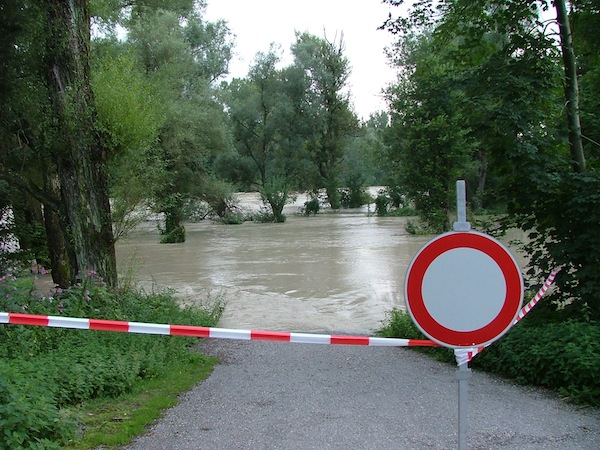
    During the recent snowstorms that affected Europe and North America, the summer floods that struck Australia were almost unnoticed except for those living in the inundated areas.

    The authorities wisely advised people, particularly tourists on their summer holidays, to avoid the affected areas.

    A friend of mine decided to ignore those warnings and take his family on a drive through those backroads despite multiple flood warnings and evacuations. In disregarding the risks, he’s not alone in Western society.

    Living the risk-free life

    In the Western world we believe we’ve engineered risk out of our society, that we can make investments without risk, that we can build houses in fire, flood or earthquake prone areas without risk, that we plan a holiday without the risk of snowstorms, volcanoes or accidents disrupting our  trips.

    As a society we believe the government will bail us because we’re good people and life, and fate, is always kind to good people.

    When things do wrong, our mobile phones will work, our emergency services will come promptly and the government will quickly shelter and support us until the insurance company comes good on the damage.

    Though it’s not just natural calamities where we believe this. It’s evident with people who quit their cubicles to find new enlightenment and riches as entrepreneurs.

    Most of them misunderstand the risk-reward ratio that for every wildly successful new business founder, there are dozens who blow their money chasing the dream and hundreds of us that would have been better off working for a salary.

    Finance markets and risk

    The subprime crisis is another good example; millions were lulled into buying property on the promise that real estate values never fell and that their no cash down, defray your payments for years deal was bullet proof. These folk did not understand, or were equipped to understand, that real estate prices could fall.

    During the subprime boom, the lenders thought they’d engineered out risk – Collateral Debt Obligations, default swaps and securitisation meant risk was a thing of the past – and they were proved wrong.

    Indeed, the most frightening thing is our banks today believe they are still bullet proof and their profits and executive bonuses are risk free as governments will bail them out at the slightest hint of trouble. When the history of The Great Recession is written, and we are still in the early chapters, the guaranteeing of our “too big to fail” banks may prove to be the biggest mistake of our generation.

    Because we believe there are no costs and little genuine threats to our lives, income or savings we don’t understand risks and therefore miscalculate them. If we think someone will be there to catch us, we’ll head up that flooded road, build that house in an earthquake zone or invest in that Ponzi scheme.

    We have to understand there are risks and there are limits our governments and societies have in responding when things go wrong. If it’s clear we don’t understand those risks, then it’s probably best not to take them in the first place.

    Endnote: My friend and his family made it back from the floods, although he ended up taking the family on four hour detour through some areas that sensible people would have avoided. Hopefully he’s learned a lesson about evaluating risks and won’t be taking his family into disaster areas again.

    AB6N9E4DEW64

    Similar posts: