Tag: society

  • Management in an age of information abundance

    Management in an age of information abundance

    The Twentieth Century was defined by abundant and cheap energy while this century will be shaped by our access to massive amounts of data.

    How do managers deal with the information age along with the changes bought about by technologies like the Internet of Things, 3D printing, automation and social media?

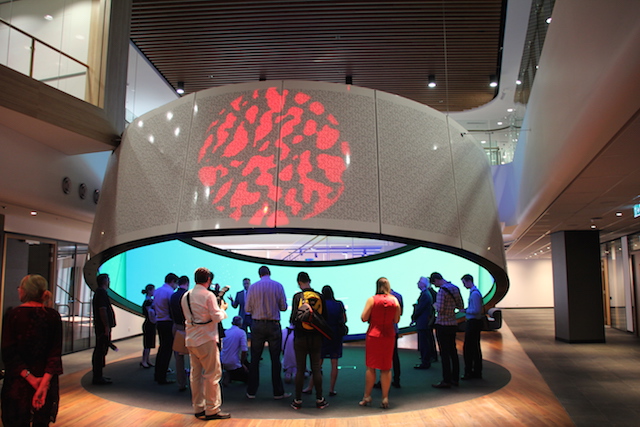
    Management in the Data Age looks at some of the opportunities and risks that face those running businesses. It was originally prepared for a private corporate briefing in June 2015.

    Some further background reading on the topic include the following links.


    Similar posts:

    • No Related Posts
  • Managing the job shock

    Managing the job shock

    One of the mantras of technologists like myself when challenged about where jobs will come from after existing industries are automated or become redundant is “we don’t know where they will come from, but they will.”

    Assuming that is true and the jobs will come in industries we’ve barely begun to contemplate there remains the question of what happens to the families and communities that depended upon the displaced industries.

    Two stories this week from opposite sides of the world show how how poorly we’re answering that question; in Tasmania the Idiot Tax describes what happens to a region with no economic value while in the UK the ongoing Rotherham sex abuse scandal portrays a community debilitated by unemployment.

    In both regions local industries collapsed through the 1970s and 80s and the local working classes became the welfare classes, stuck on benefits with at best poorly paid casual work available.

    As the Idiot Tax describes in Tasmania’s Burnie, retired older workers reaped the benefits of a life of full time employment that town’s youngsters will never know.

    History has no shortage of examples of cities that disintegrated when their economic reason for existing became no more — a process we’re seeing in Detroit today.

    Now we’re seeing almost every industry being changed with far greater potential for job losses and fractured communities.

    That we’ve dealt so poorly with the process over the last fifty years means we have to start thinking about how we as a society manage this adjustment.

    Jobs will come to replace the ones lost, just as through the Twentieth Century new roles developed to replace those displaced from as nations like the US, France and Australia evolved from largely agricultural economies into industrial and then service industries.

    But the human cost is real and there are no shortage of shrunken or abandoned towns that were once thriving market or railway hubs at the beginning of the Twentieth Century.

    For technologists, this is an issue that has to be faced as we enter a period of economic and technological change far greater than the one we saw in the 1970s and 80s.

    Car wreck photo courtesy of CBR1000 through sxc.hu

    Similar posts:

  • Little Boxes, big data and modern management

    Little Boxes, big data and modern management

    Yesterday’s passing of folk singer Pete Seeger at age 94 is a chance to think about old age, the Twentieth Century and how we use technology might be restricting us from seeing the opportunities around us.

    One of Seeger’s best known hits of the 1960s was Malvina Reynold’s song ‘Little Boxes’ that described middle class conformity in the middle of the Twentieth Century, which had a renaissance in recent years as different contemporary singers did a take of the song for the TV series ‘Weeds’ .

    As the ‘Weeds’ opening credits imply, we are probably more conformist today than our grandparents were in the 1960s.

    In business, that conformity is born out of modern management practices that insist employees be put into their own ‘little boxes’ – if you don’t tick the right boxes then the HR department can’t put you in the right box.

    With big data and social media expanding, increasing computer algorithms are used to decide which box you will fit into. One of the boxes that managers and HR people love ticking is the age box.

    Little Boxes’ writer Malvina Reynolds would never have fitted into one of the modern HR practioners’ little boxes as she only entered the folk music community in her late forties.

    Despite being a late bloomers, Malvina wrote dozens of folk and protest songs through the 1960s and 70s – The Seekers’ Morningtown Ride was another of hits – before passing away at age 77 in 1977.

    Were Malvina Reynolds born 60 years later, she would expect to live to at least Pete Seeger’s age and expect to switch careers several time during her working life.

    Modern age expectancy means the modern workplace’s age discrimination and the box ticking of HR managers is unsustainable; there’s too much talent being wasted while individuals, business and governments can’t afford to fund a society where the average person spends the last thirty years of their life in retirement.

    With technology there’s no reason why a forty year old air pilot can’t retrain to be an accountant or a sixty year old farmer get the skills to become a nurse, the very tools that are being used to keep workers in boxes are the ones that enable them to break out of those boxes.

    Similarly modern technology allows an accountant, farmer or young kid in an obscure developing nation to create a new business or industry that puts the box ticking HR managers in downtown high rises out of work.

    Just as today’s box ticking manager might be confronted by a threats they barely know exist, so too is the business that spends all its time looking at data that confirms its owners’ and executives’ prejudices.
    Life, and data, doesn’t always neatly fit into little boxes.

    Filing box image courtesy of ralev_com through sxc.hu

    Similar posts:

  • Digital vagrancy

    Digital vagrancy

    One of the joys of writing on and analysing trends IT industry trends is the never ending source of buzzwords and phrases that vendors invent.

    Today is a good day with a release from security software vendor AVG coining the term ‘Digital Vagrant’.

    Underlying the idea of digital vagrancy is an abandoned underclass who, overwhelmed by technology, are ignored and neglected in a connected society. As the AVG media release describes;

    Users who are left behind to wander around in an online world that largely ignores them are nothing more than the digital equivalent of vagrants – people who are left to cope in a world that has become too overwhelming.

    ‘Digital Vagrant’ joins other wonderful ‘digital’ labels; digital immigrant, digital native and digital sharecropper come to mind.

    It’s tempting to think that digital vagrancy is what eventually happens to poor exploited digital sharecroppers – those who’ve donated their free labour to help the likes of Mia Freedman, Chris Anderson and Ariana Huffington to build their media empires.

    Should that be the case, there’s going to be many digital vagrants.

    On more serious note, AVG does have a point in that both individuals and businesses that scorn technology risk being left behind in society that’s becoming increasingly connected.

    Society and business are going through a change similar to that of a century ago where the motor car, trucks and tractors radically changed industries and the economy.

    Those farmers and businesspeople who stuck with horse drawn equipment slowly became irrelevant and went broke.

    A similar process is happening now as a new wave of technology is changing business and society.

    The question for all of us is do we want to be left behind in a connected society?

    Beggar image courtesy of apujol through sxc.hu

    Similar posts:

  • The real thing behind the internet of things

    The real thing behind the internet of things

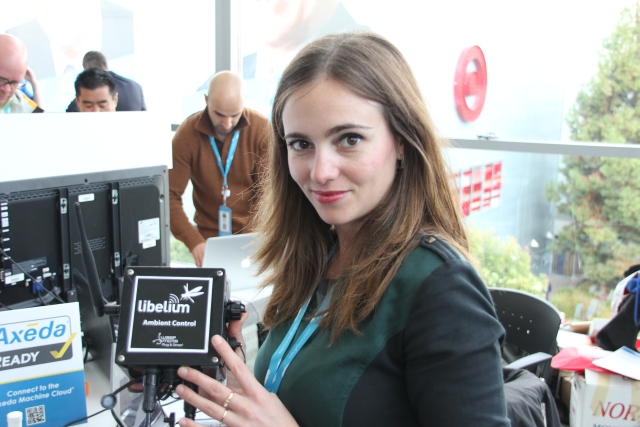
    We need to think beyond technology to get value the real value from the internet of things says Alicia Asin, the CEO and co-founder of Spanish sensor company Libelium.

    Libelium and its CEO Alicia Asin has been covered previously on this blog and we had the opportunity to record an interview with Alicia at the 2013 Dreamforce conference.

    Alicia told us about her vision for how she sees cities and governments evolving in an era of real time accessible information, in many ways it’s similar to where the Deputy Lord Mayor of Barcelona sees his city being at the end of this decade.

    “I would say the biggest legacy the internet of things can bring is transparency,” says Alicia. “In the smart cities movement the IoT gives an opportunity for have a dashboard for cities.”

    “You can see the investment made for reducing traffic investment downtown, the carbon footprint reduced and the return on investment,” says Alicia. “You can have very objective facts to supply to the citizens and they can make better decisions.”

    For this vision to become true, it means government data has to open to the community which is something that challenges many administrations, however Alicia also told the story of how her company supplied Geiger counters to volunteers monitoring the radiation fallout around the damaged Fukushima nuclear reactor in Japan.

    “We made a project in Fukushima when the nuclear accident happened where we sent some Geiger counters to the hacker space,” says Alicia. “Suddenly all the people with the Geiger counters started to publish the data onto the internet.”

    “They were keeping a totally independent radiation map made by the activist citizens.”

    Alicia raises an important point of how citizens can be using technology independently of governments. This was most notable in the Occupy movements across the United States that sprung up in late 2011 where hackers set up independent communications networks and recorded events outside the control of mainstream media and government agencies.

    While citizens can use these tools to get around official restrictions, governments play an important role in developing new industries around these technologies, Alicia sees the smart city investments made by Spanish cities as creating the start of a Spanish Silicon Valley.

    “Despite the economy, we are seeing a number of projects in Spain around smart cities,” Alicia observes. “In fact, I’m saying Spain is becoming the Silicon Valley for smart cities.”

    “In terms of attracting big companies to look at what’s going on in Spain and to build a bigger brand around the Internet of Things, I think that really helps.”

    With government and citizens working together, Alicia sees the Internet of Things delivering great changes to society as it enables citizens and makes governments more accountable.

    “It’s the real thing, it’s beyond technology.”

    Similar posts: