Tag: society

  • Fifty trillion shades of grey

    Fifty trillion shades of grey

    If you give me six lines written by the hand of the most honest of men, I will find something in them which will hang him said the 17th Century French politician Cardinal Richelieu.

    Today those six lines could be written on a social media site or be six disparate points drawn from a database. Without context those six lines could condemn us.

    Something that’s missed when we talk about Big Data is the risk of false positives – if you dip into the stream, you can prove anything against person.

    The world isn’t black or white, there are fifty trillion shades of gray and that’s why it’s important to think before posting an image on the web, firing someone or calling the cops.

    In an era where we’re quick to judge and condemn people, the stakes are very high.

    Similar posts:

  • Taxing the internet

    Taxing the internet

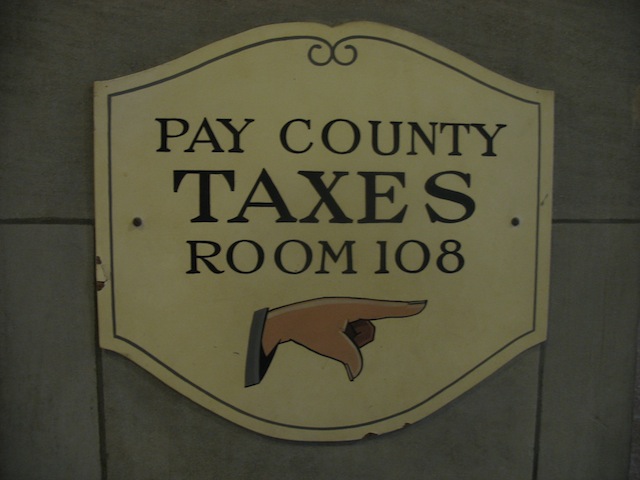
    On Friday the US Senate passed a motion supporting the rights of states to collect sales taxes on internet sales.

    While not a binding vote or a law, this is the latest blow in the fight to control, and tax, online commerce.

    The stakes are high, companies like Amazon have built their business models on basing themselves in low tax jurisdictions while many bricks-and-mortar retailers have complained they are at a disadvantage compared to out-of-state or international suppliers.

    For consumers a few dollars in avoided tax isn’t the main reason they shop online, most internet shoppers cite a better range, convenience and, in many cases, superior service as the reasons they buy over the web.

    But it is clear the online retailers do get an advantage over local stores.

    While provincial governments cite protecting employment in their regions as part of the motivation for trying to tax online sales, the bigger issue is the desperate search for sources of revenue to balance cash strapped state and local budgets.

    Those budget requirements aren’t going to ease – the global economy is restructuring in a way that doesn’t favour 19th Century levies like sales tax or stamp duty, while aging populations and declining incomes are increasing demands on government services.

    With governments caught in a pincer of rising costs and falling revenues, it’s not surprising they are trying to find ways to get more money.

    It’s not clear though they’ll win this battle though, the Senate vote is a symbolic gesture and the difficulties of being able to tax all forms of internet commerce can’t be underestimated.

    The struggle ahead for local governments also can’t be understated, the public demands more services while administrators have to deal with rising infrastructure costs and the pension liabilities of retired public servants, teachers, firefighters and police.

    Even the bravest politician struggles to find the political capital needed to deal with that challenge.

    How we tax the internet is going to be a task that will define our governments and society in the first half of this century. We’re going to have to think very carefully about the choices we have ahead.

    Tax image courtesy of ctoocheck through sxc.hu

    Similar posts:

  • Have we come to the end of the middle class era?

    Have we come to the end of the middle class era?

    Technology has transformed workplaces over the last century, drove huge income growth and moved many into the middle classes. Are we now seeing computers and robots displacing those middle class jobs?

    At Tech Crunch Jon Evans warns Get Ready To Lose Your Job  as “this time it’s different” – unlike earlier periods of industrialisation where jobs shifted to the new technologies such coach builders became car makers – robots and computers are making humans redundant.

    So I see no mystical Singularity on the horizon. Instead I see decades of drastic nonlinear changes, upheaval, transformation, and mass unemployment. Which, remember, is ultimately a good thing. But not in the short term.

    In The Observer John Naughton, professor of the public understanding of technology at the Open University, says Digital Capitalism Produces Few Winners.

    Professor Naughton’s view is that high volume, low margin businesses like Amazon mean there’s fewer well paid jobs available and many of the lower positions will be soon replaced by robots.

    At the other end of the digital marketplace, the high margin businesses like Apple, Google and Salesforce don’t need many staff to generate their profits, so wealth is concentrated among a small group of managers and owners.

    While the low paid and manufacturing workers have been squeezed for decades in the West, it’s now the turn of the middle classes to feel the pain of automation, outsourcing and restructuring.

    There’s two ways we can look at these changes, the optimistic is that our economy is going through a transition to a different structure; those out of work coachbuilders a hundred years ago didn’t immediately get jobs building cars and the same adjustments are happening again.

    A more pessimistic view is that the Twentieth Century was an aberration.

    It may be that Western world’s steady climb into middle class prosperity was itself a transition effect and we’re returning to the economic structures of the pre-industrialised age where the vast majority of people have a precarious income and only the fortunate few can afford middle class luxuries.

    The next decade will give us some clues, but the portents aren’t good for the optimistic case, the Pew Research Centre shows America’s middle classes has been shrinking for forty years.

    For those Americans still in the middle class, the Pew research shows their incomes have been falling for a decade.

    Regardless of which scenario is true, the dislocation is with us. As individuals we have to be prepared for changes to our jobs, however safe they look today. As a society we have to accept we are going through a period of economic and social upheaval with uncertain long term consequences.

    What’s particularly notable is how today’s political and business leaders seem oblivious to these changes and are locked in the ‘old normal’ of thirty or fifty years ago.

    One wonders what it will take to wake them up to the changes happening around them and what will happen when reality does bite them.

    Picture of a nice, middle class house by Strev via sxc.hu

    Similar posts:

  • Are there any plans to help us?

    Are there any plans to help us?

    Another winter storm descends upon the North Eastern United States and dozens of people get caught in the blizzard.

    The New York Times describes the plight of those stuck on the Long Island Expressway and quotes Lorna Jones who was stuck in her car overnight with nothing but a bottle of Listerene for supplies.

    “It’s terrible. It’s cold. I don’t know how long I’m going to be here,” said Ms. Jones, 62, a nurse who stalled near the town of Brookhaven, less than a mile from her destination. “Are there any plans to help us?”

    One of the conceits of modern society is that we have help at our fingertips, that we only have to dial 911, 112 or whatever emergency code is in use and a helicopter will come to pluck us from whatever predicament we find ourselves in.

    As those stuck on the Long Island Expressway found, when a real emergency hits you will join the queue in the wait for overwhelmed emergency services.

    To the west, Franklin Simson’s, 18-wheeler got stuck on an exit ramp as he tried to deliver corn flour to a tortilla bakery at 3 a.m.

    He said he had called the police every two hours but had received no assistance. He tried several towing companies, but they all said they were overwhelmed, he recalled. He had heat in the truck and had slept for two hours, but had no food or water.

    No doubt Franklin eventually got a feed and was able to deliver his flour, which illustrates a different type of risk in an economy built around just in time logistics, but he and Lorna got off lightly – plenty of people die in these situations.

    It all comes down to our modern inability to identify and evaluate risks.

    Another article in the New York Times from Jared Diamond discusses the little risks in life – the one in a thousand chance events such as slipping in the shower.

    These apparently small risks are actually almost certainties – if you shower once a day, you have a risk of slipping once every three years.

    While it’s understandable we discount those small risks, modern communications and the perceived safety net of government regulations lull us into a false sense of security with bigger risks.

    As a consequence, we invest in financial instruments we don’t understand, we rely on technologies we barely comprehend and, most importantly, we put ourselves into physical danger by venturing out into blizzards, floods or fires when anybody sensible stays at home or bunks down at the office.

    Ultimately the plans to help us don’t work when dozens, hundreds or thousands of people are affected. The best we can do is to evaluate and manage risks as best as we can.

    We have the tools to do this, the tragedy is we are far better informed about the risks around us than our forebears, which makes our modern inability to judge the risks we take so much more of a paradox.

    Image courtesy of ColinBroug through sxc.hu

    Similar posts:

  • Who will build the next Barnes and Noble?

    Who will build the next Barnes and Noble?

    As US bookseller Barnes and Noble shrinks its store network, Mark Athitakis has a tribute to the once ubiquitous chain in The New Republic.

    Barnes and Noble was never popular among US independent booksellers because of the perception, probably true, that the chain drove locally owned stores out of business.

    What it offered though was a safe, comfortable place for booklovers to gather in suburban shopping malls. As Mark points out, it created a community.

    Its stores were designed to keep people parked for a while, for children’s story time, for coffee klatches, for sitting around and browsing. That was a business decision—more time spent in the store, more money spent when you left it—but it had a cultural effect. It brought literary culture to pockets of the country that lacked them.

    In recent years that community moved to coffee shops, in the United States B&N’s role was taken by Starbucks, at the same time our reading habits changed and the business of selling books and magazines became tougher.

    Now that community is changing again, as the online societies like blogs, Facebook and Twitter become important, the coffee shops have responded with free wi-fi which is a perfect example of how the online and offline world come together.

    That need to create communities, either physically or online, is a driving human urge.

    Online that role is being catered to with social media platforms and sites like food, mommy or tech blogs where like minded people can gather.

    Down at the mall, Barnes and Noble catered for that need in the 1980s and Starbucks in the 1990s. What will follow them may be the next big success in the retail or hospitality industry.

    Image courtesy of Brenda76 on SXC

    Similar posts: