Tag: Sony

  • Sony hopes mobile phones are an IoT Trojan horse

    Sony hopes mobile phones are an IoT Trojan horse

    “We will never ever sell or exit from the current mobile business,” defiantly states CEO and president of Sony Mobile, Hiroki Totoki, in an interview with Arabian Business.

    “Smartphones are completely connected to other devices, also connected to people’s lives — deeply.” Totoki continues, “and the opportunity for diversification is huge. We’re heading to the IoT (Internet of Things) era and have to produce a number of new categories of products in this world, otherwise we could lose out on a very important business domain.”

    The smartphone has become the remote control for the smarthouse and connected car and that doesn’t appear to be changing as Totoki acknowledges.

    For companies like Sony it’s difficult to see the advantage of running their own hardware as it’s the software stack that matters in controlling the platforms with that battle long being settled as a contest between Google Android and Apple iOS for the user market.

    For Sony, the challenge is to find a niche to join players like BlackBerry’s QNX, Windows 10 and the other systems carving lucrative, but less visible, market sectors.

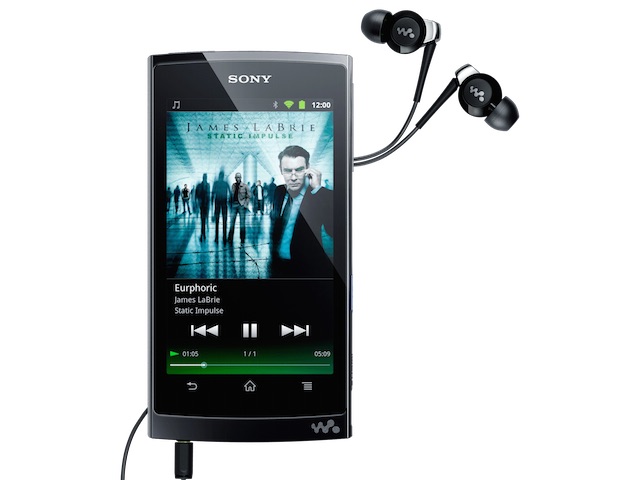
    Should Sony find a niche, it’s unlikely to based upon hardware unless they can find a modern equivalent of the 1970s Walkman.

    Whenever a corporation’s executives make a declaration like Totoki’s, it’s probably worthwhile for staff members in the affected divisions start brushing up their resumes. It’s not a good sign.

    Regardless of Totoki’s fighting words, it’s difficult to see how Sony’s mobile division can survive as a consumer vendor.

    It’s likely Sony will have to find something other than smartphones to be a Trojan horse into the Internet of Things.


    Similar posts:

    • No Related Posts
  • Will Sony ever learn its security lessons?

    Will Sony ever learn its security lessons?

    For the last week the gossip and tech industry websites have been full of revelations gleaned from a massive hack into the network of entertainment company Sony.

    Sadly it isn’t surprising that Sony that targeted in that hack, 2011 was described by this site as the ‘year of the hack’ and at the time I wondered when corporate managers would start taking IT security seriously.

    As the most recent security breach shows, Sony’s managers certainly weren’t taking their information security seriously as alleged North Korean hackers gleefully disabled systems and downloaded confidential documents.

    While Sony’s woes are deeply damaging to the company, not least for the executives caught out gossiping about movie stars, the stakes are far higher for other companies.

    In Turkey its alleged a 2008 oil pipeline explosion was caused by Russian hackers while in the US, Palestinian sympathisers are accused of causing massive damage to the IT systems of the Sands Casino group.

    Sony may be one of the most digitally incompetent business in history – at least in respect to IT security – but it’s important for every business to making sure their information systems and critical business systems are hardened against attacks.

    Similar posts:

  • Whose priorities do IT departments really care about?

    Whose priorities do IT departments really care about?

    Earlier this week mobile security company Imation showed off their latest range of Ironkey encrypted USB sticks and portable hard drives.

    Accompanying the launch was a presentation from Stollznow Research on how Australian companies are managing data with a comparison against similar surveys carried out in the UK, US, Canada and Germany.

    Of the 207 senior decision makers in Australian medium to large businesses surveyed, there were some interesting results on the attitudes of the nation’s IT departments and CIOs.

    In the field of confidence about the security of their networks, Australian IT managers came out a lot more paranoid than their foreign counterparts with only 38% of Aussies confident their office data is protected from loss or theft against 73% overseas.

    That result is encouraging as the internet and the world of IT security has a habit of severely punishing those with a false sense of security.

    What was particularly notable though with the Imation research was what IT managers considered to be the consequences of a security breach.

    consequences-of-data-breach

    Around the world, IT managers see the headache of cleaning up the mess and bad media coverage as being the biggest consequences of a data breach. Customers come fourth in priority and even then the only concern is losing clients rather than the effects it could have on those people’s lives.

    One of the tragedies of the continued Sony data breaches in 2011 was the leaking of credit card details. Many of those customers on pre-paid cards were young or low-paid workers who quite possibly lost all the money in their compromised accounts – debit cards don’t have the same protections against fraud as credit cards.

    Even more terrible are the effects on those who become victims of identity fraud as consequence of a data breach. Letting that sort of information out is a fundamental betrayal of trust by organisations with sloppy security.

    Interestingly over a third of respondents feared losing their jobs as a result of data being breached, in a perfect world it would be higher although we don’t live in a period where those accountable take responsibility for their actions.

    What’s more likely in many smaller businesses is that a data breach could be the entire organisation to fold, something that should worry anyone running a startup or small business.

    It may be true that many CIOs and IT managers aren’t too worried about the business effects of a data breach or system outage which shows that security – both physical and digital – are the job of everyone in an organisation, not just one department or executive.

    Similar posts:

  • Rivers of gold

    Rivers of gold

    Google’s announcement that their revenues have increased by 24% over the last year shows the search engine juggernaut keeps rolling on.

    It’s tempting to think that Google is untouchable and that’s certainly how it appears when you’re on track to earn forty billion dollars a year and book close to 40% of that income as profits.

    On the same day, Sony announced a massive restructure including with 10,000 redundancies and the company’s CEO, Kazuo Hirai, spoke of a sense of urgency to address the once dominant corporation’s drift into irrelevance.

    Twenty years the thought of Sony – one of the world’s innovators in consumer electronics – would be wallowing in the wake of companies like Apple and unknown upstarts like Google was unthinkable.

    Fortunes are won and quickly lost in a time of great change and this is something we should keep in mind about Google when we look at their rivers of gold.

    “Rivers Of Gold” was a term coined to describe the advertising riches of the newspaper industry in the 1980’s. Google’s online advertising is partly responsible for destroying that business.

    Today Google is a search engine business that makes its money from the advertising that deserted print media and went online.

    It may be that manufacturing mobile phones, running “identity services” disguised as social media platforms or augmented reality spectacles are the future of Google but right now they it’s search and advertising that pays the bills and books the massive profits.

    The challenge for Google is not to lose sight of its current core business while building the future rivers of gold.

    If Google’s leaders can’t manage this, then they risk following the newspaper industry that they themselves disrupted.

    Similar posts:

  • The New Soviets

    The New Soviets

    US based investment writer Mike “Mish” Sherlock called Sony’s support line to get a repair for his recently purchased laptop computer.

    What followed was something from the 1970s Soviet Union – a simple request turned into a twelve day, 34 step odyssey of structural incompetence on the part of Sony.

    The tragic thing is Mike’s tale is all the result of mis-matched rewards in Sony’s organisation;

    • Sony’s management wanted to increase profits
    • Extended warranties were identified as a revenue generator
    • A senior manager decided cutting support costs would improve returns
    • The technical support is outsourced
    • Costs are saved by splitting contracts
    • Each outsourcer has a different IT platform
    • The outsourcing contracts have quotas and penalties
    • Individual staff are penalised for escalating problems
    • Support staff have tight performance criteria

    At every level performance indicators were met, despite the whole process costing far more than fixing the problem efficiently would have had – not to mention the loss of Mike as a customer – something that Sony can ill afford.

    Not surprisingly, the computer ended up being fixed by a local IT guy. Richard almost certainly earns a fraction of Sony’s Executive Vice President Group General Managers, or whatever the title they have to match their compensation packages is, yet he gets the job done.

    In Sony we see the Soviet model of management at work – an unaccountable, out of touch cadre of apparatchiks meeting their requirements under The Five Year Plan and are rewarded accordingly.

    Just like today’s Executive Vice President Group General Managers with their KPIs and bonuses.

    As we all know, the Soviet Union failed in 1991. One wonders when we’ll say the same thing about Sony or the dozens of other large corporations that have lost their way.

    Similar posts: