Tag: Sydney

  • Finding the smart money

    Finding the smart money

    Around the world startup communities are working to connect with local investors, in Sydney and London two groups are showing how it is done.

    “We’re looking at turning idle money into start money,” is the aim of Sydney AngelEd says one of its founders, Ian Gardner.

    Fitting startup companies’ capital needs into the established criteria of investment managers is an ongoing problem that AngelEd’s founders want to resolve. “We see startups becoming an asset class,” says Gardiner.

    AngelEd, to be held on November 7, aims to educate high wealth investors and asset managers on understand the risk, benefits and hype around angel investment, particularly in tech companies.

    The global search for funds

    Startups around the world are struggling to engage with investors – in London, the local tech community has set up City Meets Tech to introduce British investors to high growth companies.

    London should have an advantage in this field given its leading role in the global finance industry, however the challenge for the tech community is to find financiers who are prepared to accept higher levels of risk than mainstream investments.

    “The City is generally risk adverse and doesn’t understand tech and tech start-ups,” says the City Meets Tech website, “though really it’s about understanding the business and managing risk though unfortunately innovation requires at least some risk.”

    Australia’s trillion dollar superannuation system should similarly give Sydney an opportunity that to become a global centre however it suffers from a similar, if not worse, conservative investment culture to London’s.

    Turning Sydney into a global finance centre has been an objective successive state and Federal governments for twenty years but the sleepy, comfortable and risk averse culture of Australian fund managers offers little to attract foreign investors or companies.

    Much of Australia’s is problem is the insular nature of local fund managers with all but a tiny part of the nation’s retirement savings being put into the top local stocks, listed property funds or domestic infrastructure projects that are notable for their lousy returns and extortionate management fees.

    Breaking that mentality is going to be the key to both AngelEd and the Sydney’s success as a financial centre.’

    Competing with the world

    While London and Sydney are struggling with the challenges of encouraging investors into the high growth sectors, cities like Singapore and New York are developing investor communities that are attracting entrepreneurs to their cities.

    Many governments dream of being the next Silicon Valley and while it isn’t likely anyone can recreate the circumstances that led to Northern California becoming the computer industry’s world centre , a vibrant and accessible capital market will be necessary for any place hoping to be a global cnetre.

    For Sydney and London, the success of initiatives like AngelEd and City Meets Tech may be critical for both centres’ future in the global digital economy.


    Similar posts:

  • New York celebrates its entrepreneurs with Made in NY

    New York celebrates its entrepreneurs with Made in NY

    Part of a thriving industrial hub is having the business and skills that support the sector. If you’ve got them, you need to tell the world you’re open for business.

    Somebody who is doing this well is New York City’s Office of Media and Entertainment which runs the Made In NY program.

    While much of the focus of the program is on attracting film production, Made in NY recently branched out into promoting the city’s tech community boasting successful businesses like video sharing site Vimeo, tutor matching service Tutorspree and stock photography supplier Shutterstock.

    Towards the end of the Shutterstock clip one of the staff mentions ‘drop bears’ – a little bit of Sydney argot creeps into the story.

    It’s the Sydney connection that makes the Made In NY campaign so bittersweet, I was involved in setting up the Digital Sydney project for the New South Wales government.

    While Sydney doesn’t have the size of New York’s or London’s tech industries it does share the advantage of being one of the most diverse cities in the world. The work of organisations like ICE in Parramatta is important in realising some of that potential.

    That potential is huge – having sizeable communities of East and South Asian language speakers gives Sydney a real opportunity in the Asian Century.

    Unfortunately most of those communities live in Sydney’s West and while lip service is given to the needs of that region most economic development work focuses on corporate welfare for established interests and supporting inner city stuff that white folks like.

    When I started at what was then the Department of State and Regional Development in 2009 I was told that many in the agency believed NSW stood for “North Sydney to Wooloomoolloo”, something that largely turned out to be true. The west of Sydney, like most of the state, took second place behind the wants of big business.

    This is what’s encouraging about the Made In New York campaign, it promotes smaller business – although they all seem based in lower Manhattan staffed largely by a middle class monoculture, which seems to be a problem when you buy into hipster chic.

    Hipster chic is one of New York’s strengths and that’s what every city and country needs to be doing in a global connected economy.

    If you can’t define and articulate what it is you add to the economy, then you’re locked into the low value, small margin commodity end of the marketplace and that is a tough place to be.

    The question for all of us, on a personal and a national basis, is do we want to be price taking commodity producers or do we want to develop the high value, growth business of the 21st Century.

    New York City has made its choice, we have to make ours.

    Similar posts:

  • Uber’s New Year’s test

    Uber’s New Year’s test

    Update: It appears Uber passed the New Year’s Eve test without problems. There were almost no complaints at all.

    New Years Eve 2011 was a tough night for customers of the Uber hire car booking service in New York City when fares surged as partygoers headed home.

    This year, Uber hopes to overcome problems by making sure customers are aware with big warnings of prices and even a sobriety test so users can confirm they know what they are doing when they agree to catch a cab.

    Uber’s dynamic pricing matches supply with demand, which means a more reliable service but also opens the company to allegations of price gouging during busy periods.

    Those allegations are exactly what happened in New York last year and in 2012 Uber’s risks of bad publicity are far higher as the service is now international with operations in cities like London, Paris and Sydney.

    Sydney will be the first city to encounter the effects of surge pricing and big risks lie in the Harbour City as Sydneysiders are used to fixed cab fares and enjoy a good whinge when things don’t work in their favour.

    Over a million people are expected on the shores of Sydney Harbour to watch the New Year’s Eve fireworks which means cabs and hire cars are at a premium.

    If Sydney has the triple fares expected in New York then Uber’s fare from Circular Quay to Bondi Beach will be around $150. This compares to the standard cab fare of around $30.

    Those markups will be exploited by the incumbent taxi companies and booking networks. We can expect a wave of stories over the next few days from tame journalists regurgitating the incumbents’ media releases.

    How Uber’s Australian management deals with this will be worth watching. One hopes they are prepared a tough week and don’t enjoy the festivities too far past midnight.

    Another problem for Uber is going to be Sydney’s mobile data networks which are horribly unreliable during peak periods. It may well be that Uber’s customers and drivers never get a fare anyway.

    Last year I was near the Habour Bridge and didn’t have a Vodafone signal from 8pm onwards. I’ll be comparing the performance of all three Aussie networks from the same place tonight.

    Similar posts:

  • Desperate Ken and market realities

    Desperate Ken and market realities

    Ken Slamet has a problem, his in-laws are trying to sell the family house and no-one will give them the price they want.

    The house at 228 Warrimoo Ave has been on the market through an agent for more than 100 days, pulling in ridiculously low offers, Mr Slamet said.

    Depending on the deposit, Mr Slamet is seeking between $1.5 million and $1.6 million for the house his wife grew up in.

    One would argue that those “ridiculously low offers” are actually Mr Market giving Ken and his in-laws a slap of reality. They are simply asking for too much money.

    St Ives, a suburb on Sydney’s Upper North Shore, is going through demographic change. In 1960s and 70s St Ives was the suburb for successful stock brokers and bankers, however in the 1980s and 90s that demographic decided they wanted to live closer to the city and Harbour and suburbs like Mosman and Clontarf became their areas of choice.

    For Ken’s in-laws and their neighbours, this is bad news as few other people can afford 1970s mansions on large blocks within 30km of Sydney. Those who do manage to sell often find the buyers are developers who sub-divide to build townhouses or apartment blocks, madness in a congested, car-dependent suburb with poor public transport links.

    Adam Smith’s invisible hand of the market is giving those holding properties that were attractive to stockbrokers in 1972 a nasty slap over the head in 2012.

    Ken though has a solution for his problem – he’s offering a rent to buy scheme at a mere snip of $2297 per week. An amount 70% higher than the average Sydneysider’s gross income and a whopping four and half times the city’s average rent of $500.

    Good luck with that.

    The real problem is that Ken’s in-laws are stuck with expectations higher than the market reality. Like many of us in the Western world, they believe their assets are worth more than they really are.

    As the global economy deleverages there will be many more people like Ken’s family. For many the transition to a less wealthy lifestyle is going to be tough.

    Similar posts:

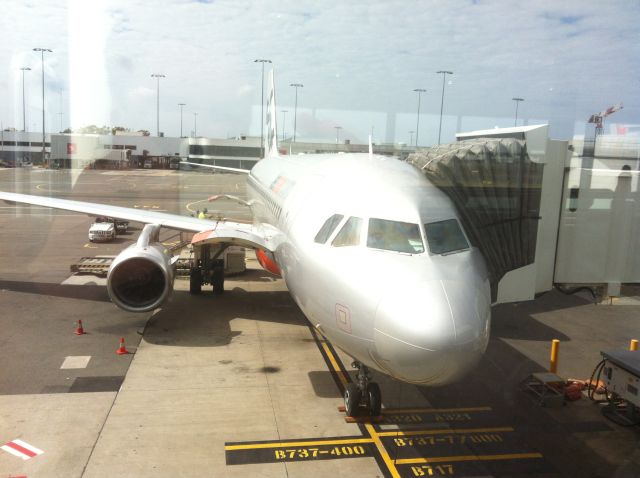
  • Travel review – Jetstar JQ406 Sydney to Coolangatta

    Travel review – Jetstar JQ406 Sydney to Coolangatta

    One of the delightful aspects of the low cost airline model is the contempt management has for their customers.

    That scorn for the people who fund management’s salaries is guilty pleasure to watch on a third rate TV “reality” show, but it’s not fun when you’re on the receiving end.

    So with a fixed smile and a grim determination not to to let the bastards grind me down, I headed to Sydney Airport to catch Jetstar’s flight JQ406 to the Gold Coast

    Check in

    It’s no conincidence people make reality TV shows documenting the clash of penny pinching, ticket clipping corporatism with the modern lumpenproletariat; the queues are long and the tempers are frayed.

    The key to your temper surviving Jetstar’s check in is not to have checked baggage so you can dodge the general grumpiness in the queues.

    Otherwise have your all your documents handy when you get to the check in clerk as they are quite friendly once they realise you aren’t going to mess them around.

    Seats

    A positive with Jetstar is the seats are spacious and comfortable compared to their Virgin competition and Qantas cousins.

    While seat comfort isn’t an issue on a one hour flight it is a plus on longer flights and actually makes Jetstar a reasonable choice if you want to sleep on a ‘red eye’ from Perth.

    Meals

    As a low cost airline, meals and drinks are an extra charge on Jetstar and really who can be bothered on a mid-morning one hour flight?

    During the Flight

    An irritation with JQ is the early “turn of electronic devices” policy that sees cabin crew telling you to turn off devices the moment the plane starts its descent.

    On short trips this weird policy means as little as twenty minutes time available to use a laptop or tablet, if you want to work on your flight then choosing Virgin or Qantas will give you more time to get things done.

    On arrival

    Baggage collection was surprisingly slow for a relatively quiet airport and Coolangatta Airport’s management save a few bucks by opening a minimum of luggage carousels which can cause crowds if two flight arrive at once.

    Getting away

    Coolangatta Airport is a delight for transport with plenty of taxis, including Maxi Cabs that seat half a dozen people and a regular city bus service that runs the length of the Gold Coast.

    Overall Jetstar delivers what it promises, an 21st Century air flight that does its best to imitate a 20th Century bus.

    If there is an alternative at a reasonable cost then go for it, otherwise accept the low prices and avoid checking baggage.

    Paul travelled to the Gold Coast courtesy of Microsoft to attend their Australian TechEd event.

    Similar posts: