Tag: telstra

  • People are the key to doing business in Asia

    People are the key to doing business in Asia

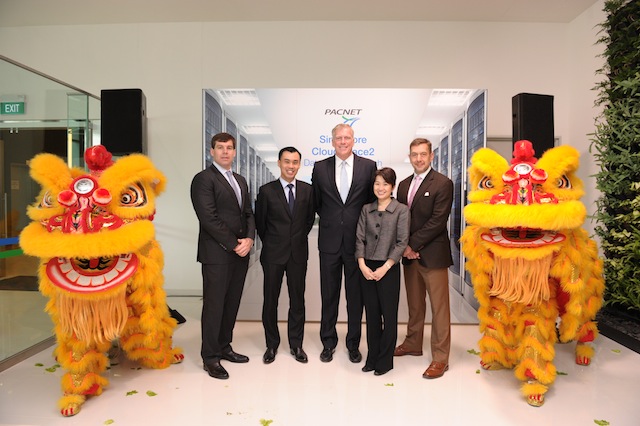
    The first Decoding the New Economy for 2014 is an interview with Carl Grivner, CEO of Asian data center and communication company Pacnet.

    Pacnet is unique in having an extensive Asian network of fibre links and data centres as well as having head offices in both Singapore and Hong Kong.

    Having two head offices in cities as different as Singapore and Hong Kong presents a number of challenges along with some advantages as Carl explains.

    The company’s combination of data centres and data links gives Pacnet an opportunity to offer some unique services in software defined networks, which Grivner describes as “the Pacnet Enabled Network”, that allows customers to create their own virtual networks.

    What differentiates Pacnet in Grivner’s view are the company’s people – an asset essential in diverse Asian markets.

    “What differentiates us are the people that we have in those locations,” says Grivner. “when you do business in Asia; doing business in Singapore versus Sydney versus Hong Kong everything is a little bit different, or a lot different for that matter.

    “The physical assets are the physical assets but the people that get know how to get things done in each of those markets is what makes us unique.”

    Grivner also explores the differences between Singapore and Hong Kong’s business cultures along with the diversity of the Chinese economy.

    Similar posts:

    • No Related Posts
  • The Roadrunner Effect

    The Roadrunner Effect

    Fans of the roadrunner cartoon will remember how in almost every episode one of the characters, usually the coyote, would run over a cliff.

    A few seconds after running off the cliff they’d keep going and then, just as they realise their mistake, they’d plummet into the deep canyon.

    It’s similar for businesses – you can be a long way over the cliff’s edge before you realise you’re about to take a big fall.

    Yesterday’s post about Sensis and the squandering of ten billion dollars is a good example of the Roadrunner Effect in business.

    Sensis annual revenue and profit 1999-2013
    Sensis annual revenue and profit 1999-2013 (millions of dollars)

    While it was obvious from the early 2000s onwards that the Yellow Pages model of expensive small business advertising listing was doomed, Sensis boss Bruce Akhurst did an admirable job of keeping revenue flowing.

    Even more impressive is that the division managed to book close to a 50% gross profit most years during that period even when the revenues started to decline.

    A large part of Sensis’ success was in screwing more money out of its client base with enhanced ads, new categories and a better digital offering that tied into Google’s Adwords program.

    Unfortunately for Akhurst and his management team, economic gravity eventually claims even the luckiest or best run enterprise and Sensis was no different as small business started realising Yellow Pages advertising had become largely ineffective.

    In many respects Sensis is a good example of a once profitable business that fails in the face of technological change – the new technologies help it become more profitable at first, but eventually a changed marketplace kill the business.

    The question for those enterprises and industries is how long can the owners, managers and employees keep running before they realise the ground has dropped out from beneath them?

    It could even be entire countries that suffer from the Roadrunner Effect, it certainly appears that the game was up for the European PIIGS long before it became obvious to the governments and citizens. This may prove true for Australia as well.

    Either way, it’s worthwhile for business owners and managers to consider whether there’s a cliff face ahead even when revenues are accelerating.

    Similar posts:

  • Google schmoogle – how one telco destroyed 9 billion dollars in shareholder funds

    Google schmoogle – how one telco destroyed 9 billion dollars in shareholder funds

    How one company blew nine billion dollars in shareholders’ equity is a business lesson on the value of timing and wise management.

    As a rule, telecommunications executives are an arrogant bunch and none are more so than Sol Trujillo – formerly of American West, French provider Orange and finally Telstra, Australia’s incumbent telecommunications operator.

    History shows that Telstra’s board, largely made up of dim-witted political appointees, had little idea of what they were getting when they hired Trujillo in 2005 but they soon found out as the brash American’s less than diplomatic style quickly alienated politicians and industry commentators alike.

    Trujillo though wasn’t particularly concerned about the sensibilities of passes for Australia’s business and political elites, he was happier to take on bigger players on the global stage and one of those was Google.

    Google Schmoogle

    Like telcos and media companies around the world in the mid-2000s, Telstra had a problem with its directories business as the World Wide Web was eroding the value of the Yellow and White Pages franchises.

    At the time many analysts were agitating for Sensis, Telstra’s directory division, to be sold off as a separate business. In 2005 it was valued at ten billion dollars which was a tidy sum for the telco as it rolled out its Next G network.

    Trujillo though had a better idea – Sensis would claw back the market by taking Google on with their own search engine.

    Sensis Search was born in November 2005 and the Telstra CEO dismissed questions about the wisdom of taking on the search engine giant with the comment, “Google Schmoogle.”

    Three years later, Telstra quietly accepted defeat with Sensis CEO Bruce Akhurst announcing a ‘commercial agreement’ with Google.

    Nielsen NetRatings at the time showed Google search being used by 9.3 million Australians compared to just 184,000 users for Sensis Search.

    In Telstra’s 2008 annual report, Sensis earned 2.1 billion dollars. On a 2.5x valuation, the division was worth five billion to Telstra’s shareholders at the time the search engine was closed down..

    The Dying Yelp

    Despite the setback, Sensis was able to struggle along for another decade on the back of its strong cashflow and legacy market position although income was steadily falling.

    In a desperate attempt to shore up its declining revenues, the company picked up the failed digital ventures of Australia’s newspaper duopoly and licensed operations from overseas startups like Yelp!

    Few of these acquisitions made sense and none of them were properly integrated into the declining directory media business.

    Finally a year ago, Sensis admitted they live in a digital era with Managing Director John Allen admitting what most industry observers knew a decade earlier;

    Until now we have been operating with an outdated print-based model – this is no longer sustainable for us. As we have made clear in the past, we will continue to produce Yellow and White Pages books to meet the needs of customers and advertisers who rely on the printed directories, but our future is online and mobile where the vast majority of search and directory business takes place.

    But it was all too late, the market had been lost along with the bulk of shareholders’ equity.

    Today Telstra announced a 70% sale of Sensis to US based Platinum Equity for $A454 million. The value of the entire business being $650 million – 7% of the division’s value nine years ago.With over nine billion Aussie dollars squandered on hubris and a failure to recognise a changed market place, Sensis stands as a good example of how valuable timing and good management are in business.Sol Trujillo though did very nicely, and the dim witted men who sat on Telstra’s board in 2005 will never be called to account for wasting so much of their shareholders’ money.

    Similar posts:
    • No Related Posts
  • Dealing with the digital investor

    Dealing with the digital investor

    Telstra’s Digital Investor report released earlier this week looked at the generational changes for the financial planning industry and the effects of technology on delivering advice and services.

    At the core of the report is the projection that by 2030, 70 per cent of Australia’s financial assets will be held by the digitally savvy Generations X and Y and the advice industry is doing little to cater for this group”s media and reading habits.

    This is barely surprising, financial planners are one of these fields subject to arcane rules and regulations which make practitioners extremely conservative about innovation or changing work habits, even when the new tools don’t breach any laws.

    One of the nagging questions though with the report is the underlying assumptions on wealth generation over the next twenty years. Will it really follow the same pattern as we’ve seen for the last few decades?

    As the Stanford Graduate School of Management notes in its dissection of the Forbes richest 400 Americans, the path to wealth is changing.

    “Three of the 10 wealthiest people in the United States – Bill Gates, Larry Ellison, and Michael Bloomberg – built their fortunes on information technology that barely existed in the 1980s,” says the author Joshua Rauth.

    It may well be that the financial planning industry’s core assumptions, of a large, stable middle class workforce steadily squirreling away a nest egg is going to be challenged in an economy undergoing massive change.

    Another generational aspect in the Digital Investor report is the handing down of family owned enterprises. The paper quotes social analyst Mark McCrindle saying “Succession planning is already a key issue (for SMEs) – yet by 2020 40% (145, 786) of today’s managers in family and small businesses will have reached retirement age. We are heading towards the biggest leadership succession ever.”

    As this blog has described before, many of the current generation of small business owners will never pass their operation on. Their barber shops, car dealerships and factories will retire or die with the proprietor as Gen X and Y entrepreneurs can’t afford to buy the business and the owner can’t afford to retire.

    The investment climate of the next quarter century will be very different from the last fifty years as will the business models and the paths to wealth. It’s something that shouldn’t be understated when considering how Generation X and Y will manage their finances.

    Despite the weaknesses, the Telstra Digital Investor report is an interesting insight into how one industry is failing to identify and act upon the fundamental changes that are happening in its marketplace.

    The financial planning industry isn’t the only sector challenged though and that makes the report good reading for any business trying to understand how marketplaces are changing.

    Similar posts:

  • Re-inventing management with social media

    Re-inventing management with social media

    Yesterday I went along to hear Telstra’s Paul Geason speak at the American Chamber of Commerce lunch in Sydney.

    Geason, who is Group Managing Director for the company’s Enterprise and Government division, was speaking on some of the findings from Telstra’s Clever Australian program along with some of the technology trends he’s encountered in big business and public organisations.

    The bulk of Geason’s presentation I reported in an article for Comms Day, and much of his observations about enterprise technology trends wouldn’t surprise keen observers of the industry or regular readers of this blog.

    What did stand out though were his comments on how social media is changing management behaviour at Telstra where over 25,000 registered users of the company’s Yammer platform have direct access to the company’s CEO, David Thodey.

    Social media is just going crazy. Within Telstra now we have over 25,000 of our staff registered on Yammer. It has been a phenomenon. It’s playing this really interesting role of breaking down the hierarchy in our organisation.

    Which is not just because of the technology but it’s also got something to do with our CEO.

    He is on Yammer just about every single day of the week. There is not an issue that hits that site that he won’t pick up and direct to the right place to get it to the right place and have it dealt with.

    Our people love it, they would never have imagined they could get that level of access and input and intervention from the CEO.

    There’s a certain transparency that has come to our organisation that didn’t exist previously which is really great for the levels of engagement of our people and very challenging for us as leaders in having to deal with that level of visibility that was not there before.

    I think it’s really changing how organistations are operating.

    Paul Geason’s comments are a good example of changing management structures. Not only does it bring accountability to executives, it also means organisations can respond quickly to changing marketplaces – something covered in the Future of Teamwork presentation back in 2010.

    A few years ago, no-one would have thought of Telstra as being an open, collaborative organisation yet today it’s gone quite a way down the path to becoming one.

    The key though to this is having senior management buying into the process. Without that leadership many companies might be facing a tough future.

    Similar posts: