A gigabit milestone for mobile networks

The rollout of Telstra’s gigabit 4G network is another step on way to the next generation of connected devices.

Yesterday communications vendors Qualcomm, Netgear, Ericsson and Telstra, unveiled their Australian gigabit LTE service that gives users high speed internet connections over the 4G mobile network.

Billed as a world’s first, Telstra will offer customers the Netgear supplied hotspots that can connect up to twenty devices over WiFi.

Listening to the Telstra spiel yesterday, it wasn’t hard to conclude the company is making a pitch for the market frustrated by the National Broadband Network’s tardy rollout and patchy service.

The service doesn’t come cheap though, as Finder’s Alex Kidman points out, an hour’s movie streaming on one device could easily cost $4500 dollars on Telstra’s current plans with one of the company’s executives emphasising the product is “aimed at the premium end of the market.”

Being aimed at the premium end of the market is shame for Qualcomm as their spokespeople were keen to show off the gaming, AR and VR potential of the Snapdragon CPUs driving these devices. It would be a brave or very affluent family that bought one of these devices for their kids given the data costs.

While the Telstra Gigabit LTE service might be an NBN replacement for deep pocketed customers, telco veteran John Lindsay points out the mobile network can’t support too many people doing so unless many more cells are deployed.

For the moment the Telstra service is going to be attractive for companies needing high speed. low volume connections in the central business district and as the gigabit LTE upgrades roll out across the country, it will be useful for travellers as well as frustrated NBN customers.

Ultimately the gigabit LTE product is another step toward the 5G networks that we’ll be seeing appear at the end of the decade, something that both the Ericsson and Telstra PR folk were keen to highlight.

The key message for consumers and businesses is the rate of innovation in the mobile communications market is not slowing and another generation of connected devices is coming that will change things as dramatically as the smartphone did.

An entrepreneur’s journey – a conversation with Muru-D’s Ben Sand

From a scrappy and underfunded inner Sydney startup to Silicon Valley and back, Muru-D’s Ben Sand has a fascinating entrepreneurial journey

As part of Telstra’s Muru-D business accelerator opening its latest startup intake this week, Annie Parker and Ben Sand, the organisation’s co-founder and Entrepreneur in Chief respectively, spoke to a small group of journalists on Tuesday about what they were looking for in the next batch of applicants and how the tech startup sector is changing.

Ben’s entrepreneurial journey from a scrappy, underfunded Aussie startup to a hot Silicon Valley property and back to a corporate incubator is an interesting tale in itself.

His first venture, an edu-tech startup called Brainworth founded in 2010, operated out of a dilapidated inner city Sydney terrace. The business acheived traction and Ben’s team won a ScreenNSW interactive media grant two years later.

Failing the Kickstarter test

Ultimately Brainworth petered out after missing a Kickstarter round. As Ben says, “I focused on getting out the maximum viable model rather than the Minimum Viable Model and the money ran out.”

As Brainworth withered away, Ben joined former university friend, Meron Gribetz at his Augmented Reality startup Meta which went onto join the Y Combinator program. The company went on to attract $23 million dollars in investment, primarily from Hong Kong and Chinese investors, and now has 150 employees.

Earlier this year, Ben returned to Australia after seeing Mick Liubinskas’ blog post about moving to the United States. In that article, his predecessor put out a call out for those interested in replacing him at the Sydney office which Ben answered.

Australian advantages

Now firmly settled into his Sydney role, Ben sees computer vision as one of the biggest opportunities in the tech sector. Bringing together disparate technologies like virtual and augmented reality, artificial intelligence and smart sensors, computer vision allows machines such as autonomous vehicles, drones and medical diagnostic equipment to pull together sources of data that lets machines see what is going on in the world around them.

Computer vision is a field where Australia has an advantage, Ben believes. “Adelaide is the second most funded city in the world in computer vision,” he points out with investments like Cisco’s into South Australia’s Kohda Wireless driving the local industry.

Ben and Annie don’t see the next group of Muru-D applicants being restricted to any one field despite Ben’s background in AR and interest in machine vision. “It’s more the psychology of the founders,” he says.

Mentoring the next wave

Three years of experience is also delivering dividends, observes Annie. “I’m starting to see the early cohorts starting to mentor and support the newer ones. That’s part of what Muru-D is part of, creating the ecosystem.”

Over the three years, there’s also been quite a few adjustments to the Muru-D process, Annie observes. “We change the model each year by about thirty percent.” she says.

Another thing that has changed is that later stage startups can apply for the program which will be open until November 4.

“I’m excited and I’m very confident we’re going to get great outcomes for these people,” says Ben of the next Muru-D cohort. “We’ll be working on getting the most confident founders on board and hopefully helping them to aim high.”

Telecommunication’s lost tribes

In a changing world, telecommunications executives are struggling to find a clear and profitable vision for their businesses.

This week saw Australia’s telecommunications industry gather for the annual Comms Day Summit at Sydney’s Westin Hotel.

A constant in the telco industry is change and new technology – few industries have had to reinvent themselves in the same telephone companies have had to over the last 30 years.

For telcos, that period of change has been immensely profitable as the switch to mobile networks proved to be a river of gold for the industry as consumers enthusiastically moved away from fixed line networks and into lucrative products like SMS services.

Missing the passion

So it was notable how the Comms Day summit was missing a sense of excitement or vision about the approaching opportunities such as 5G networks, the Internet of Things and other new markets. Much of the conversations were mainly focused on the dysfunctional Australian industry and the flawed regulations that got it to where it is.

As an Australian event it’s not surprising that much of the focus would be on domestic failings – thirty years of misguided policy, political opportunism and schoolboy ideologies have left the nation facing the prospect of the “world’s most expensive broadband”  in the words of Megaport founder Bevan Slattery – however the stasis in the telecoms sector betrays a far deeper uncertainty in the global industry.

That uncertainty was on show at this year’s Mobile World Congress in Barcelona where most of the conference’s buzz was around virtual reality headsets and connected cars, areas where telecommunications providers are, at best, a ‘dumb pipe’.

We are not a utility

Being relegated to being a ‘mere utility’ is the fear of every telecommunications executive, which is why they spend so much on abortive Pay-TV, online and sports rights acquisitions. In the Australian context, Telstra’s acquisition of PacNet and Slattery’s own East Asian ventures are possibly the most interesting developments in the local industry yet they were barely mentioned at the Comms Day event.

While the Comms Day Summit told us much about the insular nature of modern Australian business – and the depressing mess three decades of poor regulation has left the local telecommunication industry – the bigger message is the global communications industry is struggling in a world of commoditised bandwidth where the opportunities to make huge profits is not immediately obvious.

It’s hard to see how telcos can be completely disrupted in the way media companies have been given how regulated their markets are – although the same was being said of the taxi industry five years ago – but it is clear their managements are struggling to find new business models.

Thinking differently about Cyber Security

We need to think differently about cyber security in order to protect our networks says a former British intelligence officer.

“I get quite frustrated with the cybersecurity industry” says Andy France, Deputy Director of Cyber Defence Operations at British Intelligence Agency GCHQ. “We have to think differently.”

France was speaking at the Telstra Cyber Security Forum at the company’s Sydney experience centre yesterday where he outlined how organisations are rethinking about protecting their data.

“What we haven’t realised is just like the Bronze Age, the Stone Age, the Industrial Age and the Internet Age, we have to think differently about what that means to in terms of security and privacy. We have to think differently about how we build systems.”

The biggest problem France sees in the industry itself are the lack of skills to build those secure systems, a situation he believes is partly created by the sector’s credentialism gaining certifications is several orders of magnitude more bureaucratic than becoming a fighter pilot.

In contrast the bad guys who France splits into five groups – script kiddies, hacker collectives, crime syndicates, hackers for hire and nation states – have no such concerns about certificates and accreditation.

“You have serial collectors of letters after their names,” he states. “We’re putting an artificial bar against the people with the new thought processes that are going to help us address this problem.”

“It feels like the criteria has been set up to create a nice little market so we can control day rates,” French says, “in a world where we’re screaming out for talent and need people to come along who are interested and challenged by the subject.”

Apart from the trap of credentialism, the real concern for businesses and users should be the integrity of data in France’s opinion. We need to be certain information is accurate, a problem that will be exacerbated as businesses processes are automated around data streams being connected by the Internet of Things.

France suggests three principles should underlie an organisation’s data defences; having systems in place to spot early indications of a problem, obey the five ‘knows’ and understanding your network.

Understanding your network, what France calls the ‘defender’s advantage’, is the most essential task of all for someone protecting their organisation’s data. “Is someone knows your network better than you then that should be a criminal offense,” he states. “To get the defender’s advantage in place you need to understand your network.”

“Technology in itself with not keep you safe.” French says and describes security as being subject to Pareto’s Law where most vulnerabilities are mundane background noise, “we need to have a balance where technology looks after the 80% and we have the people and processes in dealing with the unexpected 20%.”

“It’s certainly not going to get any better,” French warns about the trends for cyber security in 2016. For most companies and system administrators it’s going to be a matter of being alert and having the processes in place to deal with the unexpected.

Telstra’s five ‘knows’ of security

Can data security be reduced to five rules?

Telstra, Australia’s incumbent telco, held their Cyber Security Summit in Sydney today looking at the issues facing organisations in protecting their networks and data.

One of the recurring themes speakers raised were the ‘five knows’ that Telstra’s security people believe are the core of business security.

Those ‘knows’ sound simple but in truth in they are hard to carry out in even a small, simple network;

  • Know the value of your data
  • Know who has access
  • Know where the data is
  • Know who is protecting the data
  • Know how well that data is being protected

With these five rules we’re moving into Donald Rumsfeld territory of ‘known unknowns’. In most organisations the honest answer to these questions is “we don’t fully know”, some data that’s seen as irrelevant by management could be a goldmine for a competitor or malicious actor while a relatively junior staffer could be saving critical documents on an external drive or consumer cloud service with a weak password.

Managing those knowns, or unknowns, is a tough task and one that needs to be tempered by realism.

In truth no system administrator has full knowledge of their network, for organisations real security comes from having strong leadership, robust processes and delivering the products and services demanded by the public.

Technology will help deliver those products and services while helping strong leaders implement robust process but ultimately a secure organisation needs good management, not better tech.

From the cyber security point of view, Telstra’s forum had many useful thoughts and we’ll look at more aspects regarding security that came up in the sessions later in the week.

A kid in a telco candy store

It’s a great time to be a telco CTO says Telstra’s Vish Nandlall

“It’s a kid in a candy store opportunity,” says Telstra CTO Vish Nandlall on being asked what excites him about the telecommunications industry.

Nandlall was talking to Decoding the New Economy about the challenges facing telcos in an industry facing massive change as the once immensely profitable voice and text services are being displaced by less lucrative data products.

Previously we’ve spoken to Nandlall about the future of Australia’s incumbent telco in a competitive market and this interview was an opportunity to explore some of the broader opportunities in a radically changing market.

A data business

“While our business sounds complicated, we actually only do three things.” Nandlall observes about telecommunications companies, “we move data, we store data and we compete on data.”

“In the course of my lifetime in telecoms any two of those coming together meant a major shift. Today all three are converging.”

That convergence creates a range of challenges and opportunities, Nandlall believes. “When I look at what we see on the consumer side, I see the Internet of Things which really does promise a golden age of convenience.”

“Underpinning it all is going to be a massive transformation around data, the data insights suddenly become the thing that we’re going to need to differentiate our businesses from competitors in the industry.”

Differentiation through data

The differentiation of telecoms companies is going to lie in the software and data services being offered, Nandlall believes. “I don’t think telcos need to replicate Over The Top services,” he says in reference to services like Facebook or WhatsApp or Skype.

Nandlall sees the value for telcos in providing the next level of services in areas such as API management, content delivery and security. “We need to have new digital delivery systems,” he says, flagging software defined systems as being key to delivering to the new generation of telco services, “we can’t be restricted to fixed lines.”

Facing the skills shortage

The challenge facing telcos and all businesses is finding skilled workers, Nandlall observes. “Because change has been so rapid there has been a pipeline of students or workers being readily available.”

Nandlall sees initiatives like Cloud Foundry and Hadoop offering a means to address the skills shortage by standardising processes, reducing complexity and automating many of the tasks occupying today’s developers and technology workers.

This change also promises to speed up business as well and, combined with cloud services, changing the operating models of entire industries.

A new competitive advantage

For businesses without the scale of Telstra Nandlall has an important message, “I think we’ve hit a point in industry is where the competitive advantage is not just through some sustained differentiation,” he observes. “Today it’s about your ability to rapidly adopt new things.”

That rapid adoption is only going to accelerate, Nandlall believes, as the Internet of Things and wearable devices bring a whole new range of ways to collect and display information. For a kid fascinated with data, that’s a big candy store.

Telstra adds Singapore to its Muru-D startup network

Telstra opens its Muru-D incubator program into Singapore as the company expands its Asian ambitions

Today Aussie incumbent telco Muru-D opening in Singapore.

Muru-D is loosely based on Telefonica’s Wayra incubators that the Spanish telco has set up across Europe and Latin America.

Wayra’s fortunes have been mixed recently with the incubators coming off badly in the company’s restructure last year and it’s interesting that Telstra are copying the model of opening in strategic neighbouring markets.

Complicating matters is Telstra’s Singapore based rival Singtel has its own chain of incubators Singtel Innov8. Singtel’s model is different in that they sponsor incubators, Sydney’s Fishburners for example, rather than set up their own Wayra or Muru-D style operations.

So Telstra’s moving into Singapore could be seen as another move by the Aussie incumbent to take on Singtel on it’s own home ground, something that will be assisted by the recent acquisition of PacNet.

Also notable is the Singaporean government’s support for Telstra’s with Kiren Kumar, Director of Infocomms & Media at the Singapore Economic Development Board, welcoming the launch as enhancing the city’s repuation as “the innovation capital of Asia”.

Telstra’s move is another showing how telcos are trying to move out of being utilities along with Telstra’s need to grow out of the domestic Australian market it now dominates.

For Telstra both moves are well outside the company’s historical expertise, it will be interesting to see how successful they are.

Opening Telstra in a life and death market

A new CTO seeks to make his mark on a dominant telco

“Communications are a life and death issue”, says Vish Nandlall the chief technology officer of Telstra. “You realise that when that pipe gets shut off people can die in the field.”

Nandlall’s experience in weapons technology led him to a life in the telecoms industry which bought him to Australia as he believes Telstra is one of the most innovative companies in the industry. How much this is due to Telstra dominating its domestic market is a discussion for another post.

Nandlall was speaking last week at a lunch for journalists and bloggers hosted by Telstra in Sydney. It was an opportunity for the company to introduce their CTO to the media following his joining the company last August and to publicise their push into health care services.

One of the areas Nandlall was particularly keen to push was how Telstra was looking at opening their platforms to third party developers as he sees the nine to ten million strong community as offering opportunities that even the best resourced telecoms company can’t access.

“How can I get telecom services into places where developers can access the information?” Nandlall asks.

His answer is to open the services through the Telstra Developer Site which at present is fairly Spartan although one expects it will become more impressive ahead of the I love APIs conference the company is sponsoring in Sydney this June.

Down the track Nandall sees the open systems assisting the company moving into the key growth areas for all telcos such as the Internet of Things, smart cities and the productivity growth applications in industry verticals.

The big opportunity the company sees is in health care where a fragmented industry struggles to corral disparate sources of information that touch almost every person. It though just one of the growth telcos are looking at in a dramatically changing marketplace.

For Nandlall the challenge is to grow Telstra beyond the domestic Australian telco market that it increasingly dominates as its competitors lose interest in the market and the nation’s ambitious but failed national broadband network slowly fades into irrelevance.

While Telstra is by no means facing any life or death issues, many of its customers could be. Nandlall and his fellow executives are hoping they can help them.

Software ate the demonstration centre

A tour of Telstra’s consumer insights centre shows us the software driven business of the future

Yesterday Australian incumbent telco Telstra took the media on a tour of its showpiece  Customer Insights Centre in downtown Sydney.

The company is justifiably proud of the facility that includes  a 300 person auditorium, broadcast quality TV studio, a restaurant, workshop and collaboration spaces.

Welcoming visitors is the centre’s Insight Ring, a nine metre circle-shaped platform that surrounds guests with digital insights mined from Telstra’s information services. Leading off the reception area are a range of displays showcasing the company’s products and capabilities including wearable technologies, 3D printing and Ged The Robot.

Marking the centre as a modern facility the display spaces where Telstra and its partners can show off technologies to industry bodies and prospective clients.

Ged, the Telstra robot

The previous space two floors higher in the building was beginning to show its age after seven years and the fixed displays of technology in the older facility dated the centre, something that’s a disadvantage in an industry changing as quickly as telecommunications.

In the new centre, the demonstration facility is largely screen based so displays can quickly be adapted to show off the technologies aimed at whichever industry they are pitching.

The fast moving technology world
The software driven demonstration centre


Andy Bateman, Director of Segment Marketing at Telstra, who lead the tour was proud to show off the current display that had been set up to showcase the company’s banking products.

telstra_client_demonstration_consumer_insights_centre

Bateman described how the facility can be quickly altered to suit the needs of specific demonstrations, this was a degree of flexibility missing in the PayPal innovation center in San Jose, which is more comprehensive in its displays but requires a major fit out to change anything.

Venture capital investor Marc Andreessen stated that software will eat the world, Telstra’s Customer Insights Centre illustrates this starkly.

However software doesn’t always have the upper hand, just opposite the Telstra centre is the Sydney City Apple Store. In some ways, the two facilities opposite each other illustrate one of the big technological and market battles of this decade.

View of the Apple Store from the Telstra Centre

For most businesses, software will define the future way of working but for the smart hardware vendors will still be making good money.

A tale of two telcos

The contrasting fortunes of Australia’s Telstra and China Telecom tell us much about the two nation’s economies

Last Thursday saw China Mobile and Australia’s Telstra release their annual results.

Both have impressive numbers that illustrate how the telco industry is changing along with some stark differences between the two nation’s business culture.

For both companies their results show how voice and SMS are declining as the ‘rivers of gold’ for telecoms operators around the world; China Mobile’s voice revenues are down 6% while  Telstra’s fixed line voice fell by a similar amount.

In Australia, the incumbent telco (which sometimes advertises on this blog) continued its dominant position in its market with net profit rising nearly 15% on the back of 6.1% increase in income.

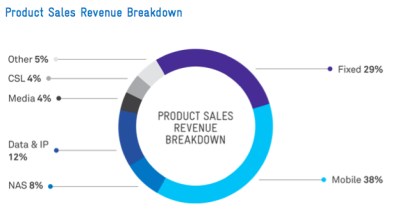
teslstra-revenue-2014

Telstra’s results also showed how the Aussie telecommunications market is now primarily a mobile sector; while the advantages of being the incumbent are substantial the real growth and profits in the business are in it’s non traditional sectors. It’s little wonder the company is happy to give away its legacy copper systems to the government’s troubled National Broadband Network.

In the PRC, the news wasn’t so good with China Mobile’s net profit for the first half of the year falling  8.5 per cent as its traditional voice and messaging businesses faced continued pressure from social media firms, despite revenue being up nearly five percent.

China Telecom is under pressure from competitors while in Australia the incumbents are doing very well. This is true across much of the Aussie economy.

While China Mobile is staking its future on its 4G rollout, Telstra is seeing the Internet of Things and Machine to Machine (M2M) markets as being the key markets, despite Gartner flagging the IoT as being at peak of the Hype Cycle.

It may well turn out to be the other way round — Chinese businesses and governments are far quicker to embrace the IoT than their Australian equivalents while Telstra’s biggest competitive advantage against SingTel Optus and Vodafone is it’s far superior 4G network.

China Mobile’s and Telstra’s competing fortunes tell us much about each country’s telecommunications markets along with the direction of both nation’s economies.

People are the key to doing business in Asia

Pacnet’s CEO sees people as key to the future of Asian business

The first Decoding the New Economy for 2014 is an interview with Carl Grivner, CEO of Asian data center and communication company Pacnet.

Pacnet is unique in having an extensive Asian network of fibre links and data centres as well as having head offices in both Singapore and Hong Kong.

Having two head offices in cities as different as Singapore and Hong Kong presents a number of challenges along with some advantages as Carl explains.

The company’s combination of data centres and data links gives Pacnet an opportunity to offer some unique services in software defined networks, which Grivner describes as “the Pacnet Enabled Network”, that allows customers to create their own virtual networks.

What differentiates Pacnet in Grivner’s view are the company’s people – an asset essential in diverse Asian markets.

“What differentiates us are the people that we have in those locations,” says Grivner. “when you do business in Asia; doing business in Singapore versus Sydney versus Hong Kong everything is a little bit different, or a lot different for that matter.

“The physical assets are the physical assets but the people that get know how to get things done in each of those markets is what makes us unique.”

Grivner also explores the differences between Singapore and Hong Kong’s business cultures along with the diversity of the Chinese economy.

The Roadrunner Effect

Your business can keep running even when it’s gone over the edge of a cliff.

Fans of the roadrunner cartoon will remember how in almost every episode one of the characters, usually the coyote, would run over a cliff.

A few seconds after running off the cliff they’d keep going and then, just as they realise their mistake, they’d plummet into the deep canyon.

It’s similar for businesses – you can be a long way over the cliff’s edge before you realise you’re about to take a big fall.

Yesterday’s post about Sensis and the squandering of ten billion dollars is a good example of the Roadrunner Effect in business.

Sensis annual revenue and profit 1999-2013
Sensis annual revenue and profit 1999-2013 (millions of dollars)

While it was obvious from the early 2000s onwards that the Yellow Pages model of expensive small business advertising listing was doomed, Sensis boss Bruce Akhurst did an admirable job of keeping revenue flowing.

Even more impressive is that the division managed to book close to a 50% gross profit most years during that period even when the revenues started to decline.

A large part of Sensis’ success was in screwing more money out of its client base with enhanced ads, new categories and a better digital offering that tied into Google’s Adwords program.

Unfortunately for Akhurst and his management team, economic gravity eventually claims even the luckiest or best run enterprise and Sensis was no different as small business started realising Yellow Pages advertising had become largely ineffective.

In many respects Sensis is a good example of a once profitable business that fails in the face of technological change – the new technologies help it become more profitable at first, but eventually a changed marketplace kill the business.

The question for those enterprises and industries is how long can the owners, managers and employees keep running before they realise the ground has dropped out from beneath them?

It could even be entire countries that suffer from the Roadrunner Effect, it certainly appears that the game was up for the European PIIGS long before it became obvious to the governments and citizens. This may prove true for Australia as well.

Either way, it’s worthwhile for business owners and managers to consider whether there’s a cliff face ahead even when revenues are accelerating.