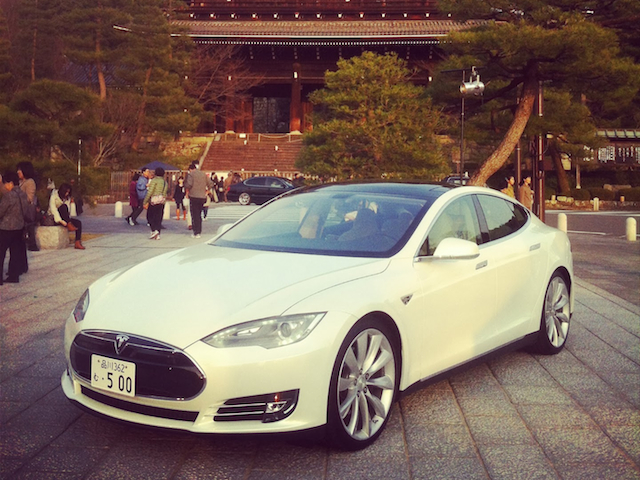
Tag: tesla

  • The dangers of hands free driving

    The dangers of hands free driving

    Last May 7 45-year-old Joshua Brown was killed when his car hit a truck just outside Willston, Florida. His Tesla was operating in ‘autopilot mode’ and he was the first death in a driverless car accident.

    Now the investigation and the speculation into the Mr Brown’s unfortunate demise begin. It’s worth watching to see how the accident will change public perception and government regulation of autonomous vehicles.

    What’s notable is Tesla are careful not to recommend leaving the car to its own devices, as The Verge reports.

    Tesla reiterates that customers are required to agree that the system is in a “public beta phase” before they can use it, and that the system was designed with the expectation that drivers keep their hands on the wheel and that the driver is required to “maintain control and responsibility for your vehicle.” Safety-critical vehicle features rolled out in public betas are new territory for regulators, and rules haven’t been set.

    Another aspect that should concern users and regulators is Tesla’s software industry attitude towards liability and safety in dismissing the car’s flaws as being an unfortunate consequence of imperfect beta software. That may cut it in the world of Microsoft Windows 3.11 but it doesn’t cut it when lives are at stake in the motor industry.

    Similar posts:

    • No Related Posts
  • Don’t mess with Elon Musk

    Don’t mess with Elon Musk

    Criticise Tesla’s launch parties and your car order may be cancelled, reports The Guardian.

    Stewart Alsop, an Californian venture capitalist, wrote an open letter to Tesla’s founder Elon Musk claiming the launch of the Tesla X was ‘a disgrace’.

    Musk responded by cancelling Alsop’s Tesla order.

    There’s a range of arguments about the customer always being correct, the customer’s right to criticise a product or the risks of making online comments but what it definitively shows is the power of being the seller of something people want.

    I suspect Stewart Alsop will get his Tesla eventually, but the boss will make him squirm.

    Similar posts:

  • Links of the day – Tesla in Australia

    Links of the day – Tesla in Australia

    Chinese tourism and Mao’s influence on the US Marines are today’s links along with Tesla’s slow start in Australia.

    Tesla rolls out in Australia

    As part of Tesla’s Australian launch of its electric vehicles, the company has announced a chain of charging stations along the country’s East Coast, unfortunately not everyone is pleased to see them.

    Chinese tourists look to Japan and the US

    Japan and the US are the most sought after destinations for Chinese tourists reports the Wall Street Journal. Both countries have relaxed travel restrictions for China nationals in the last year and now they are reaping the benefits, particularly Japan which is only a few hours flight from Shanghai and Beijing.

    Interestingly, New Zealand and Australia are also big improvers on the list with them coming in third and fourth on the list.

    The US Marines’ Maoist connection

    A curious article on Medium describes the origin of the term ‘gung-ho’ and how it was introduced to the US Marines through a Mao sympathising American General. “He may be red, but he’s not yellow” is how his contemporaries described Brigadier General Evans Carlson.

    Similar posts:

  • Tesla and the open patents

    Tesla and the open patents

    Imagine the car steering wheel had been patented at the beginning of the Twentieth Century and that it was only top end vehicles or French cars that were steered that way?

    That’s the situation we’re currently facing in the tech world as almost every conceivable idea, however silly, has a patent slapped on it in the hope it can help the business either defensively or as a revenue generator.

    Yesterday’s announcement by Tesla Motors’ CEO Elon Musk that the electric car company would be opening it’s patents for ‘in good faith’ uses is a welcome change.

    For Tesla it encourages the growth of the electric car industry making the sector deeper and more attractive to consumers who are tightly suspicious about being locked into proprietary technologies.

    It’s interesting too that the motivation for taking up so many patents was to prevent the established motor companies grabbing Tesla’s inventions. As it turns out, that wasn’t necessary.

    At Tesla, however, we felt compelled to create patents out of concern that the big car companies would copy our technology and then use their massive manufacturing, sales and marketing power to overwhelm Tesla. We couldn’t have been more wrong. The unfortunate reality is the opposite: electric car programs (or programs for any vehicle that doesn’t burn hydrocarbons) at the major manufacturers are small to non-existent, constituting an average of far less than 1% of their total vehicle sales.

    So opening up the patent portfolio means Tesla might see more companies enter the space which in turn may create economies of scale.

    No end to the patent wars

    Although Tesla’s move doesn’t mean all patents wars are over; Musk’s statement that technologies used in ‘good faith’ will be immune from legal action leaves plenty of potential for disputes.

    There’s also the problem of cross-licenses with many of Tesla’s invention being subject to agreements with other companies, not to mention technologies bought in from outside.

    As Sun Microsystems showed during a previous round of the patent wars, it’s still possible for innocent users to be sued in the event of a dispute.

    IBM and open patents

    In the wake of that debacle, which fatally damaged Sun’s reputation, IBM made 500 of their patents available to the open source community in 2005 showing Musk’s move isn’t the first time this has happened.

    History will tell us if Musk’s announcement helps build the electric car market, if it does it may be an indicator for the future of patents.

    Similar posts:

    • No Related Posts