Tag: trade

  • Pay Pal and the Modern Spice routes

    Pay Pal and the Modern Spice routes

    Online payments company PayPal has released a paper on the The Modern Spice Routes which describes the pattern of online trade across the US, Germany, UK, China, Brazil and Australia.

    The results are a snapshot of how online commerce patterns are evolving.

    PayPal commissioned the Nielsen Company to survey 6,000 online shoppers about their cross border online buying habits to determine some of the characteristics of global internet commerce.

    What immediately stands out in the report is the United States’ dominance with 45% of global market share, China follows with 26%.

    At the bottom of the pack is Australia with 16% and, surprisingly, Germany with 13%.

    The US itself is an interesting study with the most preferred overseas shopping destination being the United Kingdom followed by China.

    Why are people shopping online?

    American respondents were overwhelming shopping overseas to access more variety, with 80% of respondents citing the reasons for shopping offshore being “more variety that cannot be found locally”.

    Finding more variety was the key factor in all the markets. Even in countries like China and Australia were respondents cited saving money as their main reason for shopping internationally online, more diversity in offerings came a very close second.

    That in itself show the opportunity for companies selling internationally  – be unique and don’t offer what can be found at the local WalMart or Tesco.

    Illustrating this, the PayPal report cited Australia’s Black Milk clothing and Germany’s Hatshopping as two international success stories.

    Intra-region trading

    An understated point with the report is just what proportion of international shopping is of each country’s spend – in the United States’ case it is only 18% while in Australia it’s 35%.

    Illustrating those internal trading patterns are the British and German figures that show online shopping in other European nations is substantial, so intra-EU trade is a considerable factor.

    Similarly, the second popular destination, after the United States, for Chinese online shoppers is the Hong Kong SAR. In fact the Chinese statistics show that intra-Asian trade is just as substantial as EU commerce with Japan, Korea and Singapore all feature highly on the list of shopping destinations.

    This illustrates a problem for Australia as it has neither the United States’ massive domestic market or a group of closely integrated neighbours and the high level of international online shopping indicates just how poorly local merchants are doing with their internet strategies.

    Indeed, for Australia that the proportion of online shoppers buying overseas is so high should be a worry for local merchants.

    Today’s modern trade of bulk carriers, courier companies and shipping containers is very different to the spice routes of Marco Polo’s day, the world is evolving around new trading patterns right now.

    For businesses like Australia’s retailers those changed trade routes may not be kind to those who can’t change.
    Similar posts:

    • No Related Posts
  • Finding a role for Hong Kong in the China story

    Finding a role for Hong Kong in the China story

    The Chinese government’s declaration of a Shanghai Free Trade Zone recently made headlines with speculation the region might be exempt from the nation’s internet blocks.

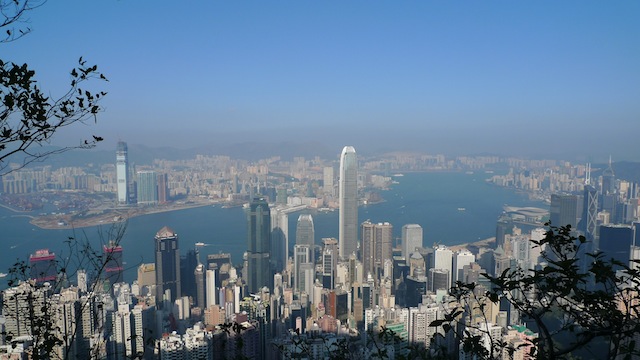
    For Hong Kong, the Chinese government’s move is another blow to the territory’s already declining position as the main gateway to the People’s Republic.

    As part of the Decoding The New Economy series of interviews, I spoke to Brian Wong of Hong Kong’s Seacliffe Partners about the challenges facing the territory and the role the former British colony will play over the next few decades.

    “Hong Kong, I think, is the perfect bridge between East and West, ” says Brian. “But I think Hong Kong has been in search since the change over in 1997 as to where it really wants to focus itself.

    The territory is squeezed between Singapore that has established itself Asia’s leading financial hub and now is positioning itself as a creative centre and Shanghai which has become the new ‘Gateway to China’ with its domestic financial centre and deep water port.

    Despite the challenges facing the Territory, Brian sees opportunities in the city’s cultural and business environments.

    “One of the great things about Hong Kong still is its international community and its accessibility for creative types,” Brian says. “I think Hong Kong is starting to recognise this advantage.”

    “You have a large base of Chinese based manufacturers looking to beyond just low cost OEM manufacturing, what they need is creative design and innovation. If Hong Kong can be one of the big suppliers of that then they have a really good opportunity.”

    One area Brian sees Hong Kong has an advantage is in its developing a hardware hackers culture that fits in with the massive manufacturing hubs surrounding the territory along the southern Chinese coast.

    “I went to a talk where there was a fellow from Mountain View, California who does a lot of product invention,” Brian tells. “He’s set up a lab in Hong Kong to do product innovation because although he recognises China has a low cost manufacturing base, he doesn’t want to live in Shenzhen.”

    The challenge for Hong Kong is to encourage a more entrepreneurial mindset, Brian believes. He also sees Hong Kong having an opportunity in being a conduit for the Chinese diaspora looking at investing into the PRC.

    Probably the biggest advantage Brian sees Hong Kong having are in its mature legal and capital markets that Shanghai and other Chinese centres lack – “these are world class,” he asserts.

    Ultimately though it may be that Shanghai, Beijing, Taipei or Singapore aren’t threats to Hong Kong at all as each city becomes the centre of certain aspects of a diverse Chinese and East Asian economy.

    “I think much like in the United States there is not just one financial centre – you’ve got Chicago, New York and you’ve got different roles for different cities, LA for media and San Francisco as the gateway into the United States.”

    “There’s room for more than just one. The question is what does Hong Kong want to be and how does it want to be most valuable to the China story.”

    Similar posts:

  • is G’day China a good idea?

    is G’day China a good idea?

    Yesterday’s announcement by the Prime Minister’s  of an Australia Week in China may prove far more successful than the G’day USA events the idea is based upon.

    G’day USA has been run for a decade and showcases Australia’s attractions, skills and businesses at events in Los Angeles and New York.

    It’s been moderately successful but an emphasis on movie stars appearing at black tie Hollywood events illustrates Australian governments’ disproportionate focus in throwing money at US movie producers.

    If China Week follows the US example we can expect private, exclusive dinners where Twiggy Forrest, Clive Palmer and the BHP board entertain Chinese plutocrats over bowls of shark fin soup and braised tigers’ testicles.

    Should China Week follow that model then it will probably share G’day USA’s middling successes.

    The opportunity to do it differently though is great as the Chinese-Australian relationship is far younger and hasn’t been locked into Crocodile Dundee type stereotypes on both sides.

    As the Chinese economy matures and evolves, there’s an opportunity for Australian businesses and industries which haven’t been available for exporters to the US.

    Done properly, G’day China could help the profile of Australian businesses in many sectors, particularly in those affected by the great Chinese rebalancing.

    Let’s hope they do it properly.

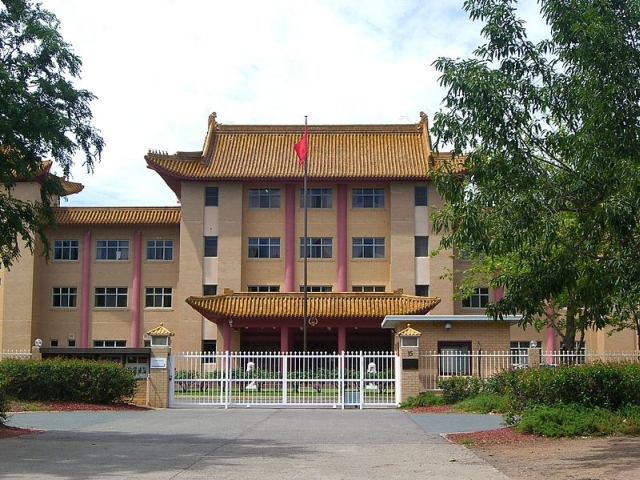
    Image of the Chinese embassy in Canberra, Australia from Alpha on Wikimedia

    Similar posts:

  • Australia and the Chinese Mexican stand off

    Australia and the Chinese Mexican stand off

    Twenty years ago visitors to Sanya on the south coast of China’s Hainan Island could find themselves staying at the town’s infectious diseases clinic, converted into a backpackers hostel by a group of enterprising doctors.

    The Prime Ministers and Presidents attending of Boao Asia Forum this week won’t get the privilege of staying at the infectious diseases hospital as Sanya’s hotel industry has boomed, bust and boomed again following the island being declared a tourism zone in 1999.

    Instead, their focus is on the pecking order of nations and for the Australians the news is not good. As the Australian Financial Review reports, the Aussies have been seated well below the salt by their Chinese hosts.

    On the Boao list, Australia is outranked by Brunei, Kazakhstan, Myanmar, Zambia, Mexico, and Cambodia – even New Zealand Prime Minister John Key gets higher billing.

    Central and South East Asian countries make sense as countries like Myanmar and Kazakhstan are China’s  neighbours with strong trade ties.

    That the Kiwis have been given priority over the Aussies by the Chinese government is not surprising in light of this.

    An unspoken aspect for the Australian attendees to the Baoa conference is how long Canberra’s political classes can continue their forelock tugging fealty to the US without offending the nation’s most important trading partner.

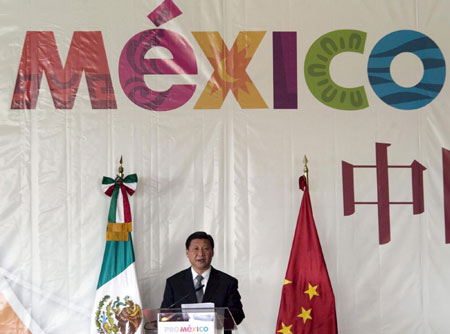
    Mexico’s entry on that list could be one of the most important with consequences for Australia and the world.

    During the 1992 US Presidential campaign candidate Ross Perot coined the phrase “the great sucking sound” in his opposition to the North American Free Trade Agreement and the risk of losing jobs to lower cost Mexico.

    As it turned out, the giant sucking sound was China – it turned out China’s admission into the World Trade Organisation had far greater consequences for the United States and Mexico than NAFTA.

    Mexican manufacturing was one of the greatest victims of China’s rise as US companies found it easier to subcontract work to Chinese factories rather than setup their own plants in Mexico.

    Now China is finding its own costs creeping up and labor shortages developing and Mexico is attractive once again. The Chinese and Mexican governments have been working on their relationships for some time.

    As manufacturing moves out of China, the shifts in world trade we’ve seen in the last two decades are going to be repeated, this time with Chinese moving up the value chain the lower level work moving to Mexico and other nations.

    The leaders at the Baoa conference have their work cut out for them in dealing with another decade of global change.

    Similar posts:

  • Australia in the Asian Century – Chapter 9: Deeper and broader relationships

    Australia in the Asian Century – Chapter 9: Deeper and broader relationships

    This post is one of the series of articles on the Australia in the Asian Century report.

    Australia in the Asian Century’s final chapter looks at how Australia can deepen relationships with its Asian neighbours. The chapter is full of fine ideas which don’t quite match the reality of government policies and spending.

    Early in the chapter the white paper proposes increasing the number of Australian diplomats in Asia along with opening a new embassy in Ulan Baator, a Jakarta based ambassador to ASEAN and consulates in Shenyang , Phuket and eastern Indonesia.

    Fine words, however Australia’s diplomatic corps has been shrinking for the last twenty years so staffing these facilities will require a withdrawal from other regions. The white paper doesn’t identify which countries Australia’s representation would be cut from and the consequences of that.

    More importantly, it doesn’t identify how Foreign Affairs and Trade staff will be skilled up to man these facilities, instead we get another worthy ambition.

    National objective 22. Australia will have the necessary capabilities to promote Australian interests and maintain Australia’s influence.

    • Australia’s diplomatic network will have a larger footprint across Asia.

    Again, one would surely expect that Australia would already have the necessary capabilities to promote its national interest and maintain influence. Is the white paper suggesting we don’t?

    Which leads us to the next national objective;

    National objective 23. Australia will have stronger and more comprehensive relationships with countries across the region, especially with key regional nations—China, India, Indonesia, Japan and South Korea.

    If we accept the assumption which underlies the entire paper, that Asia is going to continue to grow both economically and in influence then this will happen regardless of what governments do. It’s a meaningless and silly statement which once again ignores most of Asia and simplifies the dynamics.

    The Australia Network

    One of the great wastes of the Howard years was the dismembering of Radio Australia which was a cheap and effective way of projecting ‘soft power’ across the region. I personally came across this as a backpacker in China where many manual workers in the hard seat carriages practiced their Australian accented English that they’d learned on Radio Australia’s programs.

    This was shut down by one of the spiteful, stupid and poorly thought out decisions that were the hallmark of the Howard government.

    Replacing this was a new Australia network that replaced the previous awful overseas television service which had been a niche product on Asian cable TV channels – I had it on my Thai cable subscription when I lived in Bangkok. It was rarely watched.

    The Australia Network hasn’t been a great success and that is largely due to the funding – the 2011-21 contract was costed at $221 million in the budget papers.

    A break out box in the white paper boasts about the Australia Channel and its “mandate to encourage awareness of Australia, promote cross-cultural communication and build regional partnerships.”

    Listed is the funding for some other services – Al Jazeera, $359 million in 2009; CCTV, $280 million in 2009 and NHK World/Radio, $226 million in 2008.

    With the Australia Network receiving less than a tenth of this funding, it’s no surprise the station looks amateurish and irrelevant. Once again we see the difference between government words and government deeds.

    Which brings us to the final two national objectives;

    National objective 24. Australia will have deeper and broader people to people links with Asian nations, across the entire community.

    National objective 25. Australia will have stronger, deeper and broader cultural links with Asian nations.

    Again these are more motherhood statements and barely worth considering. The section itself skates over some of Australia’s most important assets – the cultural diversity and immigrant communities.

    That the final chapter spends just a few pages on this aspect probably sums up the entire project – simple, full of motherhood statements and missing the critical strengths and threats to Australia’s, and Asia’s growth.

    Overall the paper is a disappointment that tells us little we didn’t already know while stating some big ambitions which successive governments have shown they aren’t capable of delivering.

    The message for those building Australia’s 21st Century links with Asia is not to wait for government but to get on and do it.

    Similar posts: