Tag: transport

  • Uber’s sharing strategy

    For most of its existence, Uber hasn’t been shy about claiming to be at the forefront of the future of transport which fits into yesterday’s announcement of Uber Movement which promises to provide aggregated and anonymised trip data to give communities and businesses an overview of road usage in their districts.

    Jordan Gilbertson,  one of the company’s Product Managers, and Andrew Salzberg, Head of Transportation Policy, described how Uber intends to make transit time data available.

    Uber trips occur all over cities, so by analyzing a lot of trips over time, we can reliably estimate how long it takes to get from one area to another. Since Uber is available 24/7, we can compare travel conditions across different times of day, days of the week, or months of the year—and how travel times are impacted by big events, road closures or other things happening in a city.

    As the Washington Post reports, transport agencies do already have a lot of data on some aspects of commuter behaviour – particularly public transport usage – and the Uber information fills as ‘missing part of the puzzle’.

    Taxis and buses are also increasing equipped with real time tracking equipment that also gives this data while traffic services like Wayze have been collecting this information for a decade.

    So agencies aren’t short of this data and the concentration of Uber’s customer base in more affluent areas means their information may be skewed away from poorer areas. Recently a Sydney taxi driver mentioned to me how he’d stopped driving for Uber because most of the city’s sprawling Western Suburbs where he tended to drive didn’t use the service.

    Uber’s offer is another piece in their data strategy that sees the company being a data hub for the logistics industry. It also helps if you’ve co-opted governments into your scheme.

    Similar posts:

  • You’re going to need a bigger app

    You’re going to need a bigger app

    “It has to be disruptive technology,” bleated the consulting firm facilitator at the Future Transport Summit in Sydney earlier this week.

    The hapless, but well paid, consultant — a depressingly frequent feature of Australia’s current ‘ideas boom’ — was protesting when one of the participants at his ‘ideation session’ had raised topics such as integrated timetables and changing commuting habits.

    Mr Consultant’s running orders for his ‘ideation session’ were to focus on ‘digital disruption’ and his employer;s cluelessness illustrates a danger for business leaders and policy makers.

    Selling the snake oil

    Digital disruption is real however it’s not just the only factor facing governments and industries. Demographics, economics, politics and climate change will have greater influences on business and society.

    Uber, the favourite lovechild of those spruiking digital disruption snake oil, is a very good case in point. While the service certainly has disrupted the taxi and motor vehicle industries, these sectors were facing major challenges as governments enacted policies to reduce carbon emissions, voters became tired of cartel like taxi companies and the Western world’s young and wealthy moved back to the cities and away from owning motor vehicles.

    If anything, Uber was the result of GenY entrepreneurs like Travis Kalanick finding existing services didn’t meet their needs rather than the result of technology desperately looking for a problem to solve finding a niche.

    Complex changes

    While the smartphone was critical in Uber’s success in disrupting the global taxi industry, technology was only one facet of a much more complex set of changes.

    The motor industry is a good example of the complexity of change. A hundred years ago it was clear the transport industry was about to be disrupted by the automobile, it was by no means obvious access to affordable personal transport would allow urban sprawl and the suburbanisation of western society.

    Coupled with the motor car and truck, the availabilty of mains electricity meant refrigeration also became accessible which lead to the rise of supermarkets after World War II. This disrupted the local corner store in ways shopkeepers could never have foreseen in the interwar years.

    Shifting demographics

    Now, the opposite is happening as the young and affluent reject long commuting times from distant suburbs and city densities start increasing.

    The social and economic factors that drove Uber are affecting public transport usage patterns and it’s no coincidence that the cities where ride sharing services have most successful, such as Sydney, also have underfunded public transport systems that are struggling to meet their population’s demands.

    Which brings us back to the foolishness of discussing the future of transport only in relation to technology. Smartphones, apps, big data and the internet of things will all be critical parts of future transportation but the social and economic factors will shape how people use the networks.

    Focusing on technology while ignoring the other big influences is a folly that will cost businesses and government dearly. Although one suspects the management consultancies will do well regardless of how well change is managed.

    Similar posts:

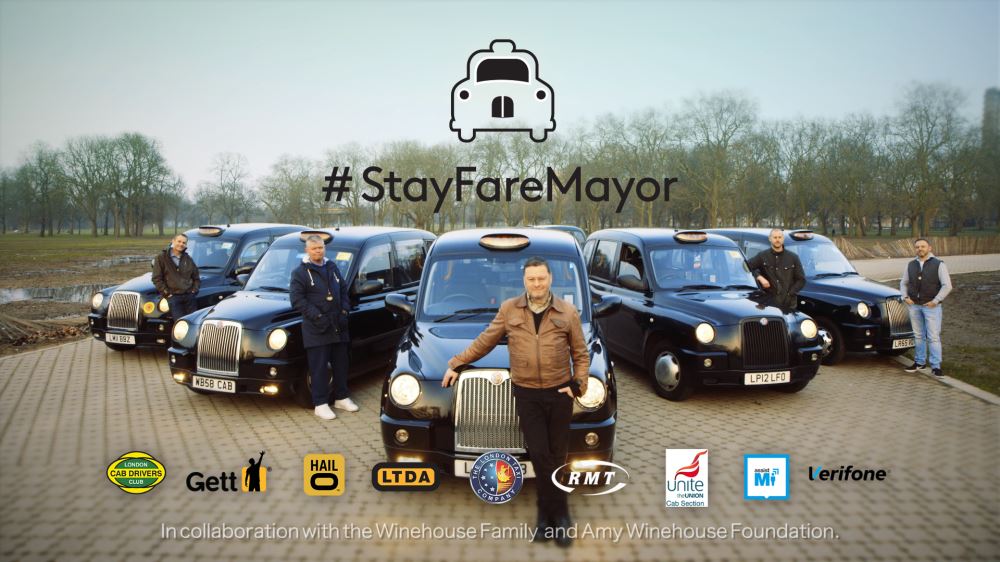
  • London’s black cabs fight back against Uber

    London’s black cabs fight back against Uber

    Like many cities’ incumbent taxi industries, London’s iconic black cabs are suffering from the ris of Uber.

    Now a consortium of operators, drivers groups and the manufacturer of black cabs have devised an action plan to attract Londoners back to their services.

    The proposals include fast Wi-Fi, better integration with tube and bus services, access to bus lanes and – depressingly – tighter restrictions on more lightly regulated minicabs.

    London’s black cabs are unique in having high standards for both driver and vehicles which results in them being ludicrously expensive, the reason why many locals use minicabs.

    Those high standards though should be an advantage against Uber, however some of the tight regulation and the industry’s culture put the black cabs at a disadvantage.

    Uber’s supporter and advocates of the gig economy would, correctly, cite the black cabs raising their game as the main benefit of disrupting the market although the advantage of ignoring many of the rules that apply to the incumbents is a big advantage as well.

    Londoners will be happy with the improved services, but for the black cabs this is a fight for protecting their industry against a worldwide disruption. Regulations will probably not be enough to protect them.

    Similar posts:

    • No Related Posts
  • Uber and the cities of the future

    Uber and the cities of the future

    “We’re building the cities of the future” claims David Plouffe, Uber’s Senior Vice President for Policy & Strategy.

    Plouffe was speaking in Uber’s head office ahead of this year’s Dreamforce conference where the transportation disrupter was announcing the next phases of its Uber Business service.

    While western societies still remain car dependent, there’s a shift underway as people prefer to live in the cities rather than the suburbs and the far flung exurbs, particularly for younger people. “For my generation it was a big deal to get a car,” says the 48 year old Plouffe. “Millennials today don’t have that same identification – they don’t want to own a car.”

    That shift, which is not just confined to millennials, presents challenges for cities believes Plouffe. “Cities need to support people who are moving in at historic rates,” he says. “Our cities are facing huge challenges.”

    “Every city is facing congestion challenges which will only get worse over the next ten to fifteen years as the number of people moving into the world cities at a historic pace.”

    “Most cities do not have the will or the money to build new public transportation systems,” Plouffe says. “The only way they are going to deal with this is for people to buy less cars, families to only have one car and to reduce the number of cars on the road.”

    Not surprisingly, Plouffe sees this as being where Uber can help in expanding accessible and affordable transport to parts of cities which are unlikely to get public transit and to increase the carrying capacity of existing infrastructure.

    This is an interesting point of view and one that has some validity if we accept the view that ‘on-demand’ services like Uber and others are actually aimed at all groups and not just the affluent upper middle classes and the rich.

    For cities struggling to meet the demands of growing populations and shrinking budgets, services like Uber and Lyft may be part of the answer. That though will take some reform and a change of attitude from many regulators.

    Similar posts:

  • Looking beyond the bro culture

    Looking beyond the bro culture

    It’s not unfair to call many of the apps disrupting today’s industries as being the result of ‘first world problems’.

    Uber was born out of founders Garrett Camp and Travis Kalanick difficulty in hailing Parisian cabs while AirBnB came from Joe Gebbia and Brian Chesky’s struggles with San Francisco rents.

    Now as smartphones and mobile internet starts to become available to those in less wealthy parts of the world, we’re seeing how these concepts can be applied to problems more widespread.

    A good example of this is the project to map Nairobi’s matatu minibus network where researchers used smartphones to create a picture of the city’s seemingly chaotic system of privately owned vehicles.

    With some modifications, the data can be fed into Google’s transit map format that allows the routes to found on Google Maps.

    The next logical step for this is for entrepreneurs, possibly even Uber, to entice matatu operators to use Uber like apps to track the location of minibuses and give passengers better payment options. It’s quite possible we’re seeing the start of an evolution into a new type of transit network using independent, privately owned vehicles bound together by an app based platform offering city wide public transport.

    Similarly, in Cuba the room sharing service AirBnB is seeing the country’s informal private accommodation market as being an opportunity not only to expand its market but to help the country deal with the massive influx of US tourists now relations with the two countries have been normalised.

    While the disruption to established markets from these new services has been huge, it may be the biggest effects are in developing countries where the economy and governments have reached the stage of development where powerful regulators work with incumbents to stymie competition.

    In which case, today’s developing nations will see very different structures in their industries to those in the developed west that were built around 19th and 20th century technologies.

    Image “A matatu” by Jociku – Own work. Licensed under CC BY-SA 4.0 via Commons – 

    Similar posts:

    • No Related Posts