Tag: us

  • Driverless cars outrun the law

    Driverless cars outrun the law

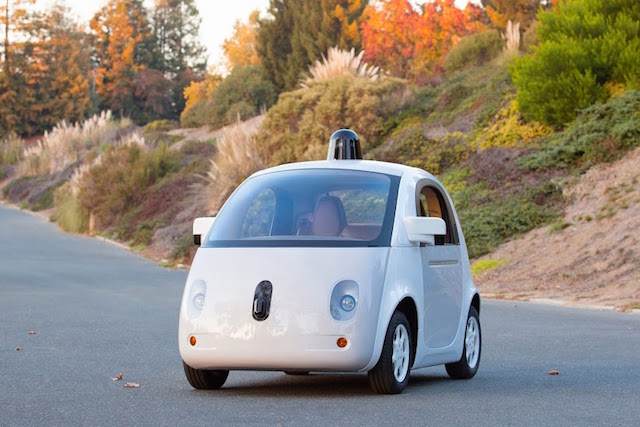
    Tesla founder Elon Musk believes there will be driverless cars on US roads by the summer, the New York Times reports.

    One of the key factors in whether Musk’s prediction comes to and driverless cars are on the road by the middle of the year is the law with most people assuming autonomous vehicles are currently illegal.

    Some experts however believe current laws don’t prevent driverless cars, with the New York Times quoting one industry leader who suggests there’s no legal barrier to autonomous vehicles taking to the road.

    Tesla is not alone in pushing the envelope. Chris Urmson, director of self-driving cars at Google, raised eyebrows at a January event in Detroit when he said Google did not believe there was currently a “regulatory block” that would prohibit self-driving cars, provided the vehicles themselves met crash-test and other safety standards.

    This view raises an interesting legal argument, who is the recognised driver of an autonomous vehicle? In the event of an accident or dispute does liability rest with the owner, the manufacturer or the passengers?

    What this debate over driverless vehicles illustrates is how laws specific to today’s society aren’t always applicable to tomorrow’s technologies; certainly many of the laws designed for the horse and buggy era became redundant as the motor car took over a hundred years ago.

    Another consequence of autonomous vehicles are the changes to occupations supporting the motor industry; it’s obvious that panel beaters and insurance lawyers may have their jobs at risk but Jay Zagorsky in The Conversation suggests nearly half of US police numbers would be redundant if there are no more car drivers.

    Given how the funds local and state governments raise from traffic offences, a shift to driverless technologies could even have an effect on city budgets.

    The motor car was the most far reaching technology of the Twentieth Century in the way it changed the economy and society over those years, it’s hardly surprising that we are only just beginning to comprehend how a shift to driverless vehicles may change our lives this century.

    Similar posts:

  • We’re crazy, not stupid

    We’re crazy, not stupid

    “We’re crazy, not stupid” is how Jack Ma describes his Alibaba team in an interview at the World Economic Forum in Davos, Switzerland, yesterday.

    Much has been written about Jack Ma and the spectacular success of Alibaba and the WEF session with Charlie Rose is an opportunity for Ma to flesh out the story and destroy some of the myths.

    One of the fascinating anecdotes Ma tells is how US cherry growers are preselling their harvests to Chinese customers through Alibaba and cites various other primary producers doing similar campaigns as how American small businesses can sell into the PRC market.

    Ma’s interview is a fascinating snapshot of how global trade is going through a radical period of change, the shifting of China’s economy and where the future lies for many industries.

    Similar posts:

  • Returns in a low growth world

    Returns in a low growth world

    Today GE had their At Work conference in Sydney where CEO Jeff Immelt was interviewed by Westfarmers’ boss Richard Goyder.

    One of the key messages from Immelt in his interview with the Australian conglomerate’s CEO was that finding growth in a flat global economy is going to take hard work and creativity; just relying on increased domestic spending is not longer an option.

    Immelt was particularly pointed about the developed world’s economies, “the US is best since the financial crisis, growth is broad based but it’s still in the two to two-and-a-half percent range. It may be that’s the new normal.”

    “Europe and Japan are pretty tough, forty percent of the world’s economy is still difficult, not going downward but stable and flat.”

    Preparing for a slow growth world

    “We’ve prepared ourselves for a slow growth world but one where you can invest in growth.”

    “There’s still opportunities out there,” Immelt observed. “We’re going to have to make our own growth.”

    Part of that growth story relates to the end of the consumerist era where debt funded consumer spending, particularly in the US, drove the global economy.

    “We are coming out of a time period of the last ten or fifteen years where the US grew four and half percent every year with no inflation. So the US was the dominant economy in the world during the 1980s and 1990s.”

    “We knew that was not going to be the same, so we’re in a world with no tail wind where we think greater focus on things like R&D, globalisation and things like that which will be critically important.”

    Changing business focus

    One of things Immelt did after the global financial crisis was to change the focus of the business away from the consumer finance division that had been a river of gold over the last thirty years back to being an industrial infrastructure company.

    “Everyone needs to paranoid about relevancy and what they do great in the world today. There is no shelf life for reputation or anything else.”

    “The engine of growth in the US when it was growing at its best was the US consumer, both in the combination of their own wealth and in taking on leverage. That was the engine of growth from 1980 to 2007.”

    “It ended badly, but those were big engines of growth. What will be the next engines of growth?” Immelt mused.

    Asian consumers to the rescue

    Immelt sees the rise of Asian economies as being the next growth drivers with over billion consumers rising in affluence.

    Whether those Asian economies can generate the growth that the hyper-developed economies of North America, Europe and Japan were able to provide during the past thirty years remains to be seen given China’s, and most of Asia’s, consumers having nothing like the West’s spending power.

    The truth is we’re decades off Asia’s huddled masses having the economic strength to carry the global economy in the way the western world’s consumers did for the closing decades of the Twentieth Century.

    For economies like Australia that are largely based upon domestic consumption funded by debt, this will mean a massive redirection of the economy away from renovating houses to investing in productive industries.

    Immelt’s message to business leaders is clear; don’t rely on a rising tide of domestic growth to keep you afloat. Companies are going to have to find new markets and products if they want to grow, waiting for customers to arrive is no longer an option.

    Similar posts:

  • Gen Y and the need for building new businesses

    Gen Y and the need for building new businesses

    The retirement of the baby boomers has been an demographic inevitability, but it’s interesting how policy makers and the population in general have ignored the ramifications of this despite the first boomers now aged beyond 65.

    One of the consequences of this is we may see an entire generation being forced to become self employed entrepreneurs.

    Illustrating this point are two stories from the US over the last few days; John Mauldin’s dissection of where US jobs are going and Zero Hedge’s 35 facts that should scare American baby boomers.

    The 35 facts really boil down to one thing, that an affluent, middle class retirement at 65 when average life expectancy is 78 is an illusion for most people – neither their bank accounts or the state treasury can support that sort of spending.

    Which is the point of John Mauldin’s column, that over 50s are taking most of the available US jobs as they can’t afford to retire.

    For those over 50 who’ve fallen out of the workforce due to unemployment or illness, getting back into the workforce is proving to be tough and for many of those folk their later years are going to be a struggle.

    Equally, as Mauldin points out, the younger generation is being locked out of the jobs being hogged by the over 50s.

    Another aspect to that is those employed Gen-X’s and Y’s hoping to get a crack at a seniors manager’s job or their name on the partner’s list are going to find a longer wait as the boomers hold on for as long as they can.

    Those young ‘uns need those high salary jobs too, a Westpac report on US student debt posits that crippling education costs are making it harder for graduates to participate in the workforce and affects their spending power when they do find a job.

    What’s clear is existing government, corporate and social structures are beginning to struggle with the realities of the changing workforce and its demographic composition.

    On a personal level, those Gen Xs, Ys and boomers who are locked out of the workforce have to find a new way to participate in the economy. It’s probably those locked out of today’s workplaces who will build the businesses of the future.

    Similar posts:

  • Ordos and Detroit – A tale of two cities and two economies

    Ordos and Detroit – A tale of two cities and two economies

    This week bought news that that two cities, one in China and one in the US, had fallen into deep financial trouble.

    While the bankruptcy of Detroit is very different to the developers of the Ordos new city failing, there is a strange symmetry between the two stories.

    Detroit is the biggest US city ever to enter bankruptcy with an estimated $20 billion in debts, dwarfing the previous record of Alabama’s Jefferson Country’s $4 billion default in 2011.

    The fall of Detroit wasn’t unexpected as the New York Times tells.

    Detroit expanded at a stunning rate in the first half of the 20th century with the arrival of the automobile industry, and then shrank away in recent decades at a similarly remarkable pace. A city of 1.8 million in 1950, it is now home to 700,000 people, as well as to tens of thousands of abandoned buildings, vacant lots and unlit streets.

    Like most industrial hubs, Detroit grew became the centre of the US motor industry due to geographic and commercial advantages along with a few historical accidents but as the economy changed, the city’s importance faded.

    It’s sad for the people of Detroit but it isn’t the first industrial hub to fade away; Ironbridge, once the cradle of the English industrial revolution, is today an open air museum and a charming rural spot.

    Ordos on the other hand is an example of 21st Century government planning with the Inner Mongolian provincial leaders building the city of the basis of build it and they will come.

    They haven’t.

    The collapse of Ordos is going to be an interesting test of the Chinese economic model. Many of the country’s local and provincial governments – like Australia’s – have become dependent on the revenues from property sales. Now the market is  drying up, local councils are having trouble paying their bills as Bloomberg reports.

    Some Ordos district governments had to borrow money from companies to pay municipal employees’ salaries, Economy & Nation Weekly, published by the official Xinhua News Agency, said in a July 5 report on its website.

    So while Detroit illustrates the stresses in the US system, so too does Ordos tell us about the problems facing Chinese governments.

    The tale of these two cities also shows the difference between the US’ industrialisation of the early Twentieth Century and today’s economic development in the PRC and reminds why the results of ‘Capitalism With Chinese Characteristics’ may be very different to the modern American consumerist economy.

    For Detroit, at least there’s good news as one US city manages to works its way out of bankruptcy. For the developers of Ordos though, things must be looking very grim.

    Ordos image courtesy of Bert van Dijk through Flickr.

    Similar posts: