
Tag: Wine

  • Context and the digital divide

    Context and the digital divide

    “This is the most difficult time in history to be a wine maker, declares Paul Mabray, Chief Strategy Office and founder of Vintank.

    “Never has the wine industry been as competitive as it is today.”

    Update: The Wine Communicators of Australia, who sponsored Mabray’s visit, have posted Paul’s presentation that covers this post’s theme in more detail.

    Mabray’s business monitors social media for wineries and collects information on wine enthusiasts. Since Vintank’s founding in 2008 the service has collected information on over thirteen million people and their tastes in wine.

    Rewriting the rule book

    Social media, or social Customer Relationship Management (sCRM), is what Mabray sees as being part of the future of the wine industry that’s evolving from a model developed in the 1970s which started to break down with the financial crisis of 2009.

    “In the old days there was a playbook originating with Robert Mondavi in the 1970s which is create amazing wine, you get amazing reviews and you go find wholesalers who bring this wine to the market.”

    “As a result of the global proliferation of brands the increase of awareness and consumption patterns where people like wine more, those playbooks didn’t work in 2009 when the crisis started.”

    With the old marketing playbook not working, wineries had to find other methods to connect to their markets and social media has become one of the key channels.

    Now the challenge in the wine industry, like all sectors, is dealing with the massive amount of data coming in though social media and other channels.

    The cacophony of data

    “If you rewind to when social media came out, everyone had these stream based things and the noise factor was so heavy,” says Mabray.

    “For small businesses this creates an ‘analysis to paralysis’ where they’d rather not do anything.”

    Mabray sees paralysis as a problem for all organisations, particularly for big brands who are being overwhelmed by data.

    “The cacophony of data at a brand level is just too much,” he says.

    “It’s as noisy as all get go and I think the transition is to break Big Data down into small bite size pieces for businesses to digest is the future, it shouldn’t be the businesses problem, it should be the software companies’.”

    A growing digital divide

    Mabray sees a divide developing between the producers who are embracing technology and those who aren’t, “the efficiencies attributed to technology are obvious whether they’re using CRM, business intelligence or other components.”

    “The people who are doing this are recognising the growth and saying ‘hey, this stuff actually works! If I feed the horse it runs.”

    While Mabray is focused on digital media and the wine industry, similar factors are work in other industries and technology sectors; whether it’s data collected by farm sensors to posts on Instagram or Facebook.

    Facebook blues

    Mabray is less than impressed with Facebook and sees businesses concentrating on the social media service as making a mistake.

    “I think that every social media platform that’s been developed had such a strong emphasis on consumer to consumer interaction that they’ve left the business behind, despite thinking that business will pay the bills.”

    “As a result almost every single business application that’s come from these social media companies has met with hiccups. That’s because it wasn’t part of the original plan.”

    Facebook in particular is problematic in his view, “it’s like setting up a kiosk in the supermall of the world.”

    The business anger towards Facebook’s recent changes is due to the effort companies have put into the platform, Mabray believes; “everyone’s angry about Facebook because we put so much into getting the data there.”

    “We said ‘go meet us on Facebook’, we spent money collecting the items and manufacturing the content to attract people and now we have to spend money to get the attention of the people we attracted to the service in the first place.”

    Despite the downsides of social media Mabray sees customer support as one of the key areas the services. “It’s easy to do in 140 characters.”

    Context is king

    “Everything come back to context. There’s this phrase that ‘content is king’,” Mabray says. “Context is king.”

    “Anyone can produce content. It’s a bull market for free content. We have content pollution – there’s so much junk to wade through.

    Mabray’s advice to business is to listen to the market: “Customers are in control more than they have ever been in human history: Google flattens the world and social media amplifies it.”

    For wineries, like most other industries, the opportunity is to deal with that flat, amplified world.

    Similar posts:

    • No Related Posts
  • A life in photojournalism

    A life in photojournalism

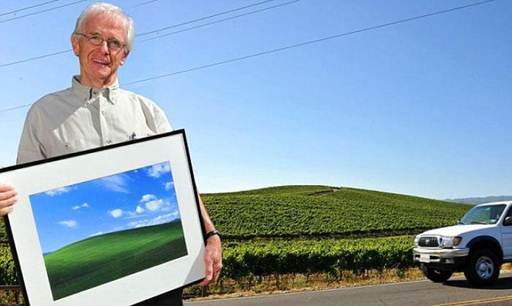
    The latest Decoding the New Economy video is an interview with wine photographer Charles O’Rear.

    Charles was on tour with Microsoft to promote the end of Windows XP, it was his photo of a Napa Valley hillside that became the background feature the system’s default ‘Bliss’ theme.

    The interview is a long ranging discussion on how photojournalism has changed over the last four decades along with the evolution of both the art and science of photography itself.

    Similar posts:

  • Australia’s grapes of wrath

    Australia’s grapes of wrath

    In a great post, The Wine Rules looks at what ails the Australian wine industry after the news of Cassella Wine’s problems.

    Three things jump out of Dudley Brown’s article – how industry bodies are generally ineffectual, the failure of 1980s conglomerate thinking and how fragile your position is when you sell on price.

    Selling on price

    It’s tough being the cheapest supplier, you constantly have to be on guard against lower cost suppliers coming onto the market and you can’t do your best work.

    Customers come to you not because you’re good, but because you’re cheap and will switch the moment someone beats you on price.

    Worse still, you’re exposed to external shocks like supply interruptions, technological change or currency movement.

    The latter is exactly what’s smashed Australia’s commodity wine sector.

    A similar thing happened to the Australian movie industry – at fifty US cents to the Aussie dollar filming The Matrix in Sydney was a bargain, at eighty producers competitiveness falls away and at parity filming down under makes no sense at all.

    Yet the movie industry persists in the model and still tries to compete in the zero-sum game of producer incentives which is possibly the most egregious example of corporate welfare on the planet.

    When you’re a high cost country then you have to sell high value products, something that’s lost on those who see Australia’s future as lying in digging stuff up or chopping it down to sell cheaply in bulk.

    Industry associations

    “It’s like a Labor party candidate pre-selection convention” says Brown in describing the lack of talent among the leadership of the Australian wine industry. To be fair, it’s little better in Liberal Party.

    There’s no surprise there’s an overlap between politics and industry associations, with no shortage of superannuated mediocre MPs supplementing their tragically inadequate lifetime pensions with a well paid job representing some hapless group of business people.

    Not that the professional business lobbyists are any better as they pop up on various industry boards and government panels doing little. The only positive thing is these roles keep such folk away from positions where they could destroy shareholder or taxpayer wealth.

    Basically, few Australian industry groups are worth spending time on and the wine industry is no exception.

    Australia conglomerate theory

    One of the conceits of 1980s Australia was the idea that local businesses had to dominate the domestic market in order to compete internationally.

    A succession of business leaders took gullible useful idiots like Paul Keating and Graheme Richardson, or the Liberal Party equivalents to lunch at Machiavelli’s or The Flower Drum, stroked their not insubstantial egos over a few bottles of top French wine and came away with a plan to merge entire industries, or unions, into one or two mega-operations.

    It ended in tears.

    The best example is the brewing industry, where the state based brewers were hoovered up in two massive conglomerates in 1980s. Thirty years later Australia’s brewing industry is almost foreign owned and has failed in every export venture it has attempted.

    Fosters Brewing Group was, ironically, one of the companies that managed to screw the Australian wine industry through poorly planned and executed conglomeration. Again every attempt at expanding overseas failed dismally.

    In many ways, the Australian wine industry represents the missed opportunities of the country’s lost generation as what should have been one of the nation’s leading sectors – that had a genuine shot at being world leader – became mired in managerialism, corporatism and cronyism.

    All isn’t lost for the nation’s vintners or any other Aussie industry, Dudley Brown describes how some individuals are committed to delivering great products to the world. There’s people like them in every sector.

    Hopefully we’ll be able to harness those talents and enthusiasm to build the industries, not just in wine, that will drive Australia in the Twenty-First Century.

    Picture courtesy of Krappweis on SXC.HU

    Similar posts: