Tag: google

  • Writedowns and triumphalism

    Writedowns and triumphalism

    The contrast between Microsoft’s and Google’s results released on Thursday attracted a lot of interest – for the first time in twenty years Microsoft posted a quarterly loss with Google’s profits continue to grow.

    While there’s no doubt Microsoft are challenged by the effects of their lost decade and bad decisions made in that time, but the business itself is still extremely profitable.

    Microsoft’s posted loss is due writing down 6 billion dollars in their aQuantive investment, an attempt to compete with Google in the online ad placement space.

    Despite a six billion dollar writedown, Microsoft only posted a 500 million dollar loss showing the business is still making over 5 billion dollars profit each quarter.

    Google on the other hand posted a profit of 2.8 billion, up 11% from the same period last year.

    But Google also has some nasty writedowns coming in the future – the purchase of Motorola will see some substantial write downs of that 12 billion dollar deal. It’s conceivable that a very big portion of that investment will have to be written off as well.

    Right now, Google’s seeing some benefit from the Motorola acquisition as the phone company’s cashflow is covering a decline in online advertising revenue, a threat to Google’s core business.

    It’s easy to be triumphant when the headlines proclaim you’re a winner, but it’s often worthwhile looking at the fine print to see the real story.

     

    Similar posts:

  • Android’s corporate wins

    Android’s corporate wins

    Telstra’s launch of the second iteration of their T-Hub device and the Commonwealth Bank’s Albert tablet Point of Sale device are notable in their choice of operating system.

    For the T-Hub, the first version was a bug plagued and slow proprietary system that which one of the reasons for the device’s market failure. Telstra’s second attempt runs on the Google Android system.

    The Commonwealth Bank didn’t make Telstra’s mistake with the Albert device, instead choosing  the open source system from the beginning.

    Choosing an open platform like Android makes it easier for the developers and company to support the device and develop new products. There’s also the advantage of thousands manufacturers supplying hardware that runs on Android.

    If we compare the costs of developing a proprietary system and sourcing hardware for it to run on, the choice of an open system is almost irresistible.

    For Microsoft, this adoption of Google Android by corporations is another blow to Windows’ dominance of the market, a few years ago all of these devices would have been running a version of Windows but Android is a cheaper, more flexible and better suited to most of the tasks required.

    It could be worse for Microsoft – Apple could be dominating this market. Apple though have had their own victory on consumer devices and increasingly companies have to cater for their customers and staff wanting an iPhone or iPad app.

    Like on smartphones, the battle is now between Android and Apple.

    Similar posts:

  • Mapping new industries

    Mapping new industries

    As smartphones become ubuiquitious in business, more applications are appearing that take advantage of the devices’ inbuilt features like GPS and cameras.

    To date, many of these have services have been in consumer based, social media style applications but as the market matures, more business orientated services are appearing.

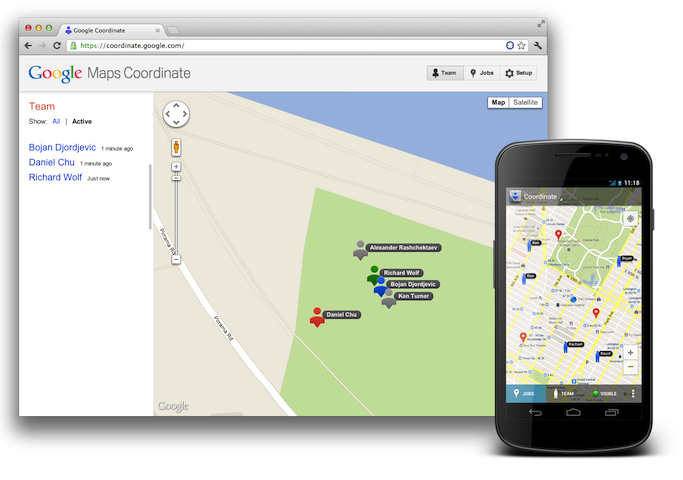
    Google Maps Coordinate, the latest service from the search engine giant, uses a smartphone’s built in location services to track field staff and allocate jobs through an Android smartphone app.

    On top of that, Google have added a Maps-style interface for businesses to schedule appointments and for staff to accept assignments.

    It’s a nice but basic product that doesn’t really address any gaps in the marketplace with job scheduling technology being available for over a decade in the logistics and field service industries.

    Connect2Field’s chief executive Steve Orenstein compared Google Maps Coordinate to his own product and while Steve is talking up his own company, the comparison does show this is a market that’s well catered for.

    Given the market already has plenty of participants, it would make sense for Google to make the API available to existing players and profit from the rich data they can provide, that move might even give the edge to Android devices in an enterprise market that will become a two horse race if Microsoft fail to execute on Windows 8 and their tablet devices.

    Unfortunately Google has chosen not to include these services into their enterprise API packages, leaving them competing against existing players rather than working with them.

    At the moment Google Maps isn’t on a roll, having dropped their developer rates by 88% to deal with threat from Apple’s new mapping service.

    Probably the biggest drawback to Google Maps Coordinate is its lack of integration with Google Docs, the increased siloing of Google’s operations makes the company start to resemble Microsoft and this is an issue Sergei Brin and Larry Page are going to have address lest the company find itself locked into the same inward looking stagnation.

    While its difficult to see Google Maps Coordinate surviving in its current form given the nature of the marketplace, the trend in business orientated geolocation services is changing how companies work.

    As smartphones take over the market and location based services become accepted, we’ll see more tools taking advantage of the business opportunities. For Google, this sector has huge potential and it will be interesting to see how they succeed in capitalising on their market dominance.

    Similar posts:

  • Building the Internet’s Frankenstein monsters

    Building the Internet’s Frankenstein monsters

    Apple’s announcement of deep Facebook integration into their iOS6 operating system for the iPhone and iPad is the latest in the weird beasts created as the various online empires jostle for position in a changing marketplace.

    We’re used to failing companies creating alliances – most notably Microsoft and Nokia in the mobile phone sector – and almost all of these ventures fail as they are akin to the two slowest runners in a race tying their legs together believing that will make them faster than the leader.

    In other areas we see the big players buy out hot new businesses as the incumbents figure its easier to buy out the competition rather than try to compete.

    While those purchases form the basis of the Silicon Valley greater fool model, usually the new business gets subsumed into the big corporation, the technology is lost and all but the most cynical founders wander off to do something more interesting.

    Then there’s the merger of equals, and today’s announcement of Apple and Facebook’s deep co-operation is one of these.

    Facebook has been talking about building its own phone – much to the scorn of industry participants – as the company struggles to deal with user moving onto mobile phones.

    Apple is hopeless at social media, which is barely surprising from a company that employs its own secret police.

    So the two coming together make sense although it may not work well as alliances like these can be likened like mating the world’s best golfer with a Grand Slam Tennis champion and expecting the child to be an Olympic swimmer.

    Of course Apple had a successful merger of equals back in the early days of the iPhone – Google. The alliance worked well and, Google’s then CEO Eric Schmidt sat on Apple’s board for some time.

    Than Google decided to develop its own mobile software build its own phones so relationships soured between Steve Jobs and Eric.

    Now Google Maps has been ditched from the iOS phone system and steadily Google are finding their services being dropped from all of Apple’s products.

    Those moveable alliances – not dissimilar to Eurasia, Eastasia and Oceania in George Orwell’s 1984 – are something we should get used to as the Big Four maneuver for position in the changing online world.

    While it’s going to be tough time if you’re a mindless fanboi following the progeny of these strange alliances, for the rest of us it should be fascinating viewing.

    Similar posts:

  • Google merges business with social

    Google merges business with social

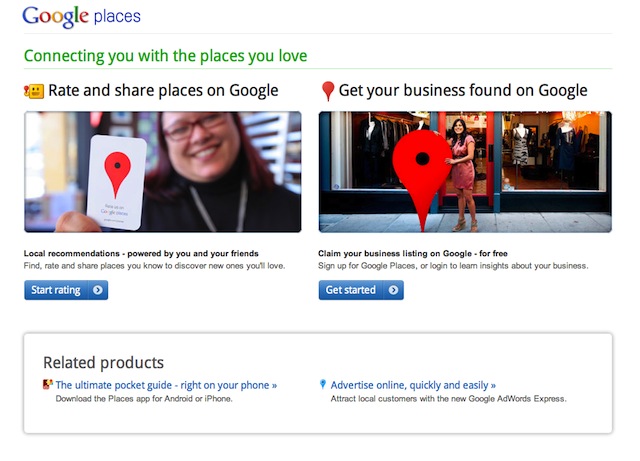
    As of today, Google Places is now part of Google Plus with the old accounts being merged into the social media and identity service.

    The effect of the merger means listings will now appear with the features of Google Plus added, for US based hospitality businesses, Zagats’ reviews are now also integrated into the results.

    For business owners, there’s little change in the administration panel and it appears any accounts that are suspended because of Google’s obscure listing policies remain in limbo.

    How the complexities of the Google Places policies mesh with the arcane and arbitrary rules applied to Google Plus identities will be an interesting thing to watch.

    One area of concern is that the owner of a Google+ Local listing will need a personal profile – for businesses this means a nominated individual has to run the account. Should that individual leave the business, then there will problems with shifting ownership.

    I have some questions in with Google’s PR folk about these aspects of the transition and hopefully we’ll get some more ideas on how to deal with these issues.

    While this merger of the two services are to be expected, it’s going to be interesting to see how it evolves. Right now it appears Google have dropped the ball on local with their focus on social and identity management.

    The identity management aspect of this integration is the key point as Google’s hope is that individuals will check into and rate businesses which in turn will give them a more complete picture of that person’s habits and preferences.

    How that pans out depends on how individuals value their personal information, it may be that once people understand the value of this data they’ll demand more than just the warm feeling of sharing their meal review with a circle of their friends.

    Similar posts: