Navigating a platform shift

Technology had dramatically changed the design industry, how does a company like Autodesk adapt?

One of the companies that defined the desktop computing revolution in the 1990s was Autodesk.

The company’s AutoCAD program bought Computer Aided Design to the masses and probably was the single main reason for the extinction of the drawing board in design offices.

In the post-PC world Autodesk itself is having to deal with a dramatically changed market as software moves onto the cloud, workplaces become more collaborative and the computing world becomes based upon mobile devices rather than static desktop computers.

As Autodesk’s Asia Pacific Senior Vice President, Pat Williams, described at the Autodesk University Extension in Sydney today there are three major disruptions happening to industry in general; to production, consumption and connections.

Disrupting design

“Technology and expectations are empowering users and disrupting how things are made,” Williams told the audience as he demonstrated Autodesk’s range of design, simulation and rendering tools that the company hopes will keep it ahead of a rapidly changing marketplace.

“How we make things and bring them to market is changing,” says Williams. “We simply don’t design, manufacture or even imagine the as-built environment as we have in the past.”

“The other thing that’s changing is how we connect and share ideas, which changes the way we create. No longer is the lone designer a reality we can live with any more.”

Along with connections between workers changing production and consumers sharing their experiences creating new consumption patterns, Williams also sees the connectivity between devices and materials as changing the way things are designed and manufactured.

“The way things connect with each other interconnect and relate is deeper than ever before. It’s getting easier to create complex systems that talk to each other and the design and physical use depends upon their interconnectivity.”

Williams echoes the ideas of designer Gadi Amit and materials engineer Skylar Tibbits on how smart materials are going to change manufacturing and design.

3D printing drives change

One of the big drivers of change in the design industry is 3D printing that allows both more complex components to be manufactured and will change some industries — most notably the construction industry as bricklaying, concrete pouring and formwork can be done by large scale printing.

Given the influence of the 3D printing, it’s not surprising that Autodesk have launched a hundred million dollar investment fund to help startups leverage the new technologies.

As one of the companies that benefited from the desktop PC revolution, Autodesk are finding themselves having to adapt to a very different marketplace. Their cloud based products will need to be nimble to succeed to in a very demanding and volatile marketplace.

Democratising the internet of things

A primary school science project shows how communities can start using open data to monitor their neighbourhood’s environment

Last year Alicia Asin of Spanish sensor vendor Libelium spoke to this site about her vision of the internet of things improving transparency in society and government.

A good example of this democratisation of data was at the New South Wales Pearcey Awards last week where the state’s winners of the Young ICT Explorers competition were profiled.

Coming in equal first were a group of students from Neutral Bay’s state primary school with their Bin I.T project that monitors garbage levels in rubbish bins.

The kids built their project on an Arduino microcontroller that connects to a Google spreadsheet which displays the status of the bin in the school’s classrooms. For $80 they’ve created a small version of what the City of Barcelona is spending millions of Euro on.

With the accessibility of cheap sensors and cloud computing its possible for students, community groups and activists to take the monitoring of their environment into their own hands; no longer do people have to rely on government agencies or private companies to release information when they can collect it themselves.

Probably the best example of activists taking action themselves is the Safecast project which was born out of community suspicion of official radiation data following the Fukushima.

We can expect to see more communities following the Safecast model as concerns about the effects of mining, industrial and fracking operations on neighbourhoods grow.

The Bin I.T project and the kids of Neutral Bay Public School could be showing us where communities will be taking data into their own hands in the near future.

Maintaining the BlackBerry ecosystem: A review of the Passport smartphone

The BlackBerry Passport is a good smartphone but may not be enough to lock existing corporate customers into the company’s ecosystem

“Man, it’s a BlackBerry!” Exclaimed the assistant at the T-Mobile store on San Francisco’s Financial District, “I haven’t seen one of those in years.”

Generally that was the reaction in taking a BlackBerry around; a lot of bemused comments along with the the odd wistful reminiscence, usually from a forty something lawyer or banker, about how they used to love their BlackBerry back in the day.

So is the Passport is enough to rekindle Blackberry’s fortunes, or at least keep the company going until CEO John Chen can execute his Internet of Things strategy around QNX?

The BlackBerry Passport is an unusual device; with a square screen it’s a very different mobile phone that takes a little getting used to.

An irony for this reviewer is the tactile keyboard, with soft keyboards now the norm for smartphones, going back to a ‘real’ keyboard takes some getting used to and the Passport suffers from the real estate taken up by the keys.

A return to two thumb typing

The layout of the keyboard also takes some getting used to with the three row tactile QWERTY layout requiring two thumbs to use, compared to the one fingered swipe or typing options available on Android or Apple phones.

Only having three rows also presents a problem for inexperienced users — where are all the punctuation keys? The answer is they appear on the screen above while typing. While a bit clunky, the predictive software which determines which punctuation you’ll need works well.

Adding to the predictive typing features is a suggested word box that appears as you type, as one becomes more experienced in using the device this becomes a very efficient way to get messages out quickly. Overall BlackBerry has done a good job on designing the phone’s typing functions to get the most out of the form factor.

Blackberry-passport-handset

Another learning curve for users are the swipe functions, where an up gesture brings up the home screen and swipes to the the left and right let you navigate between screens and apps.

The main app on the phone is the BlackBerry Hub, a centralised repository for all information. The aim of the hub is bring together email, social media and text messages into one fixed location.

Bringing together information like this is always problematic as many of us are receiving dozens, if not hundreds, of emails, texts and social media messages a day. Overall though the Hub handles them well and integrates nicely with the major social media services including Twtitter, Facebook and LinkedIn.

The Appstore weakness

Where the software falls down is when venturing outside the pre-packaged apps — while things are better than they were, BlackBerry’s devices still suffer from a sparse app store.

The lack of a suitable WordPress app prevented this reviewer from testing out the device’s blogging potential which is a shame as the 1:1 aspect screen may well have proved to be better than the Apple and Samsung equivalents.

In the case of social media Instagram is a good example with the only free app, iGram, only offering Facebook and Twitter integration; a limitation that betrays the device’s excellent 13 Megapixel camera.

On the other important hardware matters, the phone’s battery gives well over a days life on heavy use, the company claims 24 hours talk time, and recharges through a standard Micro USB connector.

The decent battery life is reflected in the weight of the device with it tipping the scales at 196g, compared  to the Samsung Galaxy 5’s 145g and the Apple iPhone 6 plus’ 172g. It’s not heavy by any means which shows some of the engineering BlackBerry has applied to the phone.

Inside the device is 32Mb of storage with the capacity to add up to 128Mb Micro SD memory, alongside the memory slot is the Nano SIM holder which worked well on both the US T-Mobile and Australian Optus 4G networks.

Maintaining the ecosystem

Unfortunately we were unable to review how well the device and its software integrated with the Black Enterprise Service as this is going to be the main selling point for the Passport.

Overall the BlackBerry Passport is a good corporate phone that’s going to appeal to organisations that wants to give their staff secure communications with smartphone capabilities.

However the handset itself is unlikely to appeal to the broader smartphone market. At best the BlackBerry Passport is an attempt to keep the company’s core market locked into the ecosystem while John Chen executes his pivot into new markets. It may not be enough.

In San Francisco’s Financial District, the guys at the T-Mobile shop are probably not going to see many more BlackBerry phones.

Connecting people to spaces

Smartphones, beacons and smart software are the key to future retail success believes Proximity Insight’s Steve Orell

Beacon technologies are one of the hottest items in the Internet of Things with retailers, sports stadiums and hotels looking at how they  can use these devices to improve their operations and customer experiences.

At Dreamforce 2014 Proximity Insight’s Steve Orell spoke on the event’s wearable panel about how their service plugs into beacon technology and customer service.

Proximity Insight was born out of the 2013 Dreamforce Hackathon where Orell and his team were finalists. From that, the company set up operations in New York with a focus on customer relationship management in the retail industry.

Retail isn’t the only the field that Orell sees for Proximity Insight with the hotel and casino industries as being other targets.

“With the hotel, why check-in? Why not walk in and let your smartphone do it for you?” Orell asks.

“It’s all about making live so much more seamless and slick,” Orell adds. “There’s opportunities in every sector.”

For businesses looking at rolling out beacon technologies the key is to be adding value to enhance the customer experience, Orell believes.

“You have to be delivering something to the customer beyond tracking them, it’s about making the whole retail or hospitality experience better. It has to benefit the customer.”

With beacon technologies now becoming common and the supporting hardware being built into all smartphones, we can expect to see more applications coming onto the market. It’s worth considering how your business can use them to enhance the customer experience.

Paul travelled to Dreamforce 2014 as a guest of Salesforce

Adrift in the data lake

We’re awash with data and businesses have to figure out how not to drown in it

Last week Yahoo! closed down their directory pages ending one of the defining services of the 1990s internet and showing how the internet has changed since the first dot com boom.

The Yahoo! Directory was victim of a fundamental change in how we manage data as Google showed it wasn’t necessary to tag and label every piece of information before it could be used.

Yahoo!’s Directory was a classic case of applying old methods to new technologies – in this case carrying out a librarian’s function of cataloguing and categorising every web page.

One problem with that way of saving information is you need to know part of the answer before you can start searching; you need to have some idea of what category your query comes under or the name of the business or person you’re looking for.

That pan was exploited by the Yellow Pages where licensees around the world harvested a healthy cash flow from businesses forced to list under a dozen different categories to make sure prospective customers found them.

With the arrival of Google that way of structuring information came to an end as Sergey Brin and Larry Page’s smart algorithm showed it wasn’t necessary to pigeonhole information into highly structured databases.

Unstructured data

Rather than being structured, data is now becoming ‘unstructured’ and instead of employing an army of clerks to categorise information it’s now the job of computers to analyse that raw information and pick out what we need for our businesses and lives.

As information pours into companies from increasingly diverse sources, a flood that’s becoming so great it’s being referred to as the ‘data lake’, it’s become clear the battle to structure data is lost.

At the Splunk Conference in Las Vegas this week, the term ‘data lake’ is being used a lot as the company explains its technology for analysing business information.

Splunk, along with services like IBM’s Watson and Tableau Software, is one the companies capitalising on businesses’ need to manage unstructured data by giving customers the tools to analyse their information without having first to shoehorn it into a database.

“Thanks to Google we got to look at data a different way,” says Splunk’s CEO and Chairman Godfrey Sullivan. “You don’t have to know the question before you start the search.”

Diving into the data lake

It’s always dangerous applying simple labels to computing technologies but some terms, like ‘Cloud Computing’, don’t do a bad job of describing the principles involved and so it is with the ‘data lake’.

Rather than a nice, orderly world where everything can be pigeonholed, we know have a fluid environment where it wouldn’t be possible to label everything even if we wanted to. A lake is a good description of the mass of data pouring into our lives.

The web was an early example of having to manage that data lake and Google showed how it could be done. Now it’s the turn of other companies to apply the principles to business.

Google fatally damaged both Yahoo! and the Yellow Pages, other companies that are stuck in the age of structured data are going to find the future equally dismal. Don’t drown in that data lake.

Paul travelled to Las Vegas as a guest of Splunk

ABC Nightlife with Tony Delroy October 2014

Connected cars, smart watches, Microsoft and social media will be the topics of the next Nightlife with Tony Delroy technology segment.

Paul Wallbank joins Tony Delroy on ABC Nightlife across Australia from 10pm Australian Eastern time on Thursday, October 2 to discuss how technology affects your business and life.

Update: If you missed the program you can listen to the podcast at the ABC site or stream it below.


For this month’s spot we’re looking at smartcars, smartwatches, the next version of Microsoft Windows and whether the new social media platform Ello can displace Facebook.

Some of the questions we’ll cover include;

  • What’s happening with connected car technologies?
  • Isn’t all this talk about smart cars another way ?
  • So how far are we off the driverless car?
  • Are our mobile phone choices going to dictate what brand car we buy?
  • How does the smart watch fit into how companies are trying to lock us into their software?
  • A new social media platform called Ello is taking off,  what is it?
  • Do we really need another social media platform?
  • Microsoft have announced Windows 10, aren’t we only up to eight?
  • What’s different in Windows 10?
  • Has Windows 8 been a success?
  • When will Windows 10 be released on the market?


Join us

We’d love to hear your views so join the conversation with your on-air questions, ideas or comments; phone in on the night on 1300 800 222 within Australia or +61 2 8333 1000 from outside Australia.

Tune in on your local ABC radio station from 10pm Eastern Summer time or listen online at www.abc.net.au/nightlife.

You can SMS Nightlife’s talkback on 19922702, or through twitter to @paulwallbank using the #abcnightlife hashtag or visit the Nightlife Facebook page.

Apple and the long game

Apple’s real game is in controlling a large part of the payments industry and the internet of things. The iPhone6 and watch are key steps in that strategy.

As expected, Apple announced their new range of iPhones and a smart watch today with many digital trees being felled as the tech media falls over to describe all the shiny features of the new devices.

Buried in Apple’s announcements though are the company’s real long game in payments and the Internet of Things.

For the IoT, the various ‘kits’ Apple have announced in the last year — HomeKit, HealthKit and now CloudKit — are the serious plays in this space as they bundle together programs, devices and data streams across health and smarthome applications.

CloudKit moves Apple onto another level as it makes it easier for developers to build back end applications that tie into smart devices; even if someone isn’t using Apple equipment they still may find themselves firmly in the walled garden of Cuptertino.

The long awaiting release of Apple Pay leverages iTunes’ strength as a payment platform, bundling a secure chip into the new iPhone adds to the company’s pitch of being a trusted partner to merchants and payments processors.

What today’s announcements of new hardware, software and APIs indicate is Apple’s shoring up the perimeters of its walled garden.

For it’s competitors, this raises the ante; Google Wallet has nothing like the market penetration or customer acceptance that iTunes has and earlier this week Amazon effectively admitted the Fire smartphone has been a failure by slashing prices. Facebook has made promising noises about payments but still remains locked in an advertising driven business model.

While there’s no doubt the new iPhone will be a success, although the jury is out on the smart watch, Apple’s real game is in controlling a large part of the payments industry and the internet of things. Today’s announcements are a key step in that strategy.

Skipping the trough of disillusionment

Will the IoT have a smooth transition from the top of Gartner’s hype cycle to general acceptance?

When consulting group Gartner placed the Internet of Things at the peak of their hype cycle last month it raised concerns that the technologies might be about to take a tumble.

Speaking to Networked Globe this week in San Jose; Maciej Kranz, VP and GM of Cisco’s technology group described how he believes the IoT’s evolution from the top of the hype cycle to the plateau of acceptance will be quick.

“We’re happy that Gartner put IoT on top as it means there’s awareness,” said Kranz. “We hope to prove Gartner wrong, that in IoT we don’t go through the classic hype cycle we go from hype into reality.”

Kranz’s reasoning while the IoT will suffer a short spell, if any at all, in Gartner’s ‘trough of disillusionment’ is because the major industry players are working closely together to build the sector and its standards.

“Where we think it’s a little bit different from some of the other hype cycles than some of the other hype cycles is that we continue to work very close at the industry,” Kranz explained.

“Because we’re all working as an industry to make it real it will go through the disillusionment and quickly into a reality.”

This may well turn out to be true if the big players like Cisco and GE in the industrial space along with companies such as Google and Apple in the consumer sector stay committed to the concept. If the major vendors stay the course, then it’s likely IoT technologies won’t suffer much at all.

Another aspect in the IoT’s favour is that it isn’t really a specific technology or product at all, instead being more of a concept bought about by various technologies such as home automation, industrial controls and cloud computing all reaching maturity.

Rather than one separate item on the Gartner hype cycle, the IoT is really made of dozens of different technologies that are mostly on the ‘plateau of acceptance’ themselves.

Kranz sees Gartner’s listing of the company as being on the top of the hype cycle as being a vindication for how the IoT has been adopted by industry and the community, “it is remarkable how we’ve gone in the last nine months from people saying it’s a vision to n

A tale of two telcos

The contrasting fortunes of Australia’s Telstra and China Telecom tell us much about the two nation’s economies

Last Thursday saw China Mobile and Australia’s Telstra release their annual results.

Both have impressive numbers that illustrate how the telco industry is changing along with some stark differences between the two nation’s business culture.

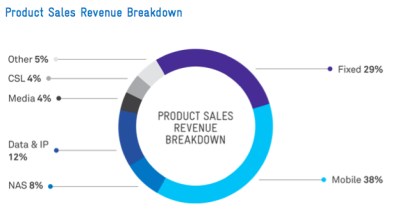
For both companies their results show how voice and SMS are declining as the ‘rivers of gold’ for telecoms operators around the world; China Mobile’s voice revenues are down 6% while  Telstra’s fixed line voice fell by a similar amount.

In Australia, the incumbent telco (which sometimes advertises on this blog) continued its dominant position in its market with net profit rising nearly 15% on the back of 6.1% increase in income.

teslstra-revenue-2014

Telstra’s results also showed how the Aussie telecommunications market is now primarily a mobile sector; while the advantages of being the incumbent are substantial the real growth and profits in the business are in it’s non traditional sectors. It’s little wonder the company is happy to give away its legacy copper systems to the government’s troubled National Broadband Network.

In the PRC, the news wasn’t so good with China Mobile’s net profit for the first half of the year falling  8.5 per cent as its traditional voice and messaging businesses faced continued pressure from social media firms, despite revenue being up nearly five percent.

China Telecom is under pressure from competitors while in Australia the incumbents are doing very well. This is true across much of the Aussie economy.

While China Mobile is staking its future on its 4G rollout, Telstra is seeing the Internet of Things and Machine to Machine (M2M) markets as being the key markets, despite Gartner flagging the IoT as being at peak of the Hype Cycle.

It may well turn out to be the other way round — Chinese businesses and governments are far quicker to embrace the IoT than their Australian equivalents while Telstra’s biggest competitive advantage against SingTel Optus and Vodafone is it’s far superior 4G network.

China Mobile’s and Telstra’s competing fortunes tell us much about each country’s telecommunications markets along with the direction of both nation’s economies.

Stages of hype – the Gartner Hype Cycle turns twenty

The Gartner Hype Cycle turns twenty

Gartner’s Hype Cycle has been a favourite of this blog as it’s been pretty accurate at describing where various technologies are in the tech media’s eye.

This year is the twentieth edition and the most notable aspect is the Internet of Things is shown as being right on the peak of industry hype.

Other sectors struggling on the cycle are cloud computing, big data and machine-to-machine technologies; all of them are tumbling into the trough of disillusionment.

gartner-hype-cycle-2014

In itself this isn’t a bad thing for these technologies as the ‘trough of disillusionment’ is where the true business cases are found, certainly for the Internet of Things this will not be bad for a sector that’s clearly overhyped.

There’s also the thought that not all troughs of disillusionment are the same as some concepts – such as Big Data – are actually trends which means they aren’t subject to the whims of corporate marketing departments.

How the hype cycle will look in five years will be fascinating as things like brain-computing interfaces and the quantified self start to take form. When they reach the peak of the hype cycle we can expect many of today’s disillusioned technologies will be on the plateau of productivity.

Reaching Peak Tablet as iPad and android sales begin to plateau

An electrical retailer’s financial results might mark turning points in two different economies.

Today Australian electronics retailer JB Hi Fi released its annual results. They confirm what’s been becoming apparent over the last year that tablet computer sales seem to have peaked.

A plateauing of tablet sales is bad news for retailers like JB whose stock price fell by 8% on the news.

It’s not surprising that tablet computer sales have peaked as the growth had been spectacular and, unlike PCs of a decade ago, there isn’t an obvious five year replacement cycle.

That the old PC industry business model doesn’t apply to tablets is why Apple is focusing on other revenue sources like the App Store and internet of things plays such as HomeKit and HealthKit.

Once again, the industry leaders are finding they have to pivot to stay up with a rapidly evolving market.

The other notable point from JB’s management was that Australian consumer confidence is tanking, which might indicate the economy is entering its first recession in twenty years.

If it is true that the Aussie economy is entering a recession, then it might be time for the adults to take charge in a very immature government. Some of the Liberal Party’s pampered princelings may have to start earning their salaries soon.

Hacks on a plane

That avionic systems could be vulnerable to hacking is a wake up call for the internet of things industry.

One of the great concerns about the internet of things is what happens when older computer technology that was never designed to be connected to the net is exposed to the online world.

A presentation to the Black Hat Conference in Las Vegas this Thursday by researcher Ruben Santamarta promises to show some of the vulnerabilities in aircraft avionic systems.

Today’s aircraft are extremely smart devices with the downsides shown in the tragedy of AF447 where an Air France jet plunged into the Atlantic Ocean when two undertrained pilots didn’t understand what their plane was doing as it encountered severe ice conditions in a storm.

With aircrew increasingly dependent upon computers to help them fly planes, the risks of bugs or security weaknesses in aircraft systems is a serious issue and with the continued mystery of MH370’s fate adds an element of speculation that a glitch of some form was responsible for its disappearance.

It wouldn’t be the first time a passenger plane came to grief because of a computer error; most notably Air New Zealand flight 901 crashed into Antarctica’s Mount Erebus during a 1979 sightseeing trip due to wrong information being loaded into the navigation system.

The internet adds numerous risk factors to aircraft – Santamarta’s hack allegedly works through in plane WiFi systems – particularly given these avionics systems haven’t been designed to deal with unauthorised access into their networks.

Should Santamarta’s demonstration prove feasible, it will be an important warning to the aviation industry and the broader Internet of Things community that security is a pressing issue in a world where critical equipment is connected.