Tag: silicon valley

  • Silicon Valley’s network effect

    Silicon Valley’s network effect

    Philip Rosedale, the founder of Second Life and various others startups has an interesting take on why San Francisco and Silicon Valley are the centres of the tech startup world.

    He puts the region’s success down to the network effect where like minded groups share knowledge and encourage each other.

    If you want to create a vibrant start-up ecosystem somewhere else that is competitive with San Francisco and Silicon Valley (and this is starting to happen right now in places such as Boulder and Austin), you want to do two things: You want to pack the people working together into as dense an area as possible, with public areas and co-working venues where they will see each other constantly, even when they aren’t working in the same company. And then you want to encourage them to let down their guard and be as open as possible about what they are doing.

    Of course the network effect doesn’t just apply to the Silicon Valley tech startup model, it’s just as true for China’s manufacturing hubs, South Korean shipbuilding or historical centres like Detroit’s motor industry and the English Midlands during the industrial revolution.

    We shouldn’t forget that fifty years ago governments sought to to emulate Detroit’s success and a century ago cities strived to be like Birmingham.

    That’s something we should keep in mind when looking at ways to emulate Silicon Valley – in trying to copy today’s successes, we may be mimicking a model that has already peaked while overlooking our own unique advantages and the opportunities in new industries.

    For cities striving to become world centres of industry, it might be best to first figure out what they do well and then find a way of attracting the smartest people in that field to move there.

    Then again, it may just be that most industrial hubs are accidents of history and the best we can do is try to attract smart people to our communities.

    Similar posts:

  • You call that a graph?

    You call that a graph?

    One way to illustrate a story is with charts. All too often though misleading graphs are used to make an incorrect point.

    A Verge story on Groupon shows how to get graphs right – clear, simple and tells the story of how the group buying service’s valuation soared and then plunged while it has never really been profitable.

    The vertical axis is the key to getting a graph right, cutting off most of the y-axis’ range is an easy way to mislead people with graphs. In this case you can see just the extent of Groupon’s valuation, profit and loss over the company’s short but troubled history.

    Since its inception, The Verge has been showing other sites how to tell stories online, their Scamworld story exposing the world of affiliate internet marketing sets the bar.

    Using graphs well is another area where The Verge is showing the rest of the media – including newspapers – how to do things well.

    For Groupon, things don’t look so good. As The Verge story points out, the company’s income largely tracked its workforce which grew from 126 at the start of 2010 to over 5,000 by April of 2011. Which illustrates how the business was tied into sales teams generating turnover.

    The spectacular growth of Groupon and other copycat businesses couldn’t last and hasn’t. The challenge for Groupon’s managers is to now build a sustainable business.

    For investors, those graphs of Groupon’s growth were a compelling story. Which is another reason why we all need to take care with what we think the charts tell us.

    Graph image courtesy of Striker_72 on SXC.HU

    Similar posts:

  • PayPal struggles with the Soviet customer service model

    PayPal struggles with the Soviet customer service model

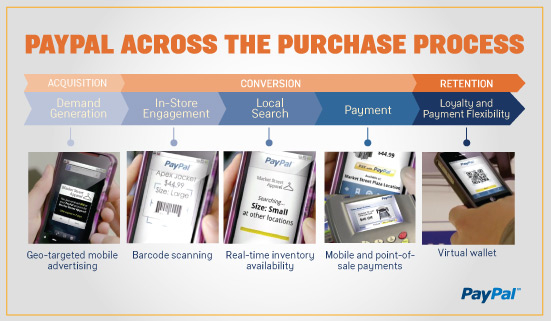
    CNN reports that internet payment giant PayPal is looking at an “aggressive changes” to its fraud detection systems which see thousands of customers accounts frozen every year.

    PayPal’s announcement follows last year’s promise by CEO David Marcus to institute a “culture change” at the company,

    Our intention has always been to protect our customers. Not to mess around with our merchants.
    I want to share two things with all of you:

    #1 — there’s a massive culture change happening at PayPal right now. If we suck at something, we now face it, and we do something about it.

    #2 — you have my commitment to make this company GREAT again. We’re reinventing how we work, our products, our platforms, our APIs, and our policies. This WILL change, and we won’t rest until you all see it. The first installments are due very soon. So stay tuned…

    Screwing around merchants and buyers has become synonymous with PayPal and their parent company eBay who together are the poster children for the Silicon Valley Soviet Customer Service Model.

    Reader comments to the CNN article cited at the beginning of this post give a taste of just how bad the problem is at PayPal.

    Once your business attracts the attention of PayPal’s algorithms, you’re locked into a Kafkaesque maze of dead ends and arbitrary, made up rules.

    To be fair to PayPal and eBay this problem isn’t just theirs, it’s shared by Google, Amazon and almost every major online company. Their view of customer service is to shoot first and ask no questions, they certainly won’t answer anything from their victim beyond a trite passive-aggressive corporate statement.

    Part of the current Silicon Valley mania around web and app based services is that, along with providing free content, users will provide support for each other and that customer service is an unnecessary overhead which should be kept to a minimum.

    In this respect, many of these new businesses are little different from the legacy airlines, telcos and declining department stores who have spent the last thirty years stripping away customer service with the result of locking them into shrinking commodity markets.

    That failure to value customer service is the biggest weakness for companies like eBay, Amazon and Google. The very forces that favour them, the reduction of the entry barriers, also makes it easier for more customer orientated businesses to grab market share.

    Just as Silicon Valley’s new businesses has challenged a whole range of incumbent operators, they too are at risk from upstarts who value their customers. This is something PayPal’s management can’t afford to forget.

    Similar posts:

  • Silicon Valley and the virtues of going private

    Silicon Valley and the virtues of going private

    Last week there were a pair of interesting stories about the tech industry’s investment models.

    The biggest story was the rumours that PC manufacturer Dell may go back to being a private company and the other was Survey Monkey’s raising of $800 million through debt and private capital.

    Not your usual VC play

    Polling company Survey Monkey’s capital raising is notable because it’s very different to the standard VC equity models used by Silicon Valley companies of this size.

    Adding to the unusual nature of Survey Monkey’s behaviour is the declaration that they have no intention of becoming a public company. By ruling out an obvious way for investors to cash out of the business, they are making a clear statement that those putting money into the venture are doing so for the long term.

    That Survey Monkey is also taking on debt indicates management believe they are going to have the cash flow to service payments. Not playing to the Greater Fool business model makes the online polling company very different to most of its contemporaries in Silicon Valley.

    Dell going private

    Survey Monkey’s $800 million is dwarfed by Dell’s market cap of 22 billion dollars so the talk of the PC manufacturer buying out its stock market shareholders and becoming a private company is big news indeed.

    The New York Times Dealbook has a close look at the of the idea of taking Dell private and comes to the conclusion it’s not likely to happen.

    While there are challenges, there is merit to the idea. Richard Branson delisted Virgin from the London Stock Market in 1988 after becoming frustrated with the short term objectives of his shareholders and there’s a possibility of Michael Dell may feel the same way.

    For Dell, the challenge lies in moving away from the commodity PC sector. The Dell Hell debacle showed the company’s management has struggled with the realities of the low margin computer market and things aren’t getting better.

    Dell themselves are steadily moving away from PCs with bigger investments in services and other computer hardware sectors.

    Project Ophelia, a USB stick sized computer running Google’s Android operating system was one of Dell’s announcements at the Consumer Electronics Show and could mark where the company is going in the post-PC environment.

    Given portable and desktop PCs represent over half of Dell’s income moving away from those markets is going to be a major change in direction for the company.

    A change is though what the company needs with revenues down 11% on last year which saw profits nearly halved.

    Whether going private or staying public will allow Dell to recover its profitability remains to been seen, but management could probably do without the distraction of answering to stock markets while dealing with a complex, challenging task.

    Both Dell and Survey Monkey are showing that there isn’t one path to raising funds for technology companies, in fact there’s plenty of businesses raising money privately without the razzamatazz of high profile venture capital investments.

    It may well be though that we’re seeing private companies coming back into fashion as individual investors see the advantages in businesses with good cash flows rather then the hyped loss leaders which have dominated Silicon Valley’s headlines.

    Image of Wall Street courtesy of Linder6580 on SXC.HU


    Similar posts:

  • Pulling up the drawbridge

    Pulling up the drawbridge

    “Online bloggers and tweters are not subject to the financial incentives which affect the print media.”

    While there’s much to disagree with in Lord Justice Leveson’s Australian speeches last week, particularly the bizarre suggestion that bloggers and social media are driving the decline in journalistic standards, he is correct about the economics of online publishing. It’s tough to make a buck on the web.

    It’s so tough, many of the new media startups are founded on not paying for the articles they publish. This model has become so entrenched, that some venture capital investors will only invest in media start ups if they don’t have any reporters or editors.

    Pure platforms

    New media startup Buzzfeed‘s founder, Jonah Peretti, mentioned Silicon Valley’s reluctant to pay writers in a staff email republished by Chris Dixon;

    Tech investors prefer pure platform companies because you can just focus on the tech, have the users produce the content for free, and scale the business globally without having to hire many people.

    This antithesis to paying creatives and content creators is one of the notable aspects of the current Silicon Valley model, who needs editors and writers when a billion people will post to Facebook, Twitter or Instagram?

    Arianna Huffington has been the most successful with this model in the media industry, parlaying a largely unpaid for content business into a fat pay-off.  Chris Anderson described this model best in a description of his website Geek Dad’s economics.

    Reading the comments

    For readers, much of the value in sites like the Huffington Post and Geek Dad lie in the comments stream where readers give their views and experiences and build the communities so many investors and advertisers are looking for.

    This is a point made by Rachel Hills when commenting about Australian website Mamamia’s payment policies;

    When I visit Mamamia. I don’t go to Mamamia for the articles, which usually don’t tell me anything I haven’t already read somewhere else. I go for the comments.

    Rachel concludes with the thought that Mia Freedman’s Mamamia is providing a platform for discussion. This is true, but that’s no different from newspapers, the six o’clock news, current affairs shows or even the weekend’s football match.

    Those football players, newsreaders and journalists are all paid for their work, just like Chris Anderson and Mia Freedman were as magazine editors.

    The hypocrisy of unpaid content

    Which leads us to the core hypocrisy of the unpaid content model; its promoters – people like Mia Freedman, Chris Anderson and Arianna Huffington – have all been well paid in their careers yet now choose to deny the next generation of writers and journalist an income.

    A business adviser once remarked to me that the management of a corporation that were locking in their entitlements while cutting middle management were “pulling up the drawbridge”, that line seems apt as older, affluent journalists demand younger ones work as unpaid contributors or interns.

    The bleat from online publishers is “we can’t afford to pay contributors”, in most other industries being able to pay your workers is a measure of whether your business is solvent. That many new media outlets can’t may mean that the entire industry is insolvent.

    Writers get exposure

    Were the local cafe to say it couldn’t afford to pay its waitstaff, but it was giving them valuable work experience they’d be rightly scorned for exploiting workers. There’s little difference with online publishers.

    It may well be because there is no shortage of manipulative, attention grabbing garbage designed to provoke reactions and increase pageviews, which is the flaw in the “writers get exposure” excuse used by many of these sites.

    As middlemen, publishers have to add value in order to have a role, ‘offering exposure’ to unpaid writers isn’t a reason in itself. This is an industry with shaky foundations and it’s not surprising founders are desperately trying to find greater fools to fund their exits.

    Image of Michael Arrington from Kevin Krejci on Flickr.

    Similar posts: