Tag: silicon valley

  • Disrupting the disrupters

    Disrupting the disrupters

    Two days ago, iconic venture capital investor Fred Wilson, wrote about the changing nature of the tech industry’s VC investments.

    Fred puts the changes down to three factors; maturing markets where big players increasingly dominate, the move to mobile which Cristina Cordova examines in more detail and the shift in focus from the consumer market to the enterprise sector.

    The last factor bears more examination as consumer and enterprise are very different and there’s no guarantee that businesses built around thousands of people downloading apps or accessing websites can pivot into selling into corporations and government agencies.

    Probably the biggest problem is the consumer or small business freemium model doesn’t cut it in the enterprises who are prepared to pay big sums for highly reliable and secure services.

    Similarly the enterprise model of fat sales commissions paid for by big implementation costs and expensive support contracts doesn’t quite fly either for these start up business. There’s also a good argument that high margin enterprise model is doomed anyway as cloud services displace costly in-house installations.

    In the transition from consumer to enterprise is difficult and most companies have struggled to make the jump, even Google Docs has been a hard sell into the corporate sector.

    At the enterprise end, cloud services are cutting margins as IBM and Oracle are finding. Both companies are moving across to cloud products and now a lot of salespeople and consultants in those organisations are looking at a substantial drop in their standards of living.

    More importantly for the startup and VC communities, the “greater fool” model doesn’t work in the enterprise space. Hyping a business which has barely made a cent in revenue but does have a million users is very different to building a stable corporate platform.

    It may well be the move to the enterprise by Silicon Valley is because the consumer model has run out of “greater fools” who’ll buy overhyped photo sharing apps or social media platforms of dubious value.

    This change in investment behaviour also has lessons for governments trying to copy Silicon Valley. The puck moves fast in the investment community while governments, by definition, are slow.

    By the time governments have setup their programs, the markets have moved on and many of the hot technologies of two years prior are now old hat. This is exactly what we’re seeing in the apps world.

    We often hear about technology causing disruption, often though we forget that those disruptive technologies can be ephemeral as they are disrupted themselves.

    As these industries evolve, we’ll see how well the disrupters deal with being disrupted.
    Similar posts:

  • Silicon lemmings

    Silicon lemmings

    Despite their self proclaimed belief in thinking different, many of today’s internet entrepreneurs tend to travel in flocks and follow the whichever business model is currently being hyped by Silicon Valley’s insiders.

    From the original dot com boom in the late 1990s to today, web entrepreneurs and their investors jump onto the bandwagon of the day – it could be online shopping, photography applications, group buying services and taxi apps which are the flavour of the moment.

    The latest taxi app is Click-a-Taxi, a European venture which has raised a stingy $1.5 million in second-round funding, which joins a legion of taxi and hire car apps following in the wake of market leader Uber.

    Unfortunately for the investors in these taxi and hire car apps, these services are making some pretty powerful enemies.

    Around the world gatekeepers such as taxi companies and booking services do their best to keep drivers in poverty while over charging passengers for a poor service.

    The new apps disrupt that business model by offering a better service for customers and a better deal for drivers – most importantly it deprives the gatekeepers of their cut.

    Predictably, the backlash is fierce with 15 US and Canadian cities proposing to tighten the rules on the use of GPS and smartphone apps.

    These backlashes are going to prove expensive to the investors as Silicon Valley entrepreneurs have a habit of under-estimating the power of regulatory barriers. How the current crop of taxi apps deal with this will determine which lemmings go over the cliff* and which ones survive.

    One group of Silicon Valley lemmings lying dazed at the bottom of a cliff face are those who invested in the group buying hype of the last two years.

    Market leader Groupon is now reportedly moving away from daily deals to ‘always on’ deals, which kills the whole point of group buying sites. Most of the copycats are already dead.

    Former Cudo CEO Billy Tucker predicts that in the Australian market – which was flooded by a wave of Groupon imitators in 2010 and 11 – will only have a dozen survivors out of the top 50 listed earlier this year.

    Investors in these look-a-like services had a gamble that a greater fool would buy the operation, usually a big corporation run by executives with a fear of missing out. The ones who missed out quietly swallowed their losses and moved on to the next mania – which appears to be taxi apps.

    For the taxi applications, the buyers of the apps will probably be the incumbent gatekeepers, who aren’t really fools at all.

    It wouldn’t be surprising to find the smarter look-a-like operators are already talking to the taxi companies about an app which will, miraculously, comply with all the requirements of the local regulators.

    As for the rest, they’ll do their dough.

    What is going to be interesting though is the battle between Uber and the various taxi regulators around the world, particularly in countries where politicians jump to the whims of their business cronies.

    *lemmings don’t really throw themselves off cliffs, that myth was invented by the Walt Disney Corporation. Sadly Australian, particularly NSW, politicians favouring ticket clippers and rent seekers is no myth.

    Similar posts:

  • Raising venture capital is not the measure of success

    Raising venture capital is not the measure of success

    “Those guys are successful, they’ve raised half a million from investors,” one startup commentator recently said about a business.

    Is raising money the benchmark of business success? Surely getting investors on board is part of the journey, not the destination.

    Having some investors coming on board means others share the founders’ belief their idea is a viable business and it’s a great ego boost for those working hard to bring the product to market.

    That cash also exponentially improves the survival chances of the business – too many promising ventures fail because the founders haven’t enough capital.

    While it’s an important milestone in the growth of a business, raising capital is not the end game. Only minds addled by the Silicon Valley kool-aide believe that.

    In fact, if you’ve set up a business because you hated working for a boss, you might find your new investors are the toughest task masters you’ve ever worked for.

    Good luck.

    Similar posts:

  • Does Facebook’s float mark social media’s peak?

    Does Facebook’s float mark social media’s peak?

    After its successful float on Friday, social media giant Facebook’s stock is now 18% down on the IPO price and there are claims some investors were aware of revised analyst expectations shortly before shares went on sale.

    Facebook’s share price isn’t being helped by large advertisers, most notably General Motors, publicly expressing their dissatisfaction.

    In SmartCompany’s survey on business tech use, one statistic that stood out was that less than 30% of businesses were happy with their returns on social media.

    Facebook can’t even win in the courts with a Californian magistrate throwing out the social media platform’s trademark case against a Norwegian pornography site.

    It’s been clear for some time that the tech industry has been in an investment bubble and social media services have at been the centre of that hype .

    The huge expectations of Facebook’s float value has been one of the drivers of Silicon Valley’s investment boom – a dangerous feedback loop in itself.

    So now Facebook’s share price is in decline and angry investors are asking “why” and demanding answers from advisors and banks.

    The real question though is does Facebook’s float mark the peak of the current tech boom in the same way AOL’s merger with Time Warner in January 2000 marked the peak of the original dot com mania?

    One of the great similarities with the original dot com mania is the businesses’ failure to make money from their services – today’s Pintrest and Twitter have that much in common with the great Dot Com boom debacles of Pets.com and Boo.

    The biggest problem with the social media services is most of them are advertising dependent. As we see from General Motors’ dissatisfaction and that of the businesses in the Smart Company survey, most businesses aren’t happy with the performance of social media platforms.

    Getting the advertising, or other revenue streams, right is key to the survival of these services. Google cracked this after the original dot com boom and are now one of the most successful companies ever.

    The companies that figure out the revenue models for social media, or online news, will be the next Google’s and Facebook could well be the business that cracks the code for social media.

    For the social media industry overall, it appears the sector is now at what Gartner calls the “Peak of Inflated Expectations” on their hype cycle.

    The next stage from the peak is the tumble into the “trough of disillusionment” and that appears to be where Facebook is heading.

    As Gartner points out, that trough is also where good, stable businesses are built. While the sector or technology is scorned, those who survived the tumble out of fashion are able to consolidate and learn from the harsh lessons they’ve received.

    Eventually the market rediscovers the technology or industry and eventually becomes accepted as a mature part of business or as Gartner put it, they enter the “plateau of productivity.”

    This is exactly the process Amazon went through during the dark days of 2002 and 2003 after the tech wreck which today finds them as one of the Internet’s giants.

    Whether Facebook can emulate Amazon or Google is for history to judge, but social media’s falling out of favour is not a bad thing, the wreckage of the current tech mania will see much stronger and viable social media businesses that will deliver real value to industry and society.

    In the wreck of the dot com boom we saw HTML “coders” reduced from driving Porsches to driving buses, the same thing will probably happen to many of today’s social media experts. That in itself is not a bad thing.

    Similar posts:

  • Now Facebook’s challenges really begin

    Now Facebook’s challenges really begin

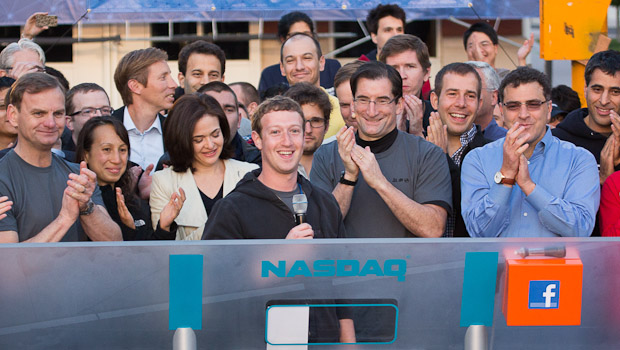
    The long awaited float yesterday of social media service Facebook was a triumph for the business’ founder Mark Zuckerberg, his management team and advisors.

    A market valuation of 100 billion dollars for a business started less than ten years ago is an impressive achievement and that sum now presents massive challenges for management who have to deliver on what investors believe the service is capable of.

    At US$38 a share, Facebook is valued at 76 times its projected 2012 earnings of 50 cents a share, and nearly twenty times its expected revenues of US$5 billion. This compares to Google which trades at less than 15 times its 2012 profit estimate and six times revenue.

    For Facebook to match Google’s value, the social media service is going to have to start making serious money beyond they can from charging egoists and corporations $2 a time for featured posts.

    Google’s success was in moving out of their walled garden, had Google focused on advertising just on their own search pages the company would be earning a fraction of the billions they now make every quarter.

    It’s difficult to see how Facebook can move off their platform into other sites and with users moving to mobile, the company will find itself even more constrained by Google and Apple who want to control access to their devices.

    A more obvious course for Facebook is to maximise income from the massive data base of likes, preferences, relationships and opinions they have amassed from their users. How they do this will probably be the biggest challenge to Facebook’s management.

    In monetizing their database, Facebook will push the limits of the law, tolerance of privacy advocates and possibly the patience of their user base. This is going to test a company that has in the past been slow to respond to public concerns.

    Another challenge is perception – with such a massive valuation, Facebook is going to attract critics regardless of what they do.

    A good example of this is the number of people criticising the float for not ‘popping’ on the stock market debut. At the end of the first day’s trading the stock had only gone up 0.6% and some in the media claimed this showed the IPO wasn’t the successful.

    The idea a successful IPO is one that soars on the first day of trading is a naive view from a 1980s mindset. The idea was born out of the privatisation of British and Australian utilities in the 1980s and 90s where taxpayers were seduced by the idea of “free money” in exchange for selling community assets cheaply.

    A ‘stag profit’ from a share that soars on its public float is theft from the existing shareholders and a transfer of wealth to insiders and their advisors.

    Silicon Valley venture capitalists and startup founders aren’t dumb and have never fallen for that trick – investors pay dearly for stock in their ventures.

    While no-one would call Mark Zuckerberg and his management team dumb they have a big job ahead of them finding revenue sources to justify the $100 billion market valuation. It’s going to be an interesting ride.

    Similar posts: