Author: Paul Wallbank

  • Penny wise and pound foolish

    Penny wise and pound foolish

    “We were penny wise and pound foolish” says Peter Trimble, Finance and Systems director of the V8 Supercars, about the IT setup he found when he started with the motor sport organisation 18 months ago.

    The V8 Supercars were like many businesses who had outgrown their basic IT setup and were struggling as a result.

    A touring organisation – “a travelling circus” as described by CEO David Malone – with 15 races in Australia, New Zealand the US has some fairly unique challenges as contractors, teams and a dispersed workforce put demands on the businesses which a basic small business system struggles to cope with.

    What Trimble found at the business were employees struggling with cheap internet connections and antiquated, inadequate servers.

    Focusing on the pennies and missing the bigger picture is a common problem when managements skimp on technology which leaves their staff spending more time on IT problems than getting their jobs done.

    Basically the $80 a month home internet connection doesn’t cut it when you have more than two or three workers and the server that worked fine when those people were in the same office becomes a security risk when a dozen a people are trying to login over the Internet.

    It wasn’t surprising the V8 Supercars management decided to go with a cloud computing service – in this case Microsoft Office 365 – and invest in proper, reliable internet connections.

    What the Supercars found that being penny proud and pound foolish with IT doesn’t work for a business, office tech is an essential investment.

    Paul travelled to the V8 Supercars in Launceston courtesy of Microsoft Australia. 

    Similar posts:

  • Australia and the Chinese Mexican stand off

    Australia and the Chinese Mexican stand off

    Twenty years ago visitors to Sanya on the south coast of China’s Hainan Island could find themselves staying at the town’s infectious diseases clinic, converted into a backpackers hostel by a group of enterprising doctors.

    The Prime Ministers and Presidents attending of Boao Asia Forum this week won’t get the privilege of staying at the infectious diseases hospital as Sanya’s hotel industry has boomed, bust and boomed again following the island being declared a tourism zone in 1999.

    Instead, their focus is on the pecking order of nations and for the Australians the news is not good. As the Australian Financial Review reports, the Aussies have been seated well below the salt by their Chinese hosts.

    On the Boao list, Australia is outranked by Brunei, Kazakhstan, Myanmar, Zambia, Mexico, and Cambodia – even New Zealand Prime Minister John Key gets higher billing.

    Central and South East Asian countries make sense as countries like Myanmar and Kazakhstan are China’s  neighbours with strong trade ties.

    That the Kiwis have been given priority over the Aussies by the Chinese government is not surprising in light of this.

    An unspoken aspect for the Australian attendees to the Baoa conference is how long Canberra’s political classes can continue their forelock tugging fealty to the US without offending the nation’s most important trading partner.

    Mexico’s entry on that list could be one of the most important with consequences for Australia and the world.

    During the 1992 US Presidential campaign candidate Ross Perot coined the phrase “the great sucking sound” in his opposition to the North American Free Trade Agreement and the risk of losing jobs to lower cost Mexico.

    As it turned out, the giant sucking sound was China – it turned out China’s admission into the World Trade Organisation had far greater consequences for the United States and Mexico than NAFTA.

    Mexican manufacturing was one of the greatest victims of China’s rise as US companies found it easier to subcontract work to Chinese factories rather than setup their own plants in Mexico.

    Now China is finding its own costs creeping up and labor shortages developing and Mexico is attractive once again. The Chinese and Mexican governments have been working on their relationships for some time.

    As manufacturing moves out of China, the shifts in world trade we’ve seen in the last two decades are going to be repeated, this time with Chinese moving up the value chain the lower level work moving to Mexico and other nations.

    The leaders at the Baoa conference have their work cut out for them in dealing with another decade of global change.

    Similar posts:

  • Corporate palaces and the new Ceasars

    Corporate palaces and the new Ceasars

    One of the key traits of managerialism is executives spending vast quantities of shareholders’ money on opulent corporate headquarters, is Apple the latest company to succumb to this disease?

    Building a new headquarters is fun for managers. One company I worked for in the early 1990s was debilitated for months as executives spent most of their time moving walls, rearranging desk positions and changing lift designs to reflect their status as grand visionaries.

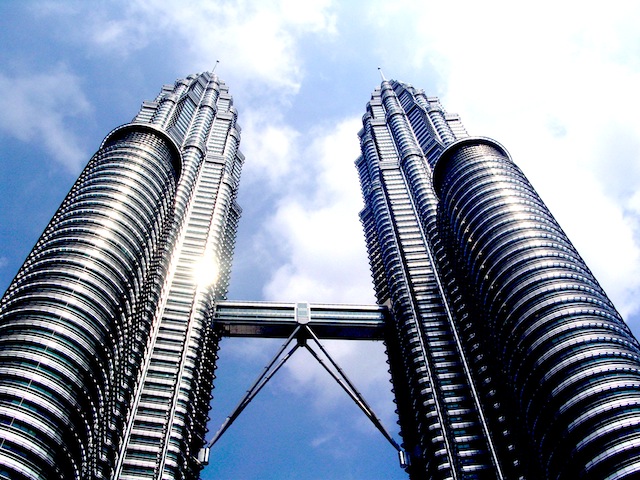
    For the company gripped with delusions of management grandeur a flashy head office is the must have accessory. It’s the corporate equivalent of the Skyscraper Index and is almost as good a predictor that a change in fortunes is imminent.

    Apple’s new headquarters is nothing if not impressive. Bloomberg Newsweek reports the building which, at two thirds the size of the Pentagon, will house 12,000 employees is currently estimated at costing five billion dollars, sixty percent over the original budget.

    The plans call for unprecedented 40-foot, floor-to-ceiling panes of concave glass from Germany. Before the Cupertino council, Jobs noted, “there isn’t a straight piece of glass on the whole building?…?and as you know if you build things, this isn’t the cheapest way to build them.”

    With over a $120 billion in cash, Apple can certainly afford to spend five or ten billion on new digs despite the grumbling of shareholders who have had to settle for a stingy 2.4% dividend from their shares.

    The big question though for Apple shareholders though is whether a project like this indicates a company that has peaked with management more intent on building monuments to itself or its genuinely visionary founder rather than deliver returns to owners or products to customers.

    On the latter point, there’s no evidence of Apple losing their way with their products yet, but it’s something worth watching in case management becomes distracted with their building project.

    For the company I worked for, the distracted managers all vanished one day when the main shareholder of the Thai-Singaporean joint venture discovered they’d been fiddling the books. They probably needed to pay for the office fit out.

    Similar posts:

  • Technology Cannot Save You – the limitations of relying on IT

    Technology Cannot Save You – the limitations of relying on IT

    One of the great conceits of modern times is that technology can solve any problem – the problems of Sydney’s transport system is an example of how IT can’t overcome managerial incompetence.

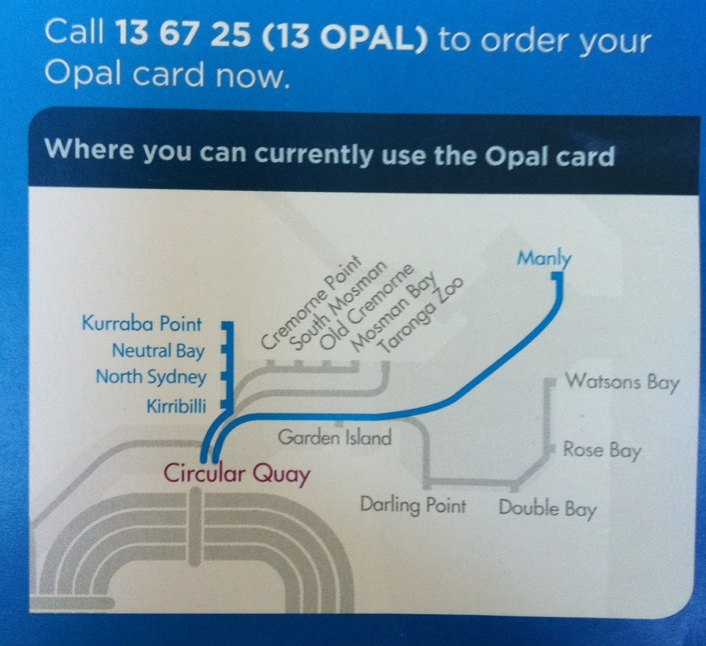
    The irrepressible New Australian has a good post about Sydney transport system and its battles with the opal card.

    Australian governments have been troubled with smartcard ticketing systems for decades, the Opal Card itself was promised in time for the Sydney Olympics thirteen years ago. Little has been done since.

    The fundamental problem is that governments are being sold technology solutions to fix management and political challenges.

    In Sydney’s case the problem is a complex fare structure and a Balkanised public transport system  – check the situation for a commuter wanting to travel from Parramatta to the city.

    • Ferry fare $7.20
    • Train fare $5.00
    • Bus fare $4.60

    The above fares are the standard single journeys, to make matters worse there’s a mind boggling range of concession, off-peak and periodic fares whose structure owes more to political opportunism, managerial incompetence and agency jobsworths protecting their turf than any logic or fairness.

    Without a logical or consistent to calculating the fares, computer algorithms have no hope – managerialism trumps coding every time.

    Basically Sydney has no chance of getting their system working properly without having an integrated fare and management structure. Technology cannot fix this problem.

    This is not just a Sydney problem A great example of how incompetent management can screw up what should be a straightforward implementation is in Melbourne which has a comparatively simple time based price structure.

    Melbourne’s Myki card has had a similarly troubled life being delivered decades late, hundreds of millions over budget and being so user unfriendly it seems designed to solve the city’s transport overcrowding problem by chasing away passengers.

    Basically management incompetence by arrogant bureaucrats and ignorant ministers doomed Melbourne’s project from the start.

    Australian governments aren’t the only organisations that fall for the fallacy that technology can solve their problems, around the world corporations and public agencies have made the same mistake.

    This is something technologists, and more importantly taxpayers and shareholders, should keep in mind when a CEO or minister is trumpeting the latest technology to fix their organisation’s woes.

    Image of the Opal Card brochure courtesy of The New Australian

    Similar posts:

  • ABC Nightlife technology – April 2013

    ABC Nightlife technology – April 2013

    For the April 2013 Nighlife spot Tony Delroy and I looked at the mobile phone turning 40, Windows 8 coming to an end, Blackberry’s chances of succeeding and what happens when the internet goes dark.

    Danny Hillis gives a great discussion of what could happen if the internet was turned off along with the history of the net in this TED talk.

    If you missed the show, you can download it from the Nightlife website.The next show will be on May 16 and we hope you can join us then.

    Similar posts: