Author: Paul Wallbank

  • Rethinking customer support

    Rethinking customer support

    One of weaknesses in most organisations is getting customer service right, good support takes time which costs money and leads many big and small companies  to scrimp on support to save a few costs.

    In a conversation with BMC Software’s Suhas Kelkar about customer support – Remedy, one of the biggest helpdesk software packages is a BMC product – the discussion turned to how the process has changed in recent years.

    Not too long ago we reached for manuals, but those vanished as CDs and then downloads became common. Then we’d call the manufacturer’s helpline or our unfortunate store who sold us the item.

    Today we Google a problem to see if we can find a quick solution and if that fails we reach out to our social networks by posting the question on Twitter or Facebook. We may even post the problem to a support forum to see if anyone has an answer.

    Only if can’t find the solution anywhere else do we call the support line, for most of us it is the last resort.

    In some ways this is a success for corporate cost cutting as most of us call a “helpline” only in desperation as we’ve trained to expect long waits, confusing menus and poorly trained operators.

    That model developed in the 1980s – in order to pay rockstar salaries to executives it was necessary to cut staff wages and training costs with after sales support often being the first business area to suffer cuts.

    Eventually this started to backfire and the Dell Hell saga as one of the leading examples where the computer manufacturer’s lousy support became industry legend. It’s fair to argue that Dell has never quite recovered from the damage the period of poorly outsourced support did to their brand.

    To repair the damage to their brand, Dell adopted a crowdsourced support model where company forums were available for customers to ask about problems with the hope other customers could answer before expensive staff became involved. Eventually other companies adopted this system.

    Social media has created a doubled-edged sword for businesses, it’s easier for people to ask their friends for help but it also increases the risk of brand damage if online posts aren’t monitored and responded to.

    All of this is forcing a rethink of how customer support works. For businesses big and small, social media and crowdsourcing tools are changing the way we talk to customers and how they can talk about us.

    The big data push is also changing customer support as businesses now have the computing power available to mine knowledge bases, issue registers and call logs to identify market trends and weaknesses in their products or sales teams.

    For business owners and managers stuck in the 1980s ways of customer support, they are in for a wretched time over the next few years.

    Similar posts:

  • Australian Hubris in the Asian Century

    Australian Hubris in the Asian Century

    This post is one of the series of articles on the Australia in the Asian Century report.

    The release of the Australia in the Asian Century discussion paper today raises the question of where the country sees itself and where it is going. It lets us down on many levels.

    While there’s a lot more to discuss in the paper, which I’ll do over the next few days, there’s a few issues that come to mind on first reading.

    The reliance on mining

    A constant  in the discussion about Australia’s future is the continued mining boom. This was the underlying theme of Monday’s Mid-Year Economic Outlook and is also the case in the Asian Century paper. Here’s chart 4.4.2 from the document which shows the forecast makeup of Australia’s exports.

    Today mining exports are shown as being just over 50% of Australia’s trade with Asia and have mineral income growing to well over 60% of trade by 2025.

    What is frightening about this is the belief across Australia’s political and business leaders that the mining boom is here to stay and will continue to keep growing.

    Little risk analysis

    Also notable about the report is how little acknowledgement of risk there is in the document. Most of the risks are dismissed in six paragraphs in Chapter 4.4

    Geopolitical risk does get its own chapter, but even there most of the challenges are glossed over. Eventually most of the risks are dismissed with this line.

    None of these developments of themselves make major power conflict likely—in some important ways they will probably act as a constraint. All the major powers recognise how interdependent their economic interests are.

    This is reminiscent of the line used in the late 1980s – “no two countries with a McDonalds have ever gone to war against each other.” A glib nonsense which ceased to be true when NATO attacked Serbia in an effort to stop the massacres of the Yugoslavian disintegration.

    Trivialising the big risks

    Had anyone predicted in 1986 that within five years, there would be a bloody civil war in Yugoslavia, the Eastern Bloc collapse and the Russian Empire’s eagle replace the hammer and sickle on the Kremlin they would have been dismissed as fools.

    Yet that is exactly what happened.

    The risk of instability within the People’s Republic of China isn’t mentioned or even the effects of what a collapse of North Korea would mean to South Korea – another key Australian mineral market – both of which would have massive effects on Australia’s export markets over the next decade.

    While I’m certainly not forecasting the collapse of either the DPRK or the Communist Party of China in the near future, these are massive risks to any plan which purports to look at the next decade. Ignoring them or trivialising them does not help the paper’s credibility.

    Australian hubris

    Most notable in the white paper is the tone of Australian Exceptionalism through the commentary. In the Prime Minister’s speech she said “we are the nation that stared down the economic crisis.”

    Calling massive stimulus packages, reinflating the property market and guaranteeing bank liabilities is hardly ‘staring down’. Australia’s avoiding going to into recession after the 2008 crisis was due to the “go early, go hard” philosophy of pumping money into the economy which was learned by Australia’s bureaucrats in the 1990s recession.

    That policy worked to stave off recessions during the Asian currency crisis of 1998, the Long Term Credit Bank collapse and the post September 11 uncertainty. It worked on massive scale during the post-Lehmann Brothers collapse.

    Crediting Australia with some sort of miracle economy is hubris on a grand scale and hardly the basis for developing a sensible plan to guide us through the next decade.

    What is Australia’s competitive advantage?

    Essential to understanding where the nation can prosper from the rise of Asian economies is where our current strengths lie. Apart from empty phrases on “skilled workforces” and “new opportunities will emerge in manufacturing” there’s no explanation of exactly where Australia can profit from these.

    In fact most of the case studies refer to Australian companies outsourcing or Asian trading patterns that really don’t need any skilled or valued added contribution at all, a case in point is the story of ‘Hitesh’, one of India’s rising middle class.

    Hitesh, 31, is a stockbroker in a firm that he opened with his friend several years ago. He brings in an annual income of US$5,280, placing his family squarely in the middle of Ahmedabad’s middle class.

    Nowhere does the case study explain exactly what Australia can offer him – the air conditioners and cars certainly won’t be made or designed in Australia and his daughters’ educations in 2025 might well come through the internet from MIT or the London School of Economics instead of them flying to Melbourne to drive taxis and do barista courses in the hope of getting Australian permanent residency.

    In fact if anything, it’s difficult to see why an Asian company would choose to do business with an Australian stockbroker when they earn thirty to a hundred times more than Hitesh.

    1980s thinking

    Much of what is in the white paper is what we’ve heard before in the 1980s – back then it was Yuske in Nagoya who was going to buy our wine and come to the Gold Coast for holidays.

    There’s nothing in the projections we haven’t heard before, except today we’ve squandered two decades of opportunity by ramping up our property markets and building an unsustainable middle class welfare state.

    Sometime in the 1990s – possibly around the time of John Howard’s election – Australia turned inwards and insular. We had the opportunity  to position Australia as a credible mid-level power in the region but we chose instead to renovate our kitchens.

    That opportunity has been lost and repeating the mantras of the 1980s with the words ‘China’ and ‘Chinese’ substituted for ‘Japan’ and ‘Japanese’ won’t cut it.

    Australia in the Asian Century was an opportunity to show some vision and stake a claim on sharing some of the 21st Century’s riches. Instead the writers chose to give us platitudes underpinned by the certainties of a never ending economic boom.

    Similar posts:

  • Heroes of Capitalism

    Heroes of Capitalism

    The few times I watch television these days is either when the footy’s on or the rare occasions that I surface from my interweb connected man cave and stumble into a room where someone has a TV running.

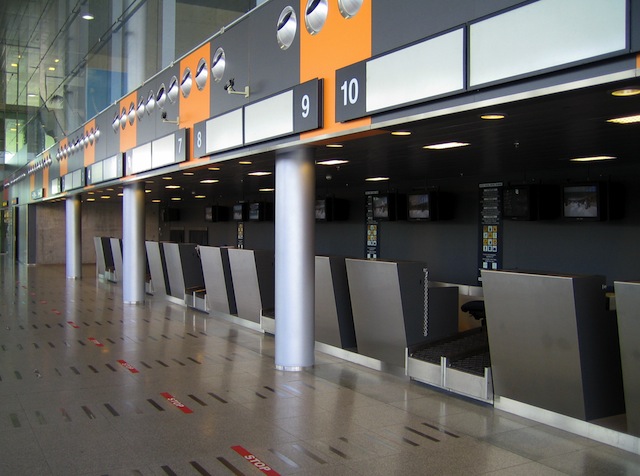
    And so it was tonight when I happened to wander out to witness a terrible airport “reality” show – this one being an unoriginal, third rate Australian effort where Tiger Airlines shows how it stuffs around and humiliates its passengers. In Australia, Channel Seven considers this to be prime-time TV “entertainment”.

    What was striking about the show was how Tiger Airlines’ check in staff humiliated a pensioner and her young son who hadn’t printed out their boarding passes.

    The “fee” for not carrying out a basic task which reasonable people would expect would be part of an airline’s service is $25 a head at Tiger Airlines – one could ask what the Australian Competition and Consumer Commission’s position is on excessive fees being used to pad airlines’, or banks’, profits but that would be asking too much of Canberra’s worlds best practice doughnut munchers.

    As result the poor lady was expected to front up with another $50 – money she didn’t have. So Tiger Airlines’ check in staff wouldn’t let her board and Channel Seven’s camera crew gleefully filmed her desperate tears and shocked son.

    Eventually a bystander took pity on her and gave her $60. At least someone in the terminal had some decency and compassion, qualities neither the Tiger Airlines staff or Channel Seven camera crew have in the tiniest way.

    No doubt somewhere in an anonymous glass tower some arsehole has a job as a manager at Tiger Airlines and has a KPI that includes how many poor mothers they can reduce to tears.

    When the arsehole Tiger Airlines manager gets its annual bonus for making the required number of victims passengers weep, it no doubt goes to lunch with the Channel Seven executives – another bunch of arseholes – to slap each others’ backs and tell themselves what great heroes of capitalism they are.

    The question that bugs me is when did it become acceptable to humiliate your customers? No doubt Tiger Airlines think it’s good publicity and Channel Seven think it is good entertainment.

    We live in interesting times when our business leaders think it isn’t good enough just to take customers’ money but that it’s also necessary to humiliate them as the managements of both Channel Seven and Tiger Airlines seem to be rewarded for doing.

    Fortunately in these corporatist days we still can vote with our wallets and turn off the muck we find offensive – that’s why decent people shouldn’t choose to fly Tiger Airlines or watch Channel Seven.

    Similar posts:

  • Open Table and free mobile restaurant sites

    Open Table and free mobile restaurant sites

    One of the big challenges facing restaurants is how customers are moving to the mobile web, diners are using their smartphones to find establishments and expect to make bookings directly.

    To help their customers deal with this move to smartphones, restaurant booking service Open Table is offering a free mobile website for their clients so establishments can have sites that are usable on smaller screens.

    Whether this is worthwhile depends upon whether the restaurant is already using Open Table, the monthly fees are quite high at $200 per month plus a relatively low $1 commission per cover so it certainly isn’t worth subscribing to their service just to get a mobile optimised website.

    For restaurants already using their service it’s best to check if your existing website already has a mobile feature as having two online addresses is only going to confuse customers.

    Businesses using WordPress based sites just need to install a plug like WordPress Touch which detects when a smaller screen is viewing your site to change.

    Open Table itself is somewhat of an internet old timer having been founded in 1998, making it one of the Tech Wreck survivors, and listed on the NASDAQ market eleven years later.

    That a company like Open Table is recognising a mobile web presence is essential for hospitality businesses should be a further warning to restaurants, cafes and hotels that they need to take smartphones seriously.

    Just as thirty years ago it was essential to have a Yellow Pages listing, today you’re missing out on customers if they can’t find you on their phones.

    Regardless of whether you’re using Open Table or any other service, you need to have some form of mobile site working for you.

    Similar posts:

  • Tech’s tough days

    Tech’s tough days

    Today sees another tough day for tech stocks with both Apple and Amazon missing their projected earnings which again finds Microsoft being stood up at their own party.

    For Amazon, along with the costs involved with a new range of Kindles, there’s a huge write down in their Living Social investment, another indicator that the group buying bubble has passed into history alongside tulips, 19th Century Argentinian railway bonds and South Sea investments.

    It’s worrying that while Amazon’s quarterly sales have increased by 23% over last year’s figures to $11.546 billion dollars, their cost of sales has also gone up 23% from $8.325 to $10.319 billion. This is a trend to watch closely over the next few quarters.

    Unlike Amazon, Apple still made a fat profit with income going up to $8.2 billion for the quarter, an increase of 24%. This missed many Wall Street analysts’ estimates.

    Apple’s missed earnings were put down to supply chain constraints and development costs, but what jumps out looking at the cash flow is the six billion turnaround in the company’s Accounts Receivable. One assumes this is the value of pending invoices on the new ranges of iPhones, iMacs and iPads sent out to their sales channel.

    If that’s right, Apple are looking at a big boost in their cashflow next month, although there’s few companies who would like to have five billion dollars in outstanding invoices in today’s economic climate.

    Once again though, Apple have managed to steal Microsoft’s thunder. Despite the glitz and glamour of the Windows 8 launch in New York, Microsoft’s announcement has been muted by the tech and business press’ reaction to the earnings reports.

    What is clear from all three companies though is that hand held devices – the Apple iPad, Amazon Kindle and Microsoft Surface – are going dominate the tech and financial coverage of all three companies for the rest of the year.

    Similar posts: