Author: Paul Wallbank

  • Failing our customers fast

    Failing our customers fast

    The New York Times suggests the new Amazon Kindle Fire could be the Edsel of electronic devices, Twitter’s new interface is met with dislike and accounting software company MYOB’s latest update receives a universal thumbs down.

    At a time when software tools, online publishing platforms and contract manufacturing mean we can get products quickly to market, it’s easy to get ahead of our customers and even our own quality control.

    Having the ability to get a something new out at low cost has given rise to the “fail fast” philosophy.

    While “failing fast” is changing the way industries work while giving rise to a whole new breed of innovations and entrepreneurs, we want to make sure we don’t fail our customers too badly or too often.

    Similar posts:

  • Fading markets, falling margins

    Fading markets, falling margins

    “They don’t pay for us to go to trade shows anymore,” lamented a journalist at a recent industry PR event. The era of international trips and freebies is over for most technology journalists and its passing is mourned by many of them.

    Media junkets, industry conferences in exotic locations and management retreats to exclusive resorts are what businesses with fat profits can afford. Most of the tech industry is past that point as most of the sector becomes commoditised.

    Slowly, vendors come to understand what a commoditised market means as Acer have with their announcement they will stop selling cheap systems while others, like Apple, have managed to avoid that trap entirely.

    As technology changes, cheaper manufacturing locations appear and consumer preferences change many businesses will find their markets change. Some will identify those changes early and change course while others will wonder what has happened to their fat margins and why they can’t afford management, client or media trips to the Pacific or the South of France anymore.

    That’s good for consumers, but a terrible thing for those managers who are little better than corporate bureaucrats and their friends in the media.

    Interestingly, it’s the jobsworths and the overfed incumbents who are the slowest to recognise when their businesses are changing which is why there’s so much opportunity for smaller, smarter enterprises.

    Similar posts:

  • Who the hell do you think you are?

    Who the hell do you think you are?

    “We have a startup ethos,” proclaimed the manager of a huge organisation funded by the government.

    It was the third time this month I’d heard about a “start up ethos” from managers of ventures backed by government or corporate money and it’s interesting that this thinking like a cash hungry startup has become a badge of honour among those who have never really lived or worked that way.

    At a time when we’re glorifying twenty something entrepreneurs it’s understandable a middle aged manager of a large, conservative and bureaucratic business might want to grab some of that glamour.

    Where does this idea of being a start up take an organisation that is anything but entrepreneurial?

    The entrepreneur myth

    Right now we’re obsessed with the cult of the entrepreneur; many people are getting rich on selling the idea if liberate yourself from the corporate cubicle and buy your doughnut franchise then in a few years time you’ll be sipping daiquiris with Richard Branson on his private island.

    For most of us, the tough reality of a building a new business is we are going to work very hard and the odds are stacked against us succeeding; that’s the risk-reward equation that underpins the free market economy – you take the risks and if you’re successful you reap the rewards.

    Many people though don’t have the appetite for taking those risks; they are happy working for a wage, paying off a mortgage and getting a nice safe pension at the end of their career. There’s nothing wrong with that.

    Similarly, the majority of business people have no desire to be the next Richard Branson – most are quite happy for their doughtnut franchise, computer repair company or dog walking service to create a decent living and saving for their family. If the business is worth a few bob when they retire that’s a bonus.

    Bureaucrats matter

    The success or otherwise of a society depends upon the mix of established institutions and the ability of entrepreneurs to realise new ideas, take the balance too far either way and you have either an inflexible or unstable economy.

    Bureaucratic managers, their processes and their established procedures have their role in a modern society, as do the risk takers, the business buccaneers and even the snake oil merchants selling dodgy ideas to frustrated corporate employees.

    The danger of business delusions

    Misunderstanding who, or what, you and your organisation fits into this spectrum is a risk in itself; the manager of a big corporation or government agency who thinks they can pivot a business the way a start up can, is probably risking their own career and by falling for the romance peddled by snake oil merchants they are risking their savings.

    Similarly the small business or real entrepreneur that acts like a government department is probably squandering their market advantages by being slow and unresponsive.

    In many ways, seeing a manager in a big corporate environment indulging in Walter Mitty like fantasies of running a start up is somewhat touching – the real danger for those bigger organisations is when their leaders start believing they are something they aren’t.

    Romantic delusions are never a good asset when managing a business.

    Similar posts:
  • Securing the USB stick

    Securing the USB stick

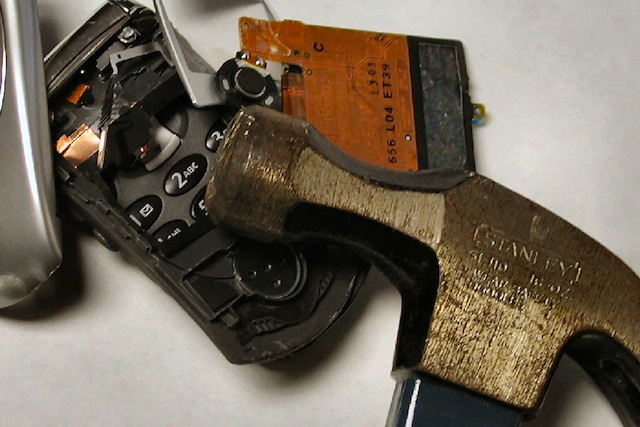
    While I’m always reluctant to publicise security company’s media releases – believing many of them to be hysterical hype – a quick study by Sophos on lost USB keys has some interesting lessons for all of us who use thumb drives to carry data.

    Sophos bought 50 USB drives at Sydney’s CityRail unclaimed lost property auction and analysed them for malware and security risks.

    The study – not yet online – found more than 4,400 files including photos, CVs and job applications. Confidential material that could be used for identity theft, stalking or commercial advantage.

    Encryption

    If you are moving confidential data between computers, it may be a good idea to consider encryption software that protects files from unwanted visitors. Mac OS X has encryption software built in as does  all but the home versions of Windows 7 and Vista.

    Should you have a computer that doesn’t come with encryption, or you’re taking the drive between different venues, then you may need a third party encryption program like TrueCrypt. Note you’ll need administrator rights to install the software on every machine you use.

    The Malware threat

    As a security company Sophos leaned heavily towards the malware aspect with a headline that 66%, or 33, of the drives had some sort of malware on them.

    While that statistic is suspiciously high, it does illustrate the risk of plugging USB sticks into school, office and internet cafe computers. Like unsafe sex, the likelihood of catching something nasty increases with the more partners you have.

    Perversely Apple Macs could be helping spread the malware as Mac users generally don’t use or need anti virus sofware and any viruses picked up on someone else’s Windows system can sit undetected and dormant until they are used on another PC.

    Consequently, its good practice to wipe a drive when you’re finished with it so along with deleting malware you are also not keeping unnecessary and possibly out of date files on your drive.

    Overall, Sopho’s survey illustrates why cloud services like Dropbox and Box.net are best for sharing data although the USB stick still has an important role when everything else goes wrong.

    Similar posts:

  • Business is fine

    Business is fine

    “I don’t need high speed broadband,” snarls the businessman in a country town, “business is fine as it is.”

    A hundred years ago this year the iconic Australian horse coach company Cobb & Co went into its first bankruptcy as it declined from being the dominant transport service of rural Australia.

    Cobb & Co was founded in 1854 by four young Americans in the Victorian gold rush and grew around the expansion of Australia’s rural farming and mining industries. By 1900 the company had 9,000 horses travelling 31,000km (20,000 miles) every week.

    By 1924 Cobb & Co was gone. Displaced by the motor car and restrictive state government rules designed to protect their railways.

    Many businesses, including the management of Cobb & Co, thought the motor car was a fad. No doubt many at the time also thought electricity was dangerous and unnecessary.

    Business worked fine as it was when stagecoaches carried the mail and bullock carts carted the crops, steam engines were fine to power the farms and businesses while the telegraph was just fine for those times when a three month letter to your customers or creditors in London or New York wasn’t quick enough.

    All those businesses went broke. They didn’t go broke fast, it was a slow process until one day owners realised it was all over and then the end came surprisingly quickly.

    That’s where many of us our today – cloud computing might be the latest buzzword, social media might be a distraction for coffee addled children of the TV generation and the global market might be just a way to dump cheap goods and services on gullible consumers – but markets and societies are changing, just as they did a hundred years ago.

    Sure, your business doesn’t need fast Internet. Business is fine.

    Stage coach image courtesy of Velda Christensen at http://www.novapages.com/

    Similar posts: