Author: Paul Wallbank

  • Lenovo and the hunt for profitable smartphone markets

    Lenovo and the hunt for profitable smartphone markets

    With Google’s Project Ara seemingly stalled, it was interesting to see Lenovo announce the Moto Z modular phone this week.

    The question remains though whether this concept is a solution looking for a problem however if Lenovo open the device up to third party accessory makers, we could see a surge of innovation similar to the ‘plug compatible’ IBM days which may drive consumer interest.

    Lenovo is still struggling to find its feet in the mobile phone market, so finding a compelling product to drive sales and improve margins in a largely unprofitable industry is a priority.

    It may be the other smartphone announced by Lenovo in San Francisco, the clumsily named Phab 2 Pro, could be where the manufacturer finds its niche with Google’s Project Tango 3D sensing technologies.

    The Phab 2 Pro’s 3D capability may be the beginning of accessible virtual and augmented reality systems however hands on reviews of the device indicate it may be some way from being ready for public release.

    Lenovo’s announcements show how the smartphone markets is currently in a state of transition as vendors try to find the next new profit and growth centres. To complicate matters, all the Android manufacturers are waiting to see what Apple’s next move will be.


    Similar posts:

    • No Related Posts
  • Uber opens its APIs

    Uber opens its APIs

    Ride service Uber has raised the game for logistics and delivery services in opening a group of Application Program Interfaces for third party developers.

    The four functions available in the Uber Rush package cover delivery tracking, quotes and history. They make starting a logistics service or adding functions to a business far easier.

    While there is a downside in the risk of being locked into Uber’s service this move will give a lot of developers the opportunity to develop delivery tracking products, for incumbent postal and courier services, this API is bad news on a number of levels.

    Similar posts:

    • No Related Posts
  • Can innovation save Australia?

    Can innovation save Australia?

    This is the prepared version of my speech at the Cloud Crowd “Can Innovation Save Australia” debate. I was on the affirmative team, even though in truth I’m probably close to the negative side.

    Australia truly is the lucky country. We entered the Twentieth Century as one of the richest countries on earth and at the turn of millennium we remained so.

    The first fifteen years of this century have been equally kind, however that prosperity has been built on a mining boom and an ever growing property bubble.

    Now those foundations are slipping – the mining boom is over and Australians have became the most indebted people on the planet as housing loans put an increasing burden on Australian families, a situation that is not sustainable.

    The three Bs of Australian Business

    Making matters worse, the good years of the last three decades have seen Australia’s business community become inward looking and complacent, as one of my colleagues recently wrote Australian managers are obsessed with their “Three Bs” – Bonuses, BMWs and their Balmoral Beach Club memberships.

    Australia though has a fine history of invention and innovation, we’ve seen ideas ranging from the stump jump plough and Hills hoist through to the flight data recorder and Cochlear ear implants change the world.

    Cochlear itself forms the centre of an Australian hearing technology hub at Macquarie University which brings together university researchers, private sector R&D and some of the world’s best medical specialists to form a globally competitive centre of excellence. We can do great things.

    Starting from behind

    However we are starting a long way behind the rest of the world. Not only is Silicon Valley speeding ahead but so too are countries as diverse as the UK, Israel and Singapore. One of the understated stories in Australian media is just how heavily China is investing in its pivot into a knowledge and innovation based economy. Others in our region like Japan, South Korea, Taiwan and Malaysia are already well down the path of moving to economies based on 21st Century technologies.

    All of these countries – their governments, their business leaders and the communities – have recognised success in the Twenty-First Century will depend upon investment in education, research, development and businesses that harness the great powers being unleashed by today’s technologies.

    This is where Australia’s opportunity also lies. In the 19th and 20th Centuries the country was the beneficiary of technologies like the steam ship, the telegraph, refrigeration, electrification and, at the end of the Twentieth century, the great global financial deregulations. We truly were the lucky country.

    Staying lucky

    Remaining lucky in the 21st Century is going to take more than riding on the back of sheep, the end of coal train or surfing the wave of easy credit that crashed over our economy in the 25 years after 1990. We are going to have to be smart, canny and adventurous.

    Australians though have shown they can grasp opportunities and with government policies that favour innovation over speculation, investment over ticket clipping, a business community that pulls its weight in research and a community that values education at all levels we can do it.

    So yes, Innovation can save Australia but we as a nation have to be prepared to work at it and change many of our current ways of thinking.

    Similar posts:

  • Fearlessness and starting a business

    Fearlessness and starting a business

    “Just do it!” Almost every startup founder I interviewed for The Australian’s series on expat entrepreneurs had the same advice for budding entrepreneurs wanting to go global – don’t wait, just do it.

    Peter Grant of Brisbane founded Safesite did though inject a slightly different view when he pointed out that it may not make sense for a company with a good domestic business to make the move, “If it’s going to be too complex or you already have a profitable business in Australia you may not need to come to the US, you have to be realistic about it. It might make sense to find a local partner.”

    In Peter’s case though that move made sense. “We have a year on our competitors,” he notes.

    Not being scared of making the move was part of a discussion I had with TechnologyOne founder Adrian DiMarco today, I’d previously interviewed Adrian for Business Spectator a few years back and it was good to hear his views on the current startup mania and the Australian innovation push.

    One of the points DiMarco made was about not being scared when launching a venture, whether it’s the competition, the marketplace or the overall daunting task of running a business, being fearless is a key attribute to making the first steps, not just success.

    That fearlessness is something that should be acknowledged about business founders, whether it’s a tech startup, dog walking service or donut franchise. Every single proprietor is taking a great leap.

    Similar posts:

  • Hubris and the cloud

    Hubris and the cloud

    A few months back I spoke to Amazon Web Services’ Chief Information Security Officer Stephen Schmidt about how his company was expanding in Australia and East Asia.

    One of the questions I asked was about the Australian footprint where all of AWS’s services are based in Sydney. Many of the company’s customers have questioned the suitability of that setup.

    Schmidt was dismissive of the need for data centres outside of Sydney to serve the Australian market saying, “the Australian footprint is largely based on what the customers tell us. Right now they are happy with the way things work in Sydney, we have POP locations in other areas for edge access.”

    “What we hear from customers is the network connectivity between Melbourne and Sydney is very good,” he added, “it’s really irrelevant whether you’re based in either city.”

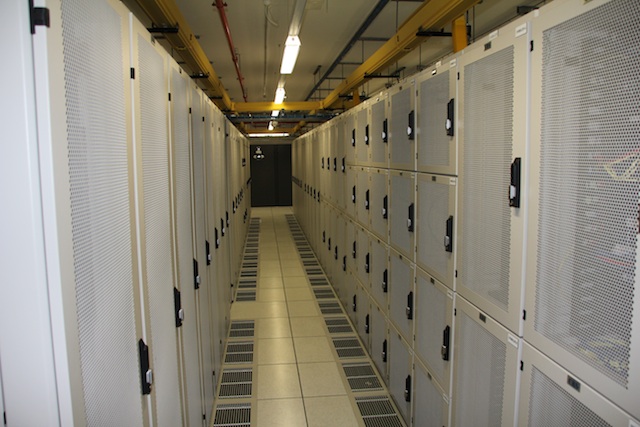
    During the storms that hit Sydney last week those words came back to haunt AWS as their data centers were knocked out of action.

    Not a good look and now one suspects a Melbourne based data center, or at least some redundancy down under, is now higher on AWS’s to-do list.

    Similar posts: