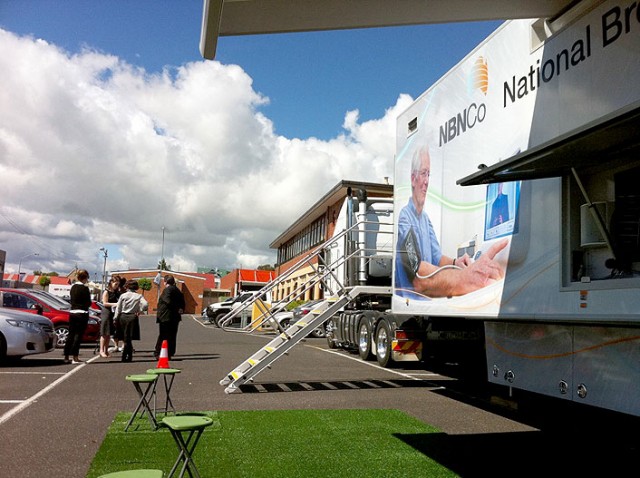
This column first appeared in SmartCompany. Since writing it, I’ve also done an ABC spot on the National Broadband rollout.
The more I research and reflect on the proposal, the more I’m convinced this plan is a winner – assuming it goes ahead.
I’m also more convinced than ever that Telstra is the big winner from the proposal as it relieves them of the Universal Service Obiligation and means they can avoid the massive costs of maintaining and upgrading the copper network. Not to mention the likelihood that the government will end up leasing space on Telstra’s existing fibre network.
Jim Collins in his book “Good to Great” coined the phrase BHAG, or Big Hairy Audacious Goal. Few goals are bigger or more audacious than spending $43 billion to run fibre to every house, office, school, farm and factory in Australia.
My first reaction to the national broadband plan was disappointment – on Twitter I commented “there goes the Rudd Government’s final strand of tech credibility.”
Having had time to think about the plan, it’s clear I was wrong. The announcement is a huge change in policy and it will have immense ramifications on how we do business.
Fibre-to-the-premises completes the gaps in our communications systems. When the rollout is complete, we can rely on our internet links and assume our customers and employees have the same dependable connections.
For regional enterprises this is great news, as it will bring the world to the door to some of Australia’s best industries and businesses. It levels the playing field between big and small businesses, regardless of their location.
For Telstra, the result is mixed. While it means more competition in regional areas, it also means it can save billions on upgrading the aging copper network. The criticism of the rollout’s cost ignores the massive replacement cost already required to replace the old phone lines.
While perhaps not good news for management, the proposed break up of Telstra is good for shareholders. Sensis and BigPond, for example, would be worth far more when not shackled to a company fixated on maximising revenue from a ramshackle copper network.
Another great change is in Canberra’s communications policy. Australia has suffered from communications and media being tied together, with the interests of well connected commercial groups being more important than good planning.
The Keating government’s disastrous cable TV rollout was an attempt to provide modern infrastructure while appeasing the dominant media tycoons who saw technology as a threat to their empires.
As a result we got a mess and the cable TV networks, which could have provided this infrastructure 15 years ago became a political and financial quagmire, which delivered little of what was promised.
We shouldn’t understate the social benefits of the plan either. As the recession bites, the need for skilled and unskilled labour to build the rollout will assist in keeping unemployment down.
It’s certainly billions of dollars better spent than propping up shopping centre developers, banks or the manufacturers of cars that no-one wants.
The biggest change though is ideology. Until now, it’s been difficult to imagine a government proposing a massive infrastructure project without the ticket clippers of the merchant banks and other cronies skimming a fat share.
In every respect, this is the best communications plan and one of the most visionary ideas we’ve seen out of Canberra in generations. While it’s going to cost, history will show it’s money well spent.
Whether the broadband rollout becomes reality or not, fast, reliable communications are already a business necessity and will become even more so.
Think about what fast broadband means for your business and plan how you can take advantage of it. Those who don’t grasp the opportunities are going to be left behind.
So have a think about it. You might come up with some BHAGs of your own.
Similar posts:
 I met a business owner last week who complained other business at his local chamber of commerce meetings spent most of their exchanging business cards.