Category: business advice

  • In it to win it – does overcompetitiveness hurt entrepreneurs?

    In it to win it – does overcompetitiveness hurt entrepreneurs?

    I’ve written before about entrepreneur and venture capital investor Mark Suster and his writings about business are always worth reading.

    His recent post pulling together writings on the DNA of an entrepreneur is interesting reading however one point jars – competitiveness.

    In Steve’s view competitiveness is about winning at all costs and crushing the opposition.

    That’s fine when competing for a customer, fighting over market share or pitching to the same VC investor, but business usually isn’t a zero-sum “if I win, you lose” equation.

    Sometimes its about complimentary strengths. In the early days of PC Rescue I tried to partner with an old colleague who had set up a competing business.

    Mark was actually a better computer tech than I was, my strengths lay more in sales and administration, had we teamed up we’d have been a good combination.

    Unfortunately Mark took Suster’s view of ‘winning at all costs’ and when I foolishly referred customers to him because I was either busy or thought he could do a better job, I found he was stealing those customers.

    Eventually I had to cut ties with him, and it cost him money and the chance to be part of something bigger. Mark was greedy but I’m sure he thinks he ‘won’ against me when there really wasn’t a contest.

    Geeks are particularly poor at admitting they have weaknesses, in fact their lack of self understanding could be their greatest weakness of all. So drumming a ‘win at all costs’ message into their heads is almost certainly counter productive.

    It may well be that this win at all costs view is damaging the mental health of many entrepreneurs, by viewing what others are doing through a prism of “I have to win” almost guarantees depression as often the life of an entrepreneur is more steps backwards than forwards.

    As most reporting of startup and entrepreneurs is distorted by survivor bias, we often gloss over this latter point – in reality starting your own business, particularly one that’s under-capitalised, is hard and tough work with a high chance of failure.

    That chance of failure means a ‘win at all costs’ mentality could result in a generation of mentally damaged former entrepreneurs.

    Mark Suster’s views are really good on what drives the Silicon Valley model of business. We need to take care though we don’t take the wrong lessons which end up hurting our businesses, families and our own mental well-being.

    Jackpot image from Henriette via SXC.HU.

    Similar posts:

  • High cost politics – how the Australian election will fail business

    High cost politics – how the Australian election will fail business

    “Running costs have gone crazy” complains Sydney restauranteur Jared Ingersoll at the same time the Australian events industry warns it’s being crushed by a higher dollar.

    While the closure of an inner city cafe doesn’t mean that much, a bigger warning about Australian costs comes from Royal Dutch Shell who have put their gas investments on hold due to project blowouts.

    Natural gas investments are the core of Australia’s economic policies with the country’s Asian Century report identifying energy exports as being the country’s main revenue earner over the next quarter century.

    Costs of doing business in Australia have been steadily on the increase since the Howard government introduced the GST which triggered Australia’s transition to a high cost country.

    It didn’t have to be that way but Howard’s addiction to middle class welfare meant what should have been a opportunity to reform the economy during the mid 2000s was squandered with gifts handed out by one of the highest spending governments in Australian history.

    While Whitlam at least spent money on bringing sewers to the suburbs, Howard spent his on subsidies to rich schools and parking permits to self-funded retirees.

    It would take a brave government to undo Howard’s work which isn’t something we can expect from the populist and cowardly Australian Labor Party that lacks any of the honesty or strength required to confront the whining middle classes about their unsustainable entitlements.

    Which makes the election announced last week interesting. In her election announcement the Prime Minister made a mention of dealing with the high Australian dollar, which at least shows the Labor Party sees there’s a problem – although they certainly don’t have the stomach to make the tough decisions required.

    On the other side of politics though it’s all unicorns and magic puddings. Tony Abbot and his friends are partying like it’s 1999.

    The Liberal Party policy paper released last week is notable for not acknowledging the global financial crisis and maintaining that taxes can be cut while Howard’s middle class welfare state can be expanded.

    The best example of the Liberal’s addiction to middle class welfare is their promise to introduce a parental leave scheme. As their Strong Australia policy document explains;

    Paid parental leave ought to be paid at a person’s wage rate, like holiday pay and like sick pay, because it is a workplace entitlement, not a government benefit.

    Not only does the Liberal Party believe that high paid workers should get subsidies for their nannies, but that employers should pick up the bill, just like holiday and sick pay.

    Middle class welfare and a massive business cost increase to boot.

    In a Smart Company poll last week, the small business readers overwhelming endorsed the Liberal Party.

    They should be careful what they wish for.

    For those worried about getting Australia’s high cost base down there are serious debates to be had about our tax and welfare systems along with tackling issues like high property prices, over-regulation, aging population and workforce skills.

    Most importantly, we have to define what Australia wants to be in the 21st Century.

    Little, if anything about these issues will be discussed before September and in the meantime the Dutch disease will slowly strangle Australian business. We need better.

    Similar posts:

  • Throwing your problems over the fence

    Throwing your problems over the fence

    I first heard the term “throwing the problem over the fence” from a telco project manager a few years ago, it describes how modern organisations shift risk to others.

    Throwing the problem over the fence usually involves contracting out a task, the philosophy is once the contract is signed delivery is no longer management’s problem, it’s now the responsibility of the contractor. Once the job is over the fence it’s out of sight and out of mind.

    Governments, financial institutions and most corporations have become very good at throwing their problems over the fence.

    Contracting away your worries

    A core tenet of 1980s management thinking is contracting out; freeing executives from the tedious task of actually doing their jobs lets them focus on the important things in life, like securing performance bonuses.

    Of course you can’t contract out risk – risk is like toothpaste, squeeze it in one place and it oozes out somewhere else.

    Unlike toothpaste, risks have a habit of growing if they are ignored. Which becomes a problem for whoever is unwittingly on the other side of the fence.

    Railways and risk

    In “The Crash That Stopped Britain” author Ian Jack looked at the causes of the October 2000 Hatfield train accident which threw the nation’s railway network into chaos.

    Jack correctly predicted that no-one would be found responsible as the tangle of rail operators, maintenance companies, financiers, labour hire firms and regulators made it almost impossible to determine exactly where responsibility for a fatal failure lay.

    Diffusing responsibility is partly by design although originally the idea was to save costs, the theory being that tendering work previously done in house to the lowest cost provider would save money.

    Instead its caused an escalation in costs as contracting out meant an increase in middlemen as financiers, lawyers, project managers, contract administrators – of which I was once one – and many others are drafted in to manage the outsourced contracts.

    Throughout the Anglosphere – the US, UK, Canada, Australia and New Zealand – the results of embracing this mentality has meant skyrocketing costs and delays in public work projects, a good example being the Southern Sydney Freight Line which was three years late and 250% over budget.

    Naturally no-one is held responsible for the delays, cost over-runs or lousy initial planning and estimating on that project, which is a happy result for everyone except the taxpayer who foots the bill.

    The Global Financial Crisis

    While the cost of building railways, schools and motorways is a chronic problem, a far more bigger issue is the role of “throwing problems over the fence” in the financial industry.

    Securitisation was seen as a magic bullet for the banking industry in the 1990s, the Basel Accords allowed banks to bundle up their entire home loan portfolios and throw them over the fence to fund managers and their unwitting investors.

    When the inevitable happened with the Global Financial Crisis in 2008, it was difficult to attribute exactly who held the mortgages, let alone who was responsible for the losses among the mass of brokers, ratings agencies, fund managers and bankers who’d profited so well from the boom.

    The only thing we could be sure of was that it was the taxpayer – you, your children and grand-children – who ended up holding the problem when the GFC’s bills were hurled over the last fence.

    On the other side of the fence

    Risk isn’t something that can be thrown over a fence, eventually it comes back in a bigger and nastier way. The question is who ends up dealing with it.

    The genius of political and business leaders in the last 30 years has been in how they’ve thrown their responsibilities over the fence while retaining the perks and privilege of holding responsible positions.

    Generally it’s taxpayers and shareholders sitting on the other side of the fence who have to deal with the costs and they aren’t getting cheaper.

    Similar posts:

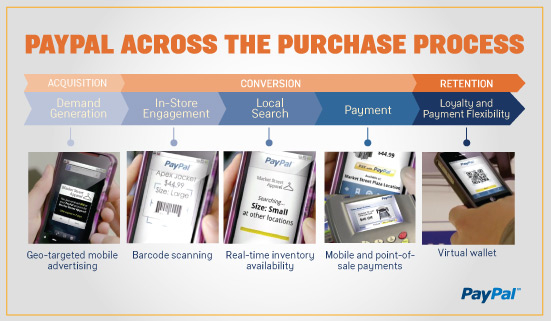
  • PayPal struggles with the Soviet customer service model

    PayPal struggles with the Soviet customer service model

    CNN reports that internet payment giant PayPal is looking at an “aggressive changes” to its fraud detection systems which see thousands of customers accounts frozen every year.

    PayPal’s announcement follows last year’s promise by CEO David Marcus to institute a “culture change” at the company,

    Our intention has always been to protect our customers. Not to mess around with our merchants.
    I want to share two things with all of you:

    #1 — there’s a massive culture change happening at PayPal right now. If we suck at something, we now face it, and we do something about it.

    #2 — you have my commitment to make this company GREAT again. We’re reinventing how we work, our products, our platforms, our APIs, and our policies. This WILL change, and we won’t rest until you all see it. The first installments are due very soon. So stay tuned…

    Screwing around merchants and buyers has become synonymous with PayPal and their parent company eBay who together are the poster children for the Silicon Valley Soviet Customer Service Model.

    Reader comments to the CNN article cited at the beginning of this post give a taste of just how bad the problem is at PayPal.

    Once your business attracts the attention of PayPal’s algorithms, you’re locked into a Kafkaesque maze of dead ends and arbitrary, made up rules.

    To be fair to PayPal and eBay this problem isn’t just theirs, it’s shared by Google, Amazon and almost every major online company. Their view of customer service is to shoot first and ask no questions, they certainly won’t answer anything from their victim beyond a trite passive-aggressive corporate statement.

    Part of the current Silicon Valley mania around web and app based services is that, along with providing free content, users will provide support for each other and that customer service is an unnecessary overhead which should be kept to a minimum.

    In this respect, many of these new businesses are little different from the legacy airlines, telcos and declining department stores who have spent the last thirty years stripping away customer service with the result of locking them into shrinking commodity markets.

    That failure to value customer service is the biggest weakness for companies like eBay, Amazon and Google. The very forces that favour them, the reduction of the entry barriers, also makes it easier for more customer orientated businesses to grab market share.

    Just as Silicon Valley’s new businesses has challenged a whole range of incumbent operators, they too are at risk from upstarts who value their customers. This is something PayPal’s management can’t afford to forget.

    Similar posts:

  • 2013 – the year of the incumbents

    2013 – the year of the incumbents

    Bigger, quicker and more congested are the predictions from consulting firm Deloitte’s 2013 Technology, Media and Telecommunications survey.

    In Sydney last Friday, the Australian aspects of the report were discussed by Clare Harding and Stuart Johnston, both partners in Deloitte’s Technology, Media and Telecommunications practice.

    Most of the predictions tie into global trends, with the main exception being the National Broadband network which Stuart sees as addressing some of the bandwidth problems that telecommunication companies are going to struggle with in 2013.

    Technology predictions

    For the technology industry, Deloitte sees 2013 as being a consolidation of existing trends with the trend away from passwords continuing, crowdfunding  growing, conflict over BYOD policies and enterprise social networks finding their niches.

    Some technologies are not dead; Deloitte sees the the PC retaining its place in the home and office, with over 80% of internet traffic and 70% of time still being consumed on desktop and laptop computers.

    Deloitte also sees gesture based interfaces struggling as users stick with the mouse, keyboard and touchscreen.

    Media predictions

    Like 3D TV two years ago, the push from vendors is now onto smart TVs and high definition 4K televisions. As with 3DTV, much of the market share of smart and hard definition TVs is going to be because television manufacturers will include these features in base models.

    Deloitte’s consultants see 2013 as one where “over the top” services (OTT) like Fetch TV and those provided by incumbents delivered start to get traction on smart TVs with 2% of industry revenues coming from these platforms.

    Catch up TV is the main driver of the over the top services with 75% of traffic being around viewers watching previously broadcast content. This will see OTT services firmly become part of the incumbent broadcasters’ suite of services.

    The bad news for some incumbents is the increase in ‘cord cutters’ as consumers move from pay-TV services to internet based content.

    Smartphone and tablet computer adoption which is expected to treble will be a driver of OTT adoption as viewers move to ‘dual screen’ consumption, the connections required to deliver these services will put further load on already strained telco infrastructure which is going to see prices rise as providers respond to shortages.

    Telecommunications predictions

    The telecommunications industry is probably seeing the greatest disruption in 2013. With smartphones dominating the market world wide as price points collapse.

    One of the big product lines pushed at this year’s CES was the “phablet” – while the Deloitte consultants find it interesting hey don’t seem convinced that the bigger form factors will displace the standard 5″ screen size during 2013.

    As a consequence of the smartphone explosion is that apps will become more pervasive and telcos will try and build in their own walled gardens with All You Can App to lock customers onto their services.

    With smartphones moving down market, largely because of the cost benefits for manufacturers, Deloitte also predicts many new users won’t access data plans given they’ll use the devices as sophisticated ‘feature phones’.

    Data usage will continue to grow, particularly with the adoption of LTE/4G networks, although much of the growth will still be on the older 2 and 3G networks as lower income users choose plans which don’t require high speed data.

    The looming data crunch

    There is a cost to booming data usage and that’s the looming shortage of bandwidth, Deloitte sees this as getting far worse before it gets better.

    With bandwidth becoming crowded, prices are expected to rise. In the United States, the “all you can eat” nature of internet plans is being replaced with “pay as you go” while in Australia data plans are becoming stingier and per unit costs are rising.

    The London Olympics were cited as an example of how the shortages are appearing – while the Olympic site itself was fine, outside events like the long distance cycle races strained infrastructure along the route. We can expect this to become common as smartphones push base station capacity.

    Where to in 2013

    Deloitte’s view of where the telecom, technology and media industries are heading in 2013 is that incumbents will take advantage of their market positions as technology runs ahead of available bandwidth.

    In Australia, governments might be disappointed as telcos internationally aren’t interested in bidding huge amounts for bandwidth. As Stuart Johnston says “globally what we’re seeing is that carriers are not as willing to spend. It’s not the cash cow that governments are expecting.”

    For government and consumers, we’re going to get squeezed a little bit harder.

    While things do look slightly better for telcos, broadcasters and other incumbents there’s always the unexpected which eludes all but the most outrageous pundits, it’s hard to see what the disruptive technologies of 2013 will be but we can be sure they are there.

    The main takeaway from the 2013 Deloitte report is that smart TVs, 4K broadcasting, tablet computers and smartphones are going to be the biggest drivers for the technology, media and telecommunications industry for this year. There’s some opportunities for some canny entrepreneurs.

    Similar posts: