Category: business advice

  • I’m not paid to have doubts

    I’m not paid to have doubts

    The Seattle Times has an interesting interview with Microsoft CEO Steve Ballmer this weekend where he discusses what has been one of the biggest years ever for his company.

    Midway through the Seattle Times story there’s a telling exchange.

    Q: What is Microsoft’s plan if Windows 8 doesn’t take off?

    A: You know, Windows 8 is going to do great.

    Q: No doubt at all?

    A: I’m not paid to have doubts. (Laughs.) I don’t have any. It’s a fantastic product. …

    There is no plan B – Windows Phone is running late and their hardware partner Nokia is looking more foolish every day. Last week not only did they flub the launch of their latest phone, but they also managed to alienate the world’s tech media at the event.

    It’s nice not to have doubts, but from outside the comfortable corporate headquarters Microsoft looks like they are struggling in this space.

    Steve Ballmer might be more credible if he did admit to doubts and at least hint there is a plan B in their smartphone strategy.

    Companies need leaders with doubts – doubts about their strategy, about their managers, about the economy and – most importantly – about their own infallibility.

    One of the worst aspects of 1980s management ideology was the myth of the CEO superstar. Too many good businesses have been destroyed, and too much damage done to the global economy, by senior executives who have believed in their own infallibility.

    Some doubts might help a business, particularly when that company is struggling with some serious threats.

    Similar posts:

  • Will write, play and cook your dinner for free

    Will write, play and cook your dinner for free

    From the Internets;

    Craigslist Ad:
    We are a small & casual restaurant in downtown Vancouver and we are looking for solo musicians to play in our restaurant to promote their work and sell their CD. This is not a daily job, but only for special events which will eventually turn into a nightly event if we get positive response. More Jazz, Rock, & smooth type music, around the world and mixed cultural music. Are you interested to promote your work? Please reply back ASAP.

    A Musician’s Reply:
    Happy new year! I am a musician with a big house looking for a restauranteur to come to my house to promote his/her restaurant by making dinner for me and my friends. This is not a daily job, but only for special events which will eventually turn into a nightly event if we get a positive response. More fine dining & exotic meals and mixed Ethnic Fusion cuisine. Are you interested to promote your restaurant? Please reply back ASAP.

    Shamelessly lifted from the Telecaster Guitar Forum via Bob Lefsetz’s blog.

    The discussion about Amanda Palmer offering unpaid gigs for local musos on her US tour has been heated and the perspectives are interesting.

    What’s missed is the difference between artist and workers – the local violin player or trombonist getting up on stage with Amanda Palmer in Poughkeepsie isn’t going onstage to make a buck, it’s because he or she loves playing and is honoured to get an opportunity to perform with a big act.

    On the other hand, one of the sites that’s been critical of Palmer advertised for a “insightful, knowledgeable and talented writers to contribute to the ongoing and ever-intriguing discourse on music and film.”

    For submitting three 200 word blog posts a day, the lucky writer will receive a grand payment of six dollars. That’s one cent a word. Plus a cut of advertising revenue.

    Should anyone be tempted to think that revenue could amount to much, they should keep in mind the web is awash with crap content that’s worth one cent a word; there’s no reason why any half decent writer couldn’t set up their own blog and stick adwords on it for a better return.

    A few decades ago when printing was expensive and distribution networks difficult to set up, indy magazines offering little but an outlet to their writers served a purpose.

    Today you can setup an outlet in five minutes on Blogger or WordPress and let the web do the distribution for you.

    Any business that relies on free or cheap content is doomed – we’re in a world awash with cheap, crappy content and the public don’t see much reason to pay for it.

    That there is no market for crap is something our once esteemed newspapers, magazines and TV stations should keep in mind as they sack subeditors, retrench journalists and increasingly source material that was available on Twitter a day earlier.

    There’s a big difference between a musician or blogger creating something for love versus a business ripping contributors off  – one needs a market to succeed, while the other just does it because they want to.

    Similar posts:

  • Google tries to drive American business online

    Google tries to drive American business online

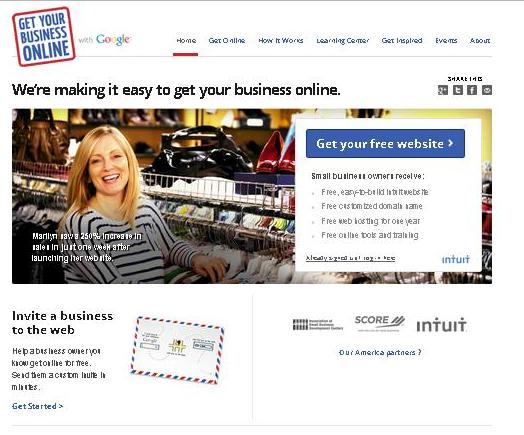
    Google’s quest to sign the world’s businesses up to websites stepped into the big time this week with the launch of America, Get Your Business Online.

    The US program is based upon the Getting British Business Online program which was followed up with similar projects in Australia and then Texas prior to being launched nationally across the States.

    An interesting aspect with the rollout of the various programs has been Google’s choice of partners — in Britain the key supporter was the incumbent telecommunication company BT.

    For some reason the subsequent programs have chosen to partner with accounting software companies and small business groups. The US program is no exception.

    These partnerships are interesting as the software companies involved are threatened by online cloud services — both Intuit and MYOB have their business models of selling boxed software to small businesses under siege.

    While Google regularly cite the Boston Consulting Group’s survey on the importance of websites to business, it seems most small operators don’t care as about half of small businesses don’t care about an online presence most developed countries.

    In Australia, the Getting Aussie Business Online fell short of its 50,000 sign up target which indicates smaller enterprises still don’t see the point.

    They may be right — for the local locksmith or lawn mowing service a Google Places account may be all they need rather than a relatively high maintenance website.

    Part of the problem is that small business proprietors are probably the most time poor people on the planet, so  filling in another set of forms is one of the last things they will do.

    Were Google to link Google + for Business to their other services so information wasn’t being duplicated there would be a far quicker and greater take up of their services.

    America, Get Your Business Online should be a useful service for some local enterprises but the real challenge for Google is to integrate their services to make it easier for smaller operations to use.

    Similar posts:

  • Six billion pairs of socks

    Six billion pairs of socks

    Ever since the days of Napoleon business people have lusted over the idea of selling into the Chinese market – the idea of a billion people clambering to buy just one widget each brings a gleam to the eyes of even jaded entrepreneurs.

    When Deng Xaioping opened the Chinese economy in the mid 1980s Australian brewers, Swiss watchmakers and German motor manufacturers rushed into the country believing that a billion liberated peasants would rush to buy expensive beer and watches.

    As it turned out, the real opportunities for foreigners were in the other direction. When China joined the World Trade Organisation in 2001 the boom that had already started in the Special Economic Zones along the southern Chinese coast spread across the Eastern provinces as manufacturing from Hong Kong, Japan and Taiwan to find cheaper labour.

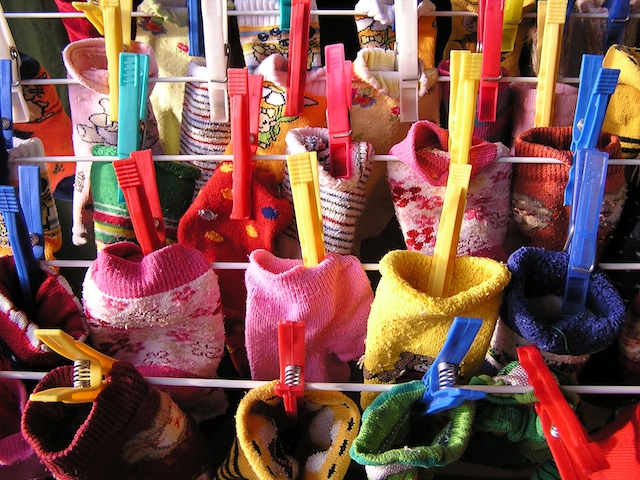
    300km South-West of Shanghai the city of Datang became “sock town” where local companies manufactured a third of the world’s sock supply.

    Chinese sock manufacturers became so competitive that their Japanese counterparts were forced to move upmarket in an effort to secure a position in an industry awash with cheap products.

    Today the Chinese sock industry is looking sick as manufacturers go broke and inventories pile up reports The Observer.

    Excess capacity is a problem in many industries, particularly motor manufacturing where governments around the world have supported their local producers resulting in a glut of cars and trucks. Socks are no exception to the laws of supply and demand.

    The travails of China’s sock industry are a cautionary tale for those who project straight lines for Chinese growth.

    Facile assumptions that every man, woman and child on the planet needs to buy two pairs of socks a year, or that China will build millions of steel hungry apartments each year, is not economic analysis and any business built on such shaky beliefs is leaving itself vulnerable when things don’t work out.

    The same is true for nations. Hollow assumptions can put an entire economy on shaky ground. Just thinking that every Chinese family needs six pairs of socks doesn’t guarantee economic success.

    Similar posts:

  • This is what happens when you rush things

    This is what happens when you rush things

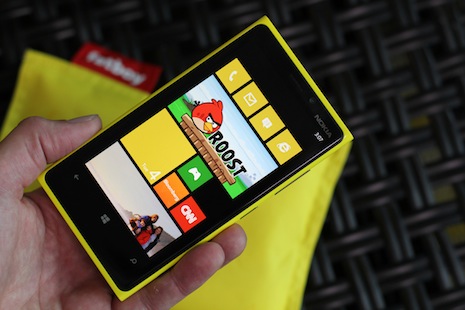
    Nokia are going to release a smartphone with the best camera seen so far on a mobile phone.

    Desperate for good news and positive coverage, Nokia decided to announce the Lumia 920 prematurely and their marketing people are forced to fake the videos and sample photos.

    Then they get caught.

    And instead of having the media fawning over the impressive features of the Lumia 920, Nokia are scorned. A particularly damaging thing in a fortnight where Amazon and Apple have major announcements.

    The problem is giving yourself artificial milestones that can’t be met. People take shortcuts to meet those deadlines and debacles like Nokia’s are the result.

    Artificial “drop dead dates” are the mark of panic by poor management. One wonders how long this can continue at Nokia.

    Similar posts: