Category: computers

  • Hands on with Microsoft Office 365 and a Windows 8 tablet

    Hands on with Microsoft Office 365 and a Windows 8 tablet

    One of the key planks of Microsoft meeting the challenge presented by online services like Google Docs is their cloud based Office365.

    The success of Office365 is important as Microsoft Office makes up a large chunk of the 24 billion dollars in sales, and $15 billion dollar profit, the company books from its Business Division.

    Coupled to this threat is also the move from personal computers to smartphones and tablet devices which Microsoft hope to meet with their Window 8 operating system, Surface tablet computer and Windows Phone.

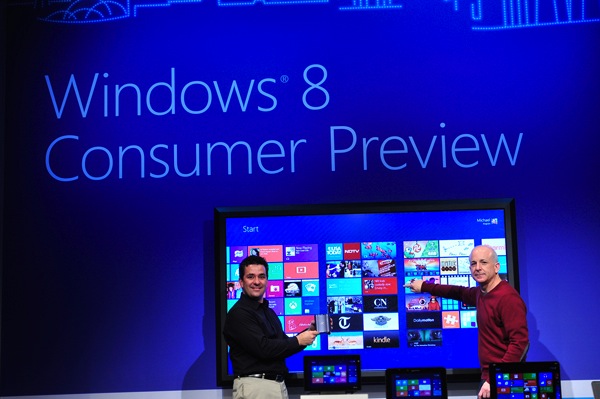
    As part of the Australian TechEd 2012 Conference, Microsoft gave a hands on preview of the Office 365 running on a Windows 8 tablet which was a good opportunity to see how both software packages worked.

    Office 365

    Office365 is very similar in layout and function to Office 2010 – if you’re using earlier versions of Office, particularly Office 2003, then you may find the ribbon bar and changed menus hard to navigate at first.

    Integration with Microsoft’s Skydrive is good and seamless. A nice feature in this is how a user can setup multiple Skydrive accounts as separate drives. How well this works while on the road will have to be tested away from a controlled environment like the one at the TechEd meeting rooms.

    The touch screen functions are fairly hard to get used to and they don’t work particularly well with fat fingers which Microsoft attempts to overcome with providing a stylus.

    Another complexity is that the menus and touch screen functions aren’t consistent across applications. The handy ‘pinch’ gesture to zoom on Windows 8 doesn’t work on the Office applications on the tablet which is a shame and is also a bit irritating for power users.

    Office365 adds a range of other features like web publishing, video editing and IT management tools but the hands on demo didn’t give enough time to properly evaluate these aspects.

    Window 8

    The first thing that jumps out with Windows 8 is the basic interface isn’t intuitive. The tile based system is difficult to use if you’re used to a keyboard and mouse or mobile systems like Apple iOS and Android.

    Another worry is the Windows 8 interface – or “Metro” as it was known – uses different applications to the desktop version. The problem with this was illustrated when trying to run a video on the device as the Internet Explorer in the Windows 8 interface was a different version to that on the desktop so videos would run in one mode, but not on the other.

    This confusion between software versions is a recipe for user confusion, lost data and possibly even a security weakness. It’s surprising that having effectively two operating systems running on the device was considered to be a good idea.

    Looking under the hood at the Control Panel, the Windows NT heritage of Window 8 becomes apparent. Anybody used to tinkering with the settings on Windows XP, Vista or 7 systems will have no trouble finding their way around the new version.

    Overall the performance of Windows 8 was impressive. It’s quite fast and responsive and this is something that Microsoft’s demonstrators are proud of.

    Tablet blues

    The surprising thing was the Windows 8 system was running on a Samsung tablet with still no ship date for the Windows hardware.

    The Windows 8 about screen on a Samsung Tablet

    With Christmas approaching, Microsoft are running out of time to compete in the tablet market and it seriously raises questions on whether the Surface tablets were prematurely announced.

    The experience with Office365 on the Windows Tablet was satisfactory although the demonstration showed there’s some barriers to adopting tablets as the main work computers.

    Office 365 shows the strengths Microsoft have in the market, if Microsoft can get their tablet strategy right then they have a good product to compete with Apple’s iOS and Google’s Android.

    Time will tell if they or their hardware partners can get products that customers want onto the market.

    Paul travelled to TechEd and stayed at the Gold Coast as a guest of Microsoft Australia.

    Similar posts:

  • Microsoft TechEd Australia 2012

    Microsoft TechEd Australia 2012

    2012 is the year that will define Microsoft as the market place they have dominated moves to tablet computers and smart phones.

    The challenge for Microsoft is how they migrate their desktop and server products to the platforms dominated by Amazon, Google and Apple.

    At this year’s TechEd Australian conference the pressure is on Microsoft to present how they will deal with this challenge from tablet computers, mobile phones and cloud computing.

    The big ticket item is the Windows phone. After the disastrous launch of the Nokia Lumia 920, Microsoft has to convince the market place they have a viable competitor to the iPhone and the plethora of Google Android devices.

    Microsoft have taken the opposite strategy to Apple in trying to offer the same operating system on all their devices. If Windows 8 can run on all systems then they have a chance of locking high margin corporate users onto their platforms.

    Windows 8 itself has to have a compelling story to tell. Much of Microsoft’s future relies upon a successful rollout of the new operating system that meets the demands of both consumers and businesses. Users increasingly expect social media and cloud computing services to be integrating into their systems.

    Cloud computing is an important part of Microsoft’s corporate strategy and how the new version of Windows Server delivers on the business requirements of using cloud services will be an important factor in the product’s success.

    One of Microsoft’s most profitable product lines has been their Office suite of applications. Margins on Office have been under pressure since the release of the free Google Docs suite and the corporate Google Apps product.

    The advantage Microsoft have in the office productivity market is their products have the full range of feature business users need and Google, and Apple, have struggled to include these tools in their products.

    With new versions of Office, Server, Phone and Windows all being released Microsoft have a lot of stories to tell and the stakes for the software giant are huge. It’s going to be an interesting few days at the Gold Coast Convention Centre.

    Similar posts:

  • How much server space do Internet companies need to run their sites?

    How much server space do Internet companies need to run their sites?

    “How much server space do companies like Google, Amazon, or YouTube, or for that matter Hotmail and Facebook need to run their sites?” is the question I’ve been asked to answer on ABC Radio National Drive this evening.

    This isn’t a simple question to answer as the details of data storage are kept secret by most online services.

    Figuring out how much data is saved in computer systems is a daunting task in itself and in 2011 scientists estimated there were 295 exabytes stored on the Internet, desktop hard drives, tape backup and other systems in 2007.

    An exabyte is the equivalent of 50,000 years worth of DVD video, a typical new computer comes with a terabyte hard drive so one exabyte is the equivalent of a million new computers.

    The numbers when looking at this topic are so great that petabytes are probably the best way of measuring data, a thousand of these make up an exabyte. A petabyte is the equivalent to filling up the hard drives of a thousand new computers.

    Given cloud computing and data centres have grown exponentially since 2007, it’s possible that number has doubled in the last five years.

    In 2009 it was reported Google was planning to have ten million servers and an exabyte of information. It’s almost certain that point has been passed, particularly given the volume of data being uploaded to YouTube which alone has 72 hours worth of video uploaded every minute.

    Facebook is struggling with similar growth and it’s reported that the social media service is having to rewrite its database. Last year it was reported Facebook users were uploading six billion photos a month and at the time of the float on the US stock market the company claimed to have over a 100 petabytes of photos and video.

    According to one of Microsoft’s blogs, Hotmail has over a billion mailboxes and “hundreds of petabytes of data”.

    For Amazon details are harder to find, in June 2012 Amazon’s founder Jeff Bezos announced their S3 cloud storage service was now hosting a billion ‘objects’. If we assume the ‘objects’ – which could be anything from a picture to a database running on Amazon’s service – have an average size of a megabyte then that’s a exabyte of storage.

    The amount of storage is only one part of the equation, we have to be able to do something with the data we’ve collected so we also have to look at processing power. This comes down to the number of computer chips or CPUs – Central Processing Units – being used to crunch the information.

    Probably the most impressive data cruncher of all is the Google search engine that processes phenomenal amounts of data every time somebody does a search on the web. Google have put together an infographic that illustrates how they manage to answer over a billion queries a day in an average time of less than quarter of a second.

    Google is reported to own 2% of the world’s servers and they are very secretive about the numbers, estimates based on power usage in 2011 put the number of servers the company uses at around 900,000. Given Google invests about 2.5 billion US dollars a year on new data centres, it’s safe to say they have probably passed the one million mark.

    How much electricity all of this equipment uses is a valid question. According to Jonathan Koomey of Stanford University, US data centres use around 2% of the nation’s power supply and globally these facilities use around 1.5%.

    The numbers involved in answering the question of how much data is stored by web services are mind boggling and they are growing exponentially. One of the problems with researching a topic like this is how quickly the source data becomes outdated.

    It’s easy to overlook the complexity and size of the technologies that run social media, cloud computing or web searches. Asking questions on how these services work is essential to understanding the things we now take for granted.

    Similar posts:

  • Windows 8 to launch on October 26

    Windows 8 to launch on October 26

    It’s official, Windows 8 has an October 6, 2012 release date.

    For Microsoft, the pressure is now on. Not only does the desktop version have to be shipped but also the smartphone and tablet versions. Their cloud services are going to have to be flawless on the day Windows 8 goes live.

    The tablet version is doubly important as Microsoft has to convince cynics like me that the Microsoft Surface is not vapourware. With the Surface RT scheduled for release with Windows 8, Microsoft are going to have to announcing pricing and final specifications very soon. Reports are that the Surface is beginning to appear on Amazon sites so release may not be far away.

    Nokia too will now be under a lot of pressure as releasing credible Windows 8 are the only hope for the company’s future. As it is, the current range of Lumia phones are now dead in the water despite massive discounts.

    As we’ve previously discussed, Windows 8 is essential to Microsoft’s market position and will define their future – a failure will almost certainly lock the once dominant software giant to a another lost decade.

    We’ll see a lot advertising and PR hype around Windows over the next few months, the real test will come at the end of October and with the Christmas buying season.

    By the middle of next year we’ll have a good idea of just how successful Windows 8 will be. Steve Ballmer’s future depends upon it.

    Similar posts:

  • Driving Windows 8

    Driving Windows 8

    Microsoft today released their preview edition of Office 2013, the product that underpins the company’s dominance of the business IT sector.

    Users sticking with an older version of Windows hurt Microsoft’s bottom line and one of the key parts of the company strategy with Office is to drive adoption of the latest operating systems which usually means buying new computers.

    The problem for Microsoft is that there has been no real compelling reason for users to upgrade for a decade since the release of Office 2003.

    Coupled with the failure of Microsoft Vista, this had damaged the PC industry’s model of users upgrading computers every three to five years.

    Microsoft would be hoping the cloud integration features, the same versions on desktops, tablets and smartphones coupled with keen prices will be enough to make contented XP users make the jump to Windows 8 and buy a new computer as well.

    Whether it does will depend on the market caring – if users simply don’t care about Office 2013, let alone Windows 8 on either desktops or smartphones, then Microsoft will struggle.

    Unfortunately for Microsoft, the era where they could dictate what people used on their computers is over and that could be their biggest management challenge of all.

    Similar posts: