Category: entrepreneurs

  • China’s entrepreneurial push

    China’s entrepreneurial push

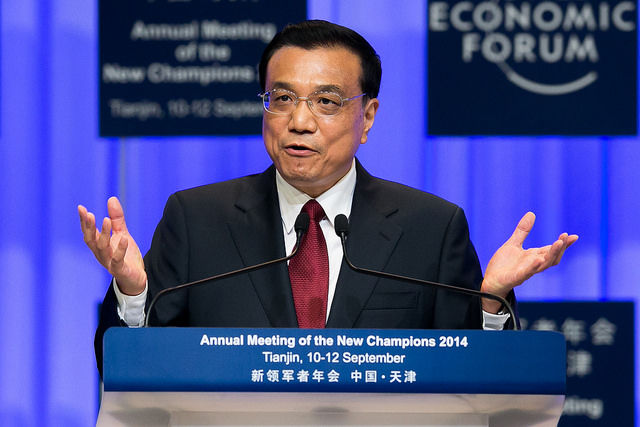
    Just as I was hitting ‘publish’ on the China goes on the tech offensive‘ post two days ago, Chinese Premier Li Keqiang was delivering a speech to the World Economic Forum on the nation’s economy.

    An English translation of Li’s speech is online and what’s particularly notable about it is the continual mention of “mass entrepreneurship and innovation” with the Premier pointing out over 10,000 new businesses are being registered every day in China.

    In parts of the speech, Li sounds like one of the small business evangelists proselytizing on why everyone should start their own venture and coupling entrepreneurship with social justice.

    “Mass entrepreneurship and innovation is effective in promoting social justice. As long as they are willing and capable, all people could establish themselves and lead a promising life through innovation and entrepreneurship. They could all have an equal chance for development and for moving up the social ladder, and could all enjoy a life of purpose and dignity.”

    Probably the biggest barrier for small businesses and startups in all countries is the access to capital, something that Li flags in his speech as being part of China’s opening up to foreign investment.

    Should Li and the Chinese leadership unleash the nation’s entrepreneurial spirits, it will see the country’s economy changed radically and that rebalancing towards domestic consumption accelerate.

    For the rest of the world worrying about China’s influence and economic might, they could be worrying about last year’s problems.

    Similar posts:

  • Five basic software tools for a new business

    Five basic software tools for a new business

    Last week I was asked by someone considering starting a business what I’d recommend in the way of software for a new company.

    That’s a good question as cloud services have completely changed what a business should buy over the past five years when the answer back then would have been to buy a new PC with Microsoft Office preloaded along with a boxed accounting package.

    More importantly for a cash strapped business, whether it’s a tech startup or a more conventional business, today’s cloud based tools don’t need new computers and most have free versions that suffice for those early days before a venture has established a cash flow or its viability. That radically changes the economics of setting up a new business.

    Google Docs

    This is the basic essential tool for a new business giving a basic word processing, spreadsheet and presentation package. The free version of Google Docs is technically only available to educational or home users, but then you are running your new business from home aren’t you?

    Paid versions of Google Apps are either five dollars or ten dollars per user per month depending on the features or storage you want. Again for most small business the cheaper version will usually suffice.

    For power users, Microsoft Office is often unavoidable as the spreadsheet and wordprocessing features of Excel and Word are far more extensive than Google’s.

    Email and calendar functions

    Once upon a time your choice of email tool mattered, today it doesn’t as there’s no shortage of free cloud based tools or, if you’re a Mac user, Apple Mail. For most small businesses it’s easiest just to choose Google’s Gmail or Microsoft’s Outlook.com. If you’ve chosen Microsoft’s Office 365 package than Outlook is part of the business bundle.

    Also in the past having an online, shareable calendar was a nice to have but often expensive feature that required a server. Now almost all systems come standards with calendars although Google has the edge in terms of sharing calendars between workgroups.

    Storage

    Being able to store and share files into the cloud has been a boon for small businesses which in the past needed to have an expensive and clumsy inhouse server if they want to share information or even just to access it on the road.

    Microsoft give unlimited storage for Office 365 subscribers while Google offer 15Gb for the free Docs service, 30Gb for the $5 Apps Plan and unlimited space for the $10 Apps plan if you have more than five users. Apple’s pricing is more complex with five different tiers although iCloud is a much more elegant solution for backing up iOS and OS X devices.

    Two third party storage providers such as Box and Dropbox are also worth considering with both offering advanced tools and integration with other cloud services. Dropbox offers a free version with 2Gb of data, a Pro version including a Terabyte of space and a business version that is unlimited at $17 per month.

    Accounting

    One of the biggest mistakes a new business makes is skimping on accounting software. This is one of those areas where cutting corners early can be expensive later. The most popular cloud accounting service for small business is Xero which does a great job in integrating with other online platforms including Office 365 and Google Apps for $25 a month.

    Xero though is not alone in this field with MYOB, Reckon, Quicken and others fighting for marketshare. It’s best to talk to your accountant and find what they work with as this will save problems when you come to do your books.

    Website

    Every business needs a web presence. If your new company is a local service, retail or hospitality outlet then you have to be listed on Google My Business which literally puts your company on the map. Listings on Facebook and signing up with all the main social media services is a must do as well.

    The cornerstone though of an online presence though is a website and the easiest, quickest and no-cost way is to set up a website on Google’s Blogger platform. Once your business gets up and running then having your own web server running WordPress is the best long term solution but in those early days Blogger will suffice and the upgrade path between the two is surprisingly painless.

    Every business though is unique and your business might need more than these five basic tools. If you’re in hospitality and retail you’ll need a Point of Sale solution while if you’re a tech startup products like Slack and Basecamp may be needed as well.

    The five basics though are common to all businesses regardless of the industries they’re in and regardless of the aspirations of the owners. The fact you can set up a business for almost nothing is one of the reasons why it’s worth giving it a go.

    Similar posts:
  • Taiwan enters the startups race

    Taiwan enters the startups race

    Battered by a declining Chinese market for its manufacturing goods, Taiwan is having to look elsewhere for its economic growth.

    Startups are one idea report Reuters News describing how the Taiwanese National Development Council set up HeadStart a year ago to create an tech entrepreneur ecosystem by relaxing regulations for registering start-ups, matching funds invested into projects and creating tech hubs.

    So far HeadStart has attracted around $US 438 million in funds and now Alibaba founder Jack Ma says he wanted to set up a $300 million fund to support Taiwanese entrepreneurs.

    While the Reuters piece focuses on the ecosystem built around fading smartphone maker HTC and the major computer chip fabricators, Taiwan’s strength may well lie in its small business roots as much of the island’s industrial strength has been built, like Japan’s, on its army of small family firms supplying the larger companies.

    That Taiwan needs to diversify its economy is a warning to other less advanced economies that depending on a narrow band of exports leaves a nation open to external risks. It might be time for others to be looking at how to encourage their entrepreneurs.

    Image of Taiwanese bronze buddha by Shirley B through freeimages.com

    Similar posts:

  • The Chinese sock fallacy

    The Chinese sock fallacy

    “We have an addressable market of four hundred million dollars a year. It’s a huge opportunity and we could win half of it.”

    The business manager speaking – who we’ll call John – was talking about the potential market for his company’s small business product that promises to earn around two hundred dollars a year.

    How John came to the four hundred million dollar number was simple. He multiplied the two hundred dollars by the two million small businesses in Australia.

    John had fallen for the ‘Chinese sock fallacy’ where a simplistic assumption creates the illusion of a huge market. The idea being that there are a billion people in China all of whom will own five pairs of socks so therefore there’s demand for five billion pairs of socks.

    The key part of the fallacy is not knowing whether those billion Chinese or two million Aussie small businesses want your socks or cloud computing services.

    Other complications include who are the incumbents currently selling to that market, how many pairs of socks do most Chinese people own, how often do they replace them and what do they pay for a new set?

    Suddenly things get complex and the assumptions don’t look so promising as we find with John’s projection of his market.

    Looking at the figures for Australia’s small business sector with 61 percent of enterprises having no employees, it’s hard not to conclude most are contractors or consultants who mostly don’t need John’s cloud service.

    So the Chinese sock fallacy strikes again.

    Similar posts:

  • Niches and needs: necessity and the mother of invention

    Niches and needs: necessity and the mother of invention

    An old saying is necessity is the mother of invention and nowhere is this shown better than walking the exhibition floor of the Internet of Things World conference in San Francisco today.

    The Wallflower is a good example of this, thought up of after the founder had to rush home when his partner thought she’d left the stove on (she hadn’t), he thought there had to be something that could monitor this on the market and when he discovered there wasn’t, he invented it.

    Snowboarding needs

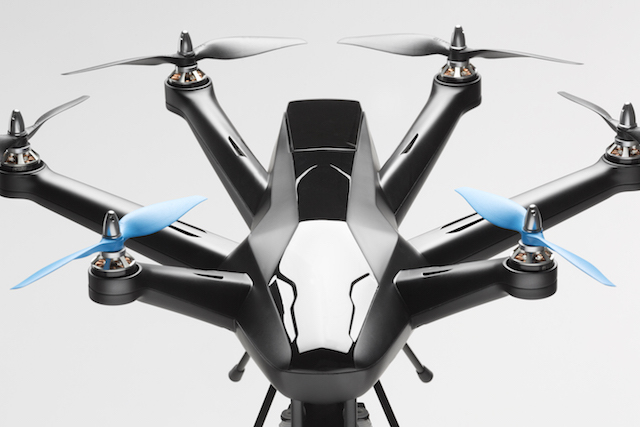
    Probably the sexiest device on the floor is the Hexo+, an autonomous drone designed for video shots. Use the app to tell you what shot you want and it the drone will take off and video you.

    Hexo+ was founded by Xavier de Le Rue, a French professional snowboarder who wanted to get shots of his maneuvers but couldn’t afford a crew or a helicopter to do so. The preprogrammed flight patterns represent the most common camera sequences optimised for the GoPro camera.

    Probably the most trivial is the MySwitchMate, a mechanical device that fits over a wall light switch. Set it up and you can use its app to flick your lights on and off.

    The device was born out of the founder wanting to remotely control his college dorm lights from his bed. While the market seems to be those who don’t want to get out of bed, its main market are those who would like remotely controlled lights but can’t install a smart lighting system.

    A niche from a need

    What all three of these devices show is how a need by an inventor spurred a  product’s development, in that respect the Internet of Things is no different from any other wave of innovation.

    So if you wonder “why doesn’t someone sell this?” it might be an opportunity to set up your own business or invent an IoT device to meet that need.

    Similar posts: