Category: future

  • Australia welcomes the multi generational mortgage

    Australia welcomes the multi generational mortgage

    At the height of the Japanese property boom in the 1980s, the hundred year mortgage came into being.

    Pushing payments onto children and grand-children was the only way home prices could continue to rise once they hit levels which the average Japanese worker could ever afford with a more traditional twenty or thirty year mortgage.

    Twenty five years later Australia finds itself in a similar position as parents guarantee their childrens’ mortgages.

    Repeating the Japanese mistake

    While the Japanese looked to sticking their mortgages onto their kids and grandkids, Down Under the kids are fighting back and getting mum and dad to underwrite their unaffordable loans.

    This weekend’s Sydney Morning Herald features in its property section the story of how Sharon and Graeme Bruce guaranteed their son’s and his fiance’s mortgage in Sydney’s inner suburbs.

    While the story isn’t clear on the size of the deposit (which isn’t surprising given the SMH’s shoddy editing), it appears the Bruces’ have guaranteed around $300,000 so his son and future daughter-in-law can grab a five bedroom, 1.45 million dollar mansion.

    One wonders what great businesses Matt and Hannah could build if mum and dad were prepared to stump up a similar amount to invest in a start up?

    Australia’s property obsession

    Sadly we’ll never know – in Australia, the smart money gets a job, pays off a mortgage and accumulates wealth through investment properties. What cows are to African tribesmen, negatively geared units are to the Australian middle class.

    The hundred year strategy hasn’t worked too well for Japan, with a declining population those mortgages entered into a boom level 1980s values now don’t look so attractive and are one large reason for the nation’s lost decades.

    In Australia, things aren’t likely to work so well either. The Baby Boomers and Lucky Generationals – those born from 1930 to 1945 – guaranteeing their kids’ and grandkids’ mortgages are relying on ever increasing property prices.

    This is understandable given that few of them have any experience of long term stagnation, let alone decline, of property values but it leaves them incredibly exposed should the Aussie housing market slump.

    Can an Aussie property decline happen?

    Many Australians, particularly those with vested interests, maintain such a decline can’t happen but the prospects aren’t good as the SMH story shows;

    The couple had attempted to buy a small terrace in Newtown but kept getting pipped at the post by other young professional couples. At a higher price point they had no competition.

    Despite his parents’ generosity he said he would still need to rent out a few of the rooms to help pay for the mortgage.

    So Matt can’t afford the mortgage. That’s not good starting point and one that could cost his parents dearly, which they don’t seem to care about much.

    ”Obviously my dad guaranteeing the loan was the only way we were going to purchase this,” Mr Bruce said. ”You need to have a 20 per cent deposit otherwise the banks want you to pay insurance … it’s a bit of a rort really.”

    It’s fair to call mortgage insurance a rort – as it certainly is – but its purpose is to protect the banks should a mortgagee default and the financiers find themselves out of pocket.

    With Matt’s parents getting him out of paying that insurance his bank has much better default protection, equity in his parents’ property.

    Guaranteeing risk and misery

    I’m not privy to the finances of Sharon and Bruce, but most of their contemporaries can ill afford to lose several hundred thousand dollars in home equity in their later years.

    That is where Australia’s multi-generational mortgages could turn very nasty, very quickly as older Australians find themselves having to deliver on the guarantees they gave on behalf of their over committed offspring.

    In Japan, it’s taken a long time for the population to realise their national wealth has been squandered on twenty years of propping up unsustainable property prices and economic policies.

    One wonders how long it will takes Australians to realise the same has happened to them and what the political reaction will be.
    Similar posts:

  • Graphs, damn lies and the middle class

    Graphs, damn lies and the middle class

    Graphs are great for illustrating a story, and also excellent at misleading people.

    A good example of where a graph can give an incorrect impression is the Sydney Morning Herald’s story Whatever Happened to the Middle Class.

    The story is a very good explanation of the predicament Australia’s political classes have put themselves into – exacerbated by their 1950s view of dividing the workforce into poorly paid ‘blue collar’ workers and affluent ‘white collar’ office staff – but it suffers from the selective use of headline graphs.

    Viewing the big picture

    The first graph shows how Australians are identifying themselves as middle class and the trend looks staggering,

    Graph of How Australians see themselves as middle class

    Now if we add those who identify themselves as working class, the picture looks even more dramatic with some pretty volatile swings,

    A graph showing How Australians see themselves as middle or working class

    However if we now add in those who identify themselves as rich, or upper class, we get a better perspective as the entire range is now shown,

    Graph showing How Australians see themselves as upper middle or working class

    Selective choosing the Y, or vertical, axis will always give an exaggerated view of a trend or proportion. Once we take the full range in we see the real extent of things. It also has the benefit of showing the trends aren’t as volatile as first appear.

    Middle class perceptions

    When we look at the graph showing the full picture there’s a number of interesting trends and characteristics about Australian society that come out of it which are worthy of some future blog posts.

    Most notably is the identification of Australians being middle class as their property values increased.

    On this point, it’s worthwhile contrasting the Australian experience with the US, here’s a Gallup poll from last year on how Americans see themselves,

    A graph showing how Americans see themselves as upper middle or working class

    While the definitions are different – that Americans differentiate ‘working class’ and ‘lower class’ is interesting in itself – it’s clear that the same trend happened in the US with more people identifying themselves as being members of middle class when their property values were increasing.

    In 2008 and 9 there’s suddenly a sharp increase in Americans identifying themselves as working class as the property downturn bites. The steady increase in those claiming to be ‘lower class’ from 2006 onwards is worth closer examination.

    What this means for Australia

    The implications of the US trends is that any Australian politician intending to dismantle John Howard’s middle class welfare state will have to wait until the property market falls before trying to win any popular support.

    For this year’s Australian election though, what’s clear is that any attempt to stoke the fires of class warfare is going to fail dismally in the outer suburban marginal seats so coveted by both parties.

    We’re going to see a lot more selective graphs during the course of this year, it’s worthwhile taking time to look at them closely. The stories may be different, and a lot more nuanced, than the headlines tell us.

    Similar posts:

  • It’s too late, baby – when digital reality bites

    It’s too late, baby – when digital reality bites

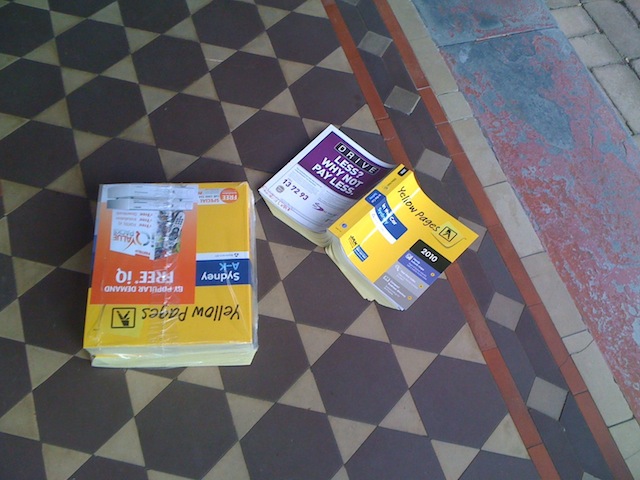
    Yesterday Sensis announced it would restructure for digital growth by sacking staff, offshoring and “accelerate its transition to a digital media business”.

    The directory division of Telstra has been in decline for years, a process that wasn’t helped by then CEO Sol Trujillo embarking on his expensive “Google Schmoogle” diversion.

    A decade later, Managing Director John Allen has announced another 650 jobs to go from the remaining 3,500 workforce.

    John’s comments are worth noting.

    Until now we have been operating with an outdated print-based model – this is no longer sustainable for us. As we have made clear in the past, we will continue to produce Yellow and White Pages books to meet the needs of customers and advertisers who rely on the printed directories, but our future is online and mobile where the vast majority of search and directory business takes place.

    Carol King put it best – it’s too late, Baby. These are words that should have been said a decade ago.

    Similar posts:

  • Have we come to the end of the middle class era?

    Have we come to the end of the middle class era?

    Technology has transformed workplaces over the last century, drove huge income growth and moved many into the middle classes. Are we now seeing computers and robots displacing those middle class jobs?

    At Tech Crunch Jon Evans warns Get Ready To Lose Your Job  as “this time it’s different” – unlike earlier periods of industrialisation where jobs shifted to the new technologies such coach builders became car makers – robots and computers are making humans redundant.

    So I see no mystical Singularity on the horizon. Instead I see decades of drastic nonlinear changes, upheaval, transformation, and mass unemployment. Which, remember, is ultimately a good thing. But not in the short term.

    In The Observer John Naughton, professor of the public understanding of technology at the Open University, says Digital Capitalism Produces Few Winners.

    Professor Naughton’s view is that high volume, low margin businesses like Amazon mean there’s fewer well paid jobs available and many of the lower positions will be soon replaced by robots.

    At the other end of the digital marketplace, the high margin businesses like Apple, Google and Salesforce don’t need many staff to generate their profits, so wealth is concentrated among a small group of managers and owners.

    While the low paid and manufacturing workers have been squeezed for decades in the West, it’s now the turn of the middle classes to feel the pain of automation, outsourcing and restructuring.

    There’s two ways we can look at these changes, the optimistic is that our economy is going through a transition to a different structure; those out of work coachbuilders a hundred years ago didn’t immediately get jobs building cars and the same adjustments are happening again.

    A more pessimistic view is that the Twentieth Century was an aberration.

    It may be that Western world’s steady climb into middle class prosperity was itself a transition effect and we’re returning to the economic structures of the pre-industrialised age where the vast majority of people have a precarious income and only the fortunate few can afford middle class luxuries.

    The next decade will give us some clues, but the portents aren’t good for the optimistic case, the Pew Research Centre shows America’s middle classes has been shrinking for forty years.

    For those Americans still in the middle class, the Pew research shows their incomes have been falling for a decade.

    Regardless of which scenario is true, the dislocation is with us. As individuals we have to be prepared for changes to our jobs, however safe they look today. As a society we have to accept we are going through a period of economic and social upheaval with uncertain long term consequences.

    What’s particularly notable is how today’s political and business leaders seem oblivious to these changes and are locked in the ‘old normal’ of thirty or fifty years ago.

    One wonders what it will take to wake them up to the changes happening around them and what will happen when reality does bite them.

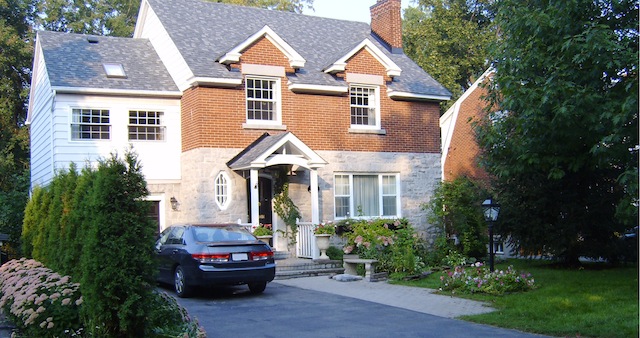
    Picture of a nice, middle class house by Strev via sxc.hu

    Similar posts:

  • Our evolving view of robots

    Our evolving view of robots

    Ahead the Ovations Speaker Showcase on Tuesday, I’ve been looking at robots as one of this decade’s trends.

    What’s interesting is how our perception of robots has evolved over the last half century.

    The idea of Robots in the 1950s and  60s were ones with human shapes – four legs, a torso, two arms, shoulders and a head – otherwise known as anthropomorphic. Lost in Space and the Day the Earth Stood Still are two good examples of those human like machines.

    How robots looked in the 1950s
    1950s robot chic – the day the Earth stood still

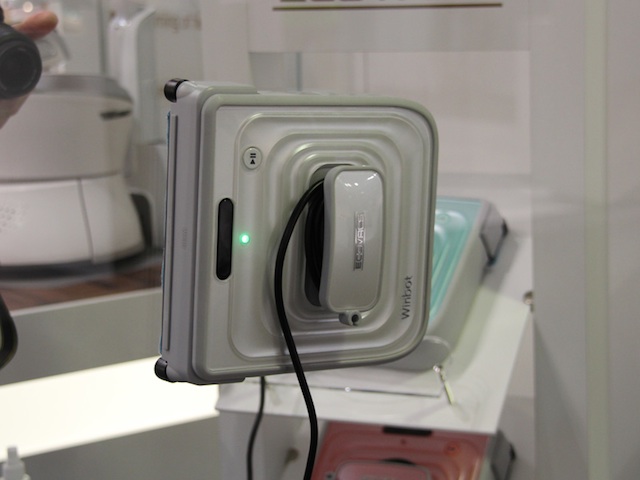
    Today’s robots have much more utilitarian shapes, like the Winbot window cleaner pictured at the beginning of this post.

    Many of the robots look like the machines we use today, mainly because they are today’s technology with the driver or operator replaced. A good example being the Google self driving cars.

    google self driving car

    The idea of a robotic car isn’t completely new though; the 1980s action series Knight Rider featured KITT, a robot car with an almost equally mechanical David Hasslehof as its sidekick.

    The Hoff and KITT

    More interesting still are the tiny robots who look, and act, like insects. Wait until these guys infest your internet fridge.

    All of these technologies had to wait until computers became small and cheap enough to fit into the systems. In the 1980s a computer with the capabilities to run KITT or a Google Car would be the size of a large warehouse, today it can fit inside a cigarette packet.

    Of course the real power for robots comes when computers talk to each other and form a collective intelligence. This is the Internet of machines.

    The terminator
    Skynet has told The Terminator to destroy us all.

    Which brings us to Arthur C. Clarke’s and Stanley Kubrick’s 2001: A Space Odyssey and the 1980s vision of Skynet which gave birth to the Terminator.

    Hopefully those visions of the future of network connected robot are just as misguided as those of 1950s movies.

    If they aren’t, we’re in a lot of trouble.

    Similar posts: