Category: Innovation

  • Why small businesses aren’t using cloud computing

    Why small businesses aren’t using cloud computing

    As part of their push into online applications, telecommunications company Optus yesterday released their Digital Ready report examining Australian small business’ use of cloud computing services.

    One of the notable results is that only four percent of small business proprietors claim to use cloud computing services and 59% are unsure of what exactly cloud computing is.

    Those results are surprisingly poor and indicate businesses don’t see the benefit or value in cloud computing services. There seems to be a number of factors driving this.

    Misunderstanding cloud computing

    That over 90% of small business owners claim not to be using cloud computing indicates many simply don’t know what these services are. If asked most would admit to using Facebook, web mail or some other online or social media platform that runs on cloud computing.

    That’s an education issue and if anything is a criticism of those of us – including myself – who are trying to explain the concept. We can do better as an industry.

    Security

    Many businesses, big and small, misunderstand technology security risks and have an inflated view of how secure their own desktop, networks and servers are. In many ways the security of cloud services is better than most small business IT systems.

    Where the security argument falls down is in the hyperbole of many IT security vendors – every month we hear breathless reports, repeated by gullible technology journalists, of how smartphones, social media or Apple Macs are going to be struck down by a new wave of viruses and each time the “threat” quietly fades away into obscurity.

    As long as hysterical fear stories about the security of smartphones and cloud services circulate in the media, it’s understandable that small business owners will be wary of trusting technologies they don’t fully understand.

    Sunk costs

    Many established businesses have sunk costs in existing software and hardware. For proprietors or managers to justify moving a new service, whether it’s on the cloud or not, there has to be a clear financial benefit in doing so.

    Terms of Service risk

    Cloud services – whether free or paid – come with a set of terms and conditions. Online Payment, social media and other cloud computing services have shown themselves to be quick in shutting down business accounts without warning, any due process or an accesible way to resolve disputes.

    Quite rightly, many business owners are wary of risking key processes or data to services that might cut them off without notice and who often lack a customer service culture.

    The reluctant advisors

    Business IT consultants struggle with cloud services. Cloud services are a threat to those used to making money from selling servers, software and desktop computers.

    For the more far sighted consultants, the thin margins offered by cloud services mean they have to rely on fees for service. If something goes wrong, the client’s first call will be to the trusted advisor and not to the service providers’ helpdesks.

    This is a headache too far for many consultants as they know they’ll probably not get paid for the time spent sifting the truth in a blizzard of vendor finger pointing. It’s far less risk and more profitable to recommend a server and desktop solution.

    Is cloud computing important?

    For businesses, the economics of cloud computing is changing industry dynamics. With lower capital costs, it makes enterprises more flexible and responsive to changing markets.

    Cloud services are critical to businesses – for established companies they’ll find themselves losing out if they don’t at least consider the advantages and choose the right online tools.

    The onus right now though is on cloud computing vendors to tell their stories better and demonstrate why they can be trusted with key business processes and valuable data.


    Similar posts:

  • ABC Nightlife: The next wave of smartphones

    ABC Nightlife: The next wave of smartphones

    The world of mobile phones is getting busy again as a whole new range of smartphones appear. Paul Wallbank joined Rod Quinn for ABC Nightlife on October 20 to discuss what the new smartphone wars mean for home and business users.

    We’ll be going to air from 10pm, Eastern Australian time across Australia on ABC Local Radio’s Nightlife to look at the following questions;

    • Why were people disappointed with Apple’s iPhone 4S that was released a few weeks ago?
    • The big competition are the Google Android phones, what are they doing?
    • What’s happened to Nokia? They seemed to have lost their domination.
    • Microsoft were the other big player, what are they doing?
    • How are the smartphones changing business?
    • Shopping centres seem to be jumping on board with various social media checkins. What are those?
    • There’s been a push to online payments, how are the smartphones affecting this?
    • Are smartphones going to be the big buy for Christmas?
    • What are the best plans for consumers and business?
    • How do people deal with telco disputes?

    The podcast from the program is available from at Nightlife website, and some of the information we mentioned can be found here;

    Dealing with Telco complaints

    We’ll be adding more resources in the next few days, the next ABC Nightlife spot is on 23 November and our events page will have more details. If you have any suggestions for future programs or comments on the last show, please let us know as we love your feedback.

    Similar posts:

  • The agents of change

    The agents of change

    It’s understandable technologists see technology as driving change. Often it’s true – technologies do build or destroy businesses, alter economies and collapse empires.

    Sometimes though there’s more to change than a new technology changing the economy and while it’s tempting to credit innovations like the web, social media and cloud computing with many of the changes we’re seeing in the world, we have to consider some other factors at work.

    The end of the 40 year credit boom

    In the 1960s, the United States started creating credit to pay for the Vietnam war; they never stopped and after the 2001 recession and terrorist attacks the money supply was kept particularly loose.

    The worldwide credit boom allowed all of us –Greek hairdressers, Irish home borrowers, Australian electronics salesmen, US bankers and pretty well everyone else in the Western world – to live beyond our means.

    In 2008, the start of the Great Recession saw the end of that period and now the economy is deleveraging. Consumers are reluctant to borrow and businesses struggle to find funds to borrow even if they want to.

    Any business plans built on the idea of almost unlimited spending growth are doomed. The era of massive consumer spending growth driven by easy credit is over and the days of expecting a plasma TV in every room are gone.

    The aging population

    An even bigger challenge is that our societies are getting older, the assumption we have an endless supply of cheap labour is being challenged as a global race for talent develops.

    The lazy assumption that economic growth can be driven by building houses and infrastructure to meet increased demands will be found wanting as the Western world’s populations fail to grow at the rates required to power the construction industries.

    Our societies are maturing and increased economic growth and wealth is going to have to come from clever use of our resources.

    Innovations in computers and the Internet – along with other technologies like biotech, clean energy and materials engineering – will help us meet those challenges but they are tools to cope with our transforming societies, not the agents of change themselves.

    Had  tools like social media come along in the 1970s or 80s they probably would have been massive drivers for change, just like the motor car and television were earlier in the 20th Century. In the early 21st Century they have been overtaken by history.

    Smart businesses, along with clever governments and communities, will use tools like social media, local search and cloud computing with the demographic and economic changes, but we shouldn’t think for a minute the underlying challenges will be business as usual.

    Similar posts:

  • Do you really want help from the government?

    Do you really want help from the government?

    Pity the public servant who stands up in front of a room and asks a bunch of business owners, executives or managers what they want from government.

    While there will be plenty of comments about improved procurement, less red tape and reduced fees you can be sure there’ll be plenty of demands that the government ought to subsidise something – anything – that business does.

    It’s notable how free enterprise, small government and low taxation loving business people will  drop their copies of Atlas Shrugged and barge their way to the feeding trough and the slightest scent of taxpayer money wafting in their direction.

    But is government money really good for a business? In many cases it isn’t.

    You run a business, not work in a government department

    “Who pays the piper, calls the tune.” The whole idea of running a business is that you are the boss, so why do you want to answer to a government department?

    If you’re self employed or just opened a startup, one of the main reasons for doing so is because you decided you no longer want to work for the man. A government grant may well open up a whole new world of paperwork that leaves you wondering why you ever left the cubicle.

    The dependency culture

    One of the dangers of government funding is if you are successful, you’ll find yourself hooked on it. Quickly you become better at filling in funding applications than delivering products your customers want. The Aussie film industry is a good example of this.

    Governments are behind the innovation curve

    Public servants are not employed to take risks, this is a good thing as it’s our money they are handling.

    Because governments are risk adverse they’ll only recognise an industry – or a problem – long after it has become established.

    If you find you are on the government’s help list, it might be time to consider an exit from a troubled industry.

    Do you really have a business?

    Many new business owners expect the government should do something to assist them in their start up phase. This is a common complaint from under capitalised proprietors.

    Given the massive subsidises given out to the banks and other big corporations since the start of the great recession, this attitude can almost be excused but we can already see how well that strategy works.

    If you really need a subsidy to run your business, then it’s time to consider whether you should be in business at all.

    This isn’t to say all government funding is bad; well thought out programs help viable businesses with things like export assistance, skills development and employing young or disabled workers. There are many of these although the process of identifying what a viable business is usually eliminates the newest and smallest enterprises.

    What is notable with the successful government programs is they address a specific need, they don’t have onerous paperwork and they are no substitute for a healthy, living cashflow and profit.

    Overall though, if you really want government money then take a job with the public service. It’s a lot easier than scrabbling for grants.

    Similar posts:

  • The mobile payments revolution

    The mobile payments revolution

    Ten years ago when I was running a computer support business we spent a lot of time trying to find an mobile payment service for our on-site technicians to process payments.

    At the time there were plenty of options but they were all expensive, asking 6% in merchant fees at a time when our bank merchant facility charged us 2.75% to accept Mastercard, Visa and Bankcard. Interestingly, the cut the mobile providers wanted to take which was the same commission as American Express and Diners Club.

    We’d long before decided Diners and Amex were too expensive and it was easy to make the same decision about mobile payments. The technicians were given a manual card swipe to carry around and they phoned through authorisations. It was messy and time consuming but a lot cheaper than the then high tech alternatives.

    Given that history, I was keen to get along to the Australian Information Industry Association’s “Mobile Payments – Cooperate, Collaborate, or Abdicate” breakfast panel held in Sydney last week to see what has changed in the mobile payments space.

    The rise of smartphones – and the developing SoLoMo trend among consumers which brings together social, local and mobile technologies – should have meant the era of online payments should have arrived and it’s puzzling why it hasn’t happened.

    It isn’t for a shortage of operators; one of the panel members, Oliver Weidlich of Sydney’s Mobile Experience mentioned a number of the services such as Square, developed by one of Twitter’s founders that are changing mobile payment overseas.

    Interestingly it was the audience questions that gave the answers to why online payments haven’t taken off in Australia. The key question from the floor was “which authority handles disputes should a phone be lost or stolen”.

    As a customer, one hopes it’s the bank that takes responsibility as the idea of a telco – particularly their mobile phone divisions with their attitude towards billing customers – having control over your credit card or bank account would make most consumers’ blood run cold.

    The point was well made though as it saw the panel’s bank, telco and credit card representatives all ruminating over the question of ‘who owns the customer’.

    Oddly, while they argue about whose property the customer is, all of them may lose out. While services like Square and built in payment features on social media and mobile apps such as Foursquare or Red Laser may take a slice of the market, there is a bigger competitor already making huge inroads.

    The day before the AIIA event, Internet payment giant PayPal announced a series of deals with various group buying sites and online applications. Their press release pointed out PayPal’s mobile payments, or mCommerce as they call it, is growing at over 400% a year

    While it might not be correct to say PayPal were the elephant in the room at the online payments breakfast, it isn’t unfair to say Big Ears was just outside scoffing the morning tea while the incumbents argued about who would have first dibs on clipping the tickets of both merchants and customers.

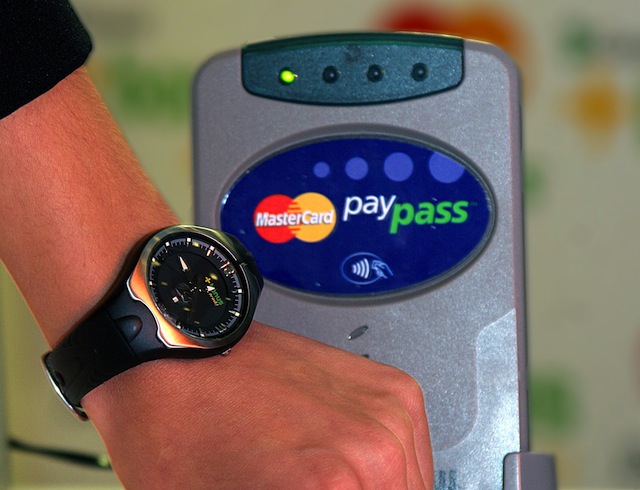
    It’s too early to say the banks, or the telcos, have lost the market but players like PayPal, Google with their wallet service and possibly even Apple – should a Near Field Communication (NFC) equipped iPhone appear in the near future – are going to make the mobile payment sector far more interesting and competitive.

    For businesses, we need to keep a close eye on the mobile payments market as it is promising to offer a lot more options in banking and transactions that what we’ve been used to in recent years. The days of 6% merchant fees are well and truly over.

    Similar posts: