Category: Investment

  • Silicon Valley and the virtues of going private

    Silicon Valley and the virtues of going private

    Last week there were a pair of interesting stories about the tech industry’s investment models.

    The biggest story was the rumours that PC manufacturer Dell may go back to being a private company and the other was Survey Monkey’s raising of $800 million through debt and private capital.

    Not your usual VC play

    Polling company Survey Monkey’s capital raising is notable because it’s very different to the standard VC equity models used by Silicon Valley companies of this size.

    Adding to the unusual nature of Survey Monkey’s behaviour is the declaration that they have no intention of becoming a public company. By ruling out an obvious way for investors to cash out of the business, they are making a clear statement that those putting money into the venture are doing so for the long term.

    That Survey Monkey is also taking on debt indicates management believe they are going to have the cash flow to service payments. Not playing to the Greater Fool business model makes the online polling company very different to most of its contemporaries in Silicon Valley.

    Dell going private

    Survey Monkey’s $800 million is dwarfed by Dell’s market cap of 22 billion dollars so the talk of the PC manufacturer buying out its stock market shareholders and becoming a private company is big news indeed.

    The New York Times Dealbook has a close look at the of the idea of taking Dell private and comes to the conclusion it’s not likely to happen.

    While there are challenges, there is merit to the idea. Richard Branson delisted Virgin from the London Stock Market in 1988 after becoming frustrated with the short term objectives of his shareholders and there’s a possibility of Michael Dell may feel the same way.

    For Dell, the challenge lies in moving away from the commodity PC sector. The Dell Hell debacle showed the company’s management has struggled with the realities of the low margin computer market and things aren’t getting better.

    Dell themselves are steadily moving away from PCs with bigger investments in services and other computer hardware sectors.

    Project Ophelia, a USB stick sized computer running Google’s Android operating system was one of Dell’s announcements at the Consumer Electronics Show and could mark where the company is going in the post-PC environment.

    Given portable and desktop PCs represent over half of Dell’s income moving away from those markets is going to be a major change in direction for the company.

    A change is though what the company needs with revenues down 11% on last year which saw profits nearly halved.

    Whether going private or staying public will allow Dell to recover its profitability remains to been seen, but management could probably do without the distraction of answering to stock markets while dealing with a complex, challenging task.

    Both Dell and Survey Monkey are showing that there isn’t one path to raising funds for technology companies, in fact there’s plenty of businesses raising money privately without the razzamatazz of high profile venture capital investments.

    It may well be though that we’re seeing private companies coming back into fashion as individual investors see the advantages in businesses with good cash flows rather then the hyped loss leaders which have dominated Silicon Valley’s headlines.

    Image of Wall Street courtesy of Linder6580 on SXC.HU

     

    Similar posts:

  • Towards the post car society

    Towards the post car society

    We don’t often think about it, but the design or our cities reflect the technologies of the day. Right now the way we live is built around the motor vehicle, but are we moving into a new era?

    After a visit to Ford Australia’s Centre of Excellence For Design and Engineering, Neerav Bhatt has some thoughts on the role of the motor car in an era where people don’t have to travel to their workplaces.

    One of Neerav’s points is that car use is falling among younger workers, a trend that’s happening across the western world.

    Much of this is put down to the generations of Millennials and Gen-Ys being more interested in technology purchases rather than cars along with changing work patterns.

    A more fundamental reason could be that we’re reaching the end of the motor car era.

    If there is one technology that represents the Twentieth Century it is the motor car; the automobile has shaped our cities, our lifestyles and our culture.

    However we are now in the Twenty-First Century.

    The three eras of motoring

    Roughly speaking, we could break the Twentieth Century’s love affair with the motor car into three phases; development, consolidation and dependency.

    In the first period, the automotive industry was developing with thousands of manufacturers experimenting with the technology and production methods. At the same time governments were beginning to build road networks and communities were demanding improved links.

    By the beginning of World War II, the motor car was an important part of life but ownership was largely restricted to affluent households and business.

    Following World War II governments made huge investments in road networks and automobiles became cheaper to own.

    This gave a generation a new taste of freedom as you could go anywhere with a tank of gas. It also changed the layout of our suburbs as people could now travel further to work, allowing them to move into bigger houses on the fringe of town.

    As government investment was focused on road building, passenger train and tram networks were starved of capital with many cities abandoning their transit systems altogether.

    Suburbs built in the early to mid Twentieth Century had evolved around trams and the legacy of that can still be seen today. However customers no longer wanted to fight for parking spots on crowded streets designed for horse drawn carriages and trams.

    Responding to this developers started building supermarkets and shopping malls which became popular largely because they offered easier parking. Cheaper goods made available by improved logistics systems – another effect of the motor car – was the other main reason.

    The beginning of dependency

    With the advent of the 1970s oil shock, the role of the motor car turned from being a tool of liberation into one of dependency. The suburbs of the 1960s and 70s had been built around the assumption of universal car ownership and cheap fuel. When fuel ceased being cheap, then households budgets were affected.

    Not coincidentally after the oil shock the reversal of ‘white flight’ – the movement of the middle classes to outer suburbs – started with the gentrification of inner suburbs that had been abandoned by the working class.

    Through the 1970s and 80s the cost of owning a motor car became more expensive as governments stopped externalising the costs of maintaining roads and saw car use and petrol taxes as a revenue source.

    At the same time the obvious effects of saturating society motor cars became obvious as roads increasingly became choked and planners began to realise that building more roads only attracted more traffic.

    Times of decline

    By the turn of the Twenty-first Century technology had also started to move away from centralised offices and factories. Today technologies like the internet and increasingly 3D printing mean that workers don’t have to commute vast distances. Automation also means many levels of management are no longer necessary.

    Changing work patterns is also affecting incomes, with car ownership being expensive many employees – particularly young workers – don’t want to buy automobiles.

    This all means that the era of the motor car is coming to an end, it’s not going to vanish quickly but the decline has started.

    For business, this means the post World War II assumptions that saw the rise of the supermarket, shopping mall and big box discount store are no longer valid.

    Some managers, most notably those of doomed department stores, won’t learn these lessons and will pass into history like the stagecoach companies.

    Just as the end of the horse and carriage era saw the demise of buggy whip makers and blacksmiths, the rise of the motor car saw an unprecedented rise in wealth, employment and productivity. Not only were the lost jobs created elsewhere, but many more were created.

    While the motor car isn’t going to disappear overnight, the decline has started and our society is adapting. For business and government leaders, the task is to understand those changes and adapt.

    Image courtesy of a Norwegian motorway by Ayla87 through SXC

    Similar posts:

  • On being evil

    On being evil

    “Don’t be evil” are the opening words of Google’s corporate code.

    When it was framed in the late 1990s there was one company in particular everyone in the tech industry thought of when the word ‘evil’ was being used.

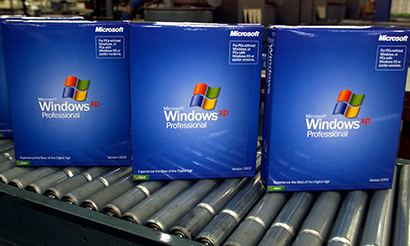
    At the time Microsoft defined evil in the technology industry. The main reason was their crushing of real or potential competitors like Netscape, Java or the troubled IBM joint venture of OS/2.

    Topping everything though was Microsoft’s tactic of fake error messages designed to scare customers away from the competing DR-DOS system in the early 1990s.

    So it’s rather delicious that Microsoft seems to be getting a taste of its own medicine twenty years later as Google Maps returns an error message on Windows Phones.

    This is particularly galling for Microsoft as Windows Phone is essential for the company’s resurgence and, as Apple have learned, maps are a critical feature for smart phone users.

    It’s too early to accuse Google of having become evil as Microsoft did during their period of dominance as Tim Wu discusses in Why Does Everyone Think Google Beat The FTC but the search giant is flexing its muscles on many fronts.

    For Microsoft, they are learning what life’s like when you’re not the toughest, meanest kid on the block.

    Karma can be a real bitch.

    Similar posts:

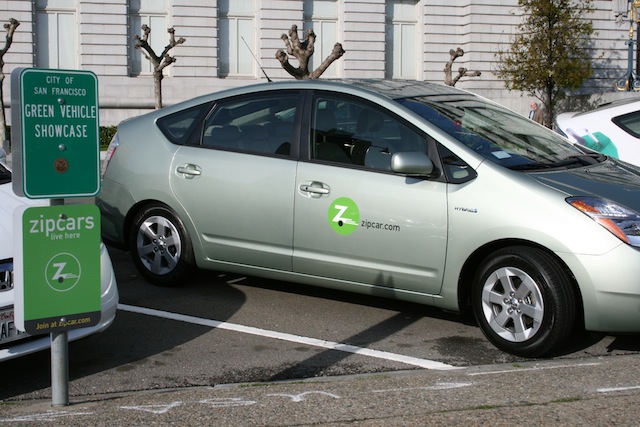
  • Big data, mobile apps and smarter logistics – why Avis is buying Zipcar

    Big data, mobile apps and smarter logistics – why Avis is buying Zipcar

    With no bad press over New Year’s Eve it looks like hire car service Uber avoided the surge pricing traps of 2011 and the good news continues for the online booking industry with the news that Avis is buying car sharing service Zipcar.

    Assuming the acquisition isn’t another example of the greater fool investment model, Avis’ purchase of Zipcar makes good sense in expanding the hire car giant’s footprint into the share car business.

    Regrettably Avis use the 1980s term “synergies” four times in their media release but it does seem the businesses are a good fit both in fleet sharing and improving both company’s services.

    Zipcar’s technology is another asset which Avis can use,  with the car sharing service’s ability to track vehicle locations meaning better fleet management for the hire car business.

    Car sharing logistics

    The logistics angle of car share services is something that’s been highlighted by Uber’s CEO Travis Kalanick at various times, most recently at the service’s Sydney launch last November.

    Another aspect of the car sharing and hire car booking services is their Big Data advantages which the online startups bring.

    Historically, car hire companies have been reasonably good at gathering data on their customers with loyalty schemes, direct mailing and plugging into airline frequent flier programs. However they have been left behind by the Big Data boom in recent years.

    Companies like Zipcar, Uber and taxi hailing apps like GoCatch have big data in their DNA, having been founded in the era of cloud computing and social media they have access to more information and a better ability to use the knowledge they gather.

    Predicting the price surges

    At Uber’s Sydney launch Kalanick described how Uber’s traffic volumes increase in San Francisco when the Giants win a game, the interesting thing is that the surge happens three hours before the match starts.

    Insights like the traffic patterns around football games and holidays are gold to a high inventory business like hire car services. They are also important to the entire logistics industry.

    This latter point is probably the most overlooked part of all with the current rush into social and mobile based apps – the market intelligence that these services gather.

    While it’s tempting to dismiss that market intelligence as just monitoring who likes cats or cheeseburgers, the application of that data is transforming supermarkets, airlines and even concert venues.

    Avis seem to have understood that it will be fascinating to see how they will use Zipcar’s data and whether their competitors will figure out the importance of what these services offer.

    Similar posts:

  • Is Facebook the new Microsoft?

    Is Facebook the new Microsoft?

    One of the problems with dominating your field is that to find new growth opportunities involves becoming distracted with your core business and damaging your reputation. This is what hurt Microsoft over the last decade and now threatens the internet’s big four.

    App.net CEO Dalton Caldwell wrote an open letter to Facebook CEO Mark Zuckerberg describing how the social media giant is trying to wipe out competitors through bullying them into being acquired.

    If a business doesn’t succumb to Facebook’s seduction, then they risk being wiped out by the social media giant setting up their own version of the product which they can push out to a billion subscribers.

    Jason Calacanis explores this strategy with Facebook’s launch of Poke, designed to compete with the instant messaging service Snapchat.

    In many ways this is the same model that Microsoft employed in the 1990s as it worked towards dominating the desktop computer market – bully innovators into selling to them and, if that fails, copy the product and crush the opposition.

    It worked for Microsoft because they controlled the distribution channels through their tight relationships with computer manufacturers.

    Microsoft created their own applications, or features in their products, which would be bundled onto Dell, Gateway or Compaq computers. Once users had functionality built into Windows or Microsoft Office then they didn’t have to buy a third party app.

    Bundling network protocols destroyed the business models of LANtastic and Novell, in the browser wars Microsoft killed Netscape by putting Internet Explorer on the desktop and in the office suite predatory pricing killed WordPerfect and Lotus while resulting in acquisitions of companies like Visio.

    This way of business cemented Microsoft’s domination of their desktop, office productivity and server markets at the turn of the century. It was a true river of gold that continues to flow today.

    Unlike the personal computer software markets, bullying or buying your way into market dominance doesn’t work online as the barriers to entry that protected Microsoft from competitors are nonexistent on the web.

    Both AOL and Yahoo! learned this the hard way as their acquisition sprees through the dot com boom didn’t prevent them from sliding into irrelevance.

    A good example of how hard it is for the Internet giants to execute a plan for world domination is the rise and fall of Google’s Knol as described by Seth Godin, who thought his own Squidoo startup would be crushed by the Internet giant. It turned out not to be so.

    For the web incumbents the fundamental problem are, as Jason says, that they are not focusing on their core businesses and they have plenty of Plan Bs as Seth Godin described.

    The manager who fails with Knol or Poke moves onto another division with a pat on the back and a safe claim on their bonus. The startup founders on the other hand are fighting for survival.

    All four of the Internet’s giants have similarities to Microsoft in the 1990s as every single one dominates its niche and wonders how to expand outside their core business – for Google, and possibly the other three, there’s the added problem of managerialism as a large cadre of managers worries more about maintaining privileges over competing in the marketplace.

    Managerialism ended up crippling Microsoft and continues to do so today, whether Facebook and Google can avoid that fate remains to be seen.

    A bigger problem for Facebook is losing trust – Microsoft’s conduct, particularly with WordPerfect and Netscape in the late 1990s made a generation of developers and entrepreneurs cautious about dealing with the company.

    For many that suspicion remains and is one of the barriers the company now has to overcome in the smartphone and cloud computing markets where it is one of the crowd of scrappy challengers.

    In the social and online worlds, collaboration is one of the keys to success. If Facebook, or any of the others, lose the trust of the community then they’ll become irrelevant a lot faster than WordPerfect or LANtastic did.

    Becoming irrelevant is the real worry for Facebook’s tenured managers and their investors.

    Similar posts: