Category: legal

  • The risks of government surveillance – how Australia’s data retention laws hurt

    The risks of government surveillance – how Australia’s data retention laws hurt

    This morning I’m speaking on ABC Radio’s Overnights about the risks of the Australian government’s law to force telecommunications companies to retain users’ metadata for two years.

    While the act, currently before the Senate having passed the House of Representatives last week after the poorly named ‘opposition’ Labor Party supported it, mandates that telcos and ISPs will have to retain the details of users’ connection times, places and type of device for two years and that government agencies will be able to access this data without a warrant.

    The program was broadcast on 26 March 2015 at 4.15am Eastern Time with Trevor Chappell and is can be listened to on the ABC radio website.

    Some resources on the data retention bill follow;

    Similar posts:

  • How the Internet of Things could overtake the law

    How the Internet of Things could overtake the law

    Last March the Australian internet industry celebrated twenty years of commercial operations with the Rewind/Fast Forward conference that looked at the evolution of the online economy down under and its future.

    Naturally the Internet of Things was an important part of the discussion looking at the internet’s future and one of the panels examined the effects of the IoT on industry and society.

    During the session chairman of the Communications Alliance industry association, John Stanton, raised an important point about how the IoT creates problems for existing laws and the regulators as a wave of connected devices are released onto the market place.

    The risks are varied, and Stanton’s list isn’t exhaustive with a few other aspects such as liability not explored while some of the issues he raises are a problem for other internet based services like cloud computing and social media.

    Roaming rules

    Having fought many regulatory battles over roaming charges and access between networks, it’s not surprising Stanton and the Communications Alliance would raise this as an issue.

    Dealing with roaming devices will probably be a big challenge for mobile Machine to Machine (M2M) technologies, particularly in the logistics, airline and travel industries. We can expect some bitter billing battles between clients and their providers before regulators start to step in.

    Number schemes

    Again this is more an issue for mobile M2M consumers. Currently every SIM card has its own phone number once the service is activated.  It may be that regulators have to revise their numbering schemes or allow providers to use alternative addressing methods to contact devices.

    Data sovereignty

    Where data lives is going to continue to be a vexed issue for cloud computing consumers, particularly given the varied laws between nations.

    Short of an international treaty, it’s difficult to see how this problem is going to be resolved beyond companies learning to manage the risks.

    Identity management

    Data integrity is essential for the IoT and accurately determining the identity of individuals and devices is going to be a challenge for those designing systems.

    Over time we can expect to see some elegant and clever solutions to identity management in the IoT however masquerading as a legitimate device will always be a way malicious actors will try to hack systems.

    Privacy

    For domestic users, the privacy of what remains in data stores is going to be a major concern as domestic devices and wearables gather greater amounts of personal information. We can expect laws to be tightened on the duties and obligations of those collecting the data.

    Access Security

    Who can do what with a networked device is another problem, should a malicious player or a defective component get onto the system, the damage they can do needs to be minimised. What constitutes unlawful access to a computer network and the penalties needs to be carefully thought out.

    Spectrum allocation and cost

    Governments around the world have been reaping the rewards of selling licenses to network operators. As the need for reliable but low data usage IoT networks grows, the economics of many of the existing licenses changes which could present challenges for both the operators and governments.

    Access to low cost and low data access networks

    Following on from the economics of M2M networks, the question of mandating slicing of scarce spectrum for IoT applications or reserving some frequencies becomes a question. How such licenses are granted will cause much friction and many headaches between regulators and operators.

    Commercial value of information

    How much data is worth will always be a problem in an economy where information is power and money. This though may turn out to be more subtle as information is only valuable in the eyes of the beholder.

    Where information becomes particularly valuable is in financial markets and highly competitive sectors so we can see the IoT becoming part of insider trading and unfair competition actions. These will, by definition, be complex.

    Like any new set of technologies the internet of things raises a whole new range of legal issues as society adapts to new ways of doing business and communicating. What we’re going to see is a period of experimentation with laws as we try to figure out how the IoT fits into society.

    Similar posts:

    • No Related Posts
  • Driverless cars outrun the law

    Driverless cars outrun the law

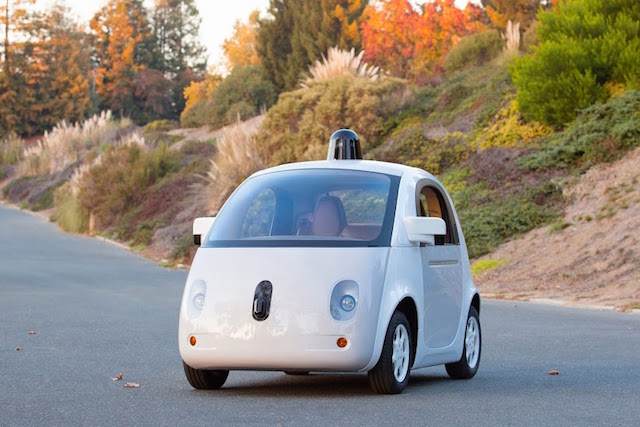
    Tesla founder Elon Musk believes there will be driverless cars on US roads by the summer, the New York Times reports.

    One of the key factors in whether Musk’s prediction comes to and driverless cars are on the road by the middle of the year is the law with most people assuming autonomous vehicles are currently illegal.

    Some experts however believe current laws don’t prevent driverless cars, with the New York Times quoting one industry leader who suggests there’s no legal barrier to autonomous vehicles taking to the road.

    Tesla is not alone in pushing the envelope. Chris Urmson, director of self-driving cars at Google, raised eyebrows at a January event in Detroit when he said Google did not believe there was currently a “regulatory block” that would prohibit self-driving cars, provided the vehicles themselves met crash-test and other safety standards.

    This view raises an interesting legal argument, who is the recognised driver of an autonomous vehicle? In the event of an accident or dispute does liability rest with the owner, the manufacturer or the passengers?

    What this debate over driverless vehicles illustrates is how laws specific to today’s society aren’t always applicable to tomorrow’s technologies; certainly many of the laws designed for the horse and buggy era became redundant as the motor car took over a hundred years ago.

    Another consequence of autonomous vehicles are the changes to occupations supporting the motor industry; it’s obvious that panel beaters and insurance lawyers may have their jobs at risk but Jay Zagorsky in The Conversation suggests nearly half of US police numbers would be redundant if there are no more car drivers.

    Given how the funds local and state governments raise from traffic offences, a shift to driverless technologies could even have an effect on city budgets.

    The motor car was the most far reaching technology of the Twentieth Century in the way it changed the economy and society over those years, it’s hardly surprising that we are only just beginning to comprehend how a shift to driverless vehicles may change our lives this century.

    Similar posts:

  • Links of the day – Mind games, wine growers and the Naples mafia

    Links of the day – Mind games, wine growers and the Naples mafia

    Mind games, wine growers and the Naples mafia are among today’s links along with last person in Britain who lived under Queen Victoria passing away and a touching series of portraits showing the end of the film photography industry.

    Cutting out the middle man

    Reka Haros is a wine maker in Italy’s Venuto region. Like many small producers her winery struggles with distribution and sales in a crowded market. Reba’s solution of going direct to the customer is one that many businesses should be considering in a noisy world.

    Life in protection

    I don’t fear death, I fear being discredited. The story of Italian journalist Roberto Saviano and his eight years in protection after writing about the Naples mafia.

    Picturing the decline of film photography

    Canadian photographer Robert Burley travelled the world with his 4×5 field camera to document the end of analogue photography. It’s a poignant portrayal of how an entire industry comes to and with one technological change.

    Last of the Victorians

    Ethel Lang, the last surviving Briton to live under the reign of Queen Victoria, died last week at the age 114.

    Manufacturing false memories

    A frightening physiological experiment shows a cunning interviewer can convince most of us  we committed crimes which we are totally innocent of. This truly is a disturbing story.

    Similar posts:

    • No Related Posts