Category: management

  • Legacy people

    Legacy people

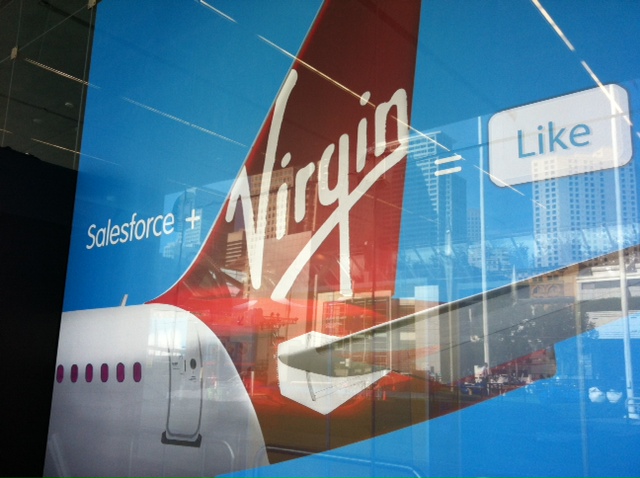
    “The problem with legacy businesses is legacy people” said David Cush, the CEO of Virgin America at the Dreamforce conference.

    For many organisations this is indeed the problem; that managements, workforces and shareholders are locked into a way of doing business that has worked for them in the past, so when change arrives they are ill-equipped to deal with it.

    One of the key take aways from the Dreamforce conference is that the rate of business change is accelerating as technologies like cloud computing and the Internet mature.

    For the legacy businesses locked into old ways this means they are going backwards faster than they could imagine.

    A good example of this is when Virgin America showed their vision of how customer service works in a connected, social world.

    The problem for companies like United and the other legacy carriers with their older aircraft and lumbering IT systems is they simply don’t have the infrastructure to provide these services if they wanted to.

    One of the characteristics of 1980s management thinking is under-investing in equipment. ‘working your assets’ by flogging them way past their replacement dates is a handy way to increase profits and management bonuses, but it leaves a business exposed when newer technologies come along.

    That’s the problem the legacy businesses, whether they are airlines, banks, telcos or in any other sector. Those who are nimble and those who have invested in new systems can take advantage of the change.

    For some of these businesses even if they had the wits, and cash, to make those investments it’s dubious whether they could make the tools work properly.

    ‘Getting it’ is more than just understanding how to turn on an iPhone or send a tweet, it’s about how these tools can be used in a business.

    If you don’t know how to use these tools, or understand the consequences of using them, then the investment is wasted.

    For those organisations who are falling behind, they have to start moving quickly or their legacy is the only trace there will be of their existence.


    Similar posts:

  • I’m not paid to have doubts

    I’m not paid to have doubts

    The Seattle Times has an interesting interview with Microsoft CEO Steve Ballmer this weekend where he discusses what has been one of the biggest years ever for his company.

    Midway through the Seattle Times story there’s a telling exchange.

    Q: What is Microsoft’s plan if Windows 8 doesn’t take off?

    A: You know, Windows 8 is going to do great.

    Q: No doubt at all?

    A: I’m not paid to have doubts. (Laughs.) I don’t have any. It’s a fantastic product. …

    There is no plan B – Windows Phone is running late and their hardware partner Nokia is looking more foolish every day. Last week not only did they flub the launch of their latest phone, but they also managed to alienate the world’s tech media at the event.

    It’s nice not to have doubts, but from outside the comfortable corporate headquarters Microsoft looks like they are struggling in this space.

    Steve Ballmer might be more credible if he did admit to doubts and at least hint there is a plan B in their smartphone strategy.

    Companies need leaders with doubts – doubts about their strategy, about their managers, about the economy and – most importantly – about their own infallibility.

    One of the worst aspects of 1980s management ideology was the myth of the CEO superstar. Too many good businesses have been destroyed, and too much damage done to the global economy, by senior executives who have believed in their own infallibility.

    Some doubts might help a business, particularly when that company is struggling with some serious threats.

    Similar posts:

  • This is what happens when you rush things

    This is what happens when you rush things

    Nokia are going to release a smartphone with the best camera seen so far on a mobile phone.

    Desperate for good news and positive coverage, Nokia decided to announce the Lumia 920 prematurely and their marketing people are forced to fake the videos and sample photos.

    Then they get caught.

    And instead of having the media fawning over the impressive features of the Lumia 920, Nokia are scorned. A particularly damaging thing in a fortnight where Amazon and Apple have major announcements.

    The problem is giving yourself artificial milestones that can’t be met. People take shortcuts to meet those deadlines and debacles like Nokia’s are the result.

    Artificial “drop dead dates” are the mark of panic by poor management. One wonders how long this can continue at Nokia.

    Similar posts:

  • Owning the customer

    Owning the customer

    During the tech boom of the late 1990s the early wave of web developers had a business model that required locking customers into a relationship.

    Having spent thousands of dollars for designing and building a website, a business then found they would have to spend hundreds of dollars every time they wanted to make even a minor change.

    While that model didn’t work out for web designers as new tools appeared that made it easy for customers to look after their own sites, it’s still the ambition of many businesses to ‘own’ as much of the customer as possible.

    Department store credit cards, supermarket petrol cards and airline frequent flier programs are all examples of how big businesses try to lock their customers into their ecosystem.

    Possibly the dumbest, and most counterproductive all, are the media companies with policies of not linking outside their own websites. The idea is to keep readers on their sites but in reality it damages their own credibility and betrays their lack of understanding how the web works.

    The airlines too have discovered the risks in trying to ‘own’ their customers as their devaluing frequent flier programs has irritated and disillusioned their most loyal clients.

    Many businesses, particularly banks and telcos, try to tie you up into knots of contractual obligations with reams of terms and conditions. All of this is an attempt to make the customer a slave to their business.

    Outside of having a legally protected monopoly, you can’t ‘own’ a customer – the customer has to grant the favour of doing business with them.

    They’ll only do business with you if they trust that you’ll do the right thing by your promises; whether it’s delivering the cheapest product, the best service or quickest delivery. The moment their trust begins to slip, you risk losing their business.

    Executives who talk of the concept of owning the customer are either working in organisations with little competition or those steeped in 1980s management practices. If you hear them talking like that, it might be best to take your business, and investments, elsewhere.

    Owning customers didn’t work for the web designers of the early 2000s and it won’t work for businesses in other sectors. The only way to ensure most of your clients keep coming back is to deliver on what you’ve promised them.

    Similar posts:

  • Creating a service mindset

    Creating a service mindset

    In the Foreign Correspondent report that inspired yesterday’s post about the start up community angel Investor Raval Navikant said  “you don’t need customer service anymore, you have Twitter.”

    While it’s refreshing to hear that Twitter is now rightly seen as a customer service channel rather than a marketing tool, it’s worrying that startup businesses still have such a low opinion of supporting their users.

    This is the mindset for the web2.0, social and cloud computing communities – that user support can be done though Frequently Asked Questions (FAQs), user forums or an anonymous email address that might get read once in a while. It’s the self-help model of helping your users and it’s the biggest weakness of online services.

    A worry for these businesses is that big organisations now beginning to remember the importance of customers. What has traditionally been small business’ advantage is  being eroded.

    At an Australian Computer Society Foundation lunch in Sydney yesterday Testra Corporation’s diector of Products and IT Enablement, Jenny Woods described how her company is moving to a more service centric culture.

    While this isn’t simple in a company the size of Telstra, a task made harder by the telco industry’s customer hostility, it’s certainly a process that’s underway.

    There’s a long way to go for Telstra. Along with that traditional telco antipathy towards their customers, they are big company with plenty of silos and aligning management KPIs so the temptation isn’t simply to gouge customers for short term profit is a big change.

    Changing that ‘soak the customer’ mindset is the biggest challenge in making companies like Telstra service centric and that means management at all levels have to buy into the process.

    Without that senior and middle management commitment, customer support will just be seen as the poor relation to other divisions and will be outsourced to the lowest cost provider at the first opportunity.

    Part of that change to a service mindset is in trusting your staff. Jenny described how Telstra abandoned scripts for their home Internet customers and told the support agents they could use their initiative – as a result customer satisfaction went up, problems were solved faster and the number of modem returns slumped.

    “The people who do the work, know how to do the work” says Jenny and it’s good that Telstra’s management is recognising the skills in their workforce.

    Much of that anti-service culture we see in large organisations is because management don’t respect the skills, experience and knowledge of their workers. Instead they’re treated as naughty children who can be slapped into line with a stern memo.

    Today’s economy doesn’t favour businesses and managements who think like that, the organisations that will do well this Century those who are flexible, value their staffs’ skills and have managers who see their role as more than micro-managing their silos.

    It also means delivering a product you’re proud to support. If you won’t support your products, then your customers will go to a competitor who looks after their clients.

    We fell into a trap into thinking customer service didn’t matter during the late Twentieth Century, it was always a myth and now we have to deliver.

    Similar posts: