Category: politics

  • Looking at the wrong curve

    Looking at the wrong curve

    “We don’t understand it, there’s a property shortage but prices are going down,” bleats the property expert in a recent interview.

    Property booms are always excused with claims of “shortages”. The US, Ireland and the UK in recent years property markets all collapsed despite business and political leaders claiming there was a “property shortage”.

    The shortage meme happens because the property spruikers, economists and finance writers focus on the wrong curve – they look at the supply curve and assume prices are going up because there isn’t enough property to go around.

    What drives speculative booms is easy credit – demand driven by access to money drives speculation, not supply shortages.

    Australia’s long term property boom which started in the late 1960s and went onto steroids in the late 1990s has been driven by access to credit. Banks were prepared to lend to property buyers, who were increasingly speculators, and government policies favoured those speculating on property over investing or building businesses.

    The crisis of 2008 was the end of the easy credit era and the Australian property speculation boom is over. For the policy makers, politicians and economists the basis of the 1980s corporatist ideology is crumbling around them.

    No ideologue lets go of their beliefs easily – that’s why Western governments who bought into the corporatist worldview are pumping trillions of dollars into supporting zombie banks and releasing constant stimulus packages to prop up the property market.

    Like the communists of the 1970s, today’s corporatists are looking at choosing the statistics that suit their ideological views.

    To support their beliefs they look at the wrong curve and then wonder why the world isn’t working as they thought it would.

    Times have changed. Have you?

    Similar posts:

  • ABC Nightlife Computers: The politicians on your homepage

    ABC Nightlife Computers: The politicians on your homepage

    Politicians around the world have discovered social media and the web. Australia’s political parties are gearing up to copy Barak Obama’s 2008 online campaigns.

    Paul, Tony Delroy and Jeff Jarvis – Associate Professor and Director of the Tow-Knight Center for Entrepreneurial Journalism at the City University of New York and the author of “Public Parts: How sharing in the digital age improves the way we work and live discussed how politicians are using social media to get into your inbox.

    The program is available from the ABC Nightlife website. If you’d still like to make comments or ask questions, feel free to have your say below.

    To show what politicians are doing with online media, here are some examples from the Obama 2008 US Presidential campaign.

    • The Art of The Possible – An overview of the Obama – Biden 2008 campaign that defined modern digital political campaigns.
    • One of the most interesting phenomenons in the 2008 Obama campaign was The Great Schlep (language warning). Can you imagine a campaign like this in Australia?
    • Blue State Digital tools were developed for the campaign. These are now being used in Australia.

    Some of the topics we looked at include;

    • Australian politicians don’t seem to have used the web very well. Why is that?
    • What are the ways overseas politicians using social media?
    • How do these integrate with the political parties’ existing databases?
    • Does this fit into the term Big Data we’re hearing about businesses?
    • Doesn’t this all create opportunities for false identities and campaigns?
    • Can you keep the parties off your computer?

    We’d love to hear your views so join the conversation with your on-air questions, ideas or comments; phone in on the night on 1300 800 222 within Australia or +61 2 8333 1000 from outside Australia.

    Tune in on your local ABC radio station or listen online at www.abc.net.au/nightlife.

    You can SMS Nightlife’s talkback on 19922702, or through twitter to @paulwallbank using the #abcnightlife hashtag or visit the Nightlife Facebook page.

    Similar posts:

  • Could Australia follow the Greek path?

    Could Australia follow the Greek path?

    Business Spectator’s Robert Gottliebsen today describes how Australia has caught the Greek disease of low productivity and an overvalued currency.

    This is interesting as just last week Robert was bleating on behalf of Australia’s middle class welfare state.

    Australia’s productivity has stagnated over the last 15 years, but unlike Greece the ten years before that was a period of massive reform to both employment practices and government spending.

    The structure of the Australian economy is very different, not least in its openness, to that of Greece.

    What’s more Australia has a floating currency which will eventually correct itself unlike the Euro that Greece finds itself trapped in.

    That’s not to say Australians won’t be hurt when that currency correction happens. The failure of the nation’s political, business and media elites in failing to recognise and plan for this is an indictment on all of them – including Robert Gottliebsen.

    Australia’s real similarity with Greece is the entitlement culture that both nations have developed.

    Over those last 15 years of poor productivity growth, Australia has seen a massive explosion of middle class welfare under the Howard Liberal government which has been institutionalised by the subsequent Rudd and Gillard Labor governments.

    Today middle class Australians believe they have a right to generous government benefits subsidising their superannuation, school fees and self funded retirements.

    For all the sneering of Australian triumphalists about Greek hairdressers getting lavish government benefits, Australia isn’t far behind Greece in believing these entitlements are a birthright.

    A middle class entitlement culture is the real similarity between Australia and Greece. It’s unsustainable in every country that harbours these illusions.

    Unlike Greece, Australia doesn’t have sugar daddies in Brussels, Paris and Berlin desperate to prop up the illusion of the European Union. Australia is own its own when the consequences of magic pudding economics become apparent.

    Australia’s day of reckoning may arrive much quicker than that of Greece. Then we’ll see the test of how Australians and their politicians are different from our Greek friends.

    Similar posts:

  • Duly diligent

    Duly diligent

    “Who would have thought our CEO didn’t have the qualifications we thought he had?” wonders the Yahoo! board.

    “It seems we forgot to count the number of beds!” whines the cleaning contractor when challenged about a filthy hospital.

    “We had no idea these people were corrupt,” growls the politician and former trade union official when confronted with proof its factional friends were misusing expenses.

    An interesting phenomenon in the rise of the managerial classes over the last thirty years has been the group’s refusal to take responsibility for their failures.

    Instead we see boards, investors, managers and politicians duck responsibilities that a reasonable observer would have thought is the reason for their healthy salaries, bonuses and perks.

    One of the many conceits of 1980s thinking is the ideology of “personal responsibility” – to low paid workers and those at the bottom of society this mantra is applied ruthlessly.

    The call centre worker who makes a mistake gets counselled or fired while the aboriginal kid who steals a can of coke is denied bail and goes to jail.

    Let’s not mention the fines and sanctions that befall a small business owner who is too slow in submitting paperwork or forgets to pay one of the countless fees that make up today’s hidden taxation.

    In boardrooms and Parliaments those doing the wrong thing rarely face any accountability; politicians caught misclaiming expenses are allowed to pay it back at their convenience while senior executives and captains of industry with a track record of mistakes continue to be employed in positions way beyond their abilities.

    One exception to the that rule is former Tyco Chief Executive Dennis Kozlowski and his cohorts who looted their company through the 1990s. Eventually their excesses became so great that the CEO and his cronies ended up being jailed.

    Not that this has rattled some of his cronies sense of entitlement. Former CFO Mark Swartz is suing the company for $60 million in retirement benefits and other monies.

    I have a personal connection with Messrs Swartz and Kozlowski – I worked for their company in the mid 1990s and lasted nine months in a culture of cronyism and rorts where middle management enthusiastically aped the excesses of their senior executives.

    One can argue I didn’t carry out my due diligence – a little bit of digging and more detailed asking around would have revealed Tyco’s institutionalised corruption and cronyism at the time.

    I paid for this oversight by having my contract terminated in a public and humiliating way which drove me to set up my own business.

    While working for companies like Tyco I saw them drive smaller businesses into the ground through slow, or non payment, of invoices. Strangely they always seemed to pay the corporate hospitality bills on time.

    The weakness in today’s corporatist economy is that boards like that at Yahoo!, executives like Tyco’s in the 1990s and many of our business and political leaders have a sense of entitlement way beyond the value they add to their business, community or society.

    Worse, the main lesson of 2008’s financial crisis is that massive government spending will protect these peoples’ bonuses and privileges regardless of their actions.

    As investors, employees, suppliers and voters we have to do our due diligence on these people and organisations. We have the tools today to check the track record of those who want our vote, skills or products.

    In today’s economy, we can’t afford to squander money or time on those who demand fat fees and salaries without delivering value.

    At the cash register and ballot box, it’s time to do our due diligence.

    Similar posts:
  • ANZAC Day

    ANZAC Day

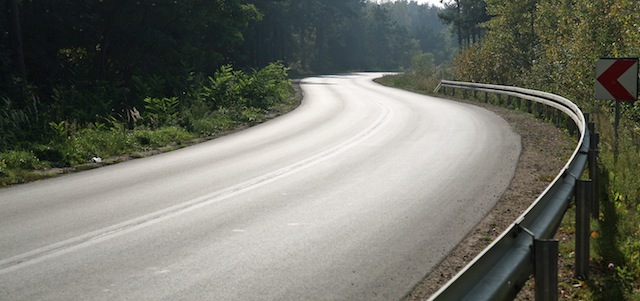
    It’s ANZAC Day in Australia where the anniversary of the World War One landings in Gallipoli marks the first national action of the then new nation.

    At its heart, ANZAC Day remembers sacrifice and bravery. The men and women who volunteered for the Great War and all those that have followed over the last hundred years were prepared to sacrifice relationships, safe careers and their lives to protect the King or Country from the threats of the Kaiser, Hitler, Japan, Communism or Terrorism.

    We should remember though that those politicians saying fine words today and posing for photo opportunities at the landing beaches are the much the same people who started an unnecessary war in 1914 and many of those wars since.

    Compare the words of Billy Hughes supporting Australian conscription in 1915 and the words of John Howard or Julia Gillard.

    Stripped of spin doctors’ dressing and the words of today’s politicians are the same.  Only the empire has changed.

    Today’s politicians know of concepts like sacrifice, patriotism and bravery, exploiting them can prove handy at election time.

    Luckily for most of them their political and business careers rarely call for such qualities.

    Hopefully our children won’t find themselves in the trenches  – or fall out shelters – to meet the short term gains of an Obama, Cameron or Gillard and their corporate friends.

    The real lesson of ANZAC Day, Veterans Day and all the other national days of remembrance around the world for those every nation has lost in battle is that war is the final act and represents a failure by the Kings, Presidents and Prime Ministers who choose to lead us.

    They shall not grow old, as we that are left grow old:
    Age shall not weary them, nor the years condemn.
    At the going down of the sun and in the morning,
    We will remember them.

    Lest We Forget

    Similar posts: