Category: software

  • How Apple will have to think differently about the smartwatch

    How Apple will have to think differently about the smartwatch

    Unsurprisingly the hype ahead of Tuesday’s media announcement by Apple is reaching a crescendo, with the consensus being that a smart watch will be the day’s main announcement.

    The constant stream of targeted leaks by Apple to friendly outlets is quite tiring, however one thing that will be fascinating if all the stories are true is the software the device will run.

    As Microsoft have discovered, the idea of running the same operating system across all devices just doesn’t work.

    While how users interact with the devices will be the main factor, the most immediate problem will be power. If Apple Insider’s report that prototypes need to be recharged twice a day is true, then the limitations of smaller batteries are going to be considerable and software is going to have to be much more stingy with power usage.

    The other big challenge for the iWatch, if that’s what it’s called, is the entire global watch market is a tiny fraction of the smartphone industry so expectations Apple’s new product will replace smartphones and tablets as a huge growth driver for the company are probably misguided.

    So it’s good for Apple and its acolytes that the iPhone6 will probably be announced as well. If this has the features expected, then its likely to give the company’s slowing smartphone sales a boost.

    Regardless of what’s announced on Wednesday, Apple does have the luxury of being one of the most profitable and richest companies on the planet. if a smartwatch is the major new product they have the resources and time to finesse the product and its software.


    Similar posts:

    • No Related Posts
  • Frenemies in the age of tectonic shifts

    Frenemies in the age of tectonic shifts

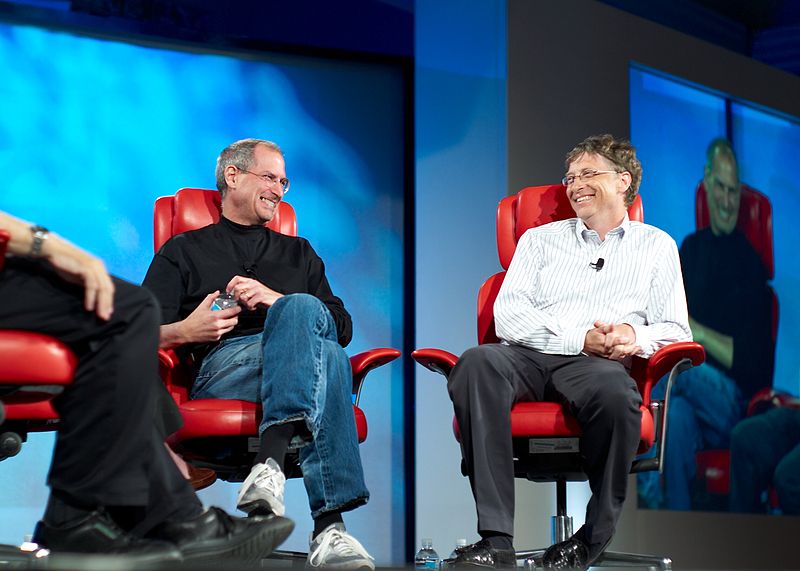
    “Apple lives in an ecosystem,” Steve Jobs told the 1997 MacWorld conference. “It helps other partners and it needs the help of other partners.”

    A few minutes later Jobs unveiled Apple’s deal with Microsoft, much to the disgust of many of the company’s true believers in the audience – something not helped by Bill Gates appearing on video midway through the presentation.

    “We have to let go of the idea that for Apple to win, Microsoft has to lose;” said Jobs after the booing died down.

    I was reminded of Jobs’ and Gates’ deal when talking to Pat Gelsinger, the CEO of virtualisation software company VM Ware at their annual VM World conference in San Francisco this week.

    Gelsinger was discussing the myriad deals VM Ware has made with companies that are their superficially their rivals as markets radically change. The company has even gone as far to embrace the open source Open Stack that was originally set up as competition to VM Ware’s proprietary technology.

    “The idea of frenemies – or co-competition – isn’t new to the IT industry.” Said Gelsinger, “as we are in this period that we’ve called the tectonic shifts that are underway.”

    “All of us need to be somewhat careful about who’s our friends and who’s our enemies as we go through that period and be as nice as we can to everybody because who’s our friends and who’s our enemies in six months or twelve months could change a whole lot.”

    That lesson has been harsh in the IT industry as various unstoppable businesses have found the market has shifted rapidly against them. A process that’s accelerating as cloud computing changes the software industry.

    “I always quip that ten years ago or fifteen years ago Sun would have been buying Oracle. Those shifts can occur quite rapidly,” Gelsinger says.

    VM Ware itself is on the brunt of one of those shifts as its core business of creating virtual services in company’s data centres is being disrupted by cloud computing companies like Amazon, Google and – ironically – Microsoft.

    Adapting to that changing market is the key task for Gelsinger and VM Ware’s management team, “our philosophy has been about doing the right thing that technology enables us to do.” Gesliner states, “do the right things for our customers and enable the ecosystem to join us on the journey.”

    For companies like VM Ware and Microsoft no-one predicted that one of their biggest threats would come from an online book retailer, yet Amazon Web Services has upended the entire software industry.

    The challenges for VM Ware today or Apple nearly two decades ago are being repeated in many other industries as competitors appear from unexpected directions, which is why it’s important not to ignore and sometimes co-operate with your competitors.

    We shouldn’t also ignore the other main reason why companies like Apple, Microsoft and, possibly, VM Ware have survived massive market shifts over time – a deep and loyal customer base.

    Understanding and responding to your customers’ needs is possibly the greatest management skill needed in every business today. Are you listening to what your market is telling you?

    Paul travelled to VM World in San Francisco as a guest of VM Ware

    Picture of Steve Jobs and Bill Gates via Joi Ito on Flickr

    Similar posts:

    • No Related Posts
  • The strength of keeping things simple

    The strength of keeping things simple

    This week I’m in New York to attend the BlackBerry Security Summit, more of which I’ll write about later although this story for Technology Spectator covers much of the news from the day.

    BlackBerry is struggling to find relevance after losing its way when Apple and Android smashed their business model of providing secure, reliable and email friendly phones.

    Now in post Snowden world, BlackBerry under new CEO John Chen is looking to rebuild the company’s fortunes on its strengths in security.

    One of the aspects Chen’s team is emphasising is the simplicity of their software. Dan Dodge, who heads BlackBerry’s QNX embedded devices division says their operating system has a 100,000 lines of code as opposed to hundreds of millions in Windows and Android.

    That weakness in the established software packages is something illustrated in today’s story about a verification problem in Android due to reuse of old code from another older product.

    Simplicity is strength is Dodge’s message and that idea could probably be applied to more than software.

    In the complex times we live in, simplicity could be the key to success.

    Similar posts:

  • Restructuring Microsoft

    Restructuring Microsoft

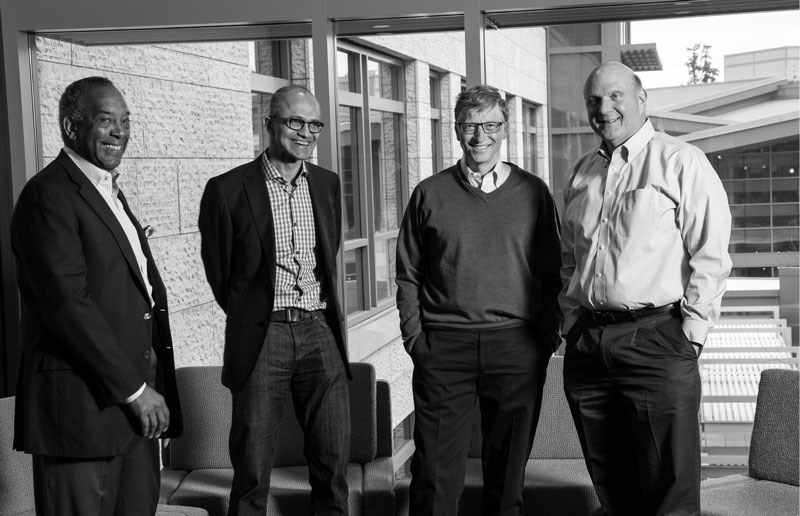
    After last week’s long memo from CEO Satya Nadilla, it was inevitable Microsoft would have to restructure around the company’s new direction.

    Bloomberg now reports Microsoft will be laying off thousands of employees – possibly more than the 5,800 laid off in the recessionary depths of 2009.

    With 127, 000 employees Microsoft could almost certainly do with a cull, to make the company as nimble as it needs to be may take more than 5,000 jobs.

    Similar posts:

    • No Related Posts
  • ABC Nightlife Computers – The end of Windows XP

    ABC Nightlife Computers – The end of Windows XP

    Paul Wallbank joins Tony Delroy on ABC Nightlife across Australia to discuss how technology affects your business and life.

    For the March 2014 spot we’ll be looking at the end of Windows XP, Australia’s Privacy Act, the web turning 25 and the call for an Internet Magna Carta.

    If you missed the show, you can listen online at the Tony Delroy’s Nightlife homepage.

    One of the show’s listeners, Linda, called in about asking for Apple Mac security software; two free products for OsX users are Sophos Home Edition and Avira Free. While Macs are less prone to malware than Windows systems, it’s still a good idea to be protected.

    Another listener, Grant, described a problem with his computer which sounds like it’s infected with something. We recommend the free Malwarebytes as the first step to fixing the problem.

    The end of Windows XP

    After 13 years, Microsoft is retiring Windows XP; what does this mean for those of us still using it, or for our banks who still use it in their ATMs? Some of the questions we’ll cover include;

    • why is Microsoft pulling the pin on Windows XP now?
    • what happens on April 8 when Microsoft stops support?
    • are Windows XP users still protected from viruses?
    • what’s this story about bank ATMs running Windows XP?
    • the web turned 25 last week. Didn’t it turn twenty a year or so back?
    • inventor of the web, Tim Berners-Lee, called for an Internet Magna Carta last week; what does he mean?
    • could such an idea work in today’s globalised world?
    • on similar topic, the new Privacy Act came into effect last week; what does this mean for the average person?

    We’d love to hear your views so join the conversation with your on-air questions, ideas or comments; phone in on the night on 1300 800 222 within Australia or +61 2 8333 1000 from outside Australia.

    Tune in on your local ABC radio station from 10pm Eastern Summer time or listen online at www.abc.net.au/nightlife.

    You can SMS Nightlife’s talkback on 19922702, or through twitter to @paulwallbank using the #abcnightlife hashtag or visit the Nightlife Facebook page.

    Similar posts:

    • No Related Posts