Category: telcos

  • Disrupting the smartphone market

    Disrupting the smartphone market

    It’s been a long time since we’ve had a three or four way war in the technology industry, with most sectors settling down into a two way fight between alternatives.

    Mozilla’s promised $25 smartphone project threatens to open the mobile industry into a three way battle just as it appeared the market had comfortably settled down into an Android and iOS duopoly.

    Now we see a three way race and possibly four if Samsung can get traction with its Tizen operating system that it’s bundling into the latest version of the Gear smartwatch.

    One positive aspect of the four way battle is that three of the participants – Firefox, Tizen and Android are relatively open so compatibility between them isn’t impossible.

    For Google and Apple though, this four way tussle presents a problem to their business plans.

    Apple’s iOS ambitions of putting the software in smarthomes, connected cars and, possibly most lucratively of all, into retailing with iBeacon are threatened by a fragmented market and a rapidly eroding market share.

    For Google, both Firefox and Tizen threaten the dominant position of their Android operating system that forms a plank in the company’s ambition to control the planet’s data and become an ‘identity service’.

    Worse still for Google’s information ambitions, Firefox is working with Deutsche Telekom on a security initiative that will lock away users’ data.

    So the stakes are high in the smartphone operating systems wars.

    It’s early days to forecast the demise of either Android or Apple iOS, which is unlikely in the short term, but if Firefox’s operating system does take hold it will mean the smartphone industry is about to become a lot more complex.


    Similar posts:

    • No Related Posts
  • Network neutrality and the internet of things

    Network neutrality and the internet of things

    Yesterday’s US Supreme Court decision ruling against the Federal Communication Commission’s regulations on network neutrality is a mixed bag for the Internet of Things industry.

    Network neutrality is the principle that all internet traffic is treated the same, regardless of its nature or destination.

    The FCC rules meant US based Internet Service Providers weren’t allowed to discriminate between different types of services, for instance blocking Netflicks or allowing faster downloads from Amazon.

    In the United States network neutrality has been a bone of contention between consumer groups, government regulators and ISPs for over a decade, although it hasn’t been much of an issue outside North America.

    For Machine to Machine (M2M) or Internet of Things (IoT) vendors and services there is some attraction in Telcos being able to offer prioritised traffic for mission critical systems.

    In applications like supply chain management and public safety, reliability of the connection is essential and something the ‘best effort’ services offered by ISPs are not well suited to.

    When networks are overcapacity, say at sporting events or during disasters, being able to shed non critical traffic may be important for emergency services and the devices they may depend upon.

    So for IoT and M2M services, network neutrality is not necessarily a good thing.

    However there is a downside should network neutrality be overturned, the risk of vendor lock in is high and it’s quite possible to see as situation where, for instance, AT&T enter into an agreement with Google to provide the public network capabilities for Nest home automation devices.

    This could see Nest customers suffering a substandard service if they choose another provider.

    Internationally the attitude towards network neutrality has been that competition will sort things out, however the IT and telco industries do have a habit of trying to enforce their own monopolies on customers – something we’re currently seeing in the Apple-Google battles over smartphones and connected vehicles.

    So it isn’t clear whether network neutrality isn’t a good thing for the M2M sector, however it’s something that’s going to play out as these technologies become more ubiquitous across the economy.

    Similar posts:

    • No Related Posts
  • Today marks a moment of reinvention

    Today marks a moment of reinvention

    In announcing the company will acquire Nokia’s mobile and devices business, Microsoft said “Today marks a moment of reinvention”.

    This is certainly true, with the retirement of Steve Ballmer, Microsoft officially enters the post Bill Gates era and today’s announcement is an admission from Nokia that their moment as the world’s dominant mobile phone manufacturer is over.

    What’s notable about the deal is what Microsoft doesn’t get — particularly Nokia’s maps service. While Microsoft gets a license to use Nokia’s mapping services, it leaves the Finnish company with a valuable asset and possibly leaves it as the only company capable of competing with Google in that market.

    For Microsoft, acquiring the expertise of Nokia’s engineers shouldn’t be understated, although integrating 32,000 Nokia employees will test Microsoft’s management as this increases their workforce by a third.

    Possibly the most fascinating part of Microsoft’s announcement though is the comment in the second paragraph of their media release.

    Microsoft will draw upon its overseas cash resources to fund the transaction.

    US technology companies have been struggling to deal with the massive profits they have accumulated offshore as part of their tax minimalisation strategy. What we may now be seeing is a wave of foreign takeovers as American companies start to reduce their offshore cash stashes without incurring domestic tax bills.

    If that’s true, Microsoft’s agreement with Nokia may well indicate we’re about to see many more takeovers around the world .

    Regardless of what it means for the wider industry, both Microsoft and Nokia have entered fundamentally different phases of their businesses.

    Similar posts:

  • On running late

    On running late

    Business Insider’s unathorised biography of Yahoo CEO Marissa Mayer is both enlightening and scary while giving some insight into the psyche of the tech industry.

    Nicholas Carlson’s story tells the warts and all tale to date of a gifted, focused and difficult to work with lady who’s been given the opportunity to lead one of the Dot Com era’s great successes back into relevance. It’s a very good read.

    Two things jump out in the story; Mayer’s desire to surround herself with talented people and her chronic lateness.

    When asked why she decided to work at a scrappy startup called Google, which see saw as only having a two percent chance of success, Mayer tells her ‘Laura Beckman story’ of her school friend who chose to spend a season on the bench of her school varsity volleyball team rather than play in the juniors.

    Just as Laura became a better volleyball player by training with the best team, Mayer figured she’d learn so much more from the smart folk at Google. It was a bet that paid off spectacularly.

    Chronic lateness is something else Mayer picked up from Google. Anyone whose dealt with the company is used to spending time sitting around their funky reception areas or meeting rooms waiting for a way behind schedule Googler.

    To be fair to Google, chronic lateness is a trait common in the tech industry – it’s a sector that struggles with the concept of sticking to a schedule.

    One of the worst examples I came across was at IBM where I arrived quarter of an hour before a conference was due to start. There was no-one there.

    At the appointed time, a couple of people wandered in. Twenty minutes later I was about to leave when the organiser showed up, “no problem – a few people are running late,” he said.

    The conference kicked off 45 minutes late to a full room. As people casually strolled in I realised that starting nearly an hour late was normal.

    It would drive me nuts. Which is one reason among many that I’ll never get a job working with Marissa Mayer, Google or IBM.

    A few weeks ago, I had to explain the chronic lateness of techies to an event organiser who was planning on using a technical speaker for closing keynote.

    “Don’t do it,” I begged and went on to describe how they were likely to take 45 minutes to deliver a twenty minute locknote – assuming they showed up on time.

    The event organiser decided to look for a motivational speaker instead.

    Recently I had exactly this situation with a telco executive who managed to blow through their alloted twenty minutes, a ten minute Q&A and the closing thanks.

    After two days the audience was gasping for a beer and keeping them from the bar for nearly an hour past the scheduled finish time on a Friday afternoon was a cruel and unusual punishment.

    This was by no means the first time I’d encountered a telco executive running chronically over time having even seen one dragged from the stage by an MC when it became apparent their 15 minute presentation was going to take at least an hour.

    It’s something I personally can’t understand as time is our greatest, and most precious, asset and wasting other people’s is a sign of arrogance and disrespect.

    Whether Marissa Mayer can deliver returns to Yahoo!’s long suffering investors and board members remains to be seen, one hopes they haven’t set a timetable for those results.

    Similar posts:

  • Are apps killing the text message?

    Are apps killing the text message?

    One of the great accidental successes of our times has been the Short Messaging System – or SMS – which was designed as a control function on GSM mobile phones.

    In 1993, telcos in Finland started offering SMS as a feature and Nokia began supporting the service on their phones.

    Text messaging quickly became a worldwide success as mobile phone users found sending a text message was often more convenient that calling someone.

    As the marginal cost for providing SMS is effectively nothing, the feature being built into equipment, the service was a goldmine for mobile phone operators. However the tide might be turning as apps take over.

    This was emphasised in a submission by telco Optus to the Australian Competition and Consumer Commission on some regulatory changes governing mobile connection costs where the provider raised the point that the rate of SMS growth is slowing.

    First, while SMS usage has grown significantly since 2009, the rate of this growth has slowed significantly over the last year few years. This slow-down is largely due to greatercompetition from IP-based over-the-top (OTT) messaging services.
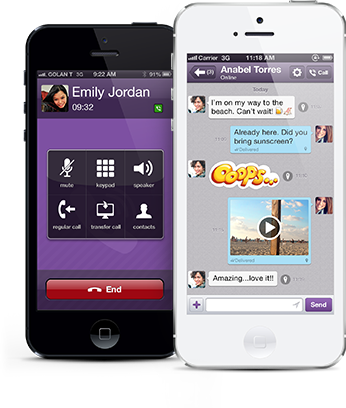
    Over The Top services is telco jargon for apps that replicate phone functions, like Skype or Viber and these are expected to start taking a chunk from telco revenues.
    While Optus’ submission is somewhat self serving as they are using the claim as an argument to get more protection, it may well be that telcos are seeing the age of what was the golden goose of SMS coming to an end.
    If so, it will be the death of a technology which, for a short time was a very lucrative one.

    Similar posts: