Category: Uncategorized

  • TVs unchanging face

    TVs unchanging face

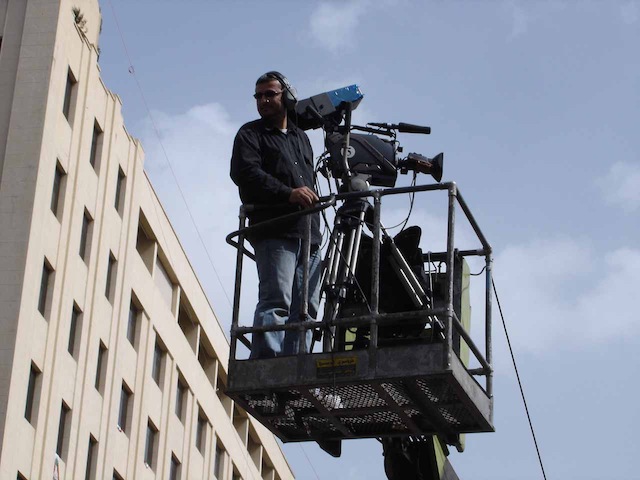
    In the wake of Apple’s big announcements this week, CEO Tim Cook has an interview with US talk show host Charlie Rose about the company and its strategy.

    One of the notable views in the clips that have been released so far is how Cook sees television being stuck in the 1970s.

    Apple has been trying to reinvent TV for nearly a decade and, despite consumers watching more content on their computers, the television industry’s revenues continue to stand up.

    Cook’s almost certainly right that television is moribund, but it’s a medium that for the moment seems resistant to disruption.

    How long television can stave off change might be one of the defining questions of the entertainment industry.


    Similar posts:

    • No Related Posts
  • Rise and fall

    Rise and fall

    Twenty years ago UK supermarket chain Tesco was an also ran.

    A decade ago it was the market leader.

    Today Tesco is in trouble again as low cost European competitors like Aldi and Lidl have chipped away the British majors’ market share.

    A few weeks later, Tesco shares plummeted on revelations the company’s profit guidance had been overtstated by 250 million pounds with the company’s chief executive Dave Lewis announcing several executives have been stood down as auditors investigate the descrepencies.

    Tesco is a very good example of how quickly how competitors can come from behind in today’s marketplaces; first Tesco itself during its 1990s rise and then its crash in recent years.

    We live in rapidly changing times. Incumbents and market leaders shouldn’t assume their positions are safe.

    Similar posts:

    • No Related Posts
  • Reinventing online publishing

    Reinventing online publishing

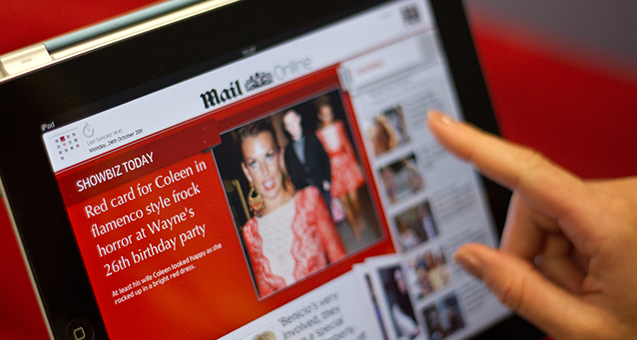
    Is the Daily Mail the future of online publishing? In USA Today Michael Wolff posits that the British media outfit might be the first newspaper company to navigate the transition from print to digital.

    Certainly the 180 million unique visitors a month make it the English language’s most popular news site which, despite the unease and criticisms about its brand of journalism, shows the model might be working.

    Wolff puts the success down to the digital arm being autonomous to the print operations, making the point its hard to simultaneously defend the old, but still profitable, print mastheads while growing the digital platforms.

    It would be sad if it were a crusty incumbent that becomes the David Sarnoff of the digital era rather than some smart and hungry kids from a barrio or ghetto,  but there’s no reason why one of the established newspaper groups couldn’t be the people who reinvent the media for modern times.

    There’s plenty of competition though from groups like Vice, Buzzfeed and dozen of others. Despite the Daily Mail’s successes, there’s still no shortage of opportunity

    Similar posts:

    • No Related Posts
  • Land of the sore white bum

    Land of the sore white bum

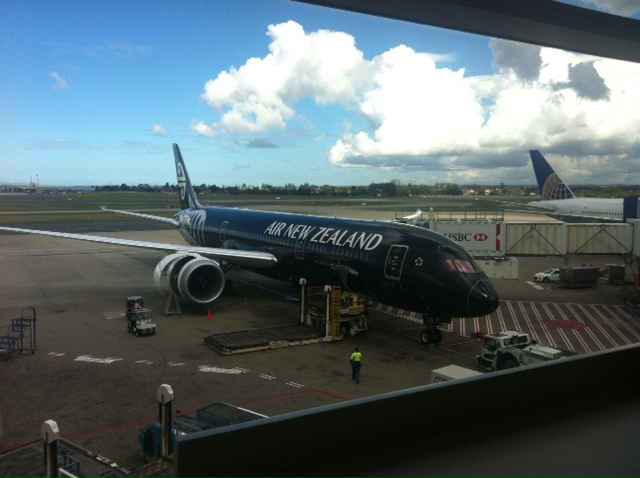
    “Welcome aboard the world’s first Dreamliner,” is Air New Zealand’s proud announcement on boarding at Sydney for the three hour flight to Auckland.

    The plane is shiny with lots of new fangled gadgets, the most notable being the polarised glass window shades that electronically ‘open’ or ‘close’. The toilets are like something from the Jetsons and one wonders what the Japanese fitout of this plane offers in the lavatories.

    A serious downside with the plane is the three-three-three economy configuration that makes for a very cramped seat and on the packed flight like NZ104 it’s difficult to work on a laptop even with an accommodating partner one side and a nice old lady on the other. Two adjoining road warriors would be playing duelling elbows for the entire flight.

    To add to the disappointment with the seats they aren’t particularly comfortable. For the three hour journey between Sydney and Auckland they are tolerable but they would be a painful experience on a longer haul flight.

    air-new-zealand-ife-selections

    One area Air New Zealand excels in is with its inflight entertainment system with an excellent range of movies, TV series and music. The favourites playlist actually works, unlike its equivalents on Qantas and United Airlines. A nice little touch is you can email your favourites list from the seat.

    The touchscreen is responsive although not quite as intuitive as one might expect on a modern airliner.

    A downside with the 787 entertainment system is the sound levels are quite low, the volume has to be cranked up until nearly the maximum before you can hear soundtracks. If you have your own headphones with volume control then this is the time to use them.

    If you’re bringing other equipment, there are two power socket for every three seats which are easily accessible in the base of the seats in front. This is a lot easier than hiding them in the armrests — on the Qantas business class flight last month I had to ask the cabin crew where they were hidden after half an hour searching.

    Despite the plane being full, there’s ample room in the luggage bays. This is possibly due to Kiwis not pushing the limits the way Asian, American and Australian travellers do with carry on baggage.

    The cabin crew are the usual friendly and helpful bunch that Air New Zealand does well although they seem a bit overworked in the early stages of the flight. Service is a bit slow out of Sydney with nothing but a glass of water for the first hour. Tough if you haven’t eaten and you’re waiting on a lunch.

    Once service begins the food is good standard economy fare with the choice of piri-piri chicken or lamb tagine and complimentary bar if travelling on ‘Works’ or ‘Full Works’ tickets.

    air-new-zealand-inflight-meal-nz104-sydney-auckland

    The lamb tagine, a combination of diced lamb and sausage on couscous is touch greasy while the chicken salad was bland and inoffensive.

    Travelling on the ‘Works’ or ‘Full Works’ package includes meals and beverages with drinks ordered through the IFE menu are quick to arrive which were much needed after the long wait for the initial food service.

    Arrival in Auckland was fifteen minutes early despite the almost predictable ground delays in Sydney and overall the experience was pleasant, even if one gets off the plane with a sore bum and bruised elbows.

    Overall, the Air New Zealand 787 Dreamliner service is an efficient way of getting across the Tasman with some nice quirky touches although in economy though you wouldn’t want to be travelling too much further.

    air-new-zealand-dreamliner-IFE

    Similar posts:

    • No Related Posts
  • A tale of two telcos

    A tale of two telcos

    Last Thursday saw China Mobile and Australia’s Telstra release their annual results.

    Both have impressive numbers that illustrate how the telco industry is changing along with some stark differences between the two nation’s business culture.

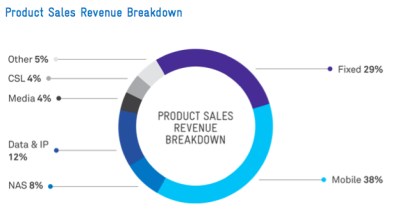
    For both companies their results show how voice and SMS are declining as the ‘rivers of gold’ for telecoms operators around the world; China Mobile’s voice revenues are down 6% while  Telstra’s fixed line voice fell by a similar amount.

    In Australia, the incumbent telco (which sometimes advertises on this blog) continued its dominant position in its market with net profit rising nearly 15% on the back of 6.1% increase in income.

    teslstra-revenue-2014

    Telstra’s results also showed how the Aussie telecommunications market is now primarily a mobile sector; while the advantages of being the incumbent are substantial the real growth and profits in the business are in it’s non traditional sectors. It’s little wonder the company is happy to give away its legacy copper systems to the government’s troubled National Broadband Network.

    In the PRC, the news wasn’t so good with China Mobile’s net profit for the first half of the year falling  8.5 per cent as its traditional voice and messaging businesses faced continued pressure from social media firms, despite revenue being up nearly five percent.

    China Telecom is under pressure from competitors while in Australia the incumbents are doing very well. This is true across much of the Aussie economy.

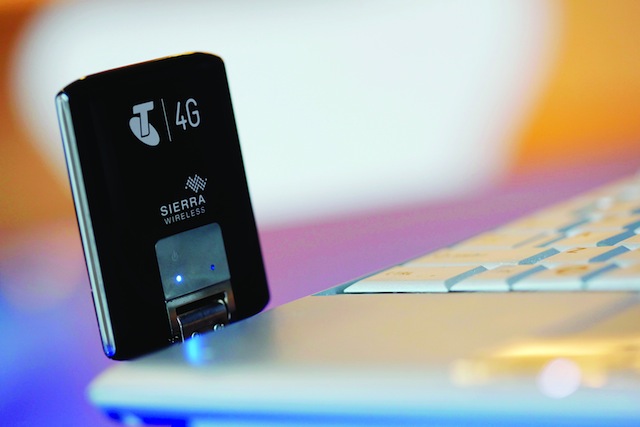
    While China Mobile is staking its future on its 4G rollout, Telstra is seeing the Internet of Things and Machine to Machine (M2M) markets as being the key markets, despite Gartner flagging the IoT as being at peak of the Hype Cycle.

    It may well turn out to be the other way round — Chinese businesses and governments are far quicker to embrace the IoT than their Australian equivalents while Telstra’s biggest competitive advantage against SingTel Optus and Vodafone is it’s far superior 4G network.

    China Mobile’s and Telstra’s competing fortunes tell us much about each country’s telecommunications markets along with the direction of both nation’s economies.

    Similar posts:

    • No Related Posts