Tag: banking

  • Reinventing the connected bank

    Reinventing the connected bank

    Yesterday the National Australia Bank had a media briefing to show how they, like their competitors, are revamping their entire business around new technologies.

    The investments are substantial and the re-organisation of the business is too as the old model of branch based banking only available from 9am to 4.30pm is superseded by the always on model of Internet banking delivered through tablets and smartphones.

    One of the notable points the NAB executives made was their move to authenticating customers through voice recognition. A trial had found the system reduced fraud and social engineering attempts dramatically.

    The use of voice recognition makes sense as it reduces the reliance on users remembering passwords or having to give over personal information that can often be gleaned off social media sites.

    Again we’re seeing data security evolving away from passwords.

    On the social media front, NAB are also offering their small business customers Facebook selling tools in collaboration with social media sales platform Tiger Pistol.

    While it’s questionable that businesses will get that much from a Facebook store, it’s a good attempt from the bank to add some value and encourage their commercial customers to move online.

    The move online is essential as the bank noted that online sales through their merchant platforms are up 23% as opposed to an anaemic 2.5% in general sales.

    Along with passwords dying, the NAB also found that the cash register is dying and being replaced with smartphone and tablet apps. The bank itself is moving its online platforms to being ‘device agnostic’ so as not to be locked into any one technology.

    What the NAB, and its competitor the Commonwealth Bank, are showing is the importance of having modern systems which are flexible enough to evolve with changes in the marketplace.

    Smaller businesses could learn from the banks on just how important this investment is. The organisations who aren’t making these changes are steadily being left behind.
    Similar posts:

  • Reinventing point of sale

    Reinventing point of sale

    One of the banes of running a business computer support organisation were cash registers.

    Retail Point Of Sale (POS) systems were almost always arcane, clunky and difficult to maintain, at PC Rescue we dreaded a call from a shop, pub or hairdresser having problems with their registers.

    Frequently this was by design, the POS system supplier would try to lock in their business customers into expensive support contracts.

    By making it difficult for anybody without intimate knowledge of the product to actually do anything with it, the retailer was stuck having to hire overpriced custom support.

    To make things worse, many of the POS systems ran on outdated hardware which offered the suppliers another opportunity to hit their customers (victims?) with high support costs.

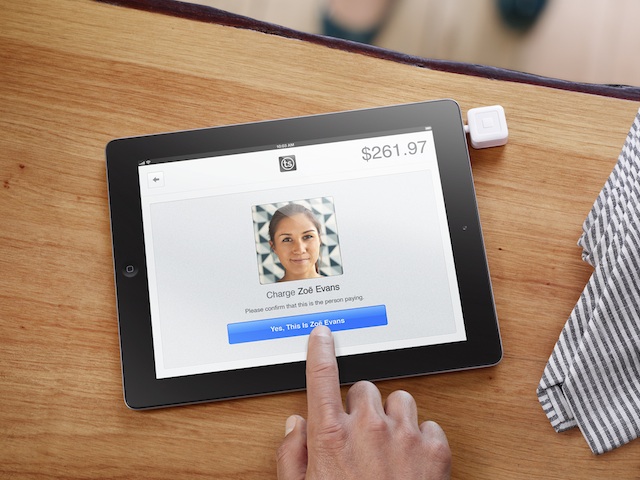
    Since the iPad was released, I’ve been waiting for an application using cloud services for a back end that challenges the existing Point of Sale systems and today US online payments system Square has announced their Square Register app.

    While only available in the US, Square has been setting the pace for physical payment systems like taxi fares and coffees using online technologies so it’s hardly surprising they are leading this push.

    The iPad as a cash register is a logical step for the device and tied in with a robust Point Of Sales platform behind a simple to use app, it will probably make a huge dent in the point of sale market.

    It may be the Square service won’t be the point of sale leader – Square is more a payments service than retail platform – which means this field is way open for some savvy operators.

    One of the concerns with the Square service, and any iPad based application, is the spectre of vendor lock-in. Being fixed on the iOS platform means there is a risk of being held hostage to Apple’s business plans, also being locked into Square’s payment systems may not be the best choice for many merchants.

    The payments and point of sale industry is another that’s being radically changed by mobile devices coupled with cloud computing. It’s not a time for incumbents to rest on their laurels.

    Similar posts:

  • Why we should give Gerry Harvey a break

    Why we should give Gerry Harvey a break

    Gerry Harvey’s been having a bad year. This time last year he was moaning about the Internet stealing his business and now his profits are down.

    In Mark Fletcher’s Newsagency Blog, Gerry gets a serve for dragging the entire retail channel down.

    Mark quite rightly points out that Gerry’s problems are of his own making and his chain’s difficulties aren’t necessarily those of the rest of the industry or even shared by individual franchises within the Harvey Norman group.

    While I’ve been as critical of Gerry as anybody else, maybe it’s time to give him a break.

    It’s worth considering how Gerry made his billions. When he started in business in the late 1950s, it was tough for the average person to get credit. At best working families could get something put aside at the local store or enter into an Encyclopedia Britannica style subscription plan.

    Gerry and his generation of retailers changed that. They made credit available to the masses who could suddenly afford to buy household appliances and electrical goods without years of savings.

    I remember my parents buying things from Norman Ross, Waltons or the ACTU’s Burke Street store (Bob Hawke once stepped on my mum’s foot while she was shopping for a sofe) because working class people could get credit there.

    Gerry was at the beginning of the consumer revolution that defined the second half of the Twentieth Century.

    In the late 1980s financial deregulation changed the game again and Gerry’s business took off as credit became even easier to get with new providers entering the market. First we saw three month interest free offers and by the mid-2000s six year interest free deals were available.

    These deals were so good that Harvey Norman franchisees often made more money selling the credit deals than on the actually product that the ‘no interest’ loan had been taken out to buy.

    For Gerry, this was insanely lucrative as his business was able to clip the ticket at almost every level of the retail and distribution chain while moving much of the risk and capital cost onto franchisees and landlords hungry for high traffic anchor tenants.

    In 2008 this entire model changed as the credit boom came to a crashing halt and consumer spending with it.

    Business models based on cheap credit now have to find something else that works and this is what Gerry Harvey is now struggling with.

    To complicate matters, the Internet has changed the distribution model that worked for Harvey Norman and other bricks and mortar retailers. All of them are now having to make a major shift in the sales cultures.

    Adapting to this new world is tough for everybody and we should have some sympathy for Gerry Harvey as our businesses and jobs are being affected by exactly the same forces.

    How Gerry adapts, or doesn’t, could be a bellwether for our own industries.

    Similar posts:

  • Finance by the masses

    Finance by the masses

    “Crowd” is one of the hot terms of the moment – the idea that groups of connected, motivated people with the right incentives can deliver great value when their skills and talents are bought together.

    One of application of this idea is crowdfunding where businesses, artists, writer and movie producers can call  on the community to donate or invest small sums into a project in return for a benefit like a copy of the book or being an extra in the movie.

    The biggest success in this space is the New York based Kickstarter which was founded in 2008. Pozible, an Australian equivalent, that provides local creatives with the opportunity to raise funds without dealing with the hassles of US bank accounts or social security numbers.

    Both of these services make money from taking a commission on the money raised, for Pozible users this fee ranges from 5 to 7.5%.

    While the focus of Pozible and Kickstarter is on creative projects like books, music and movies, it’s interesting to consider how this model can work for other businesses.

    Perhaps an IT business can offer a free year of support or food delivery service free shipping in return for a donation. The possibilities are endless.

    It’s not without risks – there’s no doubt the regulators will at best be suspicious of fund raising through these services and anyone participating has to accept the risk of not getting any sort of return.

    Since the 2008 banking crisis, funding for small business has dried up around the world. Many viable enterprises found their lines of credit being withdrawn and some even went under as a result.

    With banks rationing small business credit, there’s a need – we could even argue an economic necessity – for alternative sources of capital. Crowdsourcing could be an option.

    Now the days of easy credit are over; businesses, banks, investors and governments have to adapt. Believing models and regulations that were designed when capital was cheap and abundant won’t work in a very changed economy.

    Crowdsourcing will be one of the issues confronting regulators, it’s going to be interesting to see how they deal with it.

    Similar posts:

  • The mobile payments revolution

    The mobile payments revolution

    Ten years ago when I was running a computer support business we spent a lot of time trying to find an mobile payment service for our on-site technicians to process payments.

    At the time there were plenty of options but they were all expensive, asking 6% in merchant fees at a time when our bank merchant facility charged us 2.75% to accept Mastercard, Visa and Bankcard. Interestingly, the cut the mobile providers wanted to take which was the same commission as American Express and Diners Club.

    We’d long before decided Diners and Amex were too expensive and it was easy to make the same decision about mobile payments. The technicians were given a manual card swipe to carry around and they phoned through authorisations. It was messy and time consuming but a lot cheaper than the then high tech alternatives.

    Given that history, I was keen to get along to the Australian Information Industry Association’s “Mobile Payments – Cooperate, Collaborate, or Abdicate” breakfast panel held in Sydney last week to see what has changed in the mobile payments space.

    The rise of smartphones – and the developing SoLoMo trend among consumers which brings together social, local and mobile technologies – should have meant the era of online payments should have arrived and it’s puzzling why it hasn’t happened.

    It isn’t for a shortage of operators; one of the panel members, Oliver Weidlich of Sydney’s Mobile Experience mentioned a number of the services such as Square, developed by one of Twitter’s founders that are changing mobile payment overseas.

    Interestingly it was the audience questions that gave the answers to why online payments haven’t taken off in Australia. The key question from the floor was “which authority handles disputes should a phone be lost or stolen”.

    As a customer, one hopes it’s the bank that takes responsibility as the idea of a telco – particularly their mobile phone divisions with their attitude towards billing customers – having control over your credit card or bank account would make most consumers’ blood run cold.

    The point was well made though as it saw the panel’s bank, telco and credit card representatives all ruminating over the question of ‘who owns the customer’.

    Oddly, while they argue about whose property the customer is, all of them may lose out. While services like Square and built in payment features on social media and mobile apps such as Foursquare or Red Laser may take a slice of the market, there is a bigger competitor already making huge inroads.

    The day before the AIIA event, Internet payment giant PayPal announced a series of deals with various group buying sites and online applications. Their press release pointed out PayPal’s mobile payments, or mCommerce as they call it, is growing at over 400% a year

    While it might not be correct to say PayPal were the elephant in the room at the online payments breakfast, it isn’t unfair to say Big Ears was just outside scoffing the morning tea while the incumbents argued about who would have first dibs on clipping the tickets of both merchants and customers.

    It’s too early to say the banks, or the telcos, have lost the market but players like PayPal, Google with their wallet service and possibly even Apple – should a Near Field Communication (NFC) equipped iPhone appear in the near future – are going to make the mobile payment sector far more interesting and competitive.

    For businesses, we need to keep a close eye on the mobile payments market as it is promising to offer a lot more options in banking and transactions that what we’ve been used to in recent years. The days of 6% merchant fees are well and truly over.

    Similar posts: