Tag: computers

  • Google and Microsoft show how online business is changing

    Google and Microsoft show how online business is changing

    Both Microsoft and Google yesterday reported their second quarter earnings for 2013 and both missed the targets expected analysts. Does this really mean anything?

    Microsoft’s earnings were particularly notable as they included a $900 million dollar write off on Surface RT inventories, this almost certainly means a key part of the company’s tablet strategy has failed.

    What’s striking in Microsoft’s earnings report is the terrible performance of the Windows Division which saw sales increase 10% year-on-year to 4.4 billion dollars, but earnings collapse by over 50%. Excluding the Surface RT write off, the division would still have seen a ten percent fall.

    The company’s statement emphasised how the division is struggling with increasing costs.

    Windows Division operating income decreased $1.3 billion, primarily due to higher cost of revenue and sales and marketing expenses, offset in part by revenue growth. Cost of revenue increased $1.2 billion primarily reflecting product costs associated with Surface and Windows 8, including the charge for Surface RT inventory adjustments of approximately $900 million. Sales and marketing expenses increased $344 million, reflecting advertising costs associated with Windows 8 and Surface.

    At Google, the company’s 2nd Quarter report show trend is still upwards but the core business of online advertising is showing some cracks as the total number of paid clicks grows, but the value of each falls. At the same time traffic aquisition costs are rising at the same rate as revenues.

    This could indicate that advertisers’ appetite for online links is fading. For smaller businesses, the cost of adwords campaigns has been escalating to the point where the old days of newspaper classifieds and Yellow Pages listings start to look cheap.

    Couple the cost of advertising with the inevitable ‘ad blindness’ that web surfers have developed and a worrying trend for Google starts to appear. Overall Google’s net profit margin was 26%, down from 31% a year earlier.

    While both companies remain insanely profitable – Google earned $14 billion this quarter and Microsoft $6 billion – both businesses are showing stresses as their markets evolve. It proves no business can afford to be complacent in these times.
    Similar posts:

  • How form factors evolve as tech affects design

    How form factors evolve as tech affects design

    Technology often dictates design. As tech evolves, we can rethink the design of many things we take for granted.

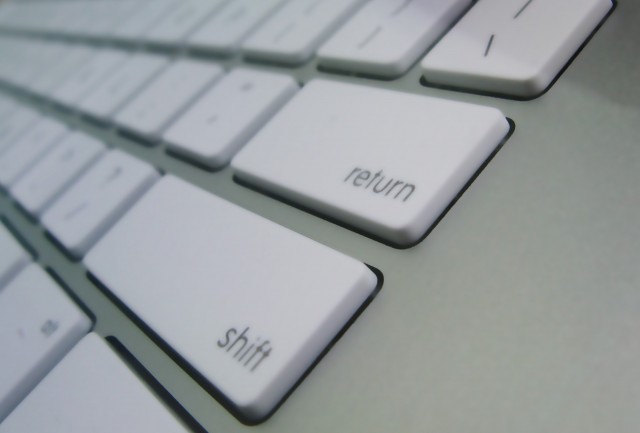
    While out helping a friend shop for computers this morning, it occurred to me how the keyboards of laptop PCs have changed.

    For many years, notepad keyboards were restricted to roughly 80 characters as the 4 x 3 ratio of screens have dictated the dimensions of of the keys. Here’s an example.

     80-character-keybaord

    In recent times though the wider screen dimensions of laptops has seen the resurrection of an older layout — the 102 key layout with an added numerical pad.

     102-character-keyboard

    What’s interesting about this is how technology form factors evolve.

    Not so long ago mobile phone manufacturers were competing to create the smallest handset. Cellphones like the  Motorola Razr pushed the limit on how small phones could be.

    With the arrival of the smartphone, the size and shape of mobile phones changed. Now the limiting factor was a screen big enough to read the internet on and display a thirty key keyboard.

    Now reliable handwriting recognition software means that some phones can eliminate the use of keyboards at all, which means we may start to see the race to create smaller cellphones restarting.

    The layout of all of the items we use, from cars to computers, is largely determined by technology limitations. As the tech evolves, we can start to rethink how a device is designed, just as the laptop and iPhone designers did.

    With whole new display, input and sensing technologies being developed, there are many household items that may well look different in the near future.

    Similar posts:

  • ABC 702 mornings – Storage and your computer

    ABC 702 mornings – Storage and your computer

    This morning on 702 Sydney I’m talking to Linda Mottram on the decidedly unsexy topic of storage – hard drives, cloud computing and the struggle to keep up with ever expanding file sizes of documents, photos and downloads.

    It’s an opportunity to revisit the How Much Data Does The Internet Need topic which I covered for Radio National last year, although almost certainly that needs updating.

    Earlier this year networking vendor Cisco released its 2013 Virtual Networking Index which forecast global data traffic growing fourteen fold over the next five years.

    Those bytes slopping around the internet have to come to rest on someone’s hard drive and this is what’s driving the storage crisis.

    Yesterday US business site Venture Beat had an op-ed by an executive from Seagate, the world’s biggest hard drive manufacturer where he discussed the storage challenges with a claim from industry consultants IDC that worldwide computer storage is 2.7 zettabytes.

    A zettabyte is a trillion gigabytes, or ten followed by twenty zeros – it’s the equivalent of a billion one terabyte hard drives that are standard on most cheap desktop computers.

    Where those hard drives are located is the big challenge, is it on your laptop, smartphone or on a somewhere on a cloud service?

    The other big challenge is what do you do with all this information – which is where the Big Data discussion comes in.

    While data storage is a mundane topic, it’s a big one that matters. I hope you can tune in.

    We’d love to hear your views so join the conversation with your on-air questions, ideas or comments; phone in on 1300 222 702 or post a question on ABC702 Sydney’s Facebook page.

    If you’re a social media users, you can also follow the show through twitter to @paulwallbank and @702Sydney.

    Similar posts:

  • Sunset on the laptop market

    Sunset on the laptop market

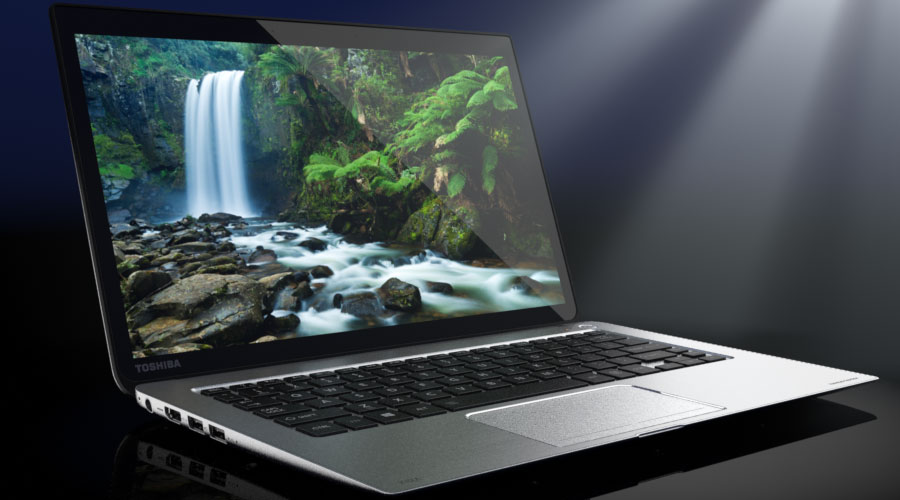
    Yesterday Toshiba released their Kira laptop computer – a premium device aimed at the ‘aspirational’ market.

    The Kira is a fine device with good specs, little weight and an ambitious $2,000 price point. It probably also marks the laptop computer’s decline.

    As tablet computers and smartphones become most people’s preferred computer devices, the laptop computer is becoming a niche device and increasingly less relevant to most technology users. The Kira is fighting for the share of a marketplace that has moved on.

    Losing the Aspirationals

    Unfortunately for Toshiba, those aspirational customers are locked into their Apple iPads and Sumsung smartphones. Laptops are seen as work devices more valued for their portability and cost.

    “We have to give our customers a reason to upgrade their computers,” said Mark Whittard, the Managing director of Toshiba Australia.

    The problem is computer users have little reason to upgrade, as nice as the Kira is the price point is just too high for customers who’ve been groomed to expect sub – thousand dollar systems and there are few compelling reasons to buy such a device.

    Caught in a pricing pincer

    Price points are probably the biggest problem for computer manufacturers – one of the reasons for the tablet computer’s success is they delivered an easy to use, portable computer for half the price of a portable computer.

    At the same time the rise of netbooks and the rush to dump unwanted Microsoft Vista and Windows 7 stock onto the market groomed customers to expect cheap computers – few computer buyers are interested in spending more than a thousand dollars on a device.

    These factors have squeezed the margins of the major manufacturers like Dell, HP and Asus.

    Those pressures are going to increase as volumes fall. For much of the 2000s, laptop computers were fast moving consumer goods – pricing and profits were based on moving large numbers of the devices.

    As manufacturing volumes fall, those devices are going to lose their economies of scale which will put further pressures on vendors’ margins.

    Laptops aren’t going away, they still have a role for power users ­– particularly for those, like this writer, who need a tactile keyboard and media editing capabilities.

    However those feature rich devices with their nice keyboards are going to cost more as parts become more expensive.

    For laptop vendors the challenge is to find the profitable market niches and exploit them. In some ways Toshiba probably has a better opportunity than most with its range of premium and gaming portable computers.

    Those in the market hoping the happy days of big volumes and good profits will return to the laptop PC market are in for a painful future. It’s something retailers, resellers and vendors need to understand.

    Similar posts:

  • Hurtling into the post PC era

    Hurtling into the post PC era

    Consulting firm IDC quarterly report on PC shipment figures this quarter shows a stunning 14% drop of global computer sales. On those numbers, the PC era is definately over.

    Across the board the figures are horrible with double digit declines across the board. Market leader HP reported PC sales had fallen by nearly a quarter yet they retained their market lead as all of their competitors reported similar falls.

    What’s also notable is the PC industry’s ultrabook attempt to wean consumers off cheap nebooks has backfired terrible, as the analysts note;

    Fading Mini Notebook shipments have taken a big chunk out of the low-end market while tablets and smartphones continue to divert consumer spending.

    Instead of buying higher priced ultabooks, consumers have abandoned portable PCs altogether and gone to smartphones or tablet computers.

    The PC manufacturers must be rueing how they let the tablet computer market slip through their fingers during the 2000s.

    Failing to ship decent tablet computers is symptomatic of a bigger problem for the PC manufacturers – their inability to innovate.

    The PC industry is struggling to identify innovations that differentiate PCs from other products and inspire consumers to buy, and instead is meeting significant resistance to changes perceived as cumbersome or costly.

    As IDC point out, even if they do introduce new products, consumers are wary that any “innovation” is going to be cumbersome. Basically the PC manufacturers have lost their customers’ trust.

    How this affects Dell’s proposed buy out remains to be seen; it’s hard to see how investors would not be concerns at a 10% fall in sales, although Dell was one of the better performers.

    For Microsoft, this news should further accelerate their moving products and customers to their cloud and enterprise products. For their Windows division it looks like there are tough times ahead.

    The decline of the PC market is itself a study in product and innovation cycles. It could well be that the personal computer is going the way of the fax machine.

    For some businesses that will be tragedy, but the market – and the opportunities – move on.

    Similar posts: