
Tag: data

  • Data and the modern movie producer

    Data and the modern movie producer

    Dealing with the massive wave of data flowing into businesses will be one of the defining management issues of the next decade. One company that is already dealing with this is New Zealand’s Weta Digital.

    Wellington based Weta that’s best known for its work on Lord of the Rings and is part owned by director Peter Jackson employs 1400 staff for its movie special effects work and has won five visual effects Academy Awards over its 23 years of operations.

    Kathy Gruzas, WETA Digital’s CIO, spoke to Decoding the new Economy at the Oracle OpenWorld forum in San Francisco this week about some of the challenges in dealing with the massive amount of data generated by the movie effects industry.

    “We have some very heavy loads.” Kathy states. “We push our systems to the limit.”

    Applying powerful systems

    One challenge is the sheer computing power required, ‘the render frame processes one frame per server until you have four seconds of footage. Sometimes that takes over night or even longer and for that we use a lot of storage,” Kathy says. “The render farm being six thousand servers will write 60 to 100 terabytes of data a day and read a quarter to half a petabyte each day.”

    “We need systems that will be very large to handle the volume of data we generate but also be very quick to handle those read and writes.”

    “One render could use a thousand computers, sometimes more, and all of those will be reading and writing against the same block of storage so we have our own software layer that directs those loads but we try to minimise the load on our storage but we have the worst work load you can imagine with lots of servers, lots of small reads and writes and many of them random and concurrent with pockets of hot files.”

    Despite the automation, the business is still extremely capital intensive. “In visual effects you probably need at least three hundred artists to work on one film, it’s a very labour intensive process to do the artistry and much like a production line.”

    Going mobile

    The nature of modern movie production means the effects teams are now part of the shoot which adds another level of complexity for Weta. “Although we are visual effects which is largely post-production we do go out with crews when they’re shooting the movie so we can do reference photography,” says Kathy.

    “We do 3D scans so if we need to do something digitally and we do motion and facial capture as well,” she says. “There are 240 muscles that we tweak individually to get the expression. That’s a huge amount of data to capture.”

    To do this, Weta created their own ‘road case’ that contains everything they need to grab the shots and store the data they need, “you can’t ask the director retake the shot because we missed something.”

    Into the forest

    “We have to take the case into the forest and into the rain and everywhere. It’s good having that roadcase that has storage, networking and servers in it.” The case, which was self assembled by Weta’s team is “probably the most travelled Oracle system on the planet,” laughs Kathy with “lots of data capture and sub-rendering.”

    Weta’s story illustrates just how managing data is becoming a critical issue for companies. While movie special effects is very much a specialised field that’s far ahead of the curve in its technology use than most businesses, they do show the importance of managing and securing their data.

    For other businesses, lessons from Weta is understanding your company’s – including staff and customers’ – needs then investing in the right tools to deliver is essential.

    One important difference between technology intensive businesses like Weta and most other organisations is the New Zealand company is doing most of its processing and storage in house. Those without the same needs will almost certainly be shifting these tasks onto the cloud.

    Similar posts:

    • No Related Posts
  • Thinking about networked thinking

    Thinking about networked thinking

    “We want to be the Wayze of enterprise software” is the line being repeated by executives at the Inforum2016 conference in New York today.

    This is an interesting strategy for Infor, who provides a range of enterprise software tools to help companies track what is going on in their business, as Wayze is built upon aggregating user data to identify traffic problems to improve commuting times. It’s no surprise that Google bought the company a few years ago.

    Infor position though is slightly different as it’s aggregating individual clients’ data for them. In a world where organisations are struggling not to be overwhelmed by information, Informa are in a good position, even if their executives do overdo it on the buzzwords.

    Which leads us to another buzzphrase – design thinking – which has been drifting in and out of fashion over recent years. During the opening keynotes one of the comments was about the rise of  “network thinking.”

    “Eighty percent of what most companies do deals with data from outside of their organisation,” says Kurt Cavano, Infor’s General Manager of their commerce cloud division. “We’ve seen in the power of networks with sites like Facebook, LinkedIn and Wayze.”

    “Nobody wants to be on a network but everyone’s on a network. It takes a long time to build but once you have one it’s magical. That’s what we’re thinking for business, they need to evolve.”

    In one respect this is another take on the ecosystem idea, that one vital corporate asset in the connected world is an ecosystem of partners, suppliers and users, however the Infor view articulated by Cavano is much more about the flow of data rather than the goodwill of a community.

    So we may well be entering a world of ‘networked thinking’ where thinking about the effects of data flows and being able to understand them – if not manage them – becomes a key executive skill.

    Paul travelled to New York as a guest of Infor

    Similar posts:

  • Evolving into a data centric company

    Evolving into a data centric company

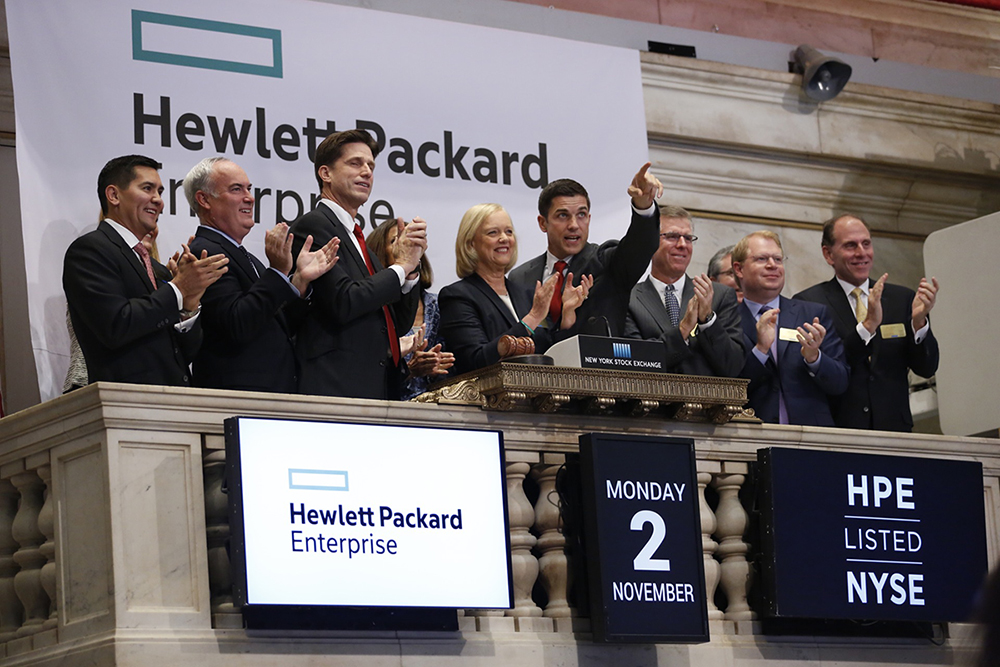
    I’m currently at the HP Enterprise Seize the Data roadshow in Singapore where the recently split company is showing off its range of data analytics tools.

    Like companies such as IBM and Google, HPE are looking to make money out of data feeds and analytics with a key part being a platform for developers to create applications.

    In launching their Haven OnDemand service, HPE are entering a crowded field with IBM, Salesforce, AWS and Splunk – among others – offering similar products. What compelling difference HPE will add to the field will be something I’ll be asking the company’s executive later.

    One of the other services, HP Vertica, looks running data analytics against structured and ‘semi-structured’ sources. Again this is a field where other companies are well established and have an advantage in being able to examine unstructured data.

    The overwhelming question though is how big, and lucrative, the market is for these data products. It’s not clear exactly how all of these companies are going to monetize these services and, should they be able to, their profitability.

    As a company finding its feet less than a year after being split in two with the added problem of seeing its core server hardware business being eroded, HP Enterprise is realigning its business around data analytics and cloud services.

    The challenge for the company is differentiating itself and providing competitive products in these markets, this will be a tough challenge.

    Similar posts:

    • No Related Posts
  • Volkwagen shows the IoT’s data weakness

    Volkwagen shows the IoT’s data weakness

    The Volkswagen emissions scandal has rocked the company and cost its CEO his job, but the implications of the company falsifying data to past regulators’ test has serious implications for the Internet of Things.

    As the Los Angeles Times explains, Volkswagen designed software to detect when its cars were being tested. During test the software would modify the car’s performance to give a false result.

    This is similar to the Stuxnet worm which sent Iranian operators false information indicating the uranium enrichment centrifuges were operating normally when in truth they were running at speeds well outside their design.

    Both the Volkswagen fraud and the Stuxnet worm show how software can be used to tell lies about data. For processes and businesses relying on that data, it’s critical to know that information is reliable and correct.

    Data is the raw material of the internet of things and all the value derived comes from analysing that information. If the information is false, then there’s no value in the IoT. Designing systems that guarantee the integrity of data is going to be essential as devices become more connected.

    Similar posts:

    • No Related Posts
  • Programming the Internet’s advertising

    Programming the Internet’s advertising

    Michael Rubenstein, President of AppNexus is the first interview for a while on the Decoding the New Economy channel.

    Rubenstein joined AppNexus as employee number 18 in 2009 and has been part of the company’s growth from a small startup to a global technology company with a workforce of 1,000 professionals.

    AppNexus is one of the new wave of companies managing and programming online advertising, helping advertisers and publishers target their products better while giving ad tech companies deeper insights and data.

    In this interview, Rubenstein discusses some of the forces changing global advertising along with the challenges of dealing with a high growth business.

    Apologies for the bad hair on my part.

    Similar posts: