
Tag: employment

  • Diversifying South East Queensland

    Diversifying South East Queensland

    Australia is one of the world’s most urbanised countries with the bulk of the nation’s population clustering in half a dozen centres mainly strung along the east coast of the continent.

    The northernmost of Australia’s population centres is South East Queensland, a sprawling collection of suburbs extending from the upper class enclave of Noosa Heads down to the Gold Coast and the New South Wales state border.

    Cisco believe this sprawling region of three million people can become a ‘Smart Region’ with the use of technologies such as intelligent lighting and parking, citizen applications, and smart power metering could add up to 30,000 jobs and $10 billion of value to the community over coming years.

    “The residents of South East Queensland told us they want to experience greater convenience and integration of public transport, greater digital engagement and intimacy in their cities, more reliable local government services, and new digital ways to further reduce the cost of red tape,” said Cisco Australia & New Zealand Vice President Ken Boal in releasing the South East Queensland: A Smart Region report.

    Local civic leaders in the cities making up the South East Queensland conurbation see this as an opportunity to grow their economies.  “The future of cities and regions and their ability to create enduring employment opportunities are entirely linked to their digital capabilities,” says Sunshine Coast Mayor Cr Mark Jamieson while Ipswich Mayor Paul Pisasale said Ipswich was already preparing for a strong future as a digital city.

    “We have recognized that building and taking advantage of digital highways now will set Ipswich on a secure and successful path to capitalise on the ballooning digital economy,” said Cr Pisasale.

    For South East Queensland, the challenge in creating new industries and jobs is becoming acute. The Australian miracle economy has left the region – like most of the nation – hopelessly uncompetitive and the bulk of employment is in domestically facing service industries underpinned by property prices.

    In fact, the residential construction industry has been the mainstay of the SE Queensland economy and the region remains probably the most economically volatile of the Australian conurbations given its high dependence upon the building sector.

    The digital economy does hold out hope for diversifying South East Queensland’s economy from building and domestic tourism, but the work is just beginning. Cisco’s smart region initiative is a first step, but there’s much more work to be done by business and civic leaders.

    Brisbane image, “Brisbane CBDandSB” by Stuart Edwards. – Own work. Licensed under CC BY-SA 3.0 via Wikimedia Commons – https://commons.wikimedia.org/wiki/File:Brisbane_CBDandSB.jpg#/media/File:Brisbane_CBDandSB.jpg

    Similar posts:

  • The three S’s of employee engagement

    The three S’s of employee engagement

    We need to rethink how we measure performance in the workplace says Andrew Lafontaine, Senior Director Human Capital Managemet Strategy & Transformation at Oracle Australia.

    As business adapts to a changing society and mobile technologies, one of the questions facing managers is the mismatch between the Millennial generation and those GenX and Boomers who make up most of the executive suite, Lafontaine sees this as been in how the younger cohort approaches authority.

    “There certainly can be a disconnect between Millennials and boomers. Millennials don’t see hierarchy the way boomers see it as important,” says Lafontaine. “Boomers have ingrained view of the way they have come through the workforce.”

    Breaking the old rules

    Unfortunately for those older managers, their world was based on a formalised, ‘straight line’ hierarchy dating back to the days ships’ captains used flags and voice tubes to communicate.

    That rigid military style worked well for nearly two hundred years of business with mail and then the telephone only reinforcing that management model. Now newer collaboration tools mean different ways of working becoming possible.

    A problem with those different ways of working in teams is how performance is measured warns Lafontaine.  “What they are not measuring at the moment are what I call ‘network performance’. How workers they helping their colleagues, collaborating and working together.”

    Separating home and office

    With mobile technologies becoming ubiquitous it becomes harder to separate work from home life, “we working now from home and on the tram. You don’t need a nine to five workforce nad companies have to deal with and embrace the technology,” says Lafontaine.

    In the context of babyboomers and GenX workers, that technology meant longer hours in the office but Lafontaine suggests things are now changing. “There other areas to measure. How are they looking after themselves? The days of babyboomers working 12 or 14 hours a day and neglecting their health or outside life are over.”

    For the future company, the key to success lies in engaging their employees Lafontaine says. “A more highly engaged workforce delivers better outcomes. Engagement is the three S’s: Stay, Say and Strive”

    Those S’s come down to three questions for the worker; should I stay? What should I say? and How should I strive to do a better job?

    For managers the challenge is engage all workers regardless of age, the task of finding what engages and motivates workers of the computer generation is only just beginning.

    Similar posts:

  • Uber becomes a US Presidential issue

    Uber becomes a US Presidential issue

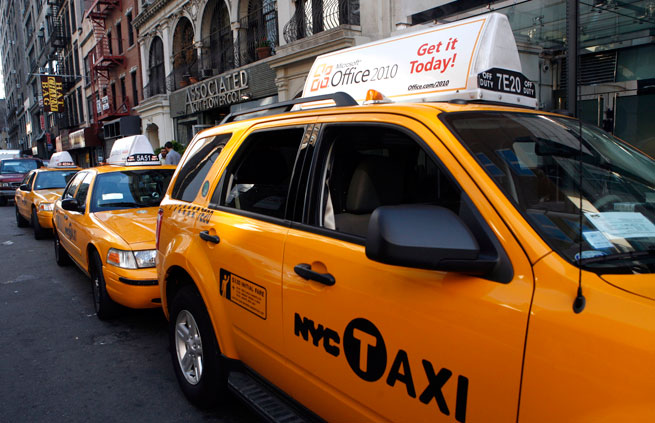
    As services like Uber change the definition of employment, the company finds it has become an issue for the US Presidential race.

    The New York Times reports how the Democratic candidates, led by Hilary Clinton, and the Republicans are carving out their positions on the sharing and on-demand economies.

    Notable in the current discussion is low little support there is for the incumbent taxi companies and their drivers which shows how in most states and cities the medallion and licensing regulations have been used to stifle competition and discourage service.

    For cab drivers that characterisation is somewhat unfair given cabbies themselves in many cities are exploited and are as much the victims of a bad systems as the passengers.

    That the future of work and the structure of these services is now in the political spotlight, the issues raised by the new business models are going to get more examination and – hopefully – some ideas on addressing the changes needed to deal with a very different workforce in the 21st Century.

    Similar posts:

  • Creating a new class of worker

    Creating a new class of worker

    With the ‘sharing economy’ becoming more widespread and freelance workers possibly being the norm in the future, the question of how are they defined arises.

    The simple answer is they become contractors after the California Labor Commission ruled for an Uber driver in a dispute over expenses incurred on the job. However it’s still possible that the level of control many of these services exert over workers may see many defined as employees.

    For the ‘sharing economy’, the definition is important as the business model depends on shifting all the costs onto the contractors and customers. The service, like Uber and AirBnB, is only there ostensibly as a platform to match buyers and sellers.

    Buzzfeed’s Caroline O’Connor suggests a third definition of worker, a ‘dependent contractor’. Under this category contractors would receive social security benefits, insurance and other features of permanent employment with the flexibility of being on call.

    In many ways O’Connor’s suggestion is similar to the national insurance schemes of many European countries where workers contribute towards their eventual retirement or for the benefits they may receive should they be unfortunate to become sick or unemployed.

    While the suggestion is worthwhile, it’s still not hard to see how the ‘sharing economy’ companies would want to put their contractors in whatever category reduces their costs and risks.

    The discussion about workers’ protection and social security benefits needs to be had as we enter a period of economic change not dissimilar to the 1920s or late nineteenth Century where work patterns changed and there was substantial dislocation.

    As the 1920s saw the start of concepts like unemployment and sickness benefits, we will need new employment and social security concepts develop to cater for the new economy and modern workforce.

    Similar posts:

  • A generation free of poverty and labor

    A generation free of poverty and labor

    How will the future workforce look? A report by Australia’s Committee for Economic Development seeks to give a picture of how employment might look at the end of next decade.

    Australia’s Future Workforce is a weighty tome covering the current structure of the nation’s economy, its trends and the factors affecting employment over the next two decades.

    The report makes it clear the economy will be very different observing 40 per cent of Australia’s workforce, more than five million people, is likely be replaced by automation over the next twenty years.

    In the opening chapter, Reshaping Work for the Future, Professor Lynda Gratton of the London Business School describes the share of the future workforce where roles are more specialised and automation increasingly takes over less complex jobs.

    An important aspect Professor Gratton also flags is the aging population which in a rapidly changing economy will require frequent retraining.

    From a technology perspective Professor Hugh Bradlow, the Chief Scientist of Telstra, suggests the workforce will be more mobile and employed in fields less amenable to computerisation involving skills like social intelligence, creative talents and social intelligence.

    Those without those skills are deeply at risk with Bradlow being the first in the report to cite the likelihood that two fifths of the workforce are at risk of losing their jobs.

    Bradlow concludes his analysis with the observation that if we work to satisfy our basic needs then machines looking after these requirements free up the workforce to address higher intellectual pursuits.

    Rethinking management

    Belinda Tee and Jessica Xu, both of IBM, agree with Bradlow that technologies like IBM Watson will help skilled workers like doctors and teachers deliver their services more efficiently.

    Xu and Tee suggest change in the workforce will need to start at the top with managers needing to enhance collaboration within the organisations and build diverse teams working on open data.

    A two speed economy

    How the effects are distributed across the workforce is probably one of the most important aspects of this report with a team from the soon to be abolished National ICT Australia mapping the regions that will be most affected by automation.

    The news for many of the country’s regions is not good with the survey finding workers in most areas have more than a fifty percent chance of losing their jobs to automation.

    NICTA’s bad news for the regions ties into a recent PwC report that found Australia’s economic power has been increasingly concentrated in the nation’s capital cities.

    A mixed future

    In many respects the CEDA report is disappointing, while it flags many of the issues facing today’s workforce and the forces shaping it, the survey doesn’t identify the industries and occupations likely to benefit.

    Despite not stating the growth sectors, the report’s overall view of the future workplace is optimistic as Telstra’s Hugh Bradlow says: “The change could result in a new generation free of poverty and the burden of labor, thereby unleashing the next wave of human innovation and creativity in directions we can never imagine.”

    This may be the case but the to achieve that will require, as the report later suggests, a new social compact.

    It’s building that new social compact which could be the greatest task ahead of us.

    Similar posts: