
Tag: entrepreneurs

  • Privileges and princelings

    Privileges and princelings

    A strange thing about Australian business reporting is that its often full of gossip and name dropping as any third rate scandal magazine.

    In a perverse way, treating business executives like the Kardashians gives the average mug punter – and shareholders – a glimpse into how these companies do business. Like this story in the Australian Financial Review;

    Hamish Tyrwhitt was unaware of the latest drama unfolding within the Leighton board as he relaxed in the Qantas First Class Lounge in Sydney on Friday morning.

    Indeed, the contractor’s chief executive officer was busy chatting to former Wallabies captain John Eales while waiting to board a flight to Hong Kong where he was due to close a recent deal to build the Wynn Cotai hotel resort in Macau and enjoy the Sevens rugby tournament.

    The timing was not good. Tyrwhitt had only just boarded the flight when the news broke that chairman Stephen Johns and two directors had resigned. Tyrwhitt was forced to change his plans and is expected back in Sydney for a board meeting convened this weekend.

    Nice work if you can get it.

    A few pages further in the day’s AFR is another gem;

    One July evening about four years ago, off the south coast of France between Cannes and St Tropez, two men sat in the jacuzzi on the top deck of a 116-foot Azimut motor yacht. It was about 3am and the sea was rough. The spa water was sloshing about and had given the latest round of caprioskas a distinctly bitter taste.

    Dodo boss Larry Kestelman was telling his good friend, M2 Telecommunications founder Vaughan Bowen, about the challenges of growing his internet service provider business.

    It’s tough doing business when the spa waters are choppy. One expects better from a seven million dollar boat.

    That second article raises another point that’s often overlooked, or unmentioned, when reporting Australian business matters.

    on Thursday the 14th, something unexpected happened. At 12.30pm, after no activity all morning, shares in the thinly traded Eftel started to rise sharply. By the time the market closed at 4pm, Eftel had soared 44 per cent to 39.5¢. Someone with knowledge of the deal was insider trading.

    Insider trading? On the Australian Security Exchange? Somebody had better call those super-efficient regulators who were responsible for Australia cruising through the global economic crisis of 2008.

    Somebody obviously wanted their own 116ft luxury yacht or corporate box at the Hong Kong Sevens.

    Both of these stories illustrate the hubris and privileges of corporate Australia and its regulators.

    One wonders how well equipped these organisations are for an economic reversal when their leaders are more worried about caprioskas and their spots in the first class lounge.

    We may yet find out.

    First class airline seat images courtesy of Pyonko on Flickr and Wikimedia.
    Similar posts:

  • Risky business – is crowd funding too rich for investors and innovators

    Risky business – is crowd funding too rich for investors and innovators

    It’s sad when a Kickstarter project fails to meet its promises and the story of the Collusion Pen, a stylus designed for iPads, is a salutary lesson of how many people don’t understand when they buy into or set up a crowdfunding proposal.

    The idea behind crowdfunding sites like Kickstarter is that artists, designers and inventors can publicise their projects, interested supporters can pledge funds in return for benefits like advanced previews, a signed book or an early version of version of the product.

    For the Collusion pen, it’s the early version that’s upset supporters who’ve complained that the device is unusable in its current form.

    Not getting the product when it was promised is standard for Kickstarter projects, late last year CNN Money reported how 84% of the site’s top listed ventures missed their target delivery dates.

    The reason for Kickstarter’s apparent failures is that ideas are risky. Often, entrepreneurs and artists overestimate their skills and underestimate the scale of the task they’ve given themselves.

    Added to this, Kickstarter is an expensive way to raise capital. When another Australian startup Moore’s Cloud went onto Kickstarter to fund their internet connected light, they found that to cover the $285,000 development costs they had to win pledges worth $700,000.

    Moore’s Cloud missed their target and have gone on to raising money independently.

    Apart from the those risks we set our expectations too high – we believe the first versions will be perfect out of the box and every idea will make the founder a billion.

    In his article The Fake Church of Entrepreneurship, US business founder Francisco Dao discussed how much of the start up community is based up on religious beliefs about the sanctity of founders and that everyone can become rich by selling their idea to a greater fool.

    The sad thing is that ideas are like armpits – most of us have a couple and almost all of them stink.

    Not that people shouldn’t have a go; having a hare brained idea and making it a reality is the foundation of human progress. It’s just that most ideas don’t work out.

    Making matters worse is our inability to evaluate risk; notable in the Sydney Morning Herald story are the consumer and investor protection angles.

    If someone isn’t getting what they thought they had been promised, then “the government aught to do something.”

    The biggest risk of all to Kickstarter and other crowdfunding sites is that governments will regulate them either as stores or as investments.

    As investments crowdfunding projects will be hiring lawyers and bankers to draft densely worded product disclosure statements which will see ventures like Moore’s cloud having to raise a couple of million more to cover their legal costs.

    Should crowdfunding be considered as a consumer issue, then projects will have be expected to deliver or face action from consumer protection agencies which would make most nonviable.

    The stories of crowdfunding successes have to be considered in the same way as most artistic and entrepreneurial ventures; we hear about the winners, but we don’t hear so much about those who didn’t ‘succeed’.

    While we – as consumers, investors and entrepreneurs – don’t think through those risks, we’ll be disappointed in tools like crowdsourcing which would be a shame as its a good way for some ideas to get a healthy start.

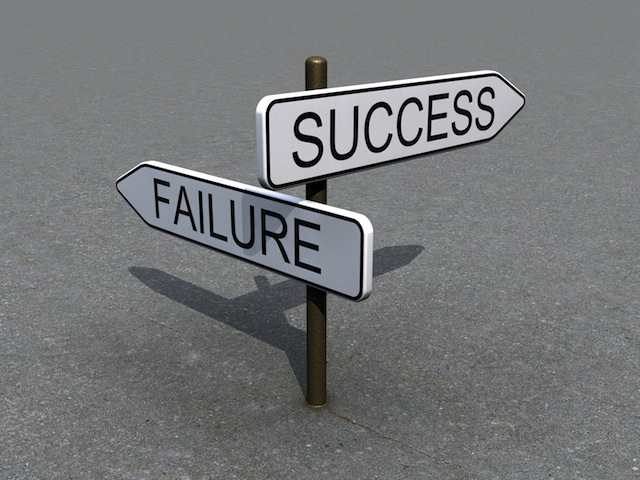
    Failure image courtesy of cobrasoft on sxc.hu

    Similar posts:

  • In it to win it – does overcompetitiveness hurt entrepreneurs?

    In it to win it – does overcompetitiveness hurt entrepreneurs?

    I’ve written before about entrepreneur and venture capital investor Mark Suster and his writings about business are always worth reading.

    His recent post pulling together writings on the DNA of an entrepreneur is interesting reading however one point jars – competitiveness.

    In Steve’s view competitiveness is about winning at all costs and crushing the opposition.

    That’s fine when competing for a customer, fighting over market share or pitching to the same VC investor, but business usually isn’t a zero-sum “if I win, you lose” equation.

    Sometimes its about complimentary strengths. In the early days of PC Rescue I tried to partner with an old colleague who had set up a competing business.

    Mark was actually a better computer tech than I was, my strengths lay more in sales and administration, had we teamed up we’d have been a good combination.

    Unfortunately Mark took Suster’s view of ‘winning at all costs’ and when I foolishly referred customers to him because I was either busy or thought he could do a better job, I found he was stealing those customers.

    Eventually I had to cut ties with him, and it cost him money and the chance to be part of something bigger. Mark was greedy but I’m sure he thinks he ‘won’ against me when there really wasn’t a contest.

    Geeks are particularly poor at admitting they have weaknesses, in fact their lack of self understanding could be their greatest weakness of all. So drumming a ‘win at all costs’ message into their heads is almost certainly counter productive.

    It may well be that this win at all costs view is damaging the mental health of many entrepreneurs, by viewing what others are doing through a prism of “I have to win” almost guarantees depression as often the life of an entrepreneur is more steps backwards than forwards.

    As most reporting of startup and entrepreneurs is distorted by survivor bias, we often gloss over this latter point – in reality starting your own business, particularly one that’s under-capitalised, is hard and tough work with a high chance of failure.

    That chance of failure means a ‘win at all costs’ mentality could result in a generation of mentally damaged former entrepreneurs.

    Mark Suster’s views are really good on what drives the Silicon Valley model of business. We need to take care though we don’t take the wrong lessons which end up hurting our businesses, families and our own mental well-being.

    Jackpot image from Henriette via SXC.HU.

    Similar posts:

  • Firing your customers

    Firing your customers

    Running your own business can be tough, but one of the therapeutic advantages of dealing with the stresses of self-employment is the ability to fire stroppy customers.

    Steve Cody, the proprietor of marketing agency Peppercom, gives a list of five types of clients worth sacking in Inc Magazine.

    It’s a good list although it misses the general “pain in the ass” client who demands a solid gold level of service for a pittance. These are particularly common if you pitch to the lowest end of the market.

    Lists like Steve’s are good reminder of Pareto’s Law, or the 80/20 rule which is usually put in terms of 80% of business revenues come from 20% of customers.

    The converse is also true, 80% of business hassles come from just 20% of customers and they are almost certainly not the most profitable ones.

    Pandering too much to the bad customers can hurt your health as well – running your own business is stressful enough without dealing with troublesome clients.

    So sacking bad clients is good, not only is it therapeutic but it also helps the bank account. It’s worthwhile doing whenever a customer drives you too far.

    Go on, you know you want to.

    Similar posts:

  • Google for entrepreneurs

    Google for entrepreneurs

    This is an interesting project – Google have pulled together all their entrepreneurial resources into one page at Google For Entrepreneurs.

    As well as being a handy resource for anyone building a business, it’s a great overview of the various programs Google and their partners are running around the world.

    If you are looking at setting up a business or have a fast growing enterprise it might be worthwhile having a look at the resources Google have pulled together.

    Similar posts: