Tag: innovation

  • Is Facebook the new Microsoft?

    Is Facebook the new Microsoft?

    One of the problems with dominating your field is that to find new growth opportunities involves becoming distracted with your core business and damaging your reputation. This is what hurt Microsoft over the last decade and now threatens the internet’s big four.

    App.net CEO Dalton Caldwell wrote an open letter to Facebook CEO Mark Zuckerberg describing how the social media giant is trying to wipe out competitors through bullying them into being acquired.

    If a business doesn’t succumb to Facebook’s seduction, then they risk being wiped out by the social media giant setting up their own version of the product which they can push out to a billion subscribers.

    Jason Calacanis explores this strategy with Facebook’s launch of Poke, designed to compete with the instant messaging service Snapchat.

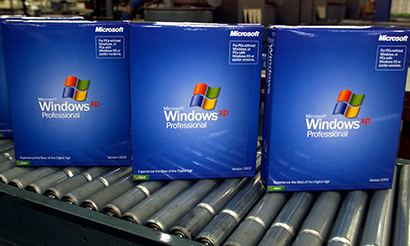
    In many ways this is the same model that Microsoft employed in the 1990s as it worked towards dominating the desktop computer market – bully innovators into selling to them and, if that fails, copy the product and crush the opposition.

    It worked for Microsoft because they controlled the distribution channels through their tight relationships with computer manufacturers.

    Microsoft created their own applications, or features in their products, which would be bundled onto Dell, Gateway or Compaq computers. Once users had functionality built into Windows or Microsoft Office then they didn’t have to buy a third party app.

    Bundling network protocols destroyed the business models of LANtastic and Novell, in the browser wars Microsoft killed Netscape by putting Internet Explorer on the desktop and in the office suite predatory pricing killed WordPerfect and Lotus while resulting in acquisitions of companies like Visio.

    This way of business cemented Microsoft’s domination of their desktop, office productivity and server markets at the turn of the century. It was a true river of gold that continues to flow today.

    Unlike the personal computer software markets, bullying or buying your way into market dominance doesn’t work online as the barriers to entry that protected Microsoft from competitors are nonexistent on the web.

    Both AOL and Yahoo! learned this the hard way as their acquisition sprees through the dot com boom didn’t prevent them from sliding into irrelevance.

    A good example of how hard it is for the Internet giants to execute a plan for world domination is the rise and fall of Google’s Knol as described by Seth Godin, who thought his own Squidoo startup would be crushed by the Internet giant. It turned out not to be so.

    For the web incumbents the fundamental problem are, as Jason says, that they are not focusing on their core businesses and they have plenty of Plan Bs as Seth Godin described.

    The manager who fails with Knol or Poke moves onto another division with a pat on the back and a safe claim on their bonus. The startup founders on the other hand are fighting for survival.

    All four of the Internet’s giants have similarities to Microsoft in the 1990s as every single one dominates its niche and wonders how to expand outside their core business – for Google, and possibly the other three, there’s the added problem of managerialism as a large cadre of managers worries more about maintaining privileges over competing in the marketplace.

    Managerialism ended up crippling Microsoft and continues to do so today, whether Facebook and Google can avoid that fate remains to be seen.

    A bigger problem for Facebook is losing trust – Microsoft’s conduct, particularly with WordPerfect and Netscape in the late 1990s made a generation of developers and entrepreneurs cautious about dealing with the company.

    For many that suspicion remains and is one of the barriers the company now has to overcome in the smartphone and cloud computing markets where it is one of the crowd of scrappy challengers.

    In the social and online worlds, collaboration is one of the keys to success. If Facebook, or any of the others, lose the trust of the community then they’ll become irrelevant a lot faster than WordPerfect or LANtastic did.

    Becoming irrelevant is the real worry for Facebook’s tenured managers and their investors.

    Similar posts:

  • Connecting the household to the internet of everything

    Connecting the household to the internet of everything

    The development of intelligent household appliances like lights is changing our lives in subtle ways, Australian startup Moore’s Cloud is a good example of how cheap computing, accessible internet and open applications are coming together.

    One of the frontiers of technology right now is the internet of things, where machines connect directly to each other, cutting out the requirement for people to monitor them.

    Good examples of these devices is the internet connected fridge – which was the poster child for pointless connectivity during tech wreck in the early 2000s but is now standard equipment in hotels, restaurants and hospitals where monitoring stock levels has become wholly automated.

    Cheap hardware has driven this trend, as processor prices have tumbled it’s become cost effective to incorporate intelligent systems into almost every household device. Everything from the kettle to the washing machine now has some sort of CPU in it.

    Moore’s Cloud is a good example of how the internet of machines is coming together. A simple cube shaped device has the electronic smarts to connect with other lights and be controlled by software apps.

    Being able to create is important as the software interfaces – the APIs – are open which people to write programs that take advantage of the light’s features. A video from the Moore’s Cloud builders showcases twelve of the apps which have been developed so far which include weather forecasting, night lights and changing moods.

    Having an ‘ecosystem’ of apps is now driving innovation in consumer electronics. The iPhone started the app revolution and now everything from stereo systems to lights are being controlled by them. Devices that don’t have open APIs are at risk of being left behind.

    With systems being open to interested designers, anybody can create their own way of controlling device which opens the way for some innovative, left of field ideas.

    In many respects, Moore’s Cloud is one of the early wave of smart features we’re going to see in the next generation of household appliances that will change how we use these tools.

    The team behind Moore’s Cloud is still raising money for the project through Kickstarter, their campaign finishes this Friday. Hopefully they’ll meet their targets and take the project further.

    Similar posts:

  • Twenty years of text messages

    Twenty years of text messages

    When the mobile phone arrived we thought that text, particularly those clumsy pagers people used, would be dead.

    Little did we know that an overlooked part of the newer digital cellphone technology would see short messaging become a key part of the phone system and a major income generator for telephone companies.

    Short Messaging Services – or SMS – was an add on to the digital Global System for Mobile communications (GSM) standard which became the second generation (2G) of mobile phones.

    While intended as a control feature on the phone networks, SMS took off as a popular medium in the mid 1990s and soon became a major profit centre for mobile carriers.

    The Twentieth anniversary of the first SMS being sent passed last week and the BBC has a great interview, conducted by text message, with Matti Makkonen who came up with idea.

    One of the notable things in the interview is Matti’s humility – he doesn’t like being called the inventor or founder of text messaging as he explains,

    I did not consider SMS as personal achievement but as result of joint effort to collect ideas and write the specifications of the services based on them.

    We can only imagine what would happen if the idea of SMS messaging was invented today, there’d be an unseemly struggle over patents while hot young Silicon Valley entrepreneurs would pitch venture capital firms with plans for niche services that will make a billion dollars when sold to Yahoo! or HP.

    As it was, SMS services were insanely profitable for the telcos. In the early days, text messages were being charged at over a dollar each – for a service that cost the carrier almost nothing.

    Over time those handsome profits have been eroded as SMS became bundled into all-you-can-eat packages and then the internet introduced new mediums to send short messages.

    While SMS isn’t going away while mobile phones are an important part of our business and personal lives; the service isn’t going to be as critical, or as profitable as it was over the last twenty years.

    Short Messaging Services are a great example of how individual technologies rise, evolve and fade with time. They are also a good lesson on how quickly a premium, highly profitable service can become commodified.

    Similar posts:

  • Disruption and leadership

    Disruption and leadership

    As new communications tools appear, the challenge for managers is to deal with the disruptions these technologies bring to their businesses.

    Launching Deloitte Digital’s release of Taking Leadership in the Digital Economy last week the Executive Director of Telstra Digital Consumers, Gerd Schenkel, described how business is changing as consumers are being empowered by smartphones.

    A good example of this is the taxi industry where applications like GoCatch, InGoGo and Uber give passengers the opportunity to fight back against poor service from protected operators.

    Sydney is an attractive market for taxi industry disruptors as the current protected market fails both passengers and drivers. Travis Kalanick, the CEO of Uber, said at the Sydney launch of his service earlier last week that the city is one of the more ‘problematic” markets they’ve entered alongside San Francisco and Paris.

    That letting down drivers along with passengers is an also an important point – drivers get 80% of Uber’s charges while InGoGo and GoCatch free operators from poor booking systems that frustrate everybody involved in the industry while making the system as unaccountable as possible.

    Similar changes are happening in other industries as technology changes the way suppliers, customers and staff work.

    A good example of changing work practices is the adoption of Bring Your Own Device (BYOD) policies in the workplace. A few years ago in most businesses it was unthought of that staff could be allowed to bring their own computers to work. Today it’s common and soon the companies that don’t have a BYOD policy will be exception.

    BYOD has happened because of the arrival of cheap consumer devices like smartphones and tablets along with IT departments rolling out web based services.

    We’ve seen this before – probably the greatest influences on the shape of modern society had been electricity and the motor car. These, and many other technological changes have shaped today’s workplace.

    Many businesses though suffer for those changes as we’re seeing with the drying up of the newspapers’ “rivers of gold”.

    For Telstra this is seen in the demise of their phone directory business; Sensis was a true river of gold in the days of printed phone directories, but a number of management mis-steps over the last 15 years meant they totally missed the transition to digital.

    The tragedy for Telstra that Sensis’ strength in the local advertising market should have been a positive given Google’s failure to execute on their local search strategy.

    On reflecting about the struggle to deal with transitions to new technology, just how many business are like Sensis and Fairfax in having leaders that aren’t equipped to deal with these changes.

    The leaders of the 1980s whose business models were based on the assumption of economic growth underpinned by easy credit, cheap energy and demographic growth and now finding those factors are moving against them at the same time technology change is disrupting their industries.

    For the upcoming generation of leaders, both in business and government, having the ability to adapt to the changed power relationships between customers, suppliers and workers is going to be essential. For those steeped in last century’s certainties, it’s going to be a tough time.

    Similar posts:

  • Reinventing the connected bank

    Reinventing the connected bank

    Yesterday the National Australia Bank had a media briefing to show how they, like their competitors, are revamping their entire business around new technologies.

    The investments are substantial and the re-organisation of the business is too as the old model of branch based banking only available from 9am to 4.30pm is superseded by the always on model of Internet banking delivered through tablets and smartphones.

    One of the notable points the NAB executives made was their move to authenticating customers through voice recognition. A trial had found the system reduced fraud and social engineering attempts dramatically.

    The use of voice recognition makes sense as it reduces the reliance on users remembering passwords or having to give over personal information that can often be gleaned off social media sites.

    Again we’re seeing data security evolving away from passwords.

    On the social media front, NAB are also offering their small business customers Facebook selling tools in collaboration with social media sales platform Tiger Pistol.

    While it’s questionable that businesses will get that much from a Facebook store, it’s a good attempt from the bank to add some value and encourage their commercial customers to move online.

    The move online is essential as the bank noted that online sales through their merchant platforms are up 23% as opposed to an anaemic 2.5% in general sales.

    Along with passwords dying, the NAB also found that the cash register is dying and being replaced with smartphone and tablet apps. The bank itself is moving its online platforms to being ‘device agnostic’ so as not to be locked into any one technology.

    What the NAB, and its competitor the Commonwealth Bank, are showing is the importance of having modern systems which are flexible enough to evolve with changes in the marketplace.

    Smaller businesses could learn from the banks on just how important this investment is. The organisations who aren’t making these changes are steadily being left behind.

    Similar posts: