Tag: media

  • Combating Fake News

    Combating Fake News

    Could schools help combat the scourge of ‘fake news’? The OECD’s education director, Andreas Schleicher, believes so.

    Schleicher runs the organisation’s PISA international comparison of educational standards that will introduce tests in 2018 on global competency alongside the existing measures of literacy and numeracy.

    The questions of what fake news is and who it affects are relevant to the discussion of dealing with propaganda, slanted reporting and the internet’s echo chambers.

    I’ll be discussing this shortly on BBC5’s Up All Night. It should be an interesting discussion.

    Similar posts:

    • No Related Posts
  • Goodbye to Yahoo!

    Goodbye to Yahoo!

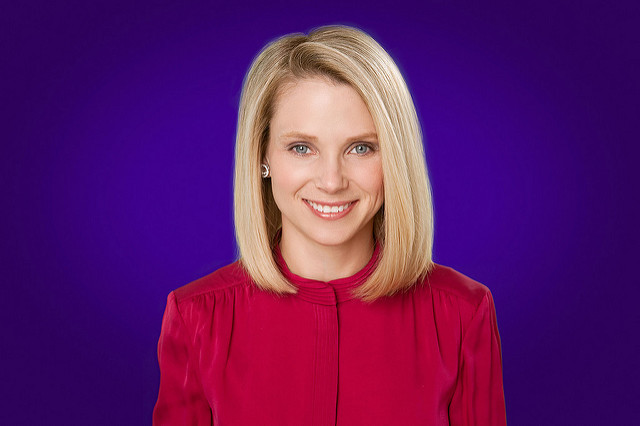
    And so Yahoo!’s journey comes to an end with the company being renamed Altba and most of its operating assets given over to Verizon.

    With the changes both CEO Marissa Mayer and original co-founder David Filo will leave Altba’s slimmed down board.

    Mayer’s failure is a lesson that being an early employee at a successful, fast growth tech startup isn’t a measure of leadership. It may even be a hindrance given companies like Google were inventing new industries during her tenure there which develops different management skills to what a business like Yahoo! needs.

    The biggest lesson of Yahoo!’s demise is how even the most powerful online brands isn’t immune from disruption itself, with what was once the internet’s most popular website being eclipsed by Google and Facebook.

    Interestingly, as Quartz reports, Yahoo! is still one of the US’s most popular sites and only slightly behind Google and Facebook in unique monthly views.

    Despite this, Yahoo! has struggled to grow for 15 years and has struggle to make money although it remains a four billion dollar a year business.

    Which shows eyeballs aren’t enough for a mature web business, at some stage it has to show a return to justify its valuations.

    Among Yahoo!’s many properties remain some gems like Flickr and it will be interesting to watch what Verizon does with them. Sadly any successes will be tiny compared to what the company once promised.

    Similar posts:

  • Jonah Peretti’s seven digital advantages

    Jonah Peretti’s seven digital advantages

    Buzzfeed founder Jonah Peretti laid out his vision of the changing media industry in his year end memo but he missed the one item most important – revenue.

    “Print revenue is decelerating at a rapid pace, cable subscriptions and TV ratings are starting to decrease even for live sports, and traditional media businesses are at various stages of a terrifying decline,” writes Peretti in accurately describes the challenges facing the industry.

    Buzzfeed’s success has largely relied on sharing across social media, particularly Facebook. In his memo Peretti lays out how he sees the modern social and personalised publishers as having seven digital advantages over the push model of the mass media days.

    1. Instant access to fresh content
    2. On-demand access to entire media libraries
    3. Nearly free distribution enabling many free ad-supported services
    4. Global distribution providing access to content from every market
    5. Data about audiences allowing personalization and customization of content experience
    6. A feedback loop between audiences and content creators making media production more dynamic and responsive
    7. Social experiences where people can use content to communicate and connect with the people who matter to them and weave media into their daily lives

    Peretti is absolutely right, those digital advantages put online platforms far ahead of print publishers and broadcasters although the advertisers haven’t quite figured out how to make these positives work for them.

    That advertisers can’t get their models to work on the digital platforms is also a problem for Peretti and Buzzfeed and the site had to half its 2016 revenue estimates earlier this year.

    In the search for new opportunities, Buzzfeed hired a new Vice President of Marketing earlier this month as it appears the branded content model is too labor intensive and video isn’t proving to be the river of gold most online publishers hoped.

    The advertising model appears to be just as broken for online publishers as it is for the traditional channels.

    As Peretti has pointed out in previous end of year memos, new media platforms always struggle in their early years.

    The difference in the modern media world is the internet destroyed the scarcity of publisher and broadcaster controlled advertising space, replacing it with an almost unlimited inventory supplied by Google, Facebook and other services that take most of the profit.

    A better comparison to today’s online advertising conundrum are the early days of radio where it took RCA’s David Sarnoff to figure out how to make broadcasting profitable.

    Like radio, online has great advantages over the older distribution methods but the revenue models that worked for those more traditional businesses don’t work on the newer medium.

    Peretti, like every online publisher, is trying to find that new model and it seems he’s as further away from discovering it as the rest of us.

    Similar posts:

    • No Related Posts
  • Facebook proves a false saviour for advertisers and publishers

    Facebook proves a false saviour for advertisers and publishers

    The advertising industry is in trouble, as consumers’ eyeballs move from broadcast mediums to online services, the wildly successful Twentieth Century business model that drove the radio and television industries is dying.

    One of the biggest hopes for advertisers, and publishers, was social media would be the salvation of their mass market model. Facebook continues to prove it isn’t the messiah with the Wall Street Journal reporting video viewing figures have been inflated for the past two years.

    Coupled with the recently announced shift away from publishers Facebook is increasingly showing any hopes of replicating the broadcast media model on social platforms is doomed.

    So it isn’t surprising advertisers are angry at Facebook for mis-stating its figures although a cynic would suggest those inflated statistics helped drive its video service over competitors like YouTube at a critical time.

    Whether Facebook’s actions were deliberate or otherwise, the service’s misleading behaviour only underscores how publishers and advertisers are struggling to find ways to translate their business model to an online world.

    Similar posts:

    • No Related Posts
  • P&G focusing on Facebook is bad news for media

    P&G focusing on Facebook is bad news for media

    Consumer goods giant Proctor and Gamble has announced they will be dialling back their targeted advertising on Facebook, as they discovered being too precise turns out to stifle sales.

    It turns out that big companies need scale, not precision, so to grow sales they need to be engaging with more people and not restricting their message to niche groups.

    Given the different natures of businesses it’s not surprising to see strategies that work for one group fail dismally for others, but it’s interesting how targeting turns out not to work so well for mass market products.

    The losers though in the P&G story are smaller websites as Wall Street Journal quotes the company’s Chief Marketing Officer as saying they will focus more on the big sites and move away from niche players.

    Mr. Pritchard said P&G won’t cut back on Facebook spending and will employ targeted ads where it makes sense, such as pitching diapers to expectant mothers. He said P&G has ramped up spending both on digital sites and traditional platforms. One category the company is scaling back: smaller websites that lack the reach of sites such as Facebook, Google and YouTube.


    Again we’re seeing the early promise of the web failing as economic power continues to be concentrated with a few major platforms. This is also terrible news for media organisations as big advertisers – P&G are the world’s biggest spender – focus on a few sites and increasingly ignore local or niche news publications.

    There’s also the quandary of where the content that Facebook’s users share will come from, with the advertising shifting away from media companies – new players such as Buzzfeed and Huffington Post as well as the old established mastheads – to Google and Facebook, there’s less funds to create interesting and shareable stories.

    P&G’s move is very good for Facebook’s and Google’s shareholder but the future media models still seem a long way off.

    Similar posts: