Tag: microsoft

  • On being evil

    On being evil

    “Don’t be evil” are the opening words of Google’s corporate code.

    When it was framed in the late 1990s there was one company in particular everyone in the tech industry thought of when the word ‘evil’ was being used.

    At the time Microsoft defined evil in the technology industry. The main reason was their crushing of real or potential competitors like Netscape, Java or the troubled IBM joint venture of OS/2.

    Topping everything though was Microsoft’s tactic of fake error messages designed to scare customers away from the competing DR-DOS system in the early 1990s.

    So it’s rather delicious that Microsoft seems to be getting a taste of its own medicine twenty years later as Google Maps returns an error message on Windows Phones.

    This is particularly galling for Microsoft as Windows Phone is essential for the company’s resurgence and, as Apple have learned, maps are a critical feature for smart phone users.

    It’s too early to accuse Google of having become evil as Microsoft did during their period of dominance as Tim Wu discusses in Why Does Everyone Think Google Beat The FTC but the search giant is flexing its muscles on many fronts.

    For Microsoft, they are learning what life’s like when you’re not the toughest, meanest kid on the block.

    Karma can be a real bitch.

    Similar posts:

  • Was the netbook the Trabant or Model T of the computer world?

    Was the netbook the Trabant or Model T of the computer world?

    Taiwanese technology website Digitimes reports Asustek have shipped their last eeePC netbooks, bringing to an end a product that promised to change the computing world when they were first released in 2007.

    At the time the eeePC netbook picked up on a number of trends – cheap hardware, the maturity of the open source Linux operating system, affordable wireless access and, most importantly, the accessibility of cloud computing services.

    There’d been a pent up demand for usable portable computers for years but Microsoft and their hardware partners consistently released clunky, overpriced tablet computers that simply didn’t deliver on their promises.

    For users wanting a cheap, fairly robust portable computer then netbooks were a good choice, at the price you could even risk having one eaten by lions.

    into the lions den with an Asus eeePC netbook

    Unfortunately for netbook a few things went against the idea.

    Customers don’t like Linux

    An early blow to the eeePC was that retail users don’t like Linux. Most computer users are happy with Windows and MacOS and weaning them off what they know is a very hard sell.

    Sadly on this topic I have first hand knowledge having suffered the pain of co-founding a business in the mid 2000s that tried to sell Linux to small businesses.

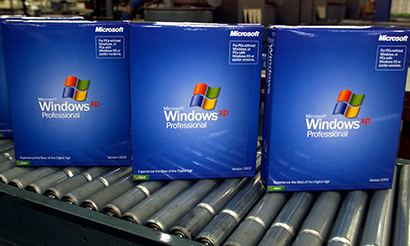
    Asustek discovered this when they found customers preferred the more expensive Windows XP version over the original Linux equipped devices.

    Unfortunately Microsoft’s licenses damaged the economics of the netbook and held the manufacturers hostage to Microsoft who, at the time, wasn’t particularly inclined to encourage customers to use cloud services.

    Manufacturer resistance

    Microsoft weren’t the only supplier unhappy with netbooks. Harry McCracken at Time Tech describes how chip supplier Intel worked against the products.

    For manufacturers, the netbooks were bad news as they crushed margins in an industry already struggling with tiny profits. However all of them couldn’t ignore the sales volumes and released their own netbooks which cannabilised their own low end laptop and desktop ranges.

    In turn this irritated the army of PC resellers who found their commissions and margins were falling due to the lower ticket prices of netbooks.

    The rise of the tablet

    The one computer manufacturer who stayed aloof from the rush into low margin netbooks was Apple who had no reason to rush down the commodity computing rabbit hole. It was Steve Jobs who launched the product that made netbooks irrelevant.

    “Netbooks aren’t better at anything… they are just cheaper, they are just cheap laptops” Jobs said at the iPad launch in January 2010.

    Immediately the iPad redefined the computer market; those who’d been waiting a decade for a decent tablet computer scooped the devices up.

    Executives who wouldn’t have dreamt of replacing their Blackberries with an iPhone, let alone using an Apple computer proudly showed off their shiny iPads.

    The arrival of the iPad in boardrooms and executive suites also had the side effect of kick starting the Bring Your Own Device movement as CIOs and IT managers found that their policy of Just Say No was a career limiting move when the Managing Director wanted to connect her iPad to the corporate network.

    Rebuilding PC margins

    Around the time of the iPad’s released the major PC manufacturers declared a detente over netbooks and joined Intel in developing the Ultrabook specification.

    Intel designed the Ultrabook portable computer specification

    The aim of the Ultrabook was to de-commodify the PC laptop market by offering higher quality machines with better margins.

    While the Ultrabook has worked to a point, competition from tablet computers and the demands of consumers who’ve been trained to look for sub $500 portables means the more expensive systems are gradually coming down to the netbook’s price points.

    Today’s Ultrabook will be next month’s netbook.

    For the PC manufacturers, the lesson is that computers have been a commodity item for nearly a decade and only savvy marketing and product development – both of which have been Apple’s strengths – is the only way for long term success in the marketplace.

    Those US based manufacturers who haven’t figured this out are only go to find that Chinese manufacturers – led by companies like Taiwan’s Asustek – will increasingly take the bottom end of the market from them.

    The car industry is a good comparison to personal computers in commoditisation – with the passing of the netbook, the question is whether we’ll remember the eeePC  as a Trabant, Model T Ford or a Volkswagen Beatle.

    Similar posts:

  • Is Facebook the new Microsoft?

    Is Facebook the new Microsoft?

    One of the problems with dominating your field is that to find new growth opportunities involves becoming distracted with your core business and damaging your reputation. This is what hurt Microsoft over the last decade and now threatens the internet’s big four.

    App.net CEO Dalton Caldwell wrote an open letter to Facebook CEO Mark Zuckerberg describing how the social media giant is trying to wipe out competitors through bullying them into being acquired.

    If a business doesn’t succumb to Facebook’s seduction, then they risk being wiped out by the social media giant setting up their own version of the product which they can push out to a billion subscribers.

    Jason Calacanis explores this strategy with Facebook’s launch of Poke, designed to compete with the instant messaging service Snapchat.

    In many ways this is the same model that Microsoft employed in the 1990s as it worked towards dominating the desktop computer market – bully innovators into selling to them and, if that fails, copy the product and crush the opposition.

    It worked for Microsoft because they controlled the distribution channels through their tight relationships with computer manufacturers.

    Microsoft created their own applications, or features in their products, which would be bundled onto Dell, Gateway or Compaq computers. Once users had functionality built into Windows or Microsoft Office then they didn’t have to buy a third party app.

    Bundling network protocols destroyed the business models of LANtastic and Novell, in the browser wars Microsoft killed Netscape by putting Internet Explorer on the desktop and in the office suite predatory pricing killed WordPerfect and Lotus while resulting in acquisitions of companies like Visio.

    This way of business cemented Microsoft’s domination of their desktop, office productivity and server markets at the turn of the century. It was a true river of gold that continues to flow today.

    Unlike the personal computer software markets, bullying or buying your way into market dominance doesn’t work online as the barriers to entry that protected Microsoft from competitors are nonexistent on the web.

    Both AOL and Yahoo! learned this the hard way as their acquisition sprees through the dot com boom didn’t prevent them from sliding into irrelevance.

    A good example of how hard it is for the Internet giants to execute a plan for world domination is the rise and fall of Google’s Knol as described by Seth Godin, who thought his own Squidoo startup would be crushed by the Internet giant. It turned out not to be so.

    For the web incumbents the fundamental problem are, as Jason says, that they are not focusing on their core businesses and they have plenty of Plan Bs as Seth Godin described.

    The manager who fails with Knol or Poke moves onto another division with a pat on the back and a safe claim on their bonus. The startup founders on the other hand are fighting for survival.

    All four of the Internet’s giants have similarities to Microsoft in the 1990s as every single one dominates its niche and wonders how to expand outside their core business – for Google, and possibly the other three, there’s the added problem of managerialism as a large cadre of managers worries more about maintaining privileges over competing in the marketplace.

    Managerialism ended up crippling Microsoft and continues to do so today, whether Facebook and Google can avoid that fate remains to be seen.

    A bigger problem for Facebook is losing trust – Microsoft’s conduct, particularly with WordPerfect and Netscape in the late 1990s made a generation of developers and entrepreneurs cautious about dealing with the company.

    For many that suspicion remains and is one of the barriers the company now has to overcome in the smartphone and cloud computing markets where it is one of the crowd of scrappy challengers.

    In the social and online worlds, collaboration is one of the keys to success. If Facebook, or any of the others, lose the trust of the community then they’ll become irrelevant a lot faster than WordPerfect or LANtastic did.

    Becoming irrelevant is the real worry for Facebook’s tenured managers and their investors.

    Similar posts:

  • ABC Nightlife December 2012

    ABC Nightlife December 2012

    Paul Wallbank joins Rod Quinn to discuss how technology affects your business and life. For December 2012 we’ll be looking at business security, Windows 8 and the saga of Apple Maps.

    If you missed the program, you can listen to the recording through the ABC website.

    Answers to listeners’ questions and links to some of the programs we discussed, including removing Norton Anti-Virus and getting your Windows start button back, are on a later blog post.

    Some of the topics we discussed included these below.

    We’d love to hear your views so join the conversation with your on-air questions, ideas or comments; phone in on the night on 1300 800 222 within Australia or +61 2 8333 1000 from outside Australia.

    Tune in on your local ABC radio station or listen online at www.abc.net.au/nightlife.

    You can SMS Nightlife’s talkback on 19922702, or through twitter to @paulwallbank using the #abcnightlife hashtag or visit the Nightlife Facebook page.

    Similar posts:

  • Windows Phone 8 launch

    Windows Phone 8 launch

    This week’s launch of Window 8 Phone is part of Microsoft’s strategy to remain relevant in a world where personal computers and laptops are being left behind by smartphones and tablet computers.

    In many ways, the tablet and mobile market is an opportunity lost by Microsoft – for a decade the market had been desperate for decent tablet computers and smartphones. The Windows tablet and PDA product in the early 2000s ran on was expensive, heavy and clunky hardware that discouraged even the most determined user.

    The failure of Microsoft and their partners cost the company dearly when the iPhone and then the iPad stole the market from them. Today Apple’s iPad owns the tablet computer market while the iPhone on its own makes more money than all of Microsoft’s products put together.

    Microsoft’s response to this threat to their core business has been slow and wasn’t helped by the company Windows Vista disaster, a mis-step that broke the PC upgrade cycle.

    Fortunately Windows 7 put Microsoft’s core business back on an even keel as they contemplated their customers’ move away from the personal computer.

    The strategy now for Microsoft with Windows 8 is the “run anywhere” philosophy where a document created on your tablet computer can be accessed just as easily on your PC or on a smartphone. This relies on a cloud computing service and the same operating system running on all devices – interestingly this “hybrid cloud” idea underpins Apple’s iCloud as well.

    Being able to run documents across all Windows devices was a key part of Microsoft’s launch today with a demonstration of how Office 2013 files can be accessed.

    To get the full features of Windows Phone though you’ll have to be running Windows 8 AND Microsoft 2013 on your tablet and personal computer.

    Vendor lock-in isn’t surprising as this strategy lies at the heart of Microsoft’s business model – the problem is the market is moving away from the Windows platform and many of the devices, and people, Windows Phone users will be communicating with are using Android or Apple systems so many of the gee-whiz functions are lost.

    One of the functions displayed is Rooms, which allows like minded people to share various features. As the Microsoft media release says;

    Sometimes you want to share and chat with one group, not your entire social network. Rooms allow you to create private groups of people who have Windows Phone 8 — like your family members best friends or fantasy football league — and easily connect with just them. Chat, share calendars, shopping lists or photos in an ongoing conversation where only those invited can join in. You can share some aspects of Rooms with friends and family on other smartphones as well.

    The problem is that when your family members, best friends or fantasy football league competitors aren’t using Windows 8, the Rooms function becomes little more than a glorified shared calendar – Dropbox and Google Docs provide more features.

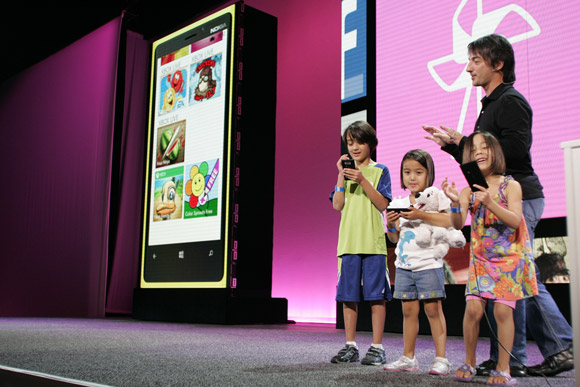
    For the family user Windows Phone 8 does have unique feature in allowing a children friendly profile called Kids Corner, where parents can quarantine the little ones from the main address books and features while allowing only certain apps to run. Unfortunately there’s only one Kids Corner so the little darlings will have to fight it out over the Angry Birds account.

    That Angry Birds app is the harbinger of where Microsoft’s multiple screen strategy will either succeed or die in the ditch as it will be the available applications which will determine whether customers will buy the device over the iPhone or Android competitors.

    Looking at the Samsung, HTC and Nokia phones that will be released running Windows Phone next month, all seem to be decent pieces of hardware although the Nokia 920 seems to be a hefty unit compared to the competition. Overall though all three phones seem to be decent competitors with their own strengths compared to the Android and Apple opposition.

    The success of Windows Phone will define Microsoft’s place in the post-PC world, now its up to the company and its partners to sell them.

    Similar posts: