Tag: microsoft

  • Building an ecosphere

    Building an ecosphere

    One of the keys to success for a software platform is its ecosphere  the community of developers, consultants and advocates that grow around a service.

    By far the most successful company in building a community around its products is Microsoft, who over the years have attracted hundreds of thousands of developers and partners to support Windows.

    Microsoft’s thousands of partners are the company’s greatest asset in beating back the threat posed by Google, cloud computing and Apple. The sheer size Microsoft’s supporter base gives it a natural buffer against competitors.

    Apple too have that buffer, in the company’s darkest days during the late 1990s it was the true believers who kept the flame burning. The ecosphere that has developed around the iPhone and iPad has now cemented Apple’s iOS as being the dominant mobile platform.

    The same thing happens around various industry software packages, as one company becomes identified as the leader in their sector they develop a following among users in that industry.

    At the Xero conference last weekend, the cloud accounting software company showed how an ecosystem of developers, accountants and bookkeepers are developing around their software platform.

    Companies as diverse as inventory management, point of sale system and document scanning services are plugging into Xero’s accounting data which adds functionality for customers.

    In turn, those third party services makes Xero more attractive to the bookkeepers and accountants looking for ways to make their jobs, and those of their clients, easier.

    Xero’s biggest competitor, MYOB, also has that strength with an army of certified consultants from long being the incumbent in their market.

    The battle between Xero and MYOB for dominance in the business accounting software market will depend upon how well the incumbent can hold onto their existing markets and the effectiveness in the incumbent building a ecosphere that makes the newer product more attractive.

    Disclaimer: Paul travelled to Melbourne and attended the Xero Partner conference courtesy of Xero.

    Similar posts:

  • Writedowns and triumphalism

    Writedowns and triumphalism

    The contrast between Microsoft’s and Google’s results released on Thursday attracted a lot of interest – for the first time in twenty years Microsoft posted a quarterly loss with Google’s profits continue to grow.

    While there’s no doubt Microsoft are challenged by the effects of their lost decade and bad decisions made in that time, but the business itself is still extremely profitable.

    Microsoft’s posted loss is due writing down 6 billion dollars in their aQuantive investment, an attempt to compete with Google in the online ad placement space.

    Despite a six billion dollar writedown, Microsoft only posted a 500 million dollar loss showing the business is still making over 5 billion dollars profit each quarter.

    Google on the other hand posted a profit of 2.8 billion, up 11% from the same period last year.

    But Google also has some nasty writedowns coming in the future – the purchase of Motorola will see some substantial write downs of that 12 billion dollar deal. It’s conceivable that a very big portion of that investment will have to be written off as well.

    Right now, Google’s seeing some benefit from the Motorola acquisition as the phone company’s cashflow is covering a decline in online advertising revenue, a threat to Google’s core business.

    It’s easy to be triumphant when the headlines proclaim you’re a winner, but it’s often worthwhile looking at the fine print to see the real story.


    Similar posts:

  • Windows 8 to launch on October 26

    Windows 8 to launch on October 26

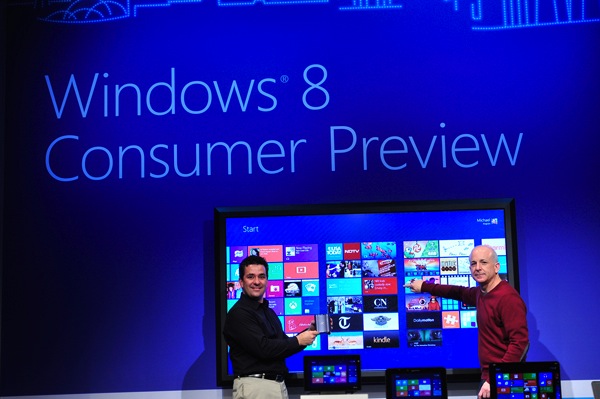
    It’s official, Windows 8 has an October 6, 2012 release date.

    For Microsoft, the pressure is now on. Not only does the desktop version have to be shipped but also the smartphone and tablet versions. Their cloud services are going to have to be flawless on the day Windows 8 goes live.

    The tablet version is doubly important as Microsoft has to convince cynics like me that the Microsoft Surface is not vapourware. With the Surface RT scheduled for release with Windows 8, Microsoft are going to have to announcing pricing and final specifications very soon. Reports are that the Surface is beginning to appear on Amazon sites so release may not be far away.

    Nokia too will now be under a lot of pressure as releasing credible Windows 8 are the only hope for the company’s future. As it is, the current range of Lumia phones are now dead in the water despite massive discounts.

    As we’ve previously discussed, Windows 8 is essential to Microsoft’s market position and will define their future – a failure will almost certainly lock the once dominant software giant to a another lost decade.

    We’ll see a lot advertising and PR hype around Windows over the next few months, the real test will come at the end of October and with the Christmas buying season.

    By the middle of next year we’ll have a good idea of just how successful Windows 8 will be. Steve Ballmer’s future depends upon it.

    Similar posts:

  • Driving Windows 8

    Driving Windows 8

    Microsoft today released their preview edition of Office 2013, the product that underpins the company’s dominance of the business IT sector.

    Users sticking with an older version of Windows hurt Microsoft’s bottom line and one of the key parts of the company strategy with Office is to drive adoption of the latest operating systems which usually means buying new computers.

    The problem for Microsoft is that there has been no real compelling reason for users to upgrade for a decade since the release of Office 2003.

    Coupled with the failure of Microsoft Vista, this had damaged the PC industry’s model of users upgrading computers every three to five years.

    Microsoft would be hoping the cloud integration features, the same versions on desktops, tablets and smartphones coupled with keen prices will be enough to make contented XP users make the jump to Windows 8 and buy a new computer as well.

    Whether it does will depend on the market caring – if users simply don’t care about Office 2013, let alone Windows 8 on either desktops or smartphones, then Microsoft will struggle.

    Unfortunately for Microsoft, the era where they could dictate what people used on their computers is over and that could be their biggest management challenge of all.

    Similar posts:

  • How much did Vista really cost Microsoft?

    How much did Vista really cost Microsoft?

    Microsoft Vista was the company’s despised stepchild – released way past schedule, clunky, slow and disdained so much by the market that PC manufacturers started offering “downgrades” to Windows XP to attract customers.

    Despite the embarrassment, Microsoft retained its position as the world’s leading software company and does so today. But Vista certainly did hurt Microsoft and today’s marketplace shows the deep, long term effects of that damage.

    Research website Asymco earlier this week looked at the ratio of Windows PCs sold to the sales of Apple Macs over the last 30 years. The ratio peaked at 56 to 1 in 2004.

    Today that ratio is 18 and when phone and tablet sales are added in, the ratio is approaching 1:1. Apple has caught up.

    It’s no accident 2004 is the peak of the Windows-Apple ratio. In 2004 Windows XP had matured after three years on the market, the older computers running Windows 98 or ME (another hated operating system) were being retired and a new version of Windows – codenamed Longhorn – taking advantage of newer technologies and with improved security was due to be released.

    On August 27, 2004 things started to change with Microsoft’s announcement Longhorn would be delayed two years. This effectively broke the product roadmap that underpinned the business models of Microsoft and their partners.

    To make matters worse, Apple were back in the game with their OSX operating system well established and a steady stream of well designed new products coming onto the market.

    For consumers and businesses one of the advantages Windows systems had over Apple was the cost difference. The “Apple Tax” started to be eroded by the company’s move to Intel CPUs which delivered economies of scale coupled an aggressive program of tying up the supply chain with key manufacturers.

    Then Longhorn – now known as Microsoft Vista – was released.

    Despite the cheerleading of the Microsoft friendly parts of the technology media, consumers weren’t fooled. The product was slow and buggy with a new interface that confused users. Making matters worse was Microsoft’s ongoing obsession with multiple versions offering different features, something mocked by Steve Jobs,  which further confused the marketplace.

    Vista languished, customers decided to stick with Windows XP or to look at the faster and better designed Apple computers, and Microsoft’s market share started to slowly erode.

    By the time Windows 7 was released Apple had clawed back their market position, launched the iPhone and caught the shift from personal computers to smartphones.

    Probably the biggest embarrassment of all to Microsoft was the launch of the iPad, the market had been gagging for good tablet computer since the late 1990s and Microsoft’s partners had failed to deliver, partly because Windows XP, Vista and 7 didn’t perform as well as Apple’s iOS on the tablet form factor.

    Microsoft’s completely blowing a decade’s lead in the tablet market is almost certainly due to the misguided priorities and feature creep that dogged Vista’s development. This is now costing the company dearly.

    Asymco’s conclusion of Microsoft’s new market position is stunning and accurate.

    The consequences are dire for Microsoft. The wiping out of any platform advantage around Windows will render it vulnerable to direct competition. This is not something it had to worry about before. Windows will have to compete not only for users, but for developer talent, investment by enterprises and the implicit goodwill it has had for more than a decade.

    It will, most importantly, have a psychological effect. Realizing that Windows is not a hegemony will unleash market forces that nobody can predict.

    Vista’s cost to Microsoft was great, it meant the company missed the smartphone surge, the rise of tablets and – possibly most dangerous of all to Microsoft – the move to cloud computing.

    A lot hangs on Microsoft’s next operating system, Windows 8. Another Vista could kill the company.

    Similar posts: