Tag: microsoft

  • When the little guy wins

    When the little guy wins

    Australian entrepreneur Ric Richardson has finally won his patent dispute with Microsoft over the use of software protection software.

    In a post on his personal blog, Ric declared “it’s over!” and said;

    “It’s kind of like having your career anchored on a test you did when you were a kid and someone questioning your score decades after the fact… all you can do is stick to your position and hope the truth rings true.”

    After winning a three hundred million dollar award against Microsoft, then an appeal striking down the size of the damages it’s been a hell of journey for Ric and Uniloc.

    The silly thing is for Microsoft they largely abandoned this method of validating software after 2003, so they could have settled this a lot earlier. Or just paid the license fees in the first case.

    You also can’t avoid the irony of Microsoft being successfully sued over a product design to protect intellectual property.

    It’s always good to see the entrepreneur and inventor get up in a world that often seems tilted in favour of the corporations.

    Now we can look forward to seeing a lot more innovations out of Ric’s caravan, that flat tyre detector looks really useful.

    Similar posts:

  • The high stakes of Lumia

    The high stakes of Lumia

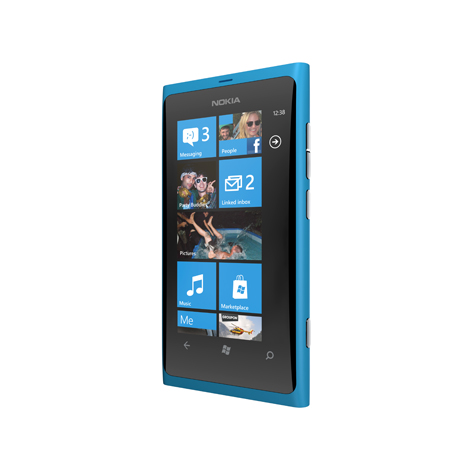
    Yesterday Nokia and Microsoft gave a preview of their upcoming Lumia 710 and 800 phones for the Australian market. It’s make or break time for both companies in the mobile space.

    The phone itself is quite nice – Windows Phone 7.5 runs quite fast with some nice features such as integrated messaging and coupled with good hardware it’s a nice experience. Those I know who use Windows Phones are quite happy with them (I’m an iPhone user myself).

    Whether its enough to displace the iPhone and the dozens of Android based handsets on a market where both Nokia and Microsoft have missed opportunities remains to be seen.

    The battle is going to be on a number of fronts – at the telco level, in the retail stores and, most importantly, with the perceptions of customers.

    Probably the biggest barrier with consumers is the perceived lack of apps, to overcome this Nokia have bundled in their Maps and Drive applications while Microsoft include their Mixed Radio streaming features along with Microsoft Office and XBox integration.

    As well the built in services, both parties are playing up their application partners with services like Pizza Hut, Fox Sports and cab service GoCatch. Although all of these are available on the other platforms.

    While application matter, the real battle for Nokia and Microsoft is going to be in the retail stores where the challenge shouldn’t be underestimated.

    Apple dominate the upper end of the smart phone market and Android is swamping the mid to low end. How Windows Phone devices fit remains to be seen.

    In Australia, if they going to find salvation it will be at the tender hands of the telco companies.

    The iPhone is constant source of irritation for the telcos as not only do Apple grab most of the profit, but they also “own” the customer.

    On the other hand, Android devices are irritating customers who are bewildered by the range of choices and frustrated by inconsistent updates that can leave them stranded with an outdated system.

    So the Windows Phone does have an opportunity in the marketplace although one suspects commissions and rebates will be the big driver in getting sales people at the retail coal face to recommend the Microsoft and Nokia alternatives.

    Overall though, it’s good to see a viable alternative on the market. For both Microsoft and Nokia the stakes are high with the Lumia range – it could be Nokia’s last shot – so they have plenty of incentives to get the product right.

    Microsoft has consistently missed the boat on mobile computing since Windows CE was launched in 1996 while Nokia were blind-sided by the launch of the iPhone in 2007 and have never really recovered.

    To make things worse for Nokia, the market for basic mobile phones where they still dominate is under threat from cheap Android based devices. So even the low margin, high volume market isn’t safe.

    For both, the Lumia range is critical. 2012 is going to be an interesting year in mobile.

    Similar posts:

  • Is it time for Microsoft to make a clean break?

    Is it time for Microsoft to make a clean break?

    Over the weekend Christina Bonnington in Wired magazine looked at how Microsoft is struggling to decide whether to have separate operating systems for their tablet and desktop products – as Apple have – or design one that works on both.

    Creating another version of Windows risks further confusing the marketplace given Microsoft already has between its four different versions of Windows and six flavours of Office.

    Although Apple haven’t suffered at all by having different operating systems. Mac OSX is more popular than ever and iOS dominates its markets.

    Perhaps its time for Microsoft to copy something else Apple did and have a clean break – rework all the Windows code and build a new system.

    Apple did this when they introduced OSX in 2001. Among other things it didn’t support floppy disks, the Apple Device Bus, floppy disks or the networking standards used by the older systems. At the time there were howls of protest from long suffering Apple true believers who had invested a lot into the earlier versions of Mac OS.

    Despite the protests and early hiccups – we sometimes forget that the first version of OSX, named Cheetah, was terrible – Apple’s clean break with the past was a great success.

    Microsoft’s selling point has been backward compatibility; software designed for one version of Windows is expected to work on the next version.

    Backward compatibility is the reason for the spyware epidemic of the early 2000s as Microsoft ignored Windows XP’s security features so that they wouldn’t have to ditch older code in other products like Office.

    Similarly, the contradiction of redesigning the Windows operating system while minimizing disruption to existing users was one of the reasons why Microsoft Vista was such a disaster.

    Perhaps it’s time for Microsoft to bite the bullet and bring Windows into the 21st Century.

    Whatever they decide to do, they better hurry as Apple and Google are carving out dominant positions; waiting until 2013 or 14 for the next version of Windows and Windows Phone may be too late in a market where Microsoft is quickly becoming irrelevant.

    Similar posts:

  • The end of the PC era

    The end of the PC era

    This morning a graph appeared on the web from analytics site Asymco showing the stalling of PC sales and the rapid catch up of Android and Apple iOS systems.

    Such graphs starkly illustrate how the industry is changing as people start using tablet and smartphones instead of their PCs but there are some caveats with making blanket comments about the death of the Windows based computer.

    Sales are still huge

    One important thing about the chart shown is it has a logrithmic scale – a doubling in height indicates ten times the sales.

    That point alone shows just how massive the lead Windows had over 15 years from the mid-1990s, something that is shown in a previous Asymco chart.

    Despite Gartner’s reported 1.4% fall in PC sales – the basis of the Asymco graphs – there are still 92 million personal computers sold each quarter so it is still a massive market.

    Tethered devices

    One of the weaknesses with smartphones and tablet computers is they are still tethered to the desktop. If you want to get the best experience from your phone or iPad you have to synch it with your home or office computer.

    For the moment that’s going to continue for most users, but not forever and the extended life of PCs means customers are using older computers to connect.

    Extended life cycles

    A bigger problem for the PC manufacturers is the extended life cycle of personal computers.

    Since the failure of Microsoft Vista, PC users have been weaned off the idea of replacing computers every three to five years and nearly half the market is using systems that are more than ten years old.

    On its own that indicates fundamental problems with the Windows and PC markets for Microsoft and their manufacturing partners.

    The irrelevant operating system

    One of the effects of increased computer life cycles is that the operating system has become irrelevant. Customers no longer care about what they are using as long as it works.

    This is one of Microsoft’s problems; the virus epidemic of last decade and various clunky versions of Windows Phones has left customers perceiving PC and Windows software as being clunky and buggy.

    Not yet dead

    While the PC market is now shrinking, it’s far from dead. There’s still a huge demand to cater for although the big growth days are over.

    For manufacturers whose business model has been based on fighting for market share in a growing sector, they now have a problem. They have to identify profitable niches and generate innovative products.

    Unfortunately for the PC industry, the market has moved on. Apple have captured the bulk of the high margin computer sector and the industry’s response of pushing “ultrabooks” to capture the MacBook Air customers isn’t going to resonate with consumers trained to buy cheap systems.

    Watching the PC industry over the next five years will be fascinating. Some companies will adapt, others will reinvent themselves and many will fade away as they cling to a declining business model.

    Despite the personal computer industry only being 30 years old, it’s already in decline which is something older industries should ponder upon.

    Similar posts:

  • Why the Microsoft Faithful are wrong about Windows Phone

    Why the Microsoft Faithful are wrong about Windows Phone

    Late last year an event organiser recounted how she’d been told to only approaching Microsoft for event sponsorship if the occasion was related to mobile telephony as “all of our marketing budgets are focused on Windows Phone.”

    So it wasn’t a surprise to read at the beginning of this year that Microsoft were allocating $200 million for marketing Windows Phone in the US alone.*

    The Consumer Electronics Show is the high temple of tech journalism with thousands flying in from around the world to breathlessly report on the latest wide screen gizmo or mobile device

    At the 2010 show, 3D television was going to be the big consumer item while at the 2011 event it was going to be Android based tablets that were going to crush the Apple iPad.

    Despite the millions of words written and spoken about these products, both flopped. So it was no surprise we were going to see plenty of coverage of Microsoft given the budgets available and it being the last time Microsoft’s CEO, Steve Ballmer, would give the CES keynote.

    Microsoft’s CES publicity blitz kicked off with a rather strange profile of Microsoft’s CEO in BusinessWeek which if anything illustrated the isolation and other worldliness of the company’s senior management.

    The PR blitz worked though with Microsoft tying for first place in online mentions during the show according to the analytics company Simply Measured.

    After the show the PR love for Microsoft continues with Business Insider having a gorgeous piece about why Windows Phone will succeed and criticising tech blogger Robert Scoble’s view that the mobile market is all about the number of apps available.

    Scoble replied on his Google+ page explaining why apps do matter and adding that most of the people he meets hate Windows Phones, the latter point not being the most compelling argument.

    The most telling point of Scoble’s though is his quoting Skype’s CEO that they aren’t developing an app for Windows Phone as “the other platforms are more important, so he put his developers on those”.

    Microsoft spent 8.5 billion dollars buying Skype and intends to lay out over $200 million promoting Windows Phone. Surely there’s a few bucks somewhere in those numbers to pay for a few developers to get Skype functionality on the new platform.

    Since writing this, Robert Scoble has issued a correction from the Skype CEO stating a version is being built for the next version of Windows Phone

    The fact Microsoft can’t organise this seems to indicate not all senior executives share the vision for Windows Phone. It’s difficult to image Google or Apple having this sort of public dissent on a key product.

    Management issues aside, Microsoft’s real problem are they are late to the mobile party and don’t have anything to gain attention.

    There’s nothing wrong about being late to the party – Apple were late to enter the MP3 player, smart phone and tablet markets – but in each case they bought something new that changed the sector and eventually gave them leadership of each sector.

    With Windows Phone, there’s so far little evidence Microsoft are going to deliver anything radically new to the sector. With Apple’s iOS and Android dominating, it’s going to be a tough slog for Microsoft and they are going to have to have to carefully spend every cent of that big marketing budget.

    At least Microsoft’s PR team is doing a great job, the challenge is for the rest of the organisation to sell it as well.

    *As an aside, it’s interesting the author of that article about Microsoft’s marketing budgets boasts how he “been sitting on this information for weeks so that Microsoft can make its big announcement at CES this coming week”. It’s good to know where Paul Thurrott thinks his responsibilities lie – certainly not with his readers.

    Similar posts: