Tag: microsoft

  • Putting machine learning into wine

    Putting machine learning into wine

    As we gather more data, the opportunities to apply it become wider. A good example of this is Seer Insights, a South Australian company started by pair of university students that calculates the likely grape yields for vineyards.

    Seer Insights’ product Grapebrain is made up of two components, a mobile app that the farmer uses to count the grape clusters on the vines and then a cloud service that analyses the data and produces web based reports for the farmers.

    The current methods are notoriously unreliable with Seer Insights estimating mistakes cost the Australian viticulture industry $200 million a year as harvests are miscalculated resulting in either rotting fruit or wasted contractor fees.

    Born in an elevator

    Seer’s founders, Harry Lucas and Liam Ellul, started the business after a chance meeting on their university campus. “We started off doing this after being stuck in a lift together,” remembers Liam. “Originally we were looking at the hyper-spectrum imaging for broadacre farming but when we started looking at the problems we ended up talking to wine organisations about this.”

    “The technology predicts how many grapes will be coming off the vineyards at the end of the season to enable people to sort out their finances,” Harry says. “The growth process grapes go through is difficult to model so we use machine learning to do that.”

    For both the founders having an off the shelf product, in this case Microsoft’s machine learning tools, to run the data analysis made it relatively easy to launch the product.

    As a winner of Microsoft’s Tech eChallenge, the startup has won a trip to the United States as well as being profiled by the company as a machine learning case study.

    Over time as these tools become more accessible to small companies we’ll see more businesses accessing machine learning services to enhance their operations.

    As companies face the waves of data flowing into their businesses over the next decade, it will be those who manage it well and gather valuable insights from their information that will be the winners.

    Similar posts:

    • No Related Posts
  • Google’s Missed Revolution

    Google’s Missed Revolution

    The slow demise of Google Plus has been painful to watch as the service is slowly wound back ahead of its inevitable quiet burial.

    Mashable’s Seth Fiegerman has a deep look at what went wrong for Google’s nascent social media platform.

    Adding to the company’s distress, early Google+ adopter and advocate Thomas Hawk posted on Facebook his requiem for the service citing how the organisation seemed to lose interest in the product and the departure of Vic Gundotra sealed its fate.

    Google’s Corporate ADD

    Hawk is particularly scathing about Google’s prospects of being trusted again by developers and the marketplace. “By quitting early, Google lost what little goodwill they might have to seed something in the future,” he says. “Who will ever take Google serious with social again?”

    Once again we see the effects of Google’s corporate Attention Deficit Disorder and the message to developers and evangelists is clear – be very careful in devoting too many resources to any new product from the company.

    Google Plus’ decline though signals something far more serious for the company however – it may well have missed some of the most serious shifts in its marketplace.

    The SoLoMo opportunity

    Four years ago when the service was launched with great fanfare SoLoMo was one of the key buzzwords and it was understandable for Google to want a slice of it. Unfortunately the company found that even an business as big as Google can’t force change by management diktat.

    SoLoMo – Social, Local and Mobile – were seen as the big market growth areas and Google’s footprint in all of those spaces was poor. Although Google Places was leading the local search market at the time.

    Google+ was intended to solve at least the social problem with the added advantage of overlaying personal information onto the already comprehensive ‘knowledge graph’ it’s gathered on users.

    Four years later it’s clear Google Plus is a failure and much of that is due to the project being driven from the top down. From its launch the project was about meeting management imperatives and it’s notable in the company’s announcements about the service how little mention users get.

    Google’s price of failure

    The problem now for Google is they have wasted four years on the failed product at a time when Facebook have become the dominant social media platform and have successfully adapted the service to the mobile world.

    Even in Local search, Facebook are making strong inroads into local business advertising, an area Google had the advantage by tying together maps and local search but lost because of inaction and bureaucracy.

    A costly distraction

    The Google+ distraction means the company has missed the entire SoLoMo opportunity and squandered the one area where they had a massive head start.

    Google now face a future where their key advantage is stranded on the desktop without serious integration into social media. At the same time their ambitions to run a payments service seems stalled as well.

    Whether Google+ turns out to be as strategic a mistake for the search engine giant as Windows Vista was for Microsoft remains to be seen but the similarity between the two companies stuck with declining desktop based business models in a world of mobile consumers is striking.

    Similar posts:

  • Businesses and the Windows 10 upgrade

    Businesses and the Windows 10 upgrade

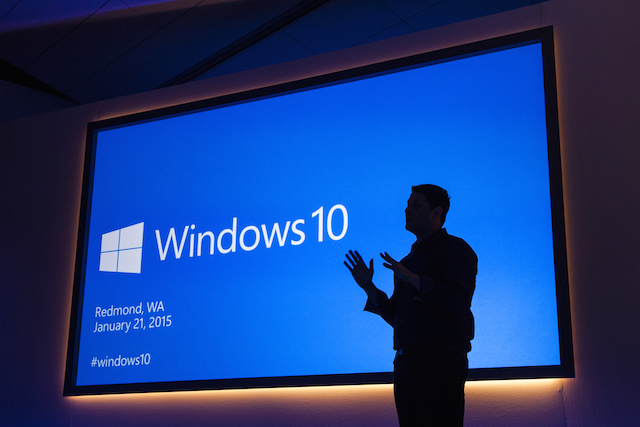
    Last night Microsoft formally launched Windows 10, the company’s latest desktop operating system.

    A decade ago a new Microsoft operating system would have had people queuing at computer shops all night but today, in a world of cloud computing, what software runs on a computer has become less important to users.

    To entice users onto the new operating system, Microsoft are making the upgrade to Windows 10 free for the next year to those using the earlier versions 8 and 7 and many will have noticed the messages appearing on their computers over the past few weeks.

    Windows 10 is a good system, Microsoft has learned from the user unfriendly missteps of Windows 8 and added features that make the system smoother and takes advantage of the desktop computers’ power.

    Microsoft have also continued with their philosophy of providing a system that works on all sizes of devices from smartphones to large monitor PCs and Windows 10 adapts to the needs and use patterns of the different screens.

    That Windows 10 works on smartphones is less of a pressing matter given Microsoft’s attempts to crack the mobile market have been unsuccessfully and Windows phones languish with a tiny market share.

    For business users, the question is whether to take advantage of the upgrade. The short answer is maybe if use cloud based services in your company and wait if you have desktop applications that rely on Windows.

    Should you have applications that run on desktops and servers in your office then it’s essential to wait and see if your software runs properly on Windows 10. You’ll need to talk to the program’s supplier and your IT support person. Generally the advice is to wait a few months to iron out any bugs.

    If you’re using cloud services then the operating system running on your computer is largely irrelevant as long as you have a modern web browser. Microsoft’s new Edge web browser that’s built into Windows 10 so far appears to be a fast and capable piece of software that’s an improvement on the much maligned Internet Explorer that still lurks on the system for backwards compatibly reasons.

    Upgrading though isn’t without its risks, sometimes things go wrong and even the best planned transition doesn’t always work out and generally most cautious IT advisors will take the attitude “if it ain’t broke, don’t fix it.”

    One other potential trap is in hardware. It may be that some printers, cameras and other hardware doesn’t have the right drivers for the new system so while the software upgrade is free, you may end up having to stump up a few hundred dollars for new peripherals.

    For businesses users, if things ain’t broke and the existing computers are working well then the upgrade to Windows 10 is adding unnecessary complexity to the office and it’s probably best to hold off the transition until new computers are needed.

    Similar posts:

  • Security, smartcars and Microsoft Windows – ABC Nightlife July 2015

    Security, smartcars and Microsoft Windows – ABC Nightlife July 2015

    Security problems with smartcars and dating sites along with asking if a new version of Microsoft Windows matters any more are the topics for July’s Nightlife tech spot.

    Paul Wallbank regularly joins Tony Delroy on ABC Nightlife on to discuss how technology affects your business and life.

    If you missed this month’s show, you can listen to the program through the ABC website.

    July’s Nightlife

    A decade ago people lined up all night for a new version of the Windows operating system. Next week Microsoft will be launching Windows 10 to an indifferent market place, does what was once the world’s biggest software company matter anymore in a world of smartphones, connected cars and cloud computing?

    Some of the questions we’ll be answering include.

    • So what are Microsoft announcing next week?
    • What happened to Windows 9?
    • Does Windows really matter any more?
    • The internet has changed things but not always for the better. What about connected cars being hacked?
    • Is this a bigger problem than just connected cars when we’re seeing things like kettles being wired up to the internet?
    • Of course it’s not just cars suffering problems on the Internet, adult dating site Ashley Madison has had potentially 37 million customers’ details leaked online.
    • Could this happen to any business? How do we protect ourselves?

    Listeners’ questions

    A few of the questions from listeners couldn’t be answered on air.

    Running Flash of iPhones and iPads: Steve Jobs’ hatred of Adobe Flash was legendary and as consequence iOS devices like the iPhone and iPad don’t come with the ability to run the software. That’s a problem for those who need Flash for some packages.

    The Puffin web browser gives iPad and iPhone users the ability to use Flash on their devices and is available from the iTunes store.

    Securing Android: While smartphones are less prone to viruses and malware than personal computers, they still are at risk. For Android users there is no shortage of choice for security packages, some of which include;

    Android power hogs: A downside with smartphone apps is they can drain battery life. One excellent feature on Android phones is the ability to easily check what’s using your juice.

    • Open device settings
    • Scroll to “about phone”
    • Click on “battery use”

    Join us

    Tune in on your local ABC radio station from 10pm Australian Eastern Summer time or listen online at www.abc.net.au/nightlife.

    We’d love to hear your views so join the conversation with your on-air questions, ideas or comments; phone in on 1300 800 222 within Australia or +61 2 8333 1000 from outside Australia.

    You can SMS Nightlife’s talkback on 19922702, or through twitter to@paulwallbank using the #abcnightlife hashtag or visit the Nightlife Facebook page.


    Similar posts:

    • No Related Posts
  • Windows Phone goes out the window

    Windows Phone goes out the window

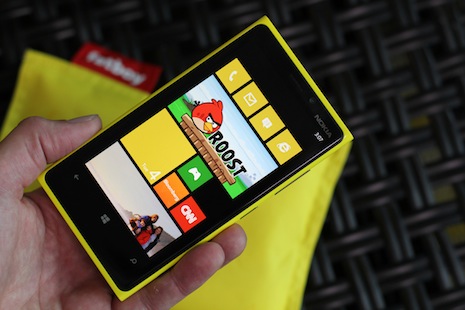
    Yesterday we looked at how Sony claim to be sticking with mobile phones, today Microsoft CEO Satya Nadella has announced major cutbacks for the Windows Phone division with Mary Jo Foley reporting in ZDNet that the company’s Finnish operation – containing the bulk of the Nokia operations the company acquired two years ago – is to lose half its staff.

    Microsoft’s strategy around Windows Phone has always been problematic but should the company be winding down the product then it leaves a hole in the strategy of running Windows on all devices.

    The bigger picture however may be that Nadella recognises the mobile phone hardware market offers little in profits and growth compared to the company’s cloud services and the potential for IoT products although the CEO claims devices are still part of the future.

    In the near term, we will run a more effective phone portfolio, with better products and speed to market given the recently formed Windows and Devices Group. We plan to narrow our focus to three customer segments where we can make unique contributions and where we can differentiate through the combination of our hardware and software. We’ll bring business customers the best management, security and productivity experiences they need; value phone buyers the communications services they want; and Windows fans the flagship devices they’ll love.

    The culling of Microsoft’s product lines may well focus the company ahead of Windows 10’s launch however it also risks leaving critical gaps in the market.

    Similar posts:

    • No Related Posts