Tag: mobile

  • Android’s corporate wins

    Android’s corporate wins

    Telstra’s launch of the second iteration of their T-Hub device and the Commonwealth Bank’s Albert tablet Point of Sale device are notable in their choice of operating system.

    For the T-Hub, the first version was a bug plagued and slow proprietary system that which one of the reasons for the device’s market failure. Telstra’s second attempt runs on the Google Android system.

    The Commonwealth Bank didn’t make Telstra’s mistake with the Albert device, instead choosing  the open source system from the beginning.

    Choosing an open platform like Android makes it easier for the developers and company to support the device and develop new products. There’s also the advantage of thousands manufacturers supplying hardware that runs on Android.

    If we compare the costs of developing a proprietary system and sourcing hardware for it to run on, the choice of an open system is almost irresistible.

    For Microsoft, this adoption of Google Android by corporations is another blow to Windows’ dominance of the market, a few years ago all of these devices would have been running a version of Windows but Android is a cheaper, more flexible and better suited to most of the tasks required.

    It could be worse for Microsoft – Apple could be dominating this market. Apple though have had their own victory on consumer devices and increasingly companies have to cater for their customers and staff wanting an iPhone or iPad app.

    Like on smartphones, the battle is now between Android and Apple.

    Similar posts:

  • Is Microsoft’s Surface Tablet Vaporware?

    Is Microsoft’s Surface Tablet Vaporware?

    In the early 1990s the term “vapourware” appeared, it was born out of big software vendors announcing mythical products with a whole new bunch of features which the opposition already had.

    Usually that next great product never appeared; it was just a ploy to stop customers defecting to the competition’s superior product.

    There were a number of ways to spot vapourware – the lack of a working prototype, vague release dates and no firm pricing being just three.

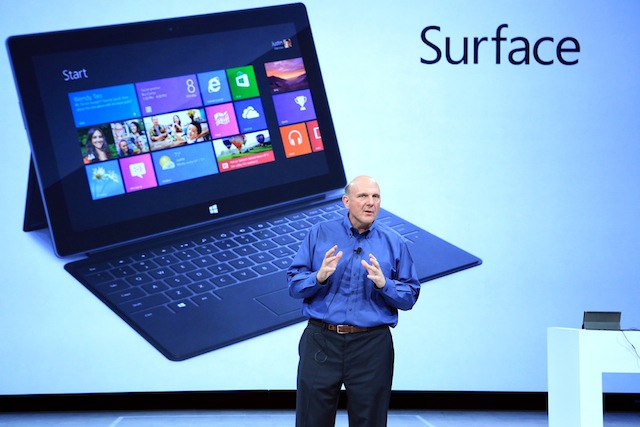
    Earlier this week, Microsoft brought tears to the eyes of grizzled IT industry veterans who missed the days of regular vapourware announcements with the “launch” of their Surface tablet computer.

    After springing the event at short notice on the tech media, forcing the poor petals to travel to Los Angeles rather than their usual haunts of Silicon Valley, Manhattan or Texas and then starting the event late, Microsoft added insult to injury by not even letting the journalists play with a working version of the Surface, let alone take one home to play with.

    One of the impressive things about vapourware are the specifications and this is true with the Microsoft Surface. The specifications of the base model Windows RT are about the same as the base model iPad with the added benefit of a keyboard, USB and Micro SD ports.

    Looking past the hype, it’s clear Microsoft are having trouble with their strategy of a unified operating system across smartphones, tablets and traditional PCs, which has forced them to announce two different versions of the Surface, running different operating systems on different chipsets.

    Having potentially incompatible products makes it even more important for tech journos and early adopters to play with the new devices to see how well they work – that version one of any new product doesn’t work well is another lesson from the 1990s IT industry.

    In the spirit of vapourware, Microsoft hasn’t mentioned what either version of the Surface will cost, which probably indicates they don’t know what the final sticker price will be either.

    Despite being funny, there was a serious side to vapourware – in the 1990s businesses often held off purchasing decisions or upgrades as they waited for promised products or features to arrive.

    While eager customers waited for products that never arrived, their productivity slipped and technologies that should have been adopted earlier ended up coming late to the office desktop.

    For Microsoft investors, the nature of the Surface announcement should be disturbing as the vapourware business tactic only works for incumbents in a strong market position and the software giant is anything but strong in the tablet computer market.

    While it would be good to see a credible competitor to the iPad, it’s going to be difficult to take Microsoft seriously until we see some working versions that we can play with.

    The lessons from the 1990s computer industry are clear – don’t fall for vapourware and buy what works for your business today.

    Similar posts:

  • Disrupting the markets

    Disrupting the markets

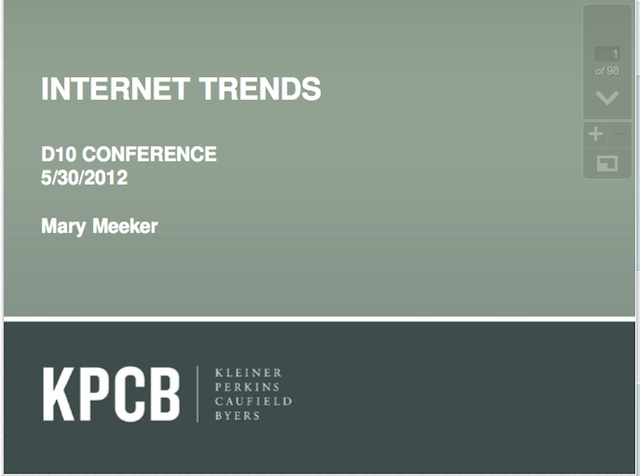
    Generally it’s not a good idea to have nearly a hundred slides in a presentation, but Mary Meeker’s overviews of the tech industry are so rich in data it’s impossible not to spend a weekend looking over the entire sldieshow.

    Last week Mary gave her presentation at the All Things Digital conference and as usual she identified a range of trends and issues in the technology industries.

    Smartphone upsides

    Still the early days of smartphone adoption, with 6 billion mobile phone subscriptions worldwide but only 954 million smartphones activated.

    This adoption is driving mobile revenues with income growing at 153% per year. Although as she shows later, this is not necessarily good news for everybody.

    Print media’s continued decline

    A constant in Mary’s presentations over recent years the key slide in has been ad spend versus usage across various mediums.

    In this year’s version we still print still vastly over represented with 25% of US advertising while TV remains static, although Henry Blodget at Business Insider thinks the tipping point might be arriving for broadcasters.

    Online’s thin returns

    One of the things that really jumps out is how thin onlie revenues really are. In annual terms services like Pandora and Zynga are making between 6 and 25 dollars per active user over a year.

    These tiny revenues indicate the problem content creators have in making money on the web, after the gatekeepers like Pandora or Spotify have taken their cut, there isn’t much left to go around.

    Facebook and Google are also encountering problems as users move to mobile where revenues are even smaller than those from desktop users. This is constraining both services’ earnings growth.

    Disrupting markets and governments

    Mary’s presentation goes on to look at the disruption web and mobile technologies are bringing to various markets – it’s a good overview of whats changing right now and the products driving the changes.

    It’s not just markets that are being disrupted with Mary also looking the US’s budget position and entitlement culture. This in itself is a massive driver of change which will have a deep effect on our lives regardless of where we live.

    Are we in a bubble?

    Mary finishes up with a look at whether we’re in a tech bubble or not.

    Her view is that we are and we aren’t – there are silly valuations of companies in the private market however the poor performance of tech stocks on the stock market indicate the public aren’t being fooled.

    One telling statistic is the only 2% of companies have accounted for nearly all the wealth creation of the 1,720 US tech IPOs between 1980 and 2002. There’s little to indicate much has changed in the decade since.

    The optimism in funding new businesses is based in the disruption they are bringing to markets and industries – you only need one eBay or Google in your portfolio and you’re a legend, if not filthy rich.

    Both the economic and technological changes are disrupting our own businesses and this is why its worth reading and understanding Mary Meeker’s presentations if only to be prepared for the inevitable changes.

    Similar posts:

  • Bringing your own device and business change

    Bringing your own device and business change

    Two years ago I realised that the management trend of staff bringing their own computers to work – BYOD – was more than a fad when I noticed executives were bringing the then new iPads to meetings.

    Most of these executives worked in organisations where IT departments had waged war on employees connecting their own equipment to the corporate network, so this was a serious development in the computing world.

    In many ways employees had been bringing their own technology devices to work for years. It was, and still is, quite common to see public servants and those working for other bureaucratic organisations arriving at meetings with an underfeatured work supplied handset and their own smartphone.

    IT managers hated this as they saw those private devices as a security risk and another headache for their overworked staff to deal with.

    When the iPod was enthusiastically adopted by the executive suite, the game was over for those IT managers. Suddenly they had to deal with these devices and the issues involved.

    At a seminar run by systems integrator Logicalis earlier this week looked at some of the issues around BYOD for companies. What was striking in their presentations were the need for HR and legal departments to be part of the process for adopting this philosophy.

    The BYOD philosophy is a big jump for organisations as it means relaxing controls on employees and for many managers that is the biggest challenge.

    Part of that challenge is controlling the organisation’s data on devices that could be going anywhere and doing anything.

    While companies like Logicalis and Citrix address this with remote desktop applications that create a virtual Windows desktop on the employee’s device, networking giant Cisco offer their ISE devices to run “identity services” that set up rules controlling what staff can access and where they can access it from.

    Cisco Australia’s Chief Technology Officer Kevin Bloch gave a good round earlier this week up of where they see BYOD driving business. To Cisco, the move to mobile devices is irresistible as shown in their Global Mobile Data Traffic Update.

    Interesting both Kevin and the Logicalis speakers see BYOD as being part of the recruitment process. Increasingly younger workers expect they will be able to use their own devices rather than relying upon employer issued workstations and mobile phones.

    According to Kevin, Cisco’s research is finding many employees would trade salary for the right to bring their own device which is something that should grab the attention of budget constrained managers.

    This also ties into other employer trends such as Activity Based Workplaces where companies provide hot desks and staff are expected to store their items away at the end of each workday.

    Ross Miller of the GPT Group described how this is another trend driving the paperless office as staff using hot desks find packing away files and paperwork each day is an unnecessary hassle.

    What we’re seeing with businesses adopting BYOD policies is a big change in the way places operate and this has consequences for all divisions of an organisation from HR and legal through to marketing and corporate affairs. It’s a genuine game changer.

    How the BYOD philosophy is changing business is good example of technology driving our habits and work practices in ways we don’t always anticipate.

    One thing is for sure, the workplace of the future is far more autonomous and diverse than those we’ve been used to for the last hundred years, the businesses who don’t adapt are those being left behind.

    Similar posts:

  • Locking in the mobile market

    Locking in the mobile market

    Mobile phone carrier Vodafone yesterday announced its purchase of Cable and Wireless, the company that rolled out the telegraph and phone networks that connected Britain’s empire.

    Vodafone’s purchase is one of the final phases of the telco industry’s long term restructure where customers – both home and business users – have switched from land lines to mobile devices.

    It’s long been acknowledged the profit in this market lies in devices and data usage which is why Cable and Wireless steadily declined over the past quarter century.

    While there’s good money to be made in running undersea cables, which is what C & W did, the big profit is in delivering the data over the “last mile” to the customer.

    For most customers, that last mile is the radius around a cellphone base station.

    In Australia, this is best illustrated by Telstra’s undisguised glee at being able to offload their legacy copper network and backbone services to the government owned National Broadband Network allowing the former land line monopoly to focus on the mobile, data customer.

    That data aspect is important too, one of the big changes in telecommunications over the last 25 years has been the rise of data.

    A quarter century ago, voice communications were the main traffic of these networks. For companies like Cable and Wireless, data was a profitable sideline with services like Telex and ISDN being lucrative business niches.

    Those rivers of gold distracted incumbent telcos in the early years of the public Internet as they tried to protect those expensive data plans and discouraged customers from using the net.

    Over time, a new breed of Internet Service Providers rose who could supply those data services customers wanted.

    Ironically, the same thing has happened with mobile phone manufacturers and the rise of the smartphone. Unlike the incumbent telcos, they haven’t adapted.

    The incumbents phone manufacturers like Nokia and Motorola missed the rise of data communications and the mobile web as the iPhone and Android devices delivered the portable utility that “dumb phones” couldn’t deliver.

    For Nokia, that miss appears fatal with the company rapidly running out of cash as their smartphone devices fail in the marketplace and margins collapse in the sectors they still dominate.

    Research In Motion – the manufacturers of the Blackberry phone – are in the same trap. While their devices were data orientated they were more akin to corporate “feature phones” where they did one or two things well but couldn’t deliver the full features mobile phone users increasingly wanted.

    The rise of the iPhone threatened Blackberry’s market and the arrival of the iPad with applications like Evernote killed most of the product’s demand.

    Blackberry and Nokia’s decline while companies like Telstra and Vodafone survive – not to mention massive profits of companies like Mexico’s Telefonica – illustrate the value of government licenses to telcos and the breathing space it gives the management of these licensees.

    We shouldn’t underestimate though the risks to all these businesses if they don’t adapt.

    Similar posts: