
Tag: mobile

  • The death of the short message service

    The death of the short message service

    The New York Times’ Bits Section looks at how in many countries text messaging (SMS) services are declining.

    For telcos, the SMS feature was a happy – and extremely profitable – accident with the Short Message Service feature designed as a control channel for the mobile voice networks.

    The Short Messaging Service cost almost nothing to develop and quickly became a massive profit centre for mobile phone companies.

    Today in markets where smartphones are dominating sales, people are moving many of their communications away from text messages over to Internet based services like email, instant messaging and social media.

    Interestingly, in the United States text messaging still growing although at a slower rate than previously. This makes sense as the US is behind countries that have fully adopted 3G networks and subscribers don’t get the full benefit from a smartphone without a reliable and fast data service.

    For developing countries, we’ll probably see SMS continue to grow as the attractions of a relatively cheap and simple communications channel like text messaging still make sense in markets where data plans are expensive and smartphones scarce.

    As revenues from text messaging drops, we’ll be seeing more telecommunications companies try to replace the lost income with other services. Expect to see more offers for various business and home service bundles and offers to upgrade to the latest phones or packages as providers try to lock profitable customers into cash generating agreements.

    The era of accidental profits for telcos is over, the quest for these companies now is to find how they can maintain profits in an era where data services are commoditising their lucrative product lines.

    For the managers of these companies, the challenge is on to successfully do this – it remains to be seen how well they do in refocusing their businesses.

    Similar posts:

  • ABC Nightlife: The next wave of smartphones

    ABC Nightlife: The next wave of smartphones

    The world of mobile phones is getting busy again as a whole new range of smartphones appear. Paul Wallbank joined Rod Quinn for ABC Nightlife on October 20 to discuss what the new smartphone wars mean for home and business users.

    We’ll be going to air from 10pm, Eastern Australian time across Australia on ABC Local Radio’s Nightlife to look at the following questions;

    • Why were people disappointed with Apple’s iPhone 4S that was released a few weeks ago?
    • The big competition are the Google Android phones, what are they doing?
    • What’s happened to Nokia? They seemed to have lost their domination.
    • Microsoft were the other big player, what are they doing?
    • How are the smartphones changing business?
    • Shopping centres seem to be jumping on board with various social media checkins. What are those?
    • There’s been a push to online payments, how are the smartphones affecting this?
    • Are smartphones going to be the big buy for Christmas?
    • What are the best plans for consumers and business?
    • How do people deal with telco disputes?

    The podcast from the program is available from at Nightlife website, and some of the information we mentioned can be found here;

    Dealing with Telco complaints

    We’ll be adding more resources in the next few days, the next ABC Nightlife spot is on 23 November and our events page will have more details. If you have any suggestions for future programs or comments on the last show, please let us know as we love your feedback.

    Similar posts:

  • The mobile payments revolution

    The mobile payments revolution

    Ten years ago when I was running a computer support business we spent a lot of time trying to find an mobile payment service for our on-site technicians to process payments.

    At the time there were plenty of options but they were all expensive, asking 6% in merchant fees at a time when our bank merchant facility charged us 2.75% to accept Mastercard, Visa and Bankcard. Interestingly, the cut the mobile providers wanted to take which was the same commission as American Express and Diners Club.

    We’d long before decided Diners and Amex were too expensive and it was easy to make the same decision about mobile payments. The technicians were given a manual card swipe to carry around and they phoned through authorisations. It was messy and time consuming but a lot cheaper than the then high tech alternatives.

    Given that history, I was keen to get along to the Australian Information Industry Association’s “Mobile Payments – Cooperate, Collaborate, or Abdicate” breakfast panel held in Sydney last week to see what has changed in the mobile payments space.

    The rise of smartphones – and the developing SoLoMo trend among consumers which brings together social, local and mobile technologies – should have meant the era of online payments should have arrived and it’s puzzling why it hasn’t happened.

    It isn’t for a shortage of operators; one of the panel members, Oliver Weidlich of Sydney’s Mobile Experience mentioned a number of the services such as Square, developed by one of Twitter’s founders that are changing mobile payment overseas.

    Interestingly it was the audience questions that gave the answers to why online payments haven’t taken off in Australia. The key question from the floor was “which authority handles disputes should a phone be lost or stolen”.

    As a customer, one hopes it’s the bank that takes responsibility as the idea of a telco – particularly their mobile phone divisions with their attitude towards billing customers – having control over your credit card or bank account would make most consumers’ blood run cold.

    The point was well made though as it saw the panel’s bank, telco and credit card representatives all ruminating over the question of ‘who owns the customer’.

    Oddly, while they argue about whose property the customer is, all of them may lose out. While services like Square and built in payment features on social media and mobile apps such as Foursquare or Red Laser may take a slice of the market, there is a bigger competitor already making huge inroads.

    The day before the AIIA event, Internet payment giant PayPal announced a series of deals with various group buying sites and online applications. Their press release pointed out PayPal’s mobile payments, or mCommerce as they call it, is growing at over 400% a year

    While it might not be correct to say PayPal were the elephant in the room at the online payments breakfast, it isn’t unfair to say Big Ears was just outside scoffing the morning tea while the incumbents argued about who would have first dibs on clipping the tickets of both merchants and customers.

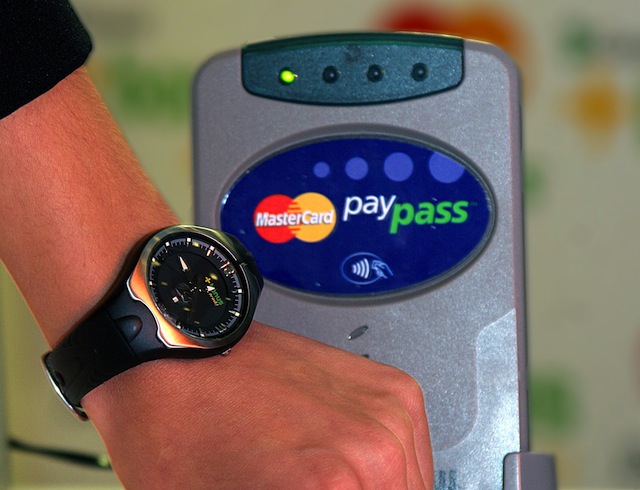
    It’s too early to say the banks, or the telcos, have lost the market but players like PayPal, Google with their wallet service and possibly even Apple – should a Near Field Communication (NFC) equipped iPhone appear in the near future – are going to make the mobile payment sector far more interesting and competitive.

    For businesses, we need to keep a close eye on the mobile payments market as it is promising to offer a lot more options in banking and transactions that what we’ve been used to in recent years. The days of 6% merchant fees are well and truly over.

    Similar posts: