Tag: Nokia

  • Did Apple kill the Finnish economy?

    Did Apple kill the Finnish economy?

    Last week the Finnish Prime Minister, Alexander Stubb, raised eyebrows with his suggestion that Apple killed the country’s economy with the iPhone putting Nokia out of business and the iPad reducing global demand for paper.

    The real reason for Finland’s immediate problems is a lack of diversity; any country dependent upon one or two businesses or industries is going to be vulnerable should markets move against them.

    In the longer term though the problems facing Finland are similar to those across the western world; an aging population, shrinking workforce and tepid export markets.

    Finland’s real problems are our problems. How the Nordic nation deals with them will provide some valuable lessons to us all.

    Similar posts:

  • Building tomorrow’s markets

    Building tomorrow’s markets

    “If I’d asked my customers we’d have built a faster horse,” is a quotation often attributed, probably incorrectly, to Henry Ford.

    The point of the quote is that asking today’s customers about tomorrow’s market is pretty pointless when new products change consumer behaviour.

    Just as the farmer of 1906 had no inkling of how the motor car, truck and tractor would change their business, the cellphone user of 2006 had no idea of how the iPhone would change the way they used a phone and communicated with the world.

    Which brings us to Nokia.

    The Sami Consulting blog discusses how Nokia lost their lead in the cellphone business as the market migrated the Apple and later Android smartphones.

    Nokia’s problem was they spoke to their customers about their existing mobile phone use rather than considered how the technology might evolve.

    When the inventors of the touchscreen approached Nokia, the company carefully evaluated the technology, consulted their customers and decided it wouldn’t work for their products.

    What does this story tell about foresight?  First, it shows that innovation creates futures that are fundamentally unpredictable. We do not have facts or data about things that do not exist yet.  When a mobile phone becomes an internet device with sensors, touch screens, and broadband access, it becomes a new thing.  If you ask your existing customers what they like, the answer will always be about incremental improvements.  When you ask about the future, the answer will always be about history.

    In many ways Nokia were the beneficiaries of a transition effect, they took advantage of a brief period of technological change  and were caught flat footed when the technologies evolved further.

    To be fair, it’s hard to see that change when you’re focused on incremental improvements.

    The motor car turned out to define the Twentieth Century – even Henry Ford couldn’t have foreseen how the automobile would change society and the design of our communities.

    Both the motor industry and smartphone industries are going through major change, particularly as the internet of everything sees the two technologies coming together.

    One thing is for sure, how we use our phones and cars over the next fifty years will be very different to how we use them today.

    Similar posts:

    • No Related Posts
  • Today marks a moment of reinvention

    Today marks a moment of reinvention

    In announcing the company will acquire Nokia’s mobile and devices business, Microsoft said “Today marks a moment of reinvention”.

    This is certainly true, with the retirement of Steve Ballmer, Microsoft officially enters the post Bill Gates era and today’s announcement is an admission from Nokia that their moment as the world’s dominant mobile phone manufacturer is over.

    What’s notable about the deal is what Microsoft doesn’t get — particularly Nokia’s maps service. While Microsoft gets a license to use Nokia’s mapping services, it leaves the Finnish company with a valuable asset and possibly leaves it as the only company capable of competing with Google in that market.

    For Microsoft, acquiring the expertise of Nokia’s engineers shouldn’t be understated, although integrating 32,000 Nokia employees will test Microsoft’s management as this increases their workforce by a third.

    Possibly the most fascinating part of Microsoft’s announcement though is the comment in the second paragraph of their media release.

    Microsoft will draw upon its overseas cash resources to fund the transaction.

    US technology companies have been struggling to deal with the massive profits they have accumulated offshore as part of their tax minimalisation strategy. What we may now be seeing is a wave of foreign takeovers as American companies start to reduce their offshore cash stashes without incurring domestic tax bills.

    If that’s true, Microsoft’s agreement with Nokia may well indicate we’re about to see many more takeovers around the world .

    Regardless of what it means for the wider industry, both Microsoft and Nokia have entered fundamentally different phases of their businesses.

    Similar posts:

  • Disrupting the incumbents

    Disrupting the incumbents

    One of the truisms of modern business is that no incumbent is safe, Microsoft, Nokia and Hauwei are good examples of just how businesses that five years ago dominated their industries are now struggling with changed marketplaces.

    In the last two days there’s been a number of stories on how the smartphone and computer markets are changing.

    According to the Wall Street Journal’s tech blog, PC manufacturers are hoping Microsoft’s changes to Windows 8 reinvigorates the computer market.

    Those hopes are desperate and somewhat touching in the face of a structural shift in the marketplace. These big vendors can wait for the Big White Hope to arrive but really they have only themselves to blame for their constant mis-steps in the tablet and smartphone markets.

    Now they are left behind as more nimble competitors like Apple, Samsung and the rising wave of Chinese manufacturers deliver the products consumers want.

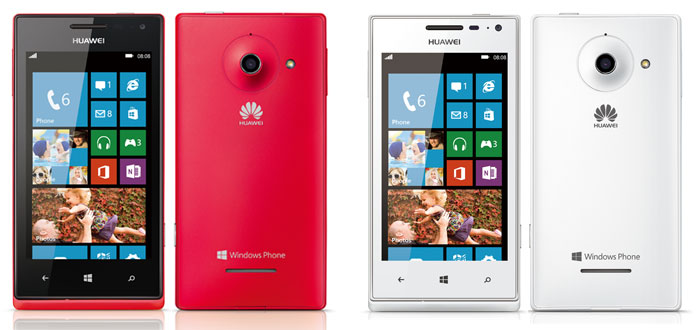
    All is not lost for Microsoft though as Chinese telecoms giant Hauwei launches a Windows Phone for the US markets which will be available through Walmart.

    Hauwei’s launch in the United States is not good news though for another failing incumbent – Nokia.

    Nokia’s relationship with Microsoft seems increasingly troubled and the Finnish company is struggling to retain leadership even in the emerging markets which until recently had been the only bright spot in the organisation’s global decline.

    Yesterday in India, Nokia launched a $99 smartphone to shore up its failing market position on the subcontinent.

    For the three months to March, Nokia had a 23 percent share of mobile phone sales in India, the world’s second-biggest cellular market by customers, Strategy Analytics estimates. Three years ago it controlled more than half the Indian market.

    India isn’t the only market where Nokia is threatened – in February Hauwei launched their 4Afrika Windows Phone aimed at phone users in Egypt, Nigeria, Kenya, Ivory Coast, Angola, Morocco and South Africa.

    The smartphone market is instructive on how many industries are changing, almost overnight the iPhone changed the cell phone sector and three years later Apple repeated the trick with the iPad, in both cases incumbents like Motorola, Nokia and Microsoft found themselves flat footed.

    As barriers are falling with cheaper manufacturing, faster prototyping and more accessible design tools, many other industries are facing the same disruption.

    The question for every incumbent should be where the next disruption is coming from.

    In fact, we all need to ask that question as those disruptions are changing our own jobs and communities.

    Similar posts:
  • I’m not paid to have doubts

    I’m not paid to have doubts

    The Seattle Times has an interesting interview with Microsoft CEO Steve Ballmer this weekend where he discusses what has been one of the biggest years ever for his company.

    Midway through the Seattle Times story there’s a telling exchange.

    Q: What is Microsoft’s plan if Windows 8 doesn’t take off?

    A: You know, Windows 8 is going to do great.

    Q: No doubt at all?

    A: I’m not paid to have doubts. (Laughs.) I don’t have any. It’s a fantastic product. …

    There is no plan B – Windows Phone is running late and their hardware partner Nokia is looking more foolish every day. Last week not only did they flub the launch of their latest phone, but they also managed to alienate the world’s tech media at the event.

    It’s nice not to have doubts, but from outside the comfortable corporate headquarters Microsoft looks like they are struggling in this space.

    Steve Ballmer might be more credible if he did admit to doubts and at least hint there is a plan B in their smartphone strategy.

    Companies need leaders with doubts – doubts about their strategy, about their managers, about the economy and – most importantly – about their own infallibility.

    One of the worst aspects of 1980s management ideology was the myth of the CEO superstar. Too many good businesses have been destroyed, and too much damage done to the global economy, by senior executives who have believed in their own infallibility.

    Some doubts might help a business, particularly when that company is struggling with some serious threats.

    Similar posts: